
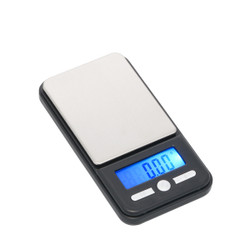
A 600g x 0.1g digital scale occupies a useful middle ground in portable weighing. It can handle a total load of up to 600 grams while showing results in increments of one tenth of a gram. That combination provides more capacity than many small precision scales while retaining substantially more detail than a scale that reads only in whole grams.
The specification is a strong fit for food portions, coffee, tea, coins, jewelry lots, small hardware, craft materials, dry ingredients and many everyday items. It is not the right choice for every task, however. A user who needs to detect hundredth-gram differences needs finer readability, while someone weighing large bowls or parcels may need considerably more capacity.
This buying guide explains exactly what 600g x 0.1g means, how capacity and readability interact, what tare does, which applications fit the specification and how to compare models beyond the numbers printed on the package.
Quick Answer: What Does 600g x 0.1g Mean?
In the specification 600g x 0.1g:
- 600g is the maximum capacity. The scale is designed to support a total load of up to 600 grams.
- 0.1g is the readability or display division. The displayed value changes in steps of one tenth of a gram.
A reading might progress from 24.1g to 24.2g to 24.3g. The scale does not display hundredths of a gram, so it will not show 24.14g or 24.27g.
The capacity includes everything placed on the platform: the item, bowl, tray, cup, packaging and any other material resting on the weighing surface. Pressing the tare button can hide a container's displayed weight, but it does not remove that physical load from the sensor.
600g x 0.1g at a Glance
| Specification | Meaning | Practical effect |
|---|---|---|
| 600g capacity | Maximum total supported load is 600 grams | Suitable for small and medium portable-weighing tasks |
| 0.1g readability | Display changes in tenth-gram steps | Useful for portioning and comparison where 0.01g is unnecessary |
| 6,000 displayed divisions | 600 ÷ 0.1 = 6,000 | Broad working range for a compact scale |
| Tare function | Resets the displayed value with a container present | Shows net contents, but does not restore physical capacity |
| Portable format | Commonly battery powered with a protective cover | Convenient for drawers, bags, counters and mobile work |
| Typical calibration load | Model dependent; often 500g in this class | Must be confirmed in the product instructions |
The combination is best understood as a balance between range and detail. A 600g x 0.1g scale is not a milligram scale and it is not a multi-kilogram kitchen or shipping scale. It is a compact general-purpose instrument designed for moderate loads and tenth-gram display increments.
Understanding the 600-Gram Capacity
Capacity is the heaviest total load the scale is designed to accept. Six hundred grams equals 0.6 kilogram, approximately 21.16 ounces or about 1.32 pounds. Those conversions help visualize the range, but the scale's gram mode should normally be used when the task is defined in grams.
NIST explains the kilogram and gram within the International System of Units in its overview of SI units for mass. In the SI system, one kilogram equals 1,000 grams, so a 600g scale covers sixty percent of a kilogram.
Capacity means gross load, not net contents
Suppose you place a 170g cup on the platform, press tare and add 400g of ingredients. The display may show 400.0g, but the load cell is physically supporting 570g. Only 30g of the rated capacity remains.
If the same cup receives 450g of ingredients, the gross load becomes 620g. That exceeds a 600g rating even though the net contents alone weigh less than 600g. The tare button has changed the displayed reference point, not the scale's mechanical limit.
Before choosing this capacity, calculate:
Maximum gross load = heaviest normal container + heaviest contents + any accessories on the platform
A safety margin is sensible because routine operation at the exact maximum leaves no room for variations in container weight or accidental additions. If a normal workflow regularly approaches 600g, moving to a higher-capacity model is usually the better decision.
What commonly fits within 600 grams?
Typical compatible loads may include:
- A small cup plus a coffee or tea portion
- Individual jewelry items and small grouped lots
- Coins, tokens, cards and compact collectibles
- Screws, washers, electronic components and small hardware
- Spices, herbs, yeast, salt and other recipe ingredients
- Beads, pigments, resin additives and craft materials
- Small product samples or packaged goods
- Compact mail items, provided the complete piece stays below capacity
Actual fit depends on both mass and physical dimensions. A light object may still be too large for the platform, obscure the display or touch the surrounding counter. Always compare the object's footprint with the platform dimensions.
Understanding 0.1-Gram Readability
Readability is the smallest increment the display can show. With 0.1g readability, the final digit represents tenths of a gram. If the load changes by a very small amount, the display may not change until the internal measurement crosses the next display threshold.
For example, a 0.03g addition may produce no visible change. A 0.10g addition corresponds to one full displayed division. The exact transition point depends on the instrument's rounding behavior, stability and measurement response.
Readability is not the same as accuracy
A scale that displays 52.4g is not automatically guaranteed to be within 0.1g of the true value. The last digit tells you how finely the result is displayed. Accuracy depends on additional specifications and conditions, including calibration, repeatability, linearity, eccentric loading, temperature, vibration, airflow and the quality of the reference masses used for checks.
NIST explains why a displayed scale division and a verification scale division are not always the same in its discussion of scale division d versus verification scale division e. This distinction is particularly important when a device is being evaluated for regulated or commercial use.
Treat 0.1g as the display increment, not as a blanket promise that every reading has an error of no more than 0.1g.
Is 0.1g fine enough?
It is fine enough when the smallest decision in your process is one tenth of a gram or larger. If you portion coffee in 0.5g steps, compare items that differ by several tenths of a gram or measure ingredients to the nearest gram, 0.1g provides useful detail.
It is not fine enough when differences of 0.01g, 0.02g or 0.05g matter. For those tasks, choose a scale with 0.01g readability and enough capacity for the complete load. For milligram-level work, choose an instrument designed specifically for that level of measurement and evaluate its full performance specifications.
Resolution, Accuracy, Precision and Repeatability
Buyers often use these terms interchangeably, but they describe different qualities.
Resolution or readability
This is the smallest displayed increment. On the scale covered here, it is 0.1g.
Accuracy
Accuracy is closeness to the accepted value. A scale may produce a stable display yet be consistently high or low if it is out of calibration or affected by its setup.
Precision
In measurement language, precision refers to the closeness of repeated results, although consumer product descriptions sometimes use the word more generally. A device can be precise without being accurate if it repeatedly produces nearly identical but biased results.
Repeatability
Repeatability describes how closely repeated measurements agree when the same item is weighed under the same conditions. Testing an unchanged item several times can reveal instability that a single reading would miss.
Linearity
Linearity concerns performance across the weighing range. A scale may perform well near one load value but show a different error at another. That is why performance checks at more than one point can be useful.
A good buying decision considers all these factors rather than selecting the model with the most decimal places.
Who Should Buy a 600g x 0.1g Scale?
This specification is suited to users who want a portable, easy-to-store scale and whose heaviest gross load remains comfortably below 600g.
Coffee and tea users
Tenth-gram readability is useful for many coffee and loose-leaf tea portions. A 600g ceiling accommodates typical doses and small containers while keeping the scale compact. If the brewing vessel and water will also sit on the platform, calculate their combined weight first; many complete brewing setups exceed 600g.
Home cooks and bakers
The scale can handle spices, salt, yeast, herbs and other smaller ingredients. It is also useful for portioning snacks and recipe components. It is not a full substitute for a multi-kilogram kitchen scale when large mixing bowls, flour batches or meal-prep containers are involved.
Coin and collectible enthusiasts
A 0.1g display can support general sorting and documentation for many items. If identification depends on finer differences, 0.01g may be more suitable. Weight should not be used as the sole test of authenticity or value.
Jewelry and craft users
The capacity suits many finished pieces, beads, findings and grouped components. Tenth-gram readability is useful for general portioning and inventory. Fine gemstones, tiny findings or applications where hundredth-gram changes affect decisions require a finer scale.
Small hardware and electronics users
The specification can handle screws, nuts, washers, connectors and small batches of components. If a counting function is important, confirm that the exact model includes it and that each piece is heavy enough relative to the 0.1g division for dependable count estimation.
Retailers and resellers
A 600g x 0.1g pocket scale serves a broad customer segment because it balances portability, accessible operation and a practical working range. Retailers can merchandise it for coffee, culinary, collecting, craft and general household use without presenting it as suitable for every weighing task.
When You Need a Different Specification
A 600g x 0.1g scale is not the best choice if the application falls outside either side of its useful range.
Choose finer readability when:
- Hundredth-gram changes affect sorting or formulation
- Individual items weigh close to or below 0.1g
- A counting application involves extremely light pieces
- The procedure specifically requires 0.01g or 0.001g display increments
- A validated method sets tighter performance requirements
Choose higher capacity when:
- The bowl and contents may exceed 600g
- You weigh full brewing vessels or water-filled containers
- Parcels and packaged products frequently approach one kilogram
- Large batches are more important than portability
- The platform must support larger containers or equipment
Choose a purpose-specific approved device when:
- Weight determines a retail price
- The measurement is used for compliance or enforcement
- The application is medical, pharmaceutical or safety critical
- The method requires documented uncertainty or traceable calibration
- The instrument must meet a formal laboratory quality system
The best scale is not the one with the most impressive single number. It is the one whose capacity, readability, platform, tolerances and approvals fit the entire task.
Current 600g x 0.1g Scale Formats to Compare
American Weigh Wholesale carries multiple models with this core specification. Although they share the same nominal capacity and readability, their physical designs and details differ.
CARDV2-600 compact digital pocket scale
The CARDV2-600 compact digital pocket scale has a 600g capacity, 0.1g readability, stainless-steel surface and removable cover that serves as an expansion tray. It supports grams, ounces, troy ounces and pennyweights and is designed to calibrate with a 500g weight. Its slim format is useful when storage space and portability matter.
AWS-600 digital pocket scale
The AWS-600 digital pocket scale pairs the 600g x 0.1g specification with a hinged protective cover, stainless-steel platform, backlit display and battery power. Its display changes colors between weighing modes, which can help users distinguish unit selections visually.
V2-600 digital pocket scale
The V2-600 digital pocket scale uses a compact design with a removable cover that can function as an expansion tray. It supports several common weighing modes and is available in multiple colors, making it suitable for retail assortments where appearance and value positioning matter alongside the core specification.
ES-600 digital pocket scale
The ES-600 digital pocket scale is a lightweight Fast Weigh model with a flip-top cover that can serve as a tray, a stainless-steel platform and common unit modes. It is designed for loads from the scale's usable low range up to 600g and also uses a 500g calibration reference.
Browse the broader digital pocket scale collection to compare 600g models with finer-readability and higher-capacity alternatives. Wholesale buyers can also review the American Weigh Wholesale catalog when building an assortment across multiple scale categories.
How to Compare Models With the Same 600g x 0.1g Rating
Two scales can share the same headline specification and still provide different user experiences. Evaluate the following features.
Platform size and shape
A wider platform supports more containers without interference. A narrow platform may be easier to carry. Measure the base of the container rather than assuming capacity guarantees physical compatibility.
Display location and visibility
An oversized bowl can block a front-mounted display. Look for a backlit screen, adequate digit size and a layout that stays readable with the intended container in place.
Protective cover or expansion tray
A cover helps protect the weighing surface in storage and transit. A removable cover that doubles as a tray adds practical value, but its weight still counts toward the 600g capacity when used for weighing.
Unit modes
Common modes may include grams, ounces, troy ounces and pennyweights. Some models also support carats or grains. Confirm the exact unit list instead of assuming every model in the category is identical.
Tare controls
The tare button should be easy to reach without disturbing the load. Consider how often the workflow requires repeated ingredient additions or container changes.
Calibration procedure
Check the required reference mass, whether it is included and how calibration mode is entered. Many 600g x 0.1g models use a 500g weight, but the instructions for the exact product are authoritative.
Power and auto-off behavior
Portable models commonly use AAA batteries. Auto-off conserves power, but a very short timeout can interrupt workflows in which ingredients are added slowly. Compare power options and timeout behavior if the scale will be used frequently.
Materials and cleaning
A stainless-steel platform is easy to wipe, but the scale body and controls should not be immersed unless the manufacturer explicitly allows it. For food and loose materials, use a container or barrier that does not interfere with the measurement.
Warranty and support
A clear warranty and access to replacement instructions can be more valuable than a minor cosmetic feature, particularly for retailers buying inventory in volume.
Calibration: What Buyers Need to Know
Calibration is the comparison of the scale's indication with a known reference under defined conditions. Some consumer scales use the word calibration for an internal adjustment routine initiated by the user. The process and required mass vary by model.
For the current 600g models described above, a 500g calibration weight is commonly specified and is generally not included. Buyers should verify the product page and manual before purchasing a weight.
NIST provides technical guidance on selecting, calibrating and using balances in NISTIR 6969. Its weighing and scales frequently asked questions also explain common scale and legal-metrology concepts.
Good calibration practices
- Use the mass specified by the manufacturer.
- Place the scale on a stable, level surface.
- Allow the instrument and reference mass to reach room conditions.
- Keep the platform and reference weight clean.
- Avoid drafts, vibration and direct sunlight.
- Follow the exact button sequence in the manual.
- Do not touch a precision reference weight unnecessarily.
- Recheck performance after calibration.
Calibration cannot compensate for an unstable table, excessive airflow, a damaged load cell or operation outside the specified temperature range.
Simple Performance Checks for Daily Use
Users can create a routine check without treating it as a formal calibration certificate.
- Inspect the scale for damage or contamination.
- Place it on its normal stable surface.
- Turn it on and allow any recommended settling time.
- Confirm the unloaded display returns to zero.
- Apply an appropriate known test mass.
- Remove and replace the mass several times.
- Check another point in the working range when practical.
- Record results if the scale supports a business or quality process.
Set acceptance limits according to the actual application. A recipe, inventory check and regulated process do not necessarily have the same tolerance.
Environmental Factors That Change Readings
Compact scales measure small forces, so their last displayed digit can react to the environment.
Air movement
Fans, HVAC vents and open windows can create changing forces on containers or light materials. Shield the weighing area or move the scale.
Vibration
Appliances, machinery, foot traffic and flexible tables can make readings fluctuate. Use a rigid, stable surface.
Temperature
Moving the scale from a cold car into a warm room may produce temporary instability. Let the instrument and items acclimate before important measurements.
Static electricity
Plastic trays, powders and dry conditions can create static effects. Static may be visible as drifting or inconsistent readings.
Off-center loading
Place the item near the center of the platform. Loads that overhang or press against another surface can give unreliable results.
Low battery power
Weak batteries can contribute to erratic performance. Replace them when the low-power indicator appears or behavior becomes unusual.
Overload and shock
Dropped objects can apply forces far beyond their resting weight. Lower items gently and never use the scale as a storage surface.
Tare: Useful but Commonly Misunderstood
The tare function makes container-based weighing convenient:
- Place the empty container on the scale.
- Wait for a stable reading.
- Press tare so the display returns to zero.
- Add the material.
- Read the net displayed amount.
The hidden container weight remains part of the physical load. If a tray weighs 110g, only 490g remains before the combined load reaches 600g. For reasonable headroom, the usable contents allowance should be lower still.
Tare is especially useful for cumulative additions, but adding several ingredients can eventually exceed capacity even if the display is reset between steps. Track the combined gross load throughout the process.
Counting Small Parts by Weight
Some digital scales include a piece-counting mode. The scale estimates quantity from the average weight of a sample. Accuracy depends on uniform piece mass, a sufficiently large reference sample and a per-piece weight that is meaningful relative to the scale's 0.1g division.
If each piece weighs only 0.03g, one extra piece may not create a visible division. Counting will be less dependable than when each piece weighs several tenths of a gram. Increase the sample size and verify the result with a manual count before relying on the feature for inventory.
Legal-for-Trade Considerations
A portable scale can be useful for internal sorting, portioning and quality checks without being approved for determining a customer's price. If the displayed weight directly controls a commercial transaction, consult the applicable weights-and-measures authority.
NIST explains the role of a legal metrology device and publishes Handbook 44 requirements for weighing and measuring devices. Approval, inspection and suitability requirements can depend on jurisdiction and application.
Do not describe a model as legal for trade unless its documentation explicitly supports that claim and the device meets the requirements for its intended use.
Wholesale and Retail Buying Considerations
Retail buyers should think beyond a single model. A well-planned assortment helps customers self-select by task.
Position 600g x 0.1g as a balanced option
Its strengths are portability, moderate capacity and tenth-gram readability. It sits logically between lower-capacity 0.01g models and one-kilogram or larger general-purpose scales.
Merchandise by application
Use examples such as coffee, tea, food portions, coins, crafts and small hardware. Avoid implying that the product is suitable for regulated, medical or critical laboratory use without supporting documentation.
Display capacity and readability together
Customers need both numbers. Advertising only “600g scale” hides the level of detail; advertising only “0.1g precision” hides the maximum load.
Include compatible accessories
If calibration weights are sold separately, state that clearly and identify the correct mass. Protective cases, trays and batteries can also affect customer satisfaction.
Stock adjacent specifications
Customers who need finer detail may prefer 500g x 0.01g or a lower-capacity milligram model. Customers who use heavier containers may need 1000g x 0.1g or more. Adjacent choices reduce returns caused by specification mismatch.
Buying Checklist
Before purchasing, confirm all of the following:
- The heaviest item and container together stay below 600g.
- A 0.1g displayed increment is fine enough for the task.
- The platform supports the container without rocking or touching the counter.
- The display remains visible with the normal load in place.
- Required weighing units are available.
- Tare is included and convenient to operate.
- The correct calibration mass is known.
- You know whether the calibration weight is included.
- Battery type and auto-off behavior fit the workflow.
- The operating environment falls within the specified range.
- The cover or tray configuration suits storage and transport.
- Any commercial or regulated-use requirements have been checked separately.
If the answer to the first two questions is yes, the 600g x 0.1g specification is likely a sound starting point. The remaining questions identify which model is the best fit.
Frequently Asked Questions
What does 600g x 0.1g mean on a digital scale?
It means the scale has a maximum capacity of 600 grams and displays weight in increments of 0.1 gram.
Is 0.1g the same as 0.01g?
No. A 0.01g scale displays changes ten times finer than a 0.1g scale. The 0.1g model shows tenths of a gram; the 0.01g model shows hundredths.
Can this scale weigh 600g of product in a bowl?
Only if the product and bowl together do not exceed 600g. If the product alone weighs 600g, any container will push the gross load beyond capacity.
Does tare give me the full capacity back?
No. Tare subtracts the container from the displayed result but does not remove its physical weight from the load cell.
How many display divisions does a 600g x 0.1g scale have?
Dividing 600 by 0.1 gives 6,000 displayed divisions across the nominal range.
Is a 600g x 0.1g scale good for coffee?
It is suitable for many coffee doses and small containers. If the scale must support a brewer, server and water together, calculate the full gross load because it may exceed 600g.
Is it good for jewelry?
It works for general jewelry weighing and grouped pieces when 0.1g detail is sufficient. Choose 0.01g or finer readability when smaller differences matter.
Can I use it for postage?
It may be useful for lightweight mail, but the complete envelope or parcel must stay below 600g and the scale must meet the practical and any applicable carrier requirements. A larger postal scale is better for varied packages.
What calibration weight does a 600g scale need?
The correct mass is model specific. Many current AWS 600g x 0.1g pocket models specify a 500g calibration weight, but always check the exact product manual.
How often should I calibrate it?
Follow the manufacturer's instructions and any requirements of your process. Recheck after relocation, unusual temperature changes, shock, suspected overload or results that fail a known-mass check.
Why does the last digit move?
Drafts, vibration, static, temperature change, an uneven surface, low batteries or an unstable item can affect the final digit. Improve the setup and allow the reading to stabilize.
Is a 600g x 0.1g pocket scale legal for trade?
Not automatically. Legal-for-trade status requires specific approval and suitability for the application. Confirm the model documentation and local requirements before using weight to set a sale price.
Can it measure liquids?
The scale measures mass, not volume. A liquid can be weighed in a suitable container, but converting that mass to volume requires the liquid's density and appropriate conditions.
Is this a laboratory balance?
The specification alone does not make it a laboratory balance. Formal laboratory use may require defined accuracy, uncertainty, traceability, environmental control, qualification and documentation.
Final Verdict
A 600g x 0.1g digital scale is a practical choice for users who need more capacity than a small fine-resolution scale but still want tenth-gram detail. It is particularly well suited to coffee and tea portions, smaller food ingredients, coins, jewelry lots, crafts, collectibles and small hardware.
Buy one when the heaviest complete load—including the container—stays comfortably below 600g and the smallest meaningful change is 0.1g or larger. Choose a 0.01g model when finer differences matter, and choose a one-kilogram or multi-kilogram scale when bowls, batches or packages need more capacity.
Finally, compare platform dimensions, display visibility, unit modes, calibration requirements, power, protective features and warranty. The printed specification tells you the scale's range and display increment; the surrounding design determines how well it fits the work.