
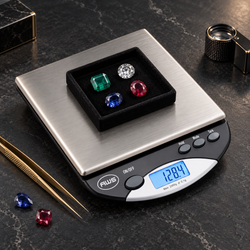
Choosing between American Weigh Scales vs Ozeri is not as simple as declaring one brand better for every kitchen.
Both companies offer digital kitchen scales, but their product ranges emphasize somewhat different strengths.
American Weigh Scales offers models spanning:
-
Everyday 1 g kitchen weighing
-
Higher-capacity food weighing
-
0.1 g precision
-
Coffee-specific weighing
-
Compact bench-scale formats
-
Removable-bowl scales
Ozeri also offers a broad consumer kitchen lineup, including:
-
Traditional 1 g food scales
-
Stainless-steel designs
-
High-capacity models
-
0.1 g models
-
Variable-resolution scales
-
Touch controls
-
Lifestyle-focused designs
The better choice depends on what you actually weigh.
For everyday baking and meal preparation, a 1 g scale may be perfectly adequate.
For coffee, spices, yeast, small ingredient portions or recipes where smaller differences matter, a 0.1 g scale may provide more useful resolution.
For large mixing bowls and bulk ingredients, capacity and platform size can matter more than an extra decimal place.
American Weigh Scales currently offers a broad kitchen scale collection ranging from general-purpose kitchen models to higher-resolution coffee and bench scales.
Ozeri similarly maintains a large kitchen scale collection with models covering basic food weighing, stainless-steel platforms, high capacities and finer-resolution designs.
So instead of asking:
Which brand is better?
A more useful question is:
Which brand offers the scale specifications that best match your kitchen workflow?
Quick Comparison: American Weigh Scales vs Ozeri
| Feature | American Weigh Scales | Ozeri |
|---|---|---|
| Everyday kitchen scales | Yes | Yes |
| 1 g models | Yes | Yes |
| 0.1 g models | Yes | Yes |
| Large-capacity models | Yes | Yes |
| Coffee-specific scale | Yes | Some models suitable |
| Built-in coffee timer | Available on BARISTA-3KG | Varies by model |
| Stainless-steel platforms | Available | Available |
| Bowl scale | Available | Varies |
| Tare | Available on many models | Available on many models |
| Multiple units | Yes | Yes |
| Battery power | Yes | Yes |
| Optional AC power | Available on some AWS models | Model dependent |
| Touch controls | Model dependent | Common on several Ozeri models |
| Variable resolution | Model dependent | Available on newer Pronto models |
| Best choice | Depends on task | Depends on task |
Neither brand can be summarized by one specification because both sell multiple models.
That is why a fair comparison should be made:
model by model and use case by use case.
American Weigh Scales vs Ozeri: The Biggest Difference
The most noticeable difference is the way the two product families are structured.
American Weigh Scales has a particularly broad weighing-focused catalog that extends beyond ordinary kitchen scales.
Within its kitchen range, shoppers can move between:
-
General 1 g kitchen scales
-
0.1 g bench scales
-
Coffee scales
-
Smaller-capacity precision models
-
Bowl-based scales
Ozeri's kitchen collection places significant emphasis on consumer kitchen design and convenience, offering models with:
-
Tempered glass
-
Stainless steel
-
Touch controls
-
Higher capacities
-
Multiple display styles
-
Variable graduation technology
That means neither brand has one universal advantage.
The important variables remain:
capacity + resolution + platform + controls + power + intended use.
Comparison 1: Everyday Kitchen Weighing
For general kitchen tasks, many people primarily weigh:
-
Flour
-
Sugar
-
Butter
-
Vegetables
-
Meat
-
Pasta
-
Rice
-
Baking ingredients
-
Meal-prep portions
For these tasks, a 1 g scale is often a practical choice.
American Weigh Scales AMW-13
The American Weigh Scales AMW-13 is currently rated at:
-
Capacity: 6,000 g / 13 lb
-
Readability: 1 g / 0.1 oz
-
Platform: 6 × 6 inches
-
Stainless-steel weighing surface
-
Backlit LCD
-
Tare
-
Multiple weighing units
-
9V battery power
-
Optional AC adapter compatibility
This makes it a straightforward general-purpose kitchen option.
Its 6,000 g capacity provides useful headroom for:
-
Mixing bowls
-
Larger ingredient quantities
-
Meal preparation
-
Baking
The 1 g readability is aimed at normal food-weighing tasks rather than extremely small quantities.
Ozeri Pronto
One of Ozeri's best-known food scales is the Ozeri Pronto Digital Kitchen Scale.
The classic version is listed with approximately:
-
5,100 g capacity
-
1 g graduations
-
Multiple weighing units
-
Tare
-
AAA battery power
-
Automatic shutoff
That places it in broadly the same everyday kitchen category as the AMW-13.
AMW-13 vs Ozeri Pronto
| Specification | AWS AMW-13 | Ozeri Pronto Classic |
|---|---|---|
| Capacity | 6,000 g | 5,100 g |
| Resolution | 1 g | 1 g |
| Tare | Yes | Yes |
| Multiple units | Yes | Yes |
| Stainless-steel platform | Yes | Not the defining feature |
| Battery | 9V | 2 AAA |
| Optional AC power | Yes | Not listed as standard feature |
| Best use | General kitchen/bench weighing | Everyday kitchen weighing |
For normal recipes, both occupy similar territory.
The AWS model offers somewhat more listed capacity and a stainless-steel platform, while the Pronto emphasizes compact consumer-friendly kitchen operation.
Which Is Better for Baking?
For most conventional baking:
1 g resolution is usually far more important than brand name.
If you're weighing:
-
500 g flour
-
250 g sugar
-
200 g butter
-
300 g water
a 1 g kitchen scale provides enough display resolution for typical recipes.
Where the comparison changes is when the recipe involves much smaller quantities.
Examples might include:
-
Yeast
-
Salt
-
Flavoring powders
-
Spices
At that point, 0.1 g resolution can become more useful.
Comparison 2: Precision Kitchen Weighing
American Weigh Scales offers several kitchen-compatible models with 0.1 g readability.
One example is the AMW-2000 Compact Digital Bench Scale.
Current specifications include:
-
Capacity: 2,000 g
-
Readability: 0.1 g
-
Platform: 6 × 6 inches
-
Stainless-steel weighing surface
-
Backlit LCD
-
Battery or optional AC adapter power
This creates a different tradeoff from the AMW-13.
You get:
finer resolution
but:
less maximum capacity.
Ozeri's Higher-Resolution Kitchen Models
Ozeri also offers finer-resolution models.
The Ozeri ZK26 Stainless Steel Kitchen Scale is listed at:
-
5,000 g capacity
-
0.1 g graduations
-
Stainless-steel platform
-
LED display
-
Tare
-
AAA battery operation
On paper, that is an unusually broad combination:
high capacity + 0.1 g displayed increments.
However, shoppers should remember an important scale principle:
display resolution is not the same as guaranteed measurement accuracy.
A scale showing 0.1 g increments does not automatically mean every measurement is accurate to ±0.1 g across its entire weighing range.
Resolution vs Accuracy
This distinction matters when comparing both brands.
Resolution
Resolution tells you the smallest increment displayed.
For example:
0.1 g
means the display changes in tenths of a gram.
Accuracy
Accuracy describes how close the measured result is to the true mass.
Repeatability
Repeatability describes how consistently the scale returns similar results when the same load is measured repeatedly.
These should not be treated as interchangeable specifications.
1 g vs 0.1 g: Which Do You Need?
Choose 1 g resolution for many ordinary tasks such as:
-
Flour
-
Sugar
-
Meat
-
Vegetables
-
Dough
-
Portion control
Consider 0.1 g resolution for smaller quantities such as:
-
Coffee beans
-
Ground coffee
-
Tea
-
Spices
-
Yeast
-
Small baking ingredients
The best resolution depends on the smallest quantity you routinely need to distinguish.
Comparison 3: Coffee
Coffee is one area where American Weigh Scales has a particularly purpose-built option.
The BARISTA-3KG Coffee/Kitchen Scale is currently listed at:
-
3,000 g capacity
-
0.1 g readability
-
Built-in timer
-
Backlit display
-
Splash-resistant design
-
Removable silicone mat
-
Multiple units
-
Collapsible silicone cup
For coffee preparation, the built-in timer is important because many brewing workflows track both:
weight and time.
Why a Timer Matters for Coffee
A general food scale can weigh:
-
Coffee beans
-
Grounds
-
Water
But a coffee-specific scale can also help monitor:
-
Pour duration
-
Extraction time
-
Brew progression
For pour-over preparation, being able to view time and weight on the same device can simplify the workflow.
Ozeri for Coffee
Several Ozeri kitchen scales offer sufficient resolution for coffee weighing.
For example, its newer Pronto models advertise finer variable graduations, and the ZK26 offers 0.1 g displayed increments.
However, when comparing a general kitchen scale against AWS's BARISTA-3KG, consider whether the scale includes a:
dedicated brewing timer.
If coffee is the primary purpose, that specialty feature can matter as much as resolution.
Winner for Coffee
For a buyer specifically looking for:
-
Espresso dosing
-
Pour-over
-
Coffee beans
-
Brew timing
the AWS BARISTA-3KG is the more purpose-specific option within the models compared here.
For a household that wants one scale mainly for cooking but occasionally weighs coffee, an Ozeri kitchen scale may still be perfectly suitable.
Comparison 4: High Capacity
Capacity determines the maximum physical load the scale can support.
Remember that the total load includes:
food + bowl + container + plate + accessories.
This is important because a large bowl may already weigh hundreds of grams before ingredients are added.
AWS AMW-13 Capacity
The AMW-13 provides:
6,000 g / approximately 13 lb capacity.
That makes it useful for larger kitchen bowls and general meal preparation.
Ozeri Capacity Options
Ozeri's lineup includes models ranging from roughly:
-
5 kg
-
6 kg
-
10 kg
depending on the specific model.
For example, Ozeri currently lists Touch III variants with capacities reaching around 22 lb / 10 kg.
Therefore, Ozeri may provide attractive options for users whose primary goal is:
very high kitchen capacity.
Do You Actually Need 10 kg?
Higher capacity is useful when weighing:
-
Large mixing bowls
-
Bulk ingredients
-
Large food portions
-
Heavy containers
But more capacity is not automatically better.
A person who normally weighs:
-
20 g coffee
-
150 g ingredients
-
500 g flour
may benefit more from finer resolution than from a 10 kg maximum.
Choose capacity based on:
your heaviest realistic complete load.
Comparison 5: Small Ingredients
Suppose you regularly measure:
-
2.5 g
-
5.8 g
-
12.3 g
A 1 g scale cannot display those tenths.
It may show:
-
3 g
-
6 g
-
12 g
instead.
A 0.1 g scale provides more useful displayed detail for those tasks.
AWS AMW-500I
For smaller precision tasks, the AMW-500I Compact Digital Bench Scale provides:
-
500 g capacity
-
0.1 g readability
-
6 × 6-inch stainless-steel platform
-
Backlit LCD
-
Tare
-
Battery or optional AC power
This model illustrates an important tradeoff:
lower capacity can be completely acceptable when only small ingredients are being weighed.
High Capacity Is Not Necessary for Every Kitchen Task
If you only weigh:
-
Spices
-
Tea
-
Small coffee doses
-
Garnishes
-
Small baking additions
a 500 g scale may be plenty.
If you regularly place an entire mixing bowl on the scale:
500 g may be far too restrictive.
Comparison 6: Bowl Weighing
Some people prefer putting ingredients directly into a supplied bowl.
American Weigh Scales offers the 5KBOWL Digital Bowl Scale, currently specified at:
-
5,000 g capacity
-
1 g readability
-
Removable 2-liter bowl
-
Tare
-
Backlit display
-
AA battery operation
This design can be convenient for:
-
Flour
-
Sugar
-
Produce
-
Recipe ingredients
-
Portioning
Bowl Scale vs Flat Platform
Neither is universally better.
Bowl Scale Advantages
Useful when:
-
Ingredients roll
-
Loose ingredients are common
-
You want an integrated container
Flat Platform Advantages
Useful when:
-
Using your own bowls
-
Weighing plates
-
Weighing packages
-
Switching between different containers
Choose based on how you actually cook.
Comparison 7: Platform Design
Platform size is often overlooked.
A scale may have excellent capacity and resolution but become inconvenient if your bowl hides the display or rests on surrounding surfaces.
Consider:
-
Platform dimensions
-
Display position
-
Button position
-
Bowl footprint
Stainless Steel
Stainless-steel platforms appear on multiple AWS and Ozeri models.
Potential advantages include:
-
Easy wiping
-
Durable work surface
-
Neutral kitchen appearance
But platform material should still be considered alongside:
-
Resolution
-
Capacity
-
dimensions
A stainless-steel scale with the wrong weighing range is not automatically the better choice.
Comparison 8: Tare
Both brands offer tare functionality on many kitchen models.
Tare allows you to:
-
Place a container on the scale.
-
Zero the displayed reading.
-
Add the ingredient.
-
Read the ingredient's net displayed mass.
This is extremely useful for cooking.
Important: Tare Does Not Restore Capacity
Suppose your scale has:
5,000 g capacity
and your bowl weighs:
1,000 g.
After taring, the display returns to zero.
But physically, the scale is still supporting that 1,000 g bowl.
Your remaining load capacity is therefore approximately:
4,000 g.
Tare changes the displayed reference.
It does not remove physical load.
Comparison 9: Power
Power configuration matters if the scale stays permanently on a countertop.
AWS
Some AWS bench models can operate from:
-
Battery
-
Optional AC adapter
This can be useful when the scale is used repeatedly throughout the day.
Ozeri
Many Ozeri kitchen models use:
-
AAA batteries
-
Lithium batteries
depending on the model.
Battery power is simple and portable.
AC compatibility can be useful for stationary repetitive use.
Comparison 10: Display and Controls
Both companies offer digital displays.
The exact implementation varies significantly by model.
AWS models may include:
-
Backlit LCD displays
-
Physical buttons
-
Tare
-
Mode selection
Ozeri offers models with:
-
LCD displays
-
LED displays
-
Touch controls
-
Physical controls
-
Mechanical/digital hybrid displays
This category is largely about personal preference.
Physical Buttons vs Touch Controls
Physical Buttons
Advantages can include:
-
Tactile feedback
-
Straightforward operation
Touch Controls
Advantages can include:
-
Smooth surface
-
Modern appearance
-
Easier wipe-down design
Neither control style changes the fundamental weighing performance by itself.
Comparison 11: New Ozeri Pronto Variable Graduation Technology
Ozeri now offers an updated Pronto with Variable Graduation Technology.
The manufacturer lists variable displayed increments depending on load:
-
0.1 g below 1,000 g
-
0.5 g at higher loads up to 6,000 g
This approach attempts to combine:
finer resolution for small loads
with:
higher capacity for general kitchen weighing.
That differs from a scale such as the AWS AMW-2000, which uses:
0.1 g readability across its 2,000 g rated capacity.
Fixed vs Variable Resolution
Neither approach is automatically better.
Fixed Resolution
Useful when you want the same display increment throughout the scale's operating range.
Variable Resolution
Can provide:
-
Finer increments at small loads
-
Greater capacity at larger loads
The correct choice depends on what you weigh most often.
Comparison 12: Warranty and Long-Term Ownership
Warranty terms should be checked for the exact product being purchased because they can vary by model and seller.
American Weigh Scales lists a long manufacturer warranty on several of its kitchen and bench models.
Ozeri also markets satisfaction guarantees and product support on various models.
Because warranty terms may change:
check the current product page before purchase.
Which Brand Is Better for Everyday Cooking?
If your main tasks include:
-
Meal prep
-
Flour
-
Meat
-
Vegetables
-
Large bowls
look first at:
capacity + platform size + 1 g readability.
The AWS AMW-13 provides a straightforward 6 kg general-purpose format.
Ozeri offers several competing 5–6 kg kitchen models and additional higher-capacity choices.
There is no major reason to buy 0.1 g resolution if your smallest meaningful measurement is 50–100 g.
Which Brand Is Better for Baking?
That depends on the recipe.
General Baking
A 1 g kitchen scale can handle:
-
Flour
-
Sugar
-
Butter
-
Milk
-
Water
-
Dough
very well.
Precision Baking
If you routinely weigh smaller quantities such as:
-
Yeast
-
Salt
-
Spices
a 0.1 g model may offer more useful granularity.
Both AWS and Ozeri offer options in this category.
Which Brand Is Better for Coffee?
For dedicated coffee use, AWS has a strong advantage in product specialization through the BARISTA-3KG.
It combines:
-
0.1 g readability
-
3 kg capacity
-
Timer
-
Splash-resistant design
-
Coffee-specific accessories
Ozeri's 0.1 g models can still weigh coffee effectively, but a dedicated timer can make a coffee-focused scale more convenient.
Which Brand Is Better for Small Ingredients?
Both brands offer 0.1 g models.
AWS gives shoppers multiple lower-capacity precision options.
Ozeri offers models such as the ZK26 with higher listed capacity combined with 0.1 g displayed graduations.
Again:
resolution should not be confused with guaranteed accuracy.
Which Brand Is Better for Large Bowls?
Look at:
-
Capacity
-
Platform size
-
Display visibility
AWS AMW-13 offers 6 kg capacity.
Ozeri also offers multiple high-capacity designs, including models beyond 6 kg.
If you regularly use extremely heavy bowls, some Ozeri high-capacity models may be worth comparing.
Which Brand Has More Specialized Weighing Options?
American Weigh Scales is fundamentally a weighing-equipment brand and maintains a broader catalog that extends into:
-
Pocket scales
-
Milligram scales
-
Kitchen scales
-
Coffee scales
-
Shipping scales
-
Bench scales
-
Bathroom scales
-
Hanging scales
That makes AWS particularly useful for shoppers whose weighing needs extend beyond basic food preparation.
Ozeri is a broader home-products brand whose kitchen-scale line sits alongside other household products.
American Weigh Scales Advantages
Depending on the model, AWS advantages can include:
-
Broad scale specialization
-
Multiple precision levels
-
0.1 g kitchen-compatible models
-
Coffee-specific scale
-
Bench-scale configurations
-
Stainless-steel platforms
-
Optional AC power on some models
-
Bowl-scale option
-
Multiple capacities
Ozeri Advantages
Depending on the model, Ozeri advantages can include:
-
Wide consumer kitchen selection
-
Numerous design choices
-
High-capacity options
-
Stainless-steel models
-
Touch-control models
-
Variable-resolution technology
-
Multiple colors and finishes
-
Modern consumer-focused designs
Where AWS Has the Edge
AWS becomes particularly attractive when your buying decision starts with a precise specification.
For example:
I want a 2,000 g × 0.1 g bench scale.
or:
I want a 3 kg × 0.1 g coffee scale with a timer.
or:
I want a 6 kg general kitchen scale with a stainless-steel platform.
Its catalog makes those requirements relatively easy to match to a specific model.
Where Ozeri Has the Edge
Ozeri can be especially attractive to shoppers prioritizing:
-
Kitchen styling
-
Touch interfaces
-
Color selection
-
Very high capacity
-
Variable graduation
-
Consumer-oriented design features
Its lineup includes many visually distinct configurations.
Do Not Choose From Brand Alone
Two scales from the same brand may differ more than similarly specified scales from competing brands.
For example:
A 1 g AWS model and a 0.1 g AWS model serve different purposes.
Likewise:
A classic 1 g Ozeri Pronto and a newer 0.1 g Ozeri model are not interchangeable simply because both say Ozeri.
Compare the actual specifications.
The Five Specifications That Matter Most
Before choosing either brand, compare these five things.
1. Capacity
How much can the scale physically support?
2. Resolution
What is the smallest displayed increment?
3. Platform Size
Will your bowl, cup or container fit properly?
4. Tare
Can you conveniently subtract container weight from the displayed result?
5. Intended Use
Is the scale built primarily for:
-
General food
-
Precision ingredients
-
Coffee
-
Large bowls
These questions matter more than the logo on the housing.
Capacity Example
Suppose your mixing bowl weighs:
1,500 g
and ingredients total:
3,800 g.
Total physical load:
1,500 + 3,800 =
5,300 g.
A 5,000 g scale is undersized.
A 6,000 g scale can accommodate the theoretical load, although comfortable headroom should still be considered.
Resolution Example
Suppose you want to distinguish:
7.2 g from 7.8 g.
A 1 g scale cannot show those tenths directly.
A 0.1 g scale can display finer changes.
This is why 0.1 g may matter for small ingredients while adding little practical value to a 2 kg bowl of dough.
Kitchen Scale Buying Checklist
Before choosing American Weigh Scales or Ozeri, ask:
-
What will I weigh most often?
-
What is the smallest quantity I need to measure?
-
What is the heaviest total load?
-
How heavy is my mixing bowl?
-
Do I need 1 g or 0.1 g resolution?
-
Is platform size large enough?
-
Will a bowl cover the display?
-
Does the scale have tare?
-
Which units does it support?
-
Do I need ounces?
-
Do I need grams?
-
Do I need pounds and ounces?
-
Do I want physical buttons?
-
Do I want touch controls?
-
Do I need a timer?
-
Is coffee a primary use?
-
Do I need a removable bowl?
-
Do I prefer stainless steel?
-
Is portability important?
-
What battery type does it use?
-
Would AC power be useful?
-
What calibration procedure is specified?
-
Is calibration equipment included?
-
What warranty applies?
-
Is the resolution appropriate for my smallest ingredients?
-
Is the capacity sufficient after adding the container?
-
Am I confusing resolution with accuracy?
-
Does the model suit my actual workflow?
Best AWS Model by Use Case
Everyday Kitchen Weighing
AMW-13
Best suited for:
-
General cooking
-
Baking
-
Meal prep
-
Larger ingredient quantities
Key specification:
6,000 g × 1 g
More Precise Kitchen Weighing
AMW-2000
Best suited for:
-
Smaller baking ingredients
-
Precision food preparation
-
Ingredients where tenths of a gram are useful
Key specification:
2,000 g × 0.1 g
Small Precision Tasks
AMW-500I
Best suited for:
-
Small ingredients
-
Spices
-
Tea
-
Small coffee quantities
Key specification:
500 g × 0.1 g
Coffee
BARISTA-3KG
Best suited for:
-
Espresso
-
Pour-over
-
Coffee beans
-
Brewing
Key specification:
3,000 g × 0.1 g + timer
Bowl-Based Food Weighing
5KBOWL
Best suited for:
-
Loose ingredients
-
Produce
-
Baking
-
General recipes
Key specification:
5,000 g × 1 g + removable bowl
Ozeri Models Worth Comparing
Ozeri's lineup is extensive, so there is no single Ozeri model that represents the entire brand.
Classic Pronto
Good comparison for:
-
Everyday cooking
-
Basic baking
-
General food weighing
Updated Pronto
Good comparison for:
-
Buyers wanting variable resolution
-
Small and larger ingredients on one device
ZK26
Good comparison for:
-
Fine displayed increments
-
Stainless-steel design
-
General kitchen use
High-Capacity Touch Models
Good comparison for:
-
Large bowls
-
Bulk ingredients
-
Higher maximum loads
The best comparison should therefore match equivalent use cases rather than simply comparing brand names.
Frequently Asked Questions
Is American Weigh Scales better than Ozeri?
Neither brand is universally better.
American Weigh Scales offers a particularly broad range of weighing-focused products and specialized options, while Ozeri offers a large consumer kitchen-scale lineup with numerous designs and feature combinations.
Which is better for normal cooking?
For ordinary food weighing, compare approximately 5–6 kg models with 1 g readability from each brand.
Either can work well when the capacity and platform suit your kitchen.
Which is better for precision weighing?
Both brands offer 0.1 g models.
Compare the exact model's:
-
Capacity
-
Resolution
-
Platform
-
Accuracy specifications
-
Repeatability
-
Calibration requirements
rather than judging only by the number of decimal places.
Which is better for coffee?
The AWS BARISTA-3KG is specifically designed around coffee preparation and includes a timer, making it a particularly strong option for espresso and pour-over users.
Is 1 g resolution enough for a kitchen scale?
For many everyday ingredients, yes.
It is widely practical for:
-
Flour
-
Sugar
-
Meat
-
Produce
-
Dough
-
Portion control
When is 0.1 g better?
0.1 g becomes more useful when weighing smaller amounts such as:
-
Coffee
-
Spices
-
Yeast
-
Tea
-
Small baking ingredients
Is 0.1 g the same as ±0.1 g accuracy?
No.
0.1 g usually describes display resolution or readability.
It should not automatically be interpreted as guaranteed ±0.1 g accuracy.
Which has more capacity?
Both brands offer several capacities.
AWS kitchen models include options around 5–6 kg and specialized scales at lower capacities.
Ozeri also offers models extending into significantly higher-capacity ranges.
Does tare increase scale capacity?
No.
The container still contributes physical load even after the display is tared to zero.
Which brand offers a stainless-steel platform?
Both brands offer stainless-steel models.
Which brand is better for a large mixing bowl?
Compare:
-
Total capacity
-
Platform dimensions
-
Display position
rather than brand alone.
Does American Weigh Scales make a bowl scale?
Yes.
The 5KBOWL combines a removable bowl with 5,000 g capacity and 1 g readability.
Does Ozeri make 0.1 g kitchen scales?
Yes.
Current Ozeri models include scales advertised with 0.1 g graduations or variable graduation systems.
What is the biggest mistake when comparing kitchen scales?
Comparing only:
maximum capacity
or only:
number of decimal places.
A useful scale must balance capacity, resolution, platform dimensions and actual workflow.
Final Verdict: American Weigh Scales vs Ozeri
The American Weigh Scales vs Ozeri comparison does not have one universal winner because both brands offer multiple kitchen scales designed for different jobs.
Choose based on:
capacity → resolution → platform → features → intended use.
For straightforward everyday kitchen weighing:
a 1 g scale around 5–6 kg can handle most:
-
Baking
-
Cooking
-
Meal prep
-
Portioning
For finer ingredient measurements:
consider:
0.1 g readability.
For coffee:
a purpose-built model with both:
0.1 g weighing + built-in timer
can be especially useful.
For large bowls:
prioritize:
capacity + platform size.
Within American Weigh Scales:
-
AMW-13 is the straightforward higher-capacity everyday option.
-
AMW-2000 provides 0.1 g readability with a 2,000 g range.
-
AMW-500I focuses on smaller 0.1 g measurements.
-
BARISTA-3KG is built specifically around coffee.
-
5KBOWL adds an integrated removable bowl.
Ozeri provides strong alternatives ranging from the classic Pronto to newer high-resolution and high-capacity kitchen designs.
The key is not to ask:
“Which logo is better?”
Ask:
“Which scale gives me the right capacity, resolution and features for what I actually weigh?”
For shoppers who want a broad choice of purpose-specific weighing equipment, American Weigh Scales offers a particularly flexible path because users can move from:
general kitchen weighing → precision ingredients → coffee → compact weighing
without leaving the same scale-focused product family.
The best kitchen scale is ultimately the one whose specifications match your real measurements—not simply the one with the biggest capacity or the most decimal places.