
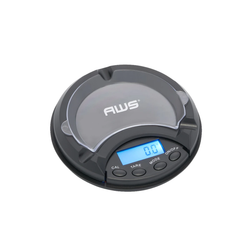
Choosing the best scale for beads requires more than comparing how many decimal places appear on the display.
A scale with:
0.001g readability
is not automatically better than:
0.01g readability.
Likewise, a scale with:
5,000g capacity
is not necessarily more useful than:
500g capacity
if you primarily weigh tiny jewelry components.
The best bead scale should balance three fundamental specifications:
accuracy and measurement performance + capacity + calibration.
For many general bead and jewelry-making applications:
100–500g capacity with 0.01g readability
provides a highly practical range.
For very small beads, lightweight findings, tiny gemstone components or specialized comparison work:
0.001g readability
may be useful.
For larger bead batches:
0.1g readability with higher capacity
may be more practical.
The correct scale depends on:
-
Your smallest bead
-
Your largest bead batch
-
Container weight
-
Required measurement detail
-
Platform size
-
Calibration requirements
-
Working environment
The most important rule is:
buy the scale that matches the bead quantities you actually weigh—not simply the scale with the most decimal places.
Quick Beads Scale Buying Guide
| Application | Practical Capacity Range | Readability to Consider |
|---|---|---|
| Tiny seed beads | 20–100g | 0.001–0.01g |
| Individual small beads | 20–500g | 0.001–0.01g |
| Gemstone beads | 50–500g | 0.01g |
| Metal beads | 100–500g | 0.01g |
| Bead strands | 100–500g | 0.01g |
| Mixed jewelry components | 100–500g | 0.01g |
| Small bead batches | 250–500g | 0.01g |
| Medium bead batches | 500g–2kg | 0.1g may be sufficient |
| Large bulk bead inventory | 2–5kg+ | 0.1–1g depending on purpose |
| Milligram-level bead comparisons | 20–100g | 0.001g |
These are starting points rather than universal accuracy requirements.
The correct scale depends on the actual measurement task.
The Three Specifications That Matter Most
When buying a digital scale for beads, begin with:
1. Accuracy and Measurement Performance
How consistently does the scale produce useful measurements within your working range?
2. Capacity
How much total physical load can the scale support?
3. Calibration
How is the scale checked and calibrated, and what reference mass does the specific model require?
These factors work together.
A highly readable scale with insufficient capacity is not useful for large bead batches.
A high-capacity scale with coarse readability may not provide enough detail for individual lightweight beads.
1. Understand Accuracy vs. Readability
This distinction is essential.
Suppose a scale displays:
14.37g.
That tells you the display has:
0.01g readability.
It does not automatically prove that the true mass is guaranteed to be within:
±0.01g.
Readability describes:
the smallest increment displayed by the scale.
Useful measurement performance can also depend on:
-
Accuracy specifications
-
Repeatability
-
Minimum usable load
-
Linearity
-
Calibration
-
Stability
-
Operating environment
AWS explains this distinction further in What Does 500g × 0.01g Mean on a Digital Scale?.
2. What Does 500g × 0.01g Mean?
This specification describes two separate characteristics.
500g
is the scale's nominal maximum capacity.
0.01g
is its readability.
That means the display changes in increments of:
one-hundredth of a gram.
For example:
12.34g
47.81g
105.27g
A 500g × 0.01g configuration provides a useful balance between:
fine readability and practical capacity.
For bead work, that combination can accommodate:
-
Individual beads
-
Bead strands
-
Gemstone beads
-
Metal beads
-
Findings
-
Small bead parcels
-
Containers
-
Trays
3. What Does 0.1g Readability Mean?
A 0.1g scale displays measurements in:
one-tenth-of-a-gram increments.
Examples:
14.2g
36.7g
118.5g
This can be perfectly practical when weighing:
-
Large bead batches
-
Heavy strands
-
Bulk craft materials
-
Larger containers
If your normal batch weighs:
750g,
you may not need:
0.001g readability.
4. What Does 0.01g Readability Mean?
A 0.01g scale displays:
hundredths of a gram.
This is a strong general-purpose range for many:
-
Jewelry-making tasks
-
Bead comparisons
-
Gemstone beads
-
Small batches
-
Bead strands
It provides considerably finer displayed increments than:
0.1g
without necessarily requiring the low capacity and more sensitive operating conditions associated with many milligram scales.
5. What Does 0.001g Readability Mean?
A 0.001g scale displays measurements in:
one-thousandth of a gram.
Because:
0.001g = 1 milligram,
this is commonly called:
milligram readability.
AWS's Best Milligram Scales: 0.001g Models Compared specifically identifies beads, jewelry findings and other fine craft materials among potential applications for milligram scales.
6. Do You Need 0.001g for Beads?
Not necessarily.
Choose 0.001g when:
the actual measurement requires milligram-level displayed increments.
Possible applications include:
-
Tiny seed beads
-
Extremely lightweight individual components
-
Fine weight comparisons
-
Small jewelry findings
-
Specialized sorting
But do not choose:
0.001g
simply because:
three decimal places look more precise.
7. Why 0.001g Can Be Less Practical for Larger Bead Work
Milligram scales frequently have:
-
Lower capacities
-
Smaller platforms
-
Greater environmental sensitivity
A 50g × 0.001g scale may be excellent for:
tiny bead components.
It cannot replace:
a 500g scale
when your complete bead batch weighs:
250g.
8. 0.001g vs. 0.01g for Beads
Consider:
Scale A
50g × 0.001g
Scale B
500g × 0.01g
Suppose your bead strand weighs:
72g.
Scale A cannot support it.
Scale B can.
The extra decimal place on Scale A provides:
no benefit
for that measurement.
9. Start With Your Smallest Bead Measurement
Ask:
What is the smallest quantity I genuinely need to measure?
Suppose you normally weigh:
Individual bead = 0.35g
Small set = 4.75g
Strand = 42.60g
Batch = 175.50g
A:
500g × 0.01g
scale may provide a practical range for all four tasks.
10. Then Determine Your Largest Complete Load
Your maximum load should include:
everything physically placed on the platform.
That means:
beads + tray + bowl + container + holder.
Suppose:
Beads = 420g
Container = 95g
Total physical load =
515g.
A 500g scale is:
too small.
11. Capacity Includes the Container
This is one of the most important scale-buying rules.
If your scale has:
500g maximum capacity,
and your container weighs:
100g,
you do not have:
500g of usable bead capacity remaining.
Your physical headroom is approximately:
400g.
12. Tare Does Not Increase Physical Capacity
Tare resets the displayed weight to:
zero.
It does not magically remove:
the container's physical mass.
Example:
Scale capacity = 500g
Container = 120g
Tare display = 0.00g
You still have only approximately:
380g
of physical capacity remaining.
13. Leave Capacity Headroom
Avoid routinely planning measurements exactly at:
maximum capacity.
If your typical complete load is:
480–500g,
a 500g scale provides very little headroom.
Consider:
a higher-capacity model.
14. Capacity for Seed Beads
Seed beads are individually tiny.
For small seed-bead quantities:
you may need relatively little capacity.
Possible practical ranges include:
20–100g
when measurement detail is the main priority.
However, larger seed-bead batches may require:
considerably more capacity.
15. Capacity for Gemstone Beads
Gemstone beads can become heavy quickly.
A strand of:
large stone beads
may weigh far more than:
a similar-sized strand of plastic beads.
For mixed gemstone-bead work:
250–500g capacity
can provide useful flexibility.
16. Capacity for Metal Beads
Metal beads and spacers can also increase total load quickly.
Always weigh or estimate:
the complete batch.
17. Capacity for Bead Strands
A bead strand may include:
-
Beads
-
Findings
-
Wire
-
Clasp
-
Decorative components
If weighing a finished strand:
include the complete object.
18. Capacity for Bulk Beads
For large inventory batches:
500g may no longer be sufficient.
Suppose:
bead batch = 1.4kg.
You need:
more than 1.4kg of physical capacity,
plus room for:
the container.
In this case:
a 2kg or higher-capacity scale
may be more appropriate.
19. When Two Bead Scales Are Better Than One
Trying to cover:
milligram-level individual bead measurements
and:
multi-kilogram bulk inventory
with one scale creates compromises.
A stronger setup may be:
Precision scale: 50–500g with 0.001–0.01g readability
plus:
Higher-capacity scale: 2–5kg with approximately 0.1g readability.
This provides:
fine measurement where it matters
and:
capacity where it matters.
20. A Practical General-Purpose AWS Option
For broad bead and jewelry-making applications, the AWS SC501g Precision Digital Pocket Scale provides:
-
500g maximum capacity
-
0.01g readability
-
g, oz, gn, ct, dwt and ozt units
-
3.9 × 3.7-inch platform
-
Tare
-
Two expansion trays
-
Battery operation
The model requires a:
500g calibration weight,
which is not included.
For bead users who want:
fine hundredth-gram readability
without dropping to the lower capacities typical of milligram scales,
500g × 0.01g is highly versatile.
21. Platform Size Matters
Capacity alone does not tell you:
whether the physical object fits comfortably.
Suppose two scales both provide:
500g capacity.
Scale A has:
a tiny platform.
Scale B has:
a substantially larger platform.
For:
bead strands, trays and containers,
Scale B may be more practical.
22. Containers Should Sit Securely
A weighing container should not:
-
Hang awkwardly
-
Touch the table
-
Press against nearby objects
-
Obscure the display
-
Become unstable
Choose a platform appropriate for:
your actual workflow.
23. Why Tare Matters for Beads
Loose beads can:
roll.
A bowl or tray can make weighing much easier.
The tare function allows you to:
-
Place the empty container on the scale.
-
Press tare.
-
Return the display to zero.
-
Add the beads.
-
Read the bead weight.
Again:
tare does not increase maximum physical capacity.
24. Calibration Matters
A precision scale should have:
an appropriate calibration procedure.
Calibration helps align the scale's measurement system with:
a known reference mass.
But:
calibration procedures are model-specific.
Do not assume every scale uses:
the same calibration weight.
25. Use the Correct Calibration Weight
If a scale specifies:
500g calibration,
use the appropriate:
500g calibration mass
according to the manufacturer's instructions.
Do not substitute:
a random household object.
26. Coins Are Not Calibration Weights
A common mistake is using:
coins
as calibration references.
Coins are everyday objects.
They are not substitutes for:
appropriate calibration masses.
27. Follow the Scale's Actual Calibration Procedure
The calibration process can vary by model.
A scale may require:
-
Specific button sequence
-
Specific calibration mass
-
Stable surface
-
Warm-up period
-
Particular operating conditions
Always use:
the instructions for the exact model.
28. Calibration Is Not the Same as Tare
These functions are different.
Tare
subtracts the displayed weight of:
a container or existing load.
Calibration
checks or adjusts the scale against:
a known reference.
Do not confuse them.
29. Calibration Is Not the Same as Zeroing
Zeroing establishes:
the display's zero reference.
Calibration relates the scale's measurement response to:
known mass.
30. Calibration Does Not Eliminate Every Source of Error
Even a calibrated scale can produce inconsistent measurements if:
-
Table vibrates
-
Air moves across the platform
-
Scale is unstable
-
Temperature changes
-
Static is present
-
Object moves
Calibration is essential,
but it is not:
the only factor affecting measurement.
31. Environmental Stability Matters
Fine scales are particularly sensitive to:
their surroundings.
This becomes increasingly important as readability becomes finer.
32. Use a Stable Surface
Place the scale on:
a rigid, level surface.
Avoid:
-
Soft furniture
-
Uneven counters
-
Flexible tables
-
Moving surfaces
33. Avoid Vibration
Possible sources include:
-
Washing machines
-
Speakers
-
Heavy footsteps
-
Nearby equipment
-
Unstable tables
A 0.001g scale can be particularly sensitive.
34. Avoid Airflow
Fans and HVAC vents can affect:
very lightweight measurements.
This matters especially when weighing:
tiny beads
at milligram-level readability.
35. Consider Static
Very lightweight components can be affected by:
static electricity.
If readings behave unpredictably:
consider the environment rather than immediately assuming the scale is defective.
36. Temperature Stability Matters
Allow the scale and objects to reach:
a reasonably stable working environment.
Rapid environmental changes can affect:
precision measurement.
37. Repeatability Matters
Suppose you weigh the same bead five times:
1.25g
1.25g
1.25g
1.25g
1.25g
That demonstrates:
strong repeatability under those conditions.
Now suppose the readings are:
1.20g
1.27g
1.23g
1.31g
1.19g
The extra decimal places are not very useful if:
the measurement is unstable.
38. Test Repeatability
A practical check is:
-
Weigh the object.
-
Remove it.
-
Allow the scale to return to zero.
-
Weigh it again.
-
Repeat several times.
Look for:
consistent readings.
39. Minimum Usable Load Matters
A scale labeled:
500g × 0.01g
does not automatically guarantee that:
0.01g
is an appropriate minimum working quantity.
Readability describes:
display increments.
Minimum usable load is:
a separate consideration.
This matters especially when weighing:
extremely tiny beads.
40. Do Not Assume 0.001g Means ±0.001g Accuracy
A scale displaying:
2.347g
has:
0.001g readability.
That does not automatically prove:
±0.001g accuracy
under every condition.
More digits are not:
an accuracy guarantee.
41. Milligram Scales for Tiny Beads
When genuine milligram readability is useful, AWS offers multiple 0.001g models.
Current AWS milligram-scale options include:
-
AWS-ELITE-100G
-
AWS-ULTRA-50G
-
GEMINI-50
-
ZEO-50
-
GEMINI-20
-
GPR-20
-
PREDATOR-30G
Capacities vary from:
20g to 100g.
42. AWS-ULTRA-50G for Beads
The AWS-ULTRA-50G combines:
50g capacity
with:
0.001g readability.
It also includes:
piece-counting functionality.
That can be useful for:
-
Beads
-
Findings
-
Small components
when the individual pieces have sufficiently consistent weights.
43. Piece Counting Is an Estimate
Piece counting typically works by:
using the average weight of a sample.
Therefore:
it works best when individual pieces are:
relatively consistent in weight.
If handmade beads vary significantly:
counting accuracy may decrease.
44. GEMINI-50 for Fine Bead Work
The GEMINI-50 provides:
50g × 0.001g.
It supports:
-
g
-
oz
-
ozt
-
dwt
-
ct
-
gn
and includes a:
20g calibration weight.
For users working with:
very lightweight bead components,
this can provide finer displayed increments than:
0.01g models.
45. GEMINI-20 for Extremely Lightweight Work
The GEMINI-20 provides:
20g × 0.001g.
This lower capacity makes it better suited to:
very lightweight items.
Before choosing a 20g model:
remember that the container contributes to:
total capacity.
46. Why Higher Capacity Can Be More Useful
Suppose your:
beads = 42g
tray = 15g
total = 57g.
A:
50g × 0.001g
scale cannot support that complete physical load.
A:
500g × 0.01g
scale can.
This is why:
capacity and readability must be considered together.
47. Best Scale for Seed Beads
For individual seed beads or tiny samples:
0.001g may be useful.
For larger seed-bead quantities:
0.01g may provide more useful capacity.
Ask:
Am I weighing one bead—or 500 beads?
The answer changes the scale requirement.
48. Best Scale for Gemstone Beads
For many gemstone-bead applications:
500g × 0.01g
offers a strong balance.
It can accommodate:
-
Individual beads
-
Pairs
-
Small parcels
-
Strands
-
Trays
without the restrictive capacity of many milligram models.
49. Best Scale for Metal Beads
Metal beads can become heavy quickly.
Prioritize:
capacity.
For smaller quantities:
0.01g may still provide useful measurement detail.
50. Best Scale for Polymer Clay Beads
Polymer clay beads are typically lighter.
If comparing:
individual bead weights,
fine readability may be useful.
For larger batches:
capacity becomes more important.
51. Best Scale for Glass Beads
Glass beads vary significantly in:
size and weight.
For general-purpose use:
100–500g × 0.01g
can provide useful flexibility.
52. Best Scale for Crystal Beads
For small crystal beads and jewelry components:
0.01g can provide practical precision.
For extremely lightweight individual components:
0.001g may be useful when genuinely required.
53. Best Scale for Bead Inventory
Inventory weighing has a different goal from:
individual bead comparison.
If you weigh:
hundreds or thousands of beads,
higher capacity may matter more than:
milligram readability.
54. Best Scale for Bead Sellers
A bead seller may need to weigh:
-
Individual products
-
Small packets
-
Strands
-
Bulk lots
-
Shipping quantities
One scale may not optimally cover:
the entire range.
55. Best Scale for Jewelry Makers
Jewelry makers may weigh:
-
Beads
-
Findings
-
Clasps
-
Finished jewelry
-
Gemstones
-
Small components
A:
500g × 0.01g
precision scale can be a versatile general-purpose choice.
AWS also offers a broader Pocket Scales collection for comparing compact scale formats.
56. Should Bead Makers Buy One Scale or Two?
If your working range is:
narrow,
one scale may be enough.
Example:
Lightest typical measurement = 1g
Heaviest complete load = 350g
A:
500g × 0.01g
scale may cover the workflow effectively.
57. When Two Scales Are Better
Suppose:
Tiny bead = 0.025g
Small parcel = 18g
Bead strand = 95g
Bulk batch = 1.8kg
No single compact scale provides the ideal combination for every measurement.
A better setup may be:
0.001g milligram scale for very small work
plus:
2–5kg higher-capacity scale for bulk batches.
58. Kitchen Scales for Large Bead Batches
For large quantities where:
0.01g precision is unnecessary,
a higher-capacity scale may be more practical.
AWS's Kitchen Scales collection includes higher-capacity formats that can be useful when total batch weight becomes more important than hundredth- or thousandth-gram readability.
59. Accuracy Does Not Determine Bead Quality
Weight can provide:
objective mass information.
It cannot independently determine:
-
Bead material
-
Authenticity
-
Gemstone identity
-
Craftsmanship
-
Market value
A heavier bead is not automatically:
higher quality.
60. Weight Does Not Identify Gemstone Beads
Suppose a bead weighs:
4.27g.
That measurement alone cannot tell you whether it is:
-
Quartz
-
Glass
-
Garnet
-
Synthetic material
-
Another substance
Weight is:
one measurement characteristic.
61. Weight Does Not Determine Value
A lightweight gemstone bead can be:
more valuable
than a much heavier decorative bead.
Do not use weight alone as:
a valuation method.
62. Commercial Selling by Weight Requires Additional Considerations
If a scale is used for:
commercial transactions based directly on measured weight,
additional legal-metrology requirements may apply.
Do not assume:
a consumer pocket scale
is automatically:
legal for trade.
Equipment used in regulated commercial weighing should meet the applicable requirements for the jurisdiction and use case.
Beads Scale Buying Decision Table
| Your Need | Scale Type to Consider |
|---|---|
| Tiny individual beads | 0.001g precision scale |
| Seed bead samples | 0.001–0.01g |
| General bead work | 0.01g precision scale |
| Gemstone bead strands | 0.01g with adequate capacity |
| Jewelry making | 500g × 0.01g general-purpose scale |
| Large bead batches | Higher-capacity 0.1g scale |
| Milligram comparison work | 0.001g scale |
| Mixed tiny + bulk work | Two-scale setup |
Common Beads Scale Buying Mistakes
Buying Based Only on Decimal Places
More digits do not automatically mean:
better measurement.
Confusing Readability With Accuracy
0.01g means:
display increments of 0.01g.
It is not automatically:
±0.01g guaranteed accuracy.
Ignoring Capacity
Include:
beads + container + tray.
Assuming Tare Restores Capacity
It does not.
Buying Too Little Capacity
Leave headroom.
Buying Excessive Capacity
A huge platform scale may provide unnecessarily coarse readability for:
tiny bead work.
Ignoring Platform Size
Containers and strands need:
physical room.
Ignoring Minimum Usable Load
Fine display increments do not automatically define:
the smallest reliable measurement.
Ignoring Repeatability
Stable measurements matter.
Ignoring Calibration
Use the model's correct procedure.
Using Random Objects for Calibration
Use:
appropriate reference masses.
Using Coins as Calibration Weights
Coins are not substitutes for:
calibration masses.
Calibrating With the Wrong Weight
Follow:
the exact model instructions.
Confusing Calibration With Tare
They perform:
different functions.
Using the Scale on an Unstable Table
Precision scales require:
stable surfaces.
Weighing Next to a Fan
Air movement can affect:
very light measurements.
Ignoring Vibration
Vibration can reduce stability.
Assuming 0.001g Means ±1mg Accuracy
Readability and accuracy are:
different specifications.
Buying One Scale for an Extreme Weight Range
Sometimes:
two scales are more practical.
Beads Scale Buying Checklist
Before purchasing a scale for beads, ask:
-
What type of beads am I weighing?
-
What is the smallest bead or quantity?
-
What is the largest batch?
-
What does the container weigh?
-
What is the complete maximum load?
-
Do I need 0.1g readability?
-
Do I need 0.01g readability?
-
Do I genuinely need 0.001g?
-
What is the scale's maximum capacity?
-
Is there enough capacity headroom?
-
What is the minimum usable load?
-
What accuracy specifications are available?
-
How repeatable are the measurements?
-
What is the platform size?
-
Will my tray fit?
-
Will bead strands fit?
-
Does the scale include tare?
-
What calibration weight is required?
-
Is the calibration weight included?
-
What is the calibration procedure?
-
Do I have an appropriate reference mass?
-
Is my work surface stable?
-
Is there nearby vibration?
-
Is there airflow?
-
Could static affect lightweight items?
-
Is temperature reasonably stable?
-
Do I need piece counting?
-
Are my beads consistent enough for piece counting?
-
Do I need multiple weighing units?
-
Will I weigh gemstone beads?
-
Will I weigh metal beads?
-
Will I weigh seed beads?
-
Will I weigh finished strands?
-
Will I weigh bulk inventory?
-
Would two scales be more practical?
-
Is the scale intended for regulated commercial use?
-
Am I confusing readability with accuracy?
-
Am I choosing extra decimals without a real need?
-
Have I allowed for container weight?
-
Does the scale match my actual workflow?
Frequently Asked Questions
What is the best scale for beads?
For many general bead applications:
100–500g capacity with 0.01g readability
is a practical starting range.
For broad versatility:
500g × 0.01g
is particularly useful.
Is 0.01g accurate enough for beads?
0.01g readability provides useful detail for many bead and jewelry-making tasks.
Whether a specific scale is sufficiently accurate depends on:
-
Accuracy specifications
-
Repeatability
-
Minimum usable load
-
Calibration
-
Operating environment
Do I need a 0.001g scale for beads?
Only if your actual work requires:
milligram-level readability.
Tiny seed beads and lightweight individual components may benefit from it.
Larger bead batches generally do not require:
0.001g.
What does 500g × 0.01g mean?
It means:
500g maximum capacity
and:
0.01g readability.
Is 500g × 0.01g good for beads?
For many bead applications:
yes.
It provides useful capacity for:
-
Individual beads
-
Small batches
-
Gemstone beads
-
Bead strands
-
Containers
while maintaining hundredth-gram displayed increments.
What scale should I use for seed beads?
For tiny samples or individual bead comparisons:
0.001g may be useful.
For larger quantities:
0.01g can provide greater practical capacity.
What scale should I use for gemstone beads?
For many gemstone bead applications:
500g × 0.01g
provides a strong general-purpose combination.
What scale should I use for bulk beads?
For batches exceeding:
500g,
consider a higher-capacity scale.
For kilogram-level bead inventory:
approximately 0.1g readability may be more practical than milligram readability.
Is readability the same as accuracy?
No.
Readability describes:
the smallest displayed increment.
Accuracy describes:
how closely the measurement corresponds to the actual value within the scale's specifications and operating conditions.
Is 0.001g more accurate than 0.01g?
Not automatically.
It has:
finer readability.
Overall measurement performance depends on additional specifications and operating conditions.
Does tare increase capacity?
No.
If:
container = 100g
and:
scale capacity = 500g,
taring the container does not create another:
500g
of physical capacity.
Why is calibration important?
Calibration helps establish the scale's measurement response against:
an appropriate known reference mass.
Can I calibrate a bead scale with a coin?
Do not use random coins or household objects as substitutes for:
appropriate calibration masses.
What calibration weight should I use?
Use:
the calibration mass specified for the exact scale model.
Does every scale use the same calibration weight?
No.
Calibration requirements are:
model-specific.
Does platform size matter?
Yes.
Bead trays, bowls, strands and containers need to sit:
securely on the weighing platform.
Can I count beads using weight?
Some scales offer:
piece-counting functionality.
This works best when:
individual beads have consistent weights.
Handmade or irregular beads may produce less reliable estimated counts.
Should I buy one scale or two?
If you weigh both:
extremely tiny beads
and:
large bulk batches,
two scales may provide a better solution.
Can weight identify a gemstone bead?
No.
Weight alone cannot determine:
gemstone identity or authenticity.
Can weight determine bead quality?
No.
Weight is one measurable characteristic.
It does not independently determine:
quality, craftsmanship or value.
Can I use a pocket scale to sell beads by weight?
Do not automatically assume a consumer pocket scale is:
legal for trade.
Commercial weight-based transactions may require appropriately approved equipment under applicable rules.
Final Verdict: How to Buy the Right Scale for Beads
The best bead scale should be selected by balancing:
accuracy and measurement performance + capacity + calibration.
Start by determining:
the smallest quantity you genuinely need to measure
and:
the largest complete load you will place on the platform.
For many general bead and jewelry-making applications:
100–500g × 0.01g
provides a practical starting range.
For maximum versatility within a compact precision format:
500g × 0.01g
is especially useful.
It can accommodate:
-
Individual beads
-
Gemstone beads
-
Metal beads
-
Small batches
-
Strands
-
Trays
-
Containers
while providing:
hundredth-of-a-gram readability.
Choose:
0.001g
when the application genuinely requires:
milligram-level displayed increments.
That may include:
-
Tiny seed beads
-
Lightweight findings
-
Individual micro-components
-
Specialized weight comparisons
But remember:
0.001g readability does not automatically mean:
±0.001g accuracy.
For larger bead batches:
0.1g readability with higher capacity
may provide a more useful balance.
Then evaluate:
-
Minimum usable load
-
Repeatability
-
Stability
-
Tare
-
Platform size
-
Calibration procedure
-
Required calibration weight
-
Environmental sensitivity
-
Piece counting
-
Available weighing units
Remember:
capacity includes the container.
Remember:
tare does not restore physical capacity.
Remember:
calibration requirements are model-specific.
And remember:
more decimal places do not automatically mean better accuracy.
For bead makers working across an unusually broad range, the strongest setup may be:
one 0.001–0.01g precision scale for individual beads and small batches
paired with:
one higher-capacity 0.1g scale for bulk bead inventory.
The key buying rule is simple:
choose the scale for the bead weights you actually measure—not for the largest number of digits on the display.