
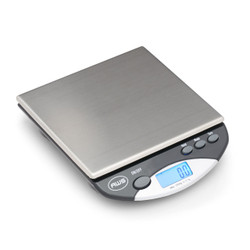
The best digital scale for essential oils provides enough resolution for the smallest oil quantity in your formula, sufficient capacity for the container and finished blend, reliable tare operation, and stable readings in your working environment.
For most home formulators and small businesses, a scale with 0.01-gram readability and 300- to 1,000-gram capacity offers a practical balance. A 0.001-gram milligram scale may be useful for tiny experimental blends or highly concentrated ingredients used in very small quantities. Larger batches may require a separate scale with 0.1-gram readability and several kilograms of capacity.
Many serious formulators use two scales:
-
A precision scale for essential oils, antioxidants, and small additives
-
A higher-capacity scale for carrier oils, waxes, bases, and finished batches
Selecting the right scale begins with the smallest amount you measure—not simply the weight of your largest batch.
Quick Recommendation
| Essential-Oil Application | Suggested Capacity | Suggested Readability |
|---|---|---|
| Tiny experimental blends | 20–100 g | 0.001 g |
| Small essential-oil blends | 100–500 g | 0.01 g |
| Roller bottles and samples | 300–500 g | 0.01 g |
| Home formulation | 500–1,000 g | 0.01–0.1 g |
| Artisan production batches | 1,000–5,000 g | 0.1 g |
| Carrier oils, waxes, and bases | Based on vessel and batch | 0.1–1 g |
A 500 g × 0.01 g scale is a strong general-purpose choice for essential-oil blends. It can accommodate many small containers and offers finer control than a whole-gram kitchen scale.
Formulators can compare compact models among AWS digital pocket scales. If the process genuinely requires milligram-level measurement, review suitable milligram scales.
Why Essential Oils Should Be Measured by Weight
Essential oils are frequently measured by drops, but drop size is not fixed.
It can change with:
-
Dropper design
-
Orifice diameter
-
Oil viscosity
-
Surface tension
-
Temperature
-
Bottle angle
-
Dispensing speed
-
Pressure
-
Residue around the opening
Different essential oils may also have different densities. An equal volume of two oils does not necessarily have an equal mass.
Weight-based measurement offers several advantages:
-
Better formula repeatability
-
Easier batch scaling
-
More precise recordkeeping
-
Clearer blend comparisons
-
Less dependence on dropper design
-
Easier percentage calculations
-
Better documentation of actual additions
This is particularly useful when a blend contains several oils in small proportions.
A scale measures the amount selected for a formula. It does not determine whether the formula, concentration, product, route of exposure, or intended use is appropriate.
What Makes a Digital Scale Suitable for Essential Oils?
A useful essential-oil scale should have:
-
Appropriate readability
-
Enough capacity for the vessel and blend
-
A suitable minimum working range
-
Reliable tare
-
Stable and repeatable measurements
-
Gram mode
-
Fast stabilization
-
A compatible platform
-
Calibration support
-
Draft protection when required
-
Overload and low-battery indicators
-
An easy-to-clean surface
-
Practical automatic shutoff
The best scale is not necessarily the one with the most decimal places. Its specifications must match your actual quantities and working conditions.
Understanding Scale Readability
Readability, also called resolution or graduation, is the smallest increment the scale displays.
0.1-Gram Readability
A 0.1-gram scale may display:
-
5.1 g
-
5.2 g
-
5.3 g
It is appropriate for:
-
Larger essential-oil quantities
-
Carrier oils
-
Waxes
-
Lotions and bases
-
Production batches
-
Ingredients added in several-gram quantities
It may be too coarse for small experimental blends.
0.01-Gram Readability
A 0.01-gram scale may display:
-
5.11 g
-
5.12 g
-
5.13 g
It is useful for:
-
Small essential-oil blends
-
Roller-bottle formulas
-
Sample products
-
Formula development
-
Small-batch production
-
Low-weight additives
This resolution is the most practical choice for many formulators.
0.001-Gram Readability
A 0.001-gram scale may display:
-
1.011 g
-
1.012 g
-
1.013 g
It can be useful for:
-
Tiny experimental blends
-
Trace ingredients
-
Very small test batches
-
Laboratory-style formulation
-
Preparing carefully documented dilutions
Milligram scales are highly sensitive to air movement, vibration, static, temperature changes, and unstable surfaces.
More Decimal Places Do Not Guarantee Better Accuracy
A display showing 0.001 gram does not necessarily mean the scale is accurate to one milligram throughout its range.
Overall measurement performance also depends on:
-
Calibration
-
Repeatability
-
Minimum working range
-
Linearity
-
Load placement
-
Temperature
-
Vibration
-
Air movement
-
Static electricity
-
Battery condition
Select only as much resolution as your formulation requires.
Accuracy, Precision, and Repeatability
Accuracy
Accuracy describes how closely the indicated result agrees with an accepted reference value.
Precision
Precision generally refers to how closely repeated results agree.
Repeatability
Repeatability is the ability to produce similar readings when the same stable load is weighed repeatedly under the same conditions.
Resolution
Resolution is the smallest displayed increment.
A scale can display several decimal places without producing useful, repeatable results in a poor environment.
The National Institute of Standards and Technology explains mass and related terminology in its guidance on SI units for mass.
Choosing the Right Capacity
Capacity is the greatest total load the scale can support.
The load includes:
-
The empty container
-
Essential oils
-
Carrier oils
-
Other ingredients
-
A weighing tray
-
Approved platform accessories
Use this calculation:
Required capacity = heaviest container + largest formula + safety margin
Example: Small Blend
-
Empty container: 15 g
-
Essential-oil blend: 10 g
-
Total: 25 g
A 50- or 100-gram scale may be sufficient.
Example: Roller-Bottle Production
-
Empty beaker: 80 g
-
Combined blend: 100 g
-
Total: 180 g
A 300- or 500-gram model provides sufficient capacity and flexibility.
Example: Body-Oil Batch
-
Empty pitcher: 300 g
-
Carrier and essential oils: 600 g
-
Total: 900 g
A 1,000-gram scale would operate close to its maximum. A model with 2,000 grams or more may be more practical.
Example: Larger Formulation
-
Empty vessel: 700 g
-
Formula: 2,500 g
-
Total: 3,200 g
A higher-capacity balance is required. AWS digital balance scales may provide more appropriate platform and capacity options for larger vessels.
Tare Does Not Increase Capacity
Tare subtracts the container from the displayed result, but it does not remove the container’s physical weight from the load cell.
If a 500-gram scale supports a 150-gram beaker, approximately 350 grams of physical capacity remain after taring.
Adding 500 grams after the display returns to zero would overload the instrument.
Overloading may:
-
Damage the sensor
-
Affect calibration
-
Reduce repeatability
-
Cause unstable readings
-
Trigger an error
-
Result in permanent failure
Best Capacity and Resolution Combinations
50–100 g × 0.001 g
Best for:
-
Tiny test blends
-
Trace additions
-
Laboratory-style experimentation
Limitations:
-
Very low capacity
-
Small platform
-
Lightweight containers required
-
High environmental sensitivity
300 g × 0.001 g
Best for:
-
Advanced formulation
-
Moderate containers
-
Milligram-level adjustments
This specification requires controlled weighing conditions.
300–500 g × 0.01 g
Best for:
-
General essential-oil blending
-
Roller-bottle formulas
-
Samples
-
Home formulators
-
Small businesses
This is one of the most useful combinations for everyday formulation.
1,000 g × 0.01 g
Best for:
-
Larger blends
-
Heavier glassware
-
More flexible container choice
-
Small production batches
2,000–5,000 g × 0.1 g
Best for:
-
Carrier oils
-
Lotions
-
Waxes
-
Soap ingredients
-
Larger production batches
Use a separate precision scale for very small essential-oil quantities.
The Importance of Minimum Working Range
Maximum capacity describes the upper end of a scale’s range. The lower end is equally important when measuring concentrated materials.
A scale may display 0.001 gram but perform poorly with a one-milligram addition.
Review available specifications for:
-
Minimum weight
-
Accuracy
-
Repeatability
-
Linearity
-
Verification interval when stated
-
Stabilization time
-
Recommended working range
If your smallest quantity is too close to the scale’s uncertain lower range, consider:
-
A more appropriate scale
-
A larger test batch
-
A documented dilution method
-
A different formulation workflow
Do not assume that a changing final digit represents a dependable measurement.
Platform Size and Container Compatibility
The platform should accommodate the container without instability or contact with surrounding surfaces.
Common containers include:
-
Small glass vials
-
Beakers
-
Amber bottles
-
Stainless steel cups
-
Silicone containers
-
Disposable weighing dishes
A container that is too large may:
-
Block the display
-
Touch the counter
-
Press against the housing
-
Become unstable
-
Interfere with a draft shield
-
Increase spill risk
Measure the bases of your common containers and compare them with the platform dimensions before purchasing.
Tare Function
Tare returns the display to zero after the empty container is placed on the scale.
A standard procedure is:
-
Turn on the scale with the platform empty.
-
Confirm zero.
-
Select grams.
-
Place the empty container centrally.
-
Wait for the reading to stabilize.
-
Press tare.
-
Confirm a stable zero.
-
Add ingredients gradually.
A responsive tare button should not require enough pressure to move the scale or disturb the container.
Sequential Taring Versus Cumulative Weighing
Sequential Taring
The scale is tared before each ingredient.
Advantages:
-
Each addition begins at zero.
-
Individual targets are easy to follow.
-
Minimal arithmetic is required.
Disadvantages:
-
The cumulative total disappears.
-
Recording errors are harder to reconstruct.
-
An overpour may complicate formula correction.
Cumulative Weighing
The scale is tared once, and ingredients are added to predetermined cumulative targets.
Advantages:
-
The complete batch total remains visible.
-
Each stage can be recorded.
-
The final mass is easier to confirm.
Disadvantages:
-
Cumulative targets must be calculated in advance.
-
A mathematical error can affect later additions.
Choose one method and use it consistently.
Stabilization Speed
The scale should respond quickly enough to prevent overpouring but remain stable enough to produce a trustworthy result.
As you approach the target:
-
Reduce the pouring rate.
-
Switch to a smaller pipette.
-
Pause between additions.
-
Wait for the display to stabilize.
-
Record the actual mass.
A stable-weight indicator is useful when available.
Draft Protection
Draft protection is important for 0.001-gram measurements and can improve some 0.01-gram applications.
Potential air sources include:
-
Air-conditioning vents
-
Fans
-
Open windows
-
Heating systems
-
Rapid hand movement
-
People walking nearby
A proper draft shield encloses the weighing area while allowing access to the container.
Do not assume every protective cover functions as a draft shield.
Vibration and Surface Stability
Place a precision scale on a hard, level surface away from:
-
Mixers
-
Refrigerators
-
Washing machines
-
Flexible tables
-
Rolling carts
-
Heavy foot traffic
-
Slamming doors
-
Operating appliances
A high-resolution scale cannot compensate for a vibrating workbench.
Static and Temperature
Static Electricity
Plastic containers, disposable pipettes, synthetic clothing, dry air, powders, and packaging can create static interference.
A drifting reading or a value that changes when your hand approaches may indicate static effects.
Temperature
Allow the scale, containers, and oils to reach stable workspace conditions before weighing. Avoid direct sunlight, heaters, windows, and strong air vents.
Volatility and Evaporation
Essential oils contain volatile components. An open container may gradually lose mass while resting on the scale.
Reduce unnecessary exposure by:
-
Preparing the formula in advance
-
Organizing transfer tools
-
Working efficiently
-
Using suitable containers
-
Closing bottles promptly
-
Recording the final reading without delay
A slowly decreasing display may reflect evaporation rather than a defective scale.
Calibration
Calibration compares a scale’s indication with an appropriate reference. Some models also allow user adjustment.
Before buying, check:
-
Whether user calibration is supported
-
Which calibration mass is required
-
Whether it is included
-
Whether one or multiple weights are needed
-
How calibration mode is entered
-
How completion is confirmed
Use the exact reference mass specified by the manufacturer. AWS offers individual and packaged calibration weights for compatible procedures.
When to Check Calibration
Check the scale:
-
When it is new
-
Before important formulation work
-
After moving it
-
After battery replacement
-
After a drop
-
After accidental overloading
-
When readings become inconsistent
-
According to your quality schedule
Calibration cannot repair physical damage, liquid intrusion, or a failing load cell.
Cleaning and Protecting the Scale
Essential oils can leave residue and may affect certain plastics or finishes. A stainless steel platform may be easier to wipe, but it does not make the complete scale oil-proof or waterproof.
Liquid can enter:
-
Button openings
-
Display seams
-
Housing joints
-
Battery compartments
-
Load-cell gaps
Protect the scale by:
-
Using containers with adequate headspace
-
Transferring oils slowly
-
Keeping source bottles away from the display
-
Closing bottles promptly
-
Cleaning drips immediately
-
Following manufacturer instructions
-
Avoiding direct spray cleaners
-
Never submerging the scale
AWS provides additional general guidance for scale maintenance.
Automatic Shutoff and Power
Automatic shutoff conserves battery life, but a very short timer can interrupt formulation while you:
-
Review a formula
-
Record an ingredient
-
Change a pipette
-
Open a bottle
-
Calculate the next target
-
Wait for stabilization
Look for:
-
A sufficiently long delay
-
Adjustable auto-off
-
The ability to disable it when appropriate
-
AC power on compatible models
A low-battery indicator is also valuable because weak batteries can cause slow response, unstable readings, or unexpected shutdowns.
Safety and Appropriate Use
A digital scale helps measure an essential oil formula. It does not determine whether the oil, concentration, delivery method, product, or intended use is appropriate.
Before using an essential oil:
-
Confirm its identity.
-
Review supplier specifications.
-
Obtain the current Safety Data Sheet.
-
Check applicable restrictions.
-
Confirm the intended product category.
-
Use appropriate protective equipment.
-
Maintain suitable ventilation.
-
Label temporary containers.
-
Record supplier and lot information.
-
Store the oil correctly.
-
Keep materials away from children and pets.
The International Fragrance Association publishes IFRA Standards documentation addressing restrictions, prohibitions, and specifications for fragrance materials, including certain essential oils and their constituents.
The Occupational Safety and Health Administration explains the standardized information provided in Safety Data Sheets.
Essential Oils and Health Claims
Product classification and regulatory requirements can depend on intended use, labeling, advertising, and claims.
The FDA’s information about aromatherapy products explains that a product’s intended use can affect whether it is regulated as a cosmetic, drug, or both.
The National Center for Complementary and Integrative Health provides general consumer information about aromatherapy and essential oils, including safety considerations.
Accurate weighing does not establish that a product is safe, effective, or legally marketed for a particular purpose.
Choosing a Scale by Application
Essential-Oil Blend Development
Choose:
-
300–500 g capacity
-
0.01 g readability
-
Gram mode
-
Tare
-
Calibration support
-
Protective cover
Tiny Experimental Blends
Choose:
-
50–300 g capacity
-
0.001 g readability
-
Suitable minimum working range
-
Draft shield
-
Stable surface
-
Correct calibration mass
Roller-Bottle Production
Choose:
-
500–1,000 g capacity
-
0.01 g readability
-
Fast stabilization
-
An appropriate platform
-
Adjustable auto-off
-
Final Thoughts
The best digital scale for essential oils should match the smallest ingredient, heaviest container, largest batch, and actual working environment.
For most essential-oil formulators:
- Choose 0.01-gram readability for general blending.
- Choose 0.001 gram for true milligram-level additions.
- Choose 0.1 gram for larger production quantities.
- Calculate capacity using the container and complete formula.
- Review the minimum working range.
- Require reliable tare and gram measurement.
- Use draft protection for sensitive weighing.
- Calibrate with the correct reference mass.
- Protect the scale from spills and oils.
- Consider separate development and production scales.
A properly selected scale improves formula repeatability, batch scaling, documentation, and ingredient control. It is a measurement tool—not a substitute for safety evaluation, supplier documentation, responsible product testing, or regulatory review.