
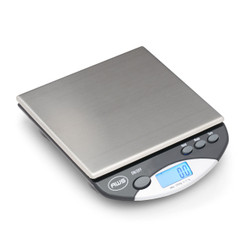
The best digital scale for farmers market products depends on what you sell and how the scale will be used. A vendor weighing herbs into fixed packages has different requirements from one calculating the price of produce by weight in front of a customer.
For general preparation, portioning and inventory tasks, a digital scale should provide:
-
Enough capacity for the largest container and product load
-
Resolution appropriate for the lightest product
-
Fast, repeatable readings
-
A tare function
-
A platform that is easy to clean
-
Battery power for outdoor use
-
A clear display
-
Suitable calibration capability
When a scale determines the amount a customer pays, additional legal-for-trade requirements may apply. A scale used only for internal preparation is not automatically suitable for a regulated commercial transaction.
For many farmers market vendors, a combination of scales works best:
-
A compact precision scale for herbs, tea, spices and small packaged goods
-
A higher-capacity scale for produce, baked goods or bulk products
-
An approved commercial scale when price is calculated directly from weight
This guide explains how to select the right digital scale for farmers market products while considering capacity, resolution, portability, sanitation and commercial requirements.
Why Farmers Market Vendors Use Digital Scales
Digital scales can support many market-related tasks:
-
Weighing produce
-
Portioning baked goods
-
Filling jars and bags
-
Checking package net contents
-
Preparing spice blends
-
Weighing herbs and tea
-
Creating gift boxes
-
Measuring soap ingredients
-
Tracking inventory
-
Estimating harvest quantities
-
Packing products before the market
-
Calculating prices when permitted
A dependable scale helps vendors create consistent packages and maintain repeatable production processes.
American Weigh Scales offers digital kitchen scales for food preparation, portioning and general weighing applications.
Best Scale by Farmers Market Product
| Product Type | Suggested Capacity | Useful Resolution | Scale Style |
|---|---|---|---|
| Herbs, tea and spices | 500–2,000 g | 0.01–0.1 g | Precision pocket scale |
| Baked goods | 5–15 kg | 1 g | Kitchen or bench scale |
| Berries and small produce | 5–15 kg | 1–5 g | Bench scale |
| Melons, squash and bulk produce | 15–30 kg or more | 5–10 g | High-capacity platform scale |
| Honey, jam and sauces | 5–15 kg | 1 g | Washable bench scale |
| Soap and candles | 5–15 kg | 0.1–1 g | Kitchen or precision scale |
| Packaged crafts | 2–10 kg | 0.1–1 g | Compact bench scale |
| Customer sales by weight | Application-specific | Application-specific | Approved legal-for-trade scale |
These recommendations are starting points. The complete load includes the product and any bowl, basket, tray or container placed on the platform.
First Decide How the Scale Will Be Used
The most important question is not what product you sell. It is what decision will be made from the measurement.
Internal Preparation
Internal uses may include:
-
Recipe formulation
-
Portioning
-
Package checks
-
Inventory
-
Batch preparation
-
Harvest records
A general-purpose digital scale may be suitable if its capacity, resolution and sanitation features match the task.
Customer-Facing Sales by Weight
If a customer’s price is calculated directly from the displayed weight, the scale may be considered a commercial weighing device.
NIST explains commercial applications and approval considerations in its weighing and scales FAQs.
Requirements can vary by state and locality. Before selling products by weight:
-
Contact the appropriate weights-and-measures authority
-
Confirm the required scale approval
-
Ask whether inspection or registration is required
-
Verify display and price-computing requirements
-
Follow applicable test and maintenance procedures
Do not assume that a scale is legal for trade simply because it provides accurate readings.
Legal-for-Trade Scales
A legal-for-trade scale is designed and evaluated for regulated commercial use.
The NIST National Type Evaluation Program evaluates commercial weighing devices for conformance with applicable requirements.
Depending on the jurisdiction, a commercial scale may need:
-
NTEP certification
-
State or local approval
-
Inspection
-
Registration
-
Security sealing
-
A customer-facing display
-
Correct units
-
A zero indication
-
Price-computing functionality
-
Periodic testing
The seller remains responsible for confirming local rules. A farmers market organizer may also impose equipment requirements beyond government regulations.
Prepackaged Products Versus Products Sold by Weight
The same vendor may need different scale functions for different sales methods.
Prepackaged Products
Examples include:
-
Bags of coffee
-
Packaged herbs
-
Tea blends
-
Soap bars
-
Baked goods
-
Jars of honey
-
Containers of jam
-
Bags of produce
The vendor weighs and labels the product before the market. The scale supports production and net-content control.
Products Weighed at Purchase
Examples include:
-
Tomatoes
-
Apples
-
Peaches
-
Berries
-
Squash
-
Mushrooms
-
Bulk nuts
-
Loose tea
-
Dried herbs
The customer selects a quantity, and the vendor weighs it during the transaction. When the price is calculated from that measurement, commercial scale requirements may apply.
Products Sold by Count
Items such as muffins, eggs, flowers or soap bars may be sold by count rather than weight. A scale can still support internal consistency, but it may not directly determine the customer’s price.
Choosing Scale Capacity
Capacity is the maximum load the scale is designed to support.
Your capacity calculation should include:
-
Product
-
Container
-
Basket
-
Bowl
-
Tray
-
Packaging
-
Any platform liner
Example
Suppose a market basket weighs 1.5 kilograms and may hold up to 8 kilograms of produce.
The total possible load is:
1.5 kg + 8 kg = 9.5 kg
A 10-kilogram scale technically covers that load, but it leaves almost no margin. A 15-kilogram scale would be more practical.
Recommended Capacity by Task
Up to 500 Grams
Useful for:
-
Fine herbs
-
Tea
-
Spices
-
Small samples
-
Jewelry and small crafts
500 to 5,000 Grams
Useful for:
-
Coffee
-
Small baked goods
-
Packaged snacks
-
Soap
-
Candles
-
Individual produce portions
5 to 15 Kilograms
Useful for:
-
Produce baskets
-
Bread
-
Jars
-
Multiple packages
-
Recipe batches
15 to 30 Kilograms or More
Useful for:
-
Melons
-
Squash
-
Bulk produce
-
Large harvest containers
-
Multiple-item orders
Do not choose capacity based only on the product. Include every item physically supported by the platform.
Tare Does Not Restore Capacity
Tare subtracts the weight of a container from the displayed result. It does not remove that container’s physical weight from the scale.
If a two-kilogram basket sits on a 15-kilogram scale and is tared, approximately 13 kilograms of capacity remain.
This matters when using:
-
Produce baskets
-
Stainless-steel bowls
-
Food-safe tubs
-
Display trays
-
Ingredient containers
Repeated overloads can affect accuracy or damage the load cell.
Choosing the Right Resolution
Resolution is the smallest weight increment shown on the display.
Common increments include:
-
0.01 gram
-
0.1 gram
-
1 gram
-
5 grams
-
0.1 ounce
-
0.01 pound
The ideal resolution depends on the lightest quantity you need to distinguish.
0.01-Gram Resolution
Useful for:
-
Fine spices
-
Concentrated flavorings
-
Lightweight herbs
-
Small samples
-
Detailed formulation work
This sensitivity is generally unnecessary for baskets of produce.
0.1-Gram Resolution
Useful for:
-
Tea
-
Herbs
-
Coffee
-
Small confections
-
Soap additives
-
Samples
AWS pocket scales can provide portable precision for lightweight products and small-batch preparation.
1-Gram Resolution
Useful for:
-
Baked goods
-
Packaged foods
-
Soap bars
-
Candles
-
Jars
-
Small produce quantities
-
Recipe ingredients
This is a practical general-purpose resolution for many farmers market preparation tasks.
5- to 10-Gram Resolution
Useful for:
-
Bulk vegetables
-
Melons
-
Large produce baskets
-
Harvest containers
Fine resolution is less important when individual products weigh several pounds.
Resolution Is Not Accuracy
A scale displaying 0.1 gram is not automatically accurate to exactly ±0.1 gram.
Resolution describes the display increment. Accuracy describes how closely the reading agrees with an accepted reference.
Other performance characteristics include:
-
Repeatability
-
Linearity
-
Minimum load
-
Stabilization time
-
Calibration
-
Load placement
-
Environmental stability
Choose useful resolution, but also test whether the scale provides repeatable results under normal market conditions.
Minimum Load Matters
A high-capacity produce scale may not respond dependably to a small bag of herbs.
Ask:
-
What is the lightest product quantity?
-
Can the scale detect one unit?
-
Does the display respond to small additions?
-
Is the minimum load appropriate?
-
Are repeated measurements consistent?
A two-scale system can solve this problem:
-
Fine-resolution scale for lightweight products
-
High-capacity scale for produce and bulk items
Platform Size and Container Fit
A scale can have adequate capacity but an unsuitable platform.
The container should:
-
Sit securely
-
Remain centered
-
Avoid touching the table
-
Leave the display visible
-
Avoid pressing controls
-
Not rock or tip
If a basket touches the surrounding table, part of its weight may not reach the scale.
Raised Platforms
A raised platform can help with large baskets and bowls by keeping them away from the display and controls.
Separate Displays
A remote display can remain visible when a large produce box covers the platform.
Removable Platforms
A removable stainless-steel platform can make cleaning easier, provided the manufacturer permits removal and washing.
Tare Is Essential for Farmers Market Products
Tare allows a vendor to subtract a bowl, tray, basket or container.
Typical process:
-
Place the empty container on the platform.
-
Wait for a stable result.
-
Press tare.
-
Confirm that the display returns to zero.
-
Add the product.
-
Record the net weight.
If the scale is used for a regulated commercial transaction, follow the applicable requirements for tare use and customer display.
Look for Fast Stabilization
A farmers market scale should produce a stable result quickly.
Slow readings can create lines and customer frustration. An unstable display can also make price calculation difficult.
Look for:
-
Fast response
-
Clear stable-weight indication
-
Consistent return to zero
-
Minimal unnecessary fluctuation
-
Easy-to-read digits
Test the scale with the real baskets, bags and products used at the booth.
Choose a Readable Display
Outdoor market conditions can make displays difficult to see.
Important features include:
-
Large digits
-
Bright backlighting
-
High contrast
-
Glare resistance
-
Clear unit symbols
-
Low-battery indicator
-
Customer-facing display when required
Consider how the display appears in:
-
Direct sun
-
Shade
-
Early-morning light
-
A covered tent
-
Indoor market lighting
A bright backlight may be helpful in shade but harder to see in direct sunlight than a high-contrast display.
Battery Power for Portable Selling
Farmers markets may not provide electrical outlets. Battery operation is therefore an important feature.
Look for:
-
Long battery life
-
Commonly available batteries
-
Rechargeable capability
-
Battery-level indication
-
Auto-off controls
-
Backup external power
-
Quick battery access
Carry spare batteries even if the scale normally lasts through several market days.
Adjustable Auto-Off
Auto-off conserves power but can disrupt sales if the scale shuts down between customers.
A useful model allows the feature to be:
-
Extended
-
Adjusted
-
Disabled
-
Bypassed with external power
Outdoor Conditions Affect Scale Performance
Farmers markets expose scales to conditions that are uncommon in a controlled kitchen.
Uneven Tables
Folding tables and rough ground can create unstable weighing surfaces. Use a rigid platform and confirm that the scale sits level.
Wind
Wind can affect lightweight products, packaging and high-resolution scales. Use wind protection when weighing herbs, tea or spices.
Temperature
A scale stored in a hot vehicle or cold storage area should be allowed to acclimate before use.
Direct Sunlight
Heat from direct sun may affect the scale and make the display difficult to read. Keep it shaded when possible.
Vibration
Busy tables, coolers, foot traffic and product handling can cause fluctuations. Use a dedicated weighing area.
Moisture
Rain, condensation and produce moisture can damage scales that are not designed for wet use.
Food-Safe Design and Cleaning
A scale used around food should be easy to clean.
Useful features include:
-
Stainless-steel platform
-
Smooth surfaces
-
Sealed controls
-
Removable trays
-
Minimal seams
-
Splash resistance
-
Non-slip feet
Avoid allowing juice, flour, oil, honey or food particles to enter the scale housing.
Follow the manufacturer’s cleaning instructions. Do not immerse a scale unless it is specifically designed for immersion.
For general food-safety information, consult the federal resource on the four steps to food safety.
Cross-Contact and Allergen Considerations
Vendors handling different foods should prevent residue from moving between products.
Potential concerns include:
-
Nuts
-
Wheat
-
Milk
-
Eggs
-
Soy
-
Sesame
-
Fish
-
Shellfish
Practical precautions may include:
-
Dedicated trays
-
Cleaning between products
-
Separate utensils
-
Covered containers
-
Clear labeling
-
Documented procedures
A scale platform can become a cross-contact surface when unwrapped food is placed directly on it.
Weighing Packaged Foods
A packaged product includes more than its contents.
The gross weight may include:
-
Product
-
Jar
-
Bag
-
Wrapper
-
Lid
-
Label
-
Tie
-
Protective material
The tare weight is the packaging weight. Net weight is the product weight after packaging is excluded.
A simplified relationship is:
Net weight = Gross weight − Tare weight
If packages vary, weigh the empty packaging rather than assuming every container has exactly the same mass.
FDA provides guidance relating to food labeling and nutrition. Vendors should also confirm state and local rules that apply to their specific products.
Produce, Baked Goods and Crafts Need Different Scales
Produce
Priorities include:
-
Higher capacity
-
Large platform
-
Fast stabilization
-
Washable surface
-
Battery operation
-
Legal-for-trade approval when required
Baked Goods
Priorities include:
-
One-gram resolution
-
Tare
-
Bowl support
-
Easy cleaning
-
Repeatability
-
Capacity for dough or finished batches
Tea, Herbs and Spices
Priorities include:
-
0.01- or 0.1-gram resolution
-
Draft protection
-
Compact design
-
Calibration capability
-
Small trays
Honey, Jam and Sauces
Priorities include:
-
Capacity for filled jars
-
Stainless platform
-
Spill-resistant controls
-
Easy cleaning
-
Tare
Soap and Candles
Priorities include:
-
Appropriate ingredient resolution
-
Heat-resistant workflow
-
Tare
-
Capacity for batch containers
-
Separate equipment from food production
Crafts and Packaged Goods
Priorities include:
-
Portable design
-
0.1- or 1-gram resolution
-
Platform suited to the product
-
Inventory and package-check functions
Counting Products by Weight
Weight-based counting can estimate quantities of uniform items such as:
-
Wrapped candies
-
Tea bags
-
Soap samples
-
Small packaged crafts
-
Promotional pieces
A counting scale estimates quantity using average piece weight:
Estimated quantity = Net weight ÷ Average piece weight
AWS counting scales can streamline repetitive inventory or packaging tasks.
Weight-based counting works best when individual items are uniform. It is less dependable when products vary significantly in size or moisture.
Calibration and Verification
Calibration establishes or adjusts the scale’s response using a known reference mass.
Verification checks the scale against a known reference to determine whether it performs within the required tolerance.
Before choosing a scale, determine:
-
Whether external calibration is supported
-
Which calibration weight is required
-
Whether the weight is included
-
Whether compatible weights are available
-
Whether official inspection is required
-
How frequently verification should occur
AWS offers calibration weights for compatible models.
How to Verify a Market Scale
A basic internal check may include:
-
Place the scale on a stable surface.
-
Allow it to acclimate.
-
Confirm a zero reading.
-
Apply a suitable known reference weight.
-
Record the displayed result.
-
Remove the weight.
-
Repeat the check.
-
Document the result.
A commercial legal-for-trade inspection must be conducted according to applicable requirements. An internal check does not replace official inspection.
When to Check the Scale
Verify performance:
-
Before the market season
-
After transporting the scale
-
After a drop or impact
-
After an overload
-
When readings appear inconsistent
-
After battery replacement
-
After major temperature changes
-
At scheduled intervals
-
When required by an inspector
Transportation is especially important because market scales are frequently packed, moved and set up again.
Maintain a Scale Log
A simple record can include:
-
Date
-
Scale identification
-
Test weight
-
Expected result
-
Observed result
-
Operator
-
Corrective action
-
Inspection information
A log helps identify drift and demonstrates that scale performance is being monitored.
Protect the Scale During Transport
Use a protective case or padded container.
Before moving the scale:
-
Remove loose trays
-
Lock the platform if the model provides a transport lock
-
Disconnect cables
-
Protect the display
-
Keep calibration weights separate
-
Prevent heavy objects from resting on the platform
-
Avoid extreme vehicle temperatures
Do not carry the scale by the platform.
For ongoing care, review the AWS recommendations on scale maintenance.
Legal Requirements Can Vary
Farmers market regulations may come from:
-
State weights-and-measures agencies
-
County or city agencies
-
Health departments
-
Agriculture departments
-
Market management
-
Cottage-food programs
-
Packaging and labeling rules
NIST Handbook 44 provides model specifications and requirements for commercial weighing equipment through the current NIST Handbook 44 resources.
However, enforcement and specific procedures are handled by the applicable jurisdiction. Contact local authorities before purchasing a scale for customer-facing sales by weight.
Common Buying Mistakes
Buying a Noncommercial Scale for Commercial Sales
An accurate kitchen scale is not automatically legal for trade.
Choosing Capacity Without Including the Container
Baskets and bowls can consume a significant portion of available capacity.
Assuming Tare Restores Capacity
The container remains a physical load.
Selecting Excessive Capacity
A very high-capacity model may lack useful resolution for small products.
Buying Too Little Capacity
Produce boxes and bulk containers can overload compact scales.
Focusing Only on Decimal Places
Resolution does not guarantee accuracy or repeatability.
Ignoring Outdoor Conditions
Wind, uneven tables, heat and moisture can affect performance.
Ignoring Platform Size
A basket touching the table can produce an incorrect result.
Using Improvised Calibration Objects
Coins and packaged products are not dependable substitutes for proper reference weights.
Overlooking Cleaning
Food residue and moisture can damage equipment and create sanitation problems.
Farmers Market Scale Buying Checklist
Before purchasing, confirm:
-
Products being weighed
-
Internal or customer-facing use
-
Local legal-for-trade requirements
-
Lightest product quantity
-
Heaviest product and container
-
Required capacity
-
Required resolution
-
Minimum practical load
-
Platform size
-
Container fit
-
Tare function
-
Display visibility
-
Customer display requirements
-
Battery type
-
External power option
-
Auto-off controls
-
Cleaning method
-
Moisture resistance
-
Calibration capability
-
Required test weights
-
Transportation protection
-
Inspection or registration requirements
Frequently Asked Questions
What is the best scale capacity for farmers market products?
It depends on the products. A 5- to 15-kilogram scale covers many baked goods, jars and produce baskets. Herbs and tea may need only 500 to 2,000 grams, while bulk produce may require 30 kilograms or more.
What resolution should a farmers market scale have?
Use 0.01 to 0.1 gram for herbs and spices, approximately 1 gram for baked goods and packaged foods, and 5 to 10 grams for heavier produce.
Can I use a kitchen scale at a farmers market?
A kitchen scale may be suitable for internal preparation or package checks. It may not be approved for calculating a customer’s price by weight.
Does a farmers market scale need to be NTEP certified?
It may if the scale is used in a commercial transaction, but requirements vary. Confirm them with the appropriate state or local authority.
What does legal for trade mean?
It generally refers to weighing equipment approved for commercial use where the measurement determines a charge or value.
Does tare increase scale capacity?
No. Tare removes the container from the displayed result, but the scale still supports its physical weight.
Can I use one scale for herbs and watermelons?
A single scale may not provide both the fine resolution required for herbs and the capacity required for watermelons. Two scales are often more practical.
How often should the scale be calibrated?
Follow the manufacturer’s instructions and applicable regulations. Verify it after transportation, overload, impact or unusual readings.
Can I use coins for calibration?
Purpose-made calibration or test weights are preferable. Coins vary because of wear, contamination and manufacturing differences.
Should customers be able to see the display?
Commercial rules may require a customer-facing display or an unobstructed view of the measurement. Confirm local requirements.
Final Thoughts
The best digital scale for farmers market products is the model that matches your products, containers, environment and method of sale.
For lightweight herbs, tea and spices, a 500- to 2,000-gram scale with 0.01- or 0.1-gram resolution may be appropriate. Baked goods, jars and packaged foods often benefit from a 5- to 15-kilogram scale with one-gram resolution. Heavy produce may require 15 to 30 kilograms or more.
Capacity and resolution are only part of the decision. Look for fast stabilization, battery power, a visible display, a practical platform, easy cleaning and dependable calibration.
Most importantly, determine whether the scale will be used only for internal preparation or whether its reading will establish a customer’s price. A kitchen or pocket scale suitable for portioning is not automatically legal for trade. Confirm state and local requirements before conducting weight-based sales.
With the right equipment and procedures, a digital scale can help a farmers market vendor create consistent packages, manage inventory, reduce waste and provide customers with a more efficient purchasing experience.