
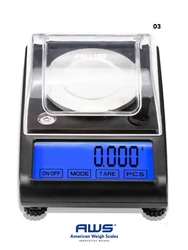
The best digital scale for soap fragrance oils is one that matches the size of your batches, displays measurements in grams, includes a reliable tare function, and offers enough resolution to measure your smallest fragrance quantity confidently.
For most home and small-business soap makers, a digital scale with 0.1-gram readability works well for measuring fragrance oils in ordinary batches. Makers developing samples, test bars, or concentrated fragrance blends may benefit from a second precision scale with 0.01-gram readability. Larger production batches often require a higher-capacity scale for base oils and finished soap batter, combined with a smaller precision scale dedicated to fragrance oils and other low-weight additives.
The key is balance. A scale must provide enough capacity for your container and ingredients without sacrificing the readability needed for small fragrance quantities.
This guide explains what capacity, resolution, platform size, calibration method, and safety features to consider when choosing the best digital scale for soap fragrance oils.
Quick Recommendation
The ideal specifications depend on your production volume:
| Soap-Making Task | Suggested Capacity | Suggested Readability |
|---|---|---|
| Tiny fragrance tests | 100–500 g | 0.01 g |
| Sample and test batches | 500–1,000 g | 0.01–0.1 g |
| Regular home soap batches | 2,000–5,000 g | 0.1–1 g |
| Larger artisan batches | 5,000–10,000 g or more | 0.1–1 g |
| Base oils and soap batter | Based on total batch and vessel weight | 1 g may be sufficient |
| Fragrance blends | 500–1,000 g | 0.01–0.1 g |
For many soap makers, the most practical setup uses two scales:
-
A higher-capacity digital scale for base oils, water, containers, and total soap batter
-
A smaller precision scale for fragrance oils, essential oils, colorants, antioxidants, and other low-weight additives
You can compare available designs in the AWS collections of digital kitchen scales and precision pocket scales.
Why Soap Fragrance Oils Should Be Measured by Weight
Fragrance oils are often liquid, which can make measuring cups, spoons, droppers, or pipettes seem convenient. However, volume is not always the most reliable basis for a soap formula.
Different fragrance oils can have different densities. One tablespoon of one fragrance may not weigh the same as one tablespoon of another. Volume measurements can also be affected by:
-
The shape of the measuring vessel
-
Surface tension
-
Meniscus-reading errors
-
Oil clinging to the container
-
Inconsistent spoon sizes
-
Drops of different sizes
-
Temperature-related expansion
-
Air bubbles
-
Human estimation
Weight provides a more consistent way to reproduce a formula. When a recipe is developed by weight, the same fragrance amount can be measured again without depending on the oil’s apparent volume.
Using grams also makes percentage calculations more straightforward. If a formula calls for a fragrance amount based on the weight of certain recipe components, grams allow you to calculate, record, and reproduce that quantity precisely.
The scale does not determine the safe usage rate. It only helps you measure the amount selected for the formula. Always obtain the correct usage information from the fragrance supplier, relevant standards, and the requirements applicable to the finished product.
What Makes a Digital Scale Good for Fragrance Oils?
The best fragrance oil scale should provide a useful combination of:
-
Appropriate capacity
-
Sufficient resolution
-
Reliable tare operation
-
Stable readings
-
Gram measurement
-
A platform large enough for the container
-
A display that remains visible
-
Easy cleaning
-
Calibration support
-
Overload protection
-
Low-battery indication
-
Automatic shutoff that does not interrupt the workflow
No single specification determines overall quality. A scale with 0.01-gram readability may be excellent for developing a 100-gram test batch but unsuitable for supporting a large mixing pitcher. A high-capacity kitchen scale may handle a full soap pot but may not display the small changes needed for a tiny fragrance blend.
Your batch size should determine the scale—not the other way around.
Best Overall Scale Type for Most Soap Makers
For everyday fragrance-oil measurement, a digital scale with the following specifications is a strong starting point:
-
Capacity of at least 1,000 to 3,000 grams
-
Readability of 0.1 gram
-
Gram and ounce modes
-
Tare function
-
Backlit display
-
Flat, easy-to-clean platform
-
Overload indicator
-
Low-battery indicator
-
User-calibration capability when provided by the manufacturer
A 0.1-gram scale offers a practical balance between capacity and resolution. It can measure fragrance oils for many home and small-business batches without the extreme sensitivity of a milligram scale.
For very small formulas, a 0.01-gram model is a better choice. For large production batches, use a higher-capacity scale and confirm that the total weight of the container plus all ingredients remains below its rated maximum.
Understanding Scale Capacity
Capacity is the greatest load a scale is designed to measure. It includes everything placed on the platform—not just the fragrance oil.
If a scale has a 1,000-gram capacity and your empty container weighs 250 grams, the remaining usable capacity is approximately 750 grams. Taring the container makes the display return to zero, but it does not remove the physical weight from the scale’s load sensor.
This distinction is essential.
Calculate Capacity Before Buying
Use this formula:
Required scale capacity = container weight + maximum ingredient weight + safety margin
For example:
-
Empty fragrance container: 120 g
-
Maximum fragrance oil amount: 200 g
-
Combined load: 320 g
A 500-gram scale could theoretically accommodate that load, but a model with additional capacity may provide more flexibility and reduce the chance of accidental overloading.
For a larger soap batch:
-
Empty mixing vessel: 1,200 g
-
Oils, water, and additives: 4,500 g
-
Combined load: 5,700 g
A 5,000-gram scale would be insufficient even if the displayed ingredient weight were tared to zero. You would need a scale rated above the actual combined load.
Why Excess Capacity Is Not Always Better
A much higher-capacity scale may display in larger increments. For instance, a scale designed for heavy packages may not show changes of 0.1 gram.
The goal is to select enough capacity for the task while preserving useful resolution. If your work ranges from tiny fragrance samples to large soap vessels, two scales may offer better performance than a single compromise model.
Understanding Readability and Resolution
Readability, also called resolution or graduation, is the smallest increment shown on the display.
A scale with 1-gram readability may show:
-
24 g
-
25 g
-
26 g
A scale with 0.1-gram readability may show:
-
24.8 g
-
24.9 g
-
25.0 g
A scale with 0.01-gram readability may show:
-
24.98 g
-
24.99 g
-
25.00 g
The smaller the ingredient amount, the more important readability becomes.
When 1-Gram Readability May Be Enough
A 1-gram scale can work for large soap batches when fragrance and base ingredients are measured in substantial quantities. It may also be suitable for measuring:
-
Large quantities of base oils
-
Water
-
Finished soap batter
-
Large mixing vessels
-
Bulk additives
However, it may be too coarse for small test batches or detailed fragrance blending.
When 0.1-Gram Readability Is Best
Readability of 0.1 gram is a versatile choice for many soap makers. It helps with:
-
Regular fragrance-oil quantities
-
Small to medium soap batches
-
Essential-oil blends
-
Colorants
-
Antioxidants
-
Formula development
-
Comparing scent variations
It provides more control than a 1-gram scale without becoming as sensitive to air currents and vibration as some higher-resolution instruments.
When 0.01-Gram Readability Is Useful
A 0.01-gram precision scale is useful for:
-
Very small test batches
-
Fragrance-blend development
-
Sample bars
-
Tiny additive quantities
-
Experimental formulas
-
Recording detailed formulation changes
-
Concentrated ingredients used in low amounts
Makers working at this level can explore AWS milligram and high-resolution scales, while selecting a model whose capacity still accommodates the intended container and ingredients.
Do You Need 0.001-Gram Readability?
Usually not for routine soap fragrance measurement. A 0.001-gram scale can be more sensitive to drafts, vibration, surface movement, static, and temperature changes. It also generally has lower capacity.
Such resolution may be useful for specialized laboratory-style development, but most soap makers will obtain a more practical workflow from 0.01- or 0.1-gram readability.
Extra decimal places do not automatically make a scale more accurate or more appropriate for a particular recipe.
Accuracy, Resolution and Repeatability
These three concepts are related but different.
Resolution
Resolution is the smallest increment the display can show.
Accuracy
Accuracy describes how close the measurement is to an accepted reference value.
Repeatability
Repeatability describes whether the scale gives similar results when the same item is weighed repeatedly under the same conditions.
A scale may display hundredths of a gram but still produce unstable or biased readings. Conversely, a scale with 0.1-gram readability may be more suitable for daily soap making because it provides stable, repeatable measurements over a useful capacity range.
When comparing scales, do not rely only on the number of decimal places. Consider the scale’s overall design, platform, calibration process, operating environment, and intended application.
Why Tare Is Essential for Fragrance Oils
Tare subtracts the weight of a container so the display shows only the weight added after the scale is zeroed.
A typical fragrance-oil workflow looks like this:
-
Place the empty container on the scale.
-
Wait for the reading to stabilize.
-
Press the tare button.
-
Confirm that the display returns to zero.
-
Add the fragrance oil gradually.
-
Stop at the target weight.
Tare reduces the need for manual subtraction and makes ingredient measurement faster.
Remember That Tare Does Not Restore Capacity
Suppose a 500-gram scale is holding a 150-gram container. After taring, the screen shows zero, but the load sensor is still supporting 150 grams.
The scale can accept only the remaining portion of its capacity. Adding 500 grams of oil would create a total load of 650 grams and exceed the rating.
Can You Tare Multiple Ingredients?
Yes, but doing so requires care. You can add one ingredient, tare the scale, and then add another. However, repeated taring can make mistakes harder to correct because the display no longer shows the previous total.
For important formulas, many makers prefer to:
-
Measure each fragrance component in a separate container
-
Record every actual weight
-
Combine the ingredients only after confirming the measurements
-
Keep a written or digital batch record
This method may use more containers, but it can make troubleshooting easier.
Why Grams Are Usually the Best Unit
Grams are convenient for soap formulation because they support both small and large quantities without complicated conversions.
For example:
-
0.5 g is easy to record
-
25.7 g is easy to reproduce
-
1,250 g is easy to calculate as part of a larger batch
Ounces can also be used when a formula is consistently written in ounces and the scale offers sufficient decimal resolution. However, switching between grams and ounces during the same batch can create conversion errors.
Choose one primary unit, verify the display before every measurement, and record the unit next to every formula quantity.
The National Institute of Standards and Technology provides additional information about SI units and mass measurement. For formulation work, consistency in units is just as important as the unit selected.
Platform Size and Container Compatibility
A scale platform must support the container without creating an unstable setup or hiding the display.
Consider the containers you regularly use:
-
Small glass beakers
-
Disposable mixing cups
-
Stainless steel pitchers
-
Silicone containers
-
Plastic measuring vessels
-
Large soap pots
A small precision scale may be ideal for a fragrance cup but impractical for a large pitcher. A wide platform can support bigger containers, but the scale may have coarser readability.
Keep the Display Visible
If a wide container blocks the display, it becomes difficult to stop at the correct weight. Possible solutions include:
-
Choosing a scale with a larger platform
-
Using a narrower container
-
Selecting a model with an offset display
-
Placing a stable support on the platform only if allowed by the manufacturer
-
Measuring fragrance in a smaller vessel before adding it to the batch
Never use an unstable arrangement that could tip fragrance oil onto the scale or workspace.
Protecting the Scale From Fragrance Oils
Fragrance oils can leave residue, affect plastics, and enter gaps around buttons or displays. A spill-resistant or easily cleaned surface is valuable, but it should not be confused with complete waterproofing.
To protect the scale:
-
Use a container with enough empty space to prevent splashing.
-
Add fragrance slowly.
-
Keep droppers and pouring tools over the container.
-
Wipe drips promptly.
-
Avoid pouring directly above the display or buttons.
-
Do not submerge the scale.
-
Follow the manufacturer’s cleaning instructions.
-
Use a removable protective cover if the model supports one.
Do not allow a protective sheet, liner, or tray to touch the surrounding countertop while weighing. External contact can support part of the load and produce a low reading.
Calibration and Calibration Weights
Calibration helps determine whether the scale’s measurements correspond appropriately to a known reference.
Some digital scales allow user calibration with a specified calibration weight. Others are factory configured and do not provide a user-calibration procedure.
Always follow the instructions for the exact model.
Basic Calibration Procedure
When supported by the manufacturer, the process commonly involves:
-
Placing the scale on a stable, level surface
-
Turning it on and allowing it to initialize
-
Confirming that the platform is empty
-
Entering calibration mode
-
Placing the specified calibration weight at the center
-
Waiting for confirmation
-
Removing the weight
-
Returning the scale to normal weighing mode
The exact steps and required mass vary. Never guess the calibration weight or substitute instructions from another model.
AWS offers individual and packaged scale calibration weights for compatible scales and procedures.
How Often Should You Check a Soap-Making Scale?
Check performance:
-
Before using a new scale
-
Before an important production run
-
After moving the scale
-
After replacing batteries
-
After a drop or impact
-
After an overload
-
When readings become inconsistent
-
At intervals appropriate to your production and quality system
A repeatability test is also helpful. Weigh the same stable object several times, removing it completely between measurements. Similar readings suggest that the scale is behaving consistently under those conditions.
A repeatability check is not the same as formal calibration, but it can reveal obvious problems.
Environmental Factors That Affect Measurements
High-resolution scales respond not only to ingredients but also to the environment.
Uneven Surfaces
A tilted, soft, or flexible surface can affect stability. Place the scale on a level, solid countertop.
Vibration
Mixers, washing machines, appliances, foot traffic, and flexible tables can cause fluctuating readings. Measure precision ingredients away from vibration.
Air Movement
Fans, vents, open windows, and air-conditioning drafts can affect very sensitive scales. Use a draft shield when supplied and appropriate.
Temperature Changes
Allow the scale, containers, and fragrance oils to adjust to the workspace. Avoid measuring immediately after moving equipment from a very hot or cold storage area.
Static Electricity
Some containers and powders can generate static. Static effects are more noticeable with high-resolution measurements. Follow the scale manufacturer’s recommendations for reducing interference.
Low Batteries
Weak batteries can cause dim displays, unexpected shutdowns, or inconsistent behavior. Replace batteries when the indicator appears or performance becomes questionable.
Safe Fragrance-Oil Measurement
A scale supports accurate formulation, but it does not establish whether a fragrance oil is appropriate or safe for a particular soap.
Before measuring a fragrance:
-
Confirm that it is intended for the application.
-
Obtain current supplier documentation.
-
Review the recommended usage limit.
-
Check the relevant product category.
-
Read the Safety Data Sheet.
-
Use suitable protective equipment.
-
Work in an appropriately ventilated space.
-
Label every container.
-
Prevent cross-contamination.
-
Keep materials away from children and pets.
The International Fragrance Association explains how the IFRA Standards support the safe use of fragrance ingredients. Limits can vary by ingredient and product category, so do not apply a percentage taken from an unrelated product or formula.
The Occupational Safety and Health Administration explains the purpose and standardized sections of Safety Data Sheets. The SDS can provide information about hazards, handling, storage, exposure controls, accidental release, and first aid.
Supplier documentation and standards can change. Retain the current version used for each production batch when traceability is important.
Soap, Cosmetics and Product Claims
The way a product is regulated can depend on its composition, intended use, labeling, and marketing claims.
A product marketed only for cleansing may be treated differently from one promoted with moisturizing, deodorizing, therapeutic, or disease-related claims. Adding fragrance does not remove the maker’s responsibility to evaluate the finished product and its labeling.
The U.S. Food and Drug Administration provides guidance through its frequently asked questions about soap. Soap makers selling products should review the rules applicable to their formulations and claims rather than assuming every product called “soap” receives identical treatment.
Fragrance ingredients may sometimes appear collectively on cosmetic labels under applicable rules, but labeling responsibilities depend on the product and jurisdiction. FDA information about fragrances in cosmetics offers useful regulatory context for U.S. businesses.
A precision scale improves formulation records, but it does not establish regulatory compliance by itself.
Best Scale Setup by Soap-Making Scenario
Beginner Making Regular Home Batches
Choose a 3,000- to 5,000-gram kitchen scale with 0.1- to 1-gram readability, depending on your formulas. Make sure it has tare and grams.
If the fragrance amount in your smallest batch cannot be measured confidently, add a smaller 0.01-gram precision scale.
Maker Developing Fragrance Blends
Choose a scale with:
-
500- to 1,000-gram capacity
-
0.01-gram readability
-
A small, stable platform
-
A draft shield if appropriate
-
User calibration when available
This setup makes it easier to record changes among multiple fragrance components.
Small Soap Business
A two-scale system is often best:
-
High-capacity scale for oils, water, containers, and batter
-
Precision scale for fragrance oils and low-weight additives
Use written procedures for calibration checks, cleaning, battery replacement, ingredient identification, and batch records.
Large-Batch Artisan Producer
Select a bench or kitchen scale with capacity above the combined weight of the vessel and ingredients. Use a separate precision scale for fragrance development and small additives.
Do not attempt to place an oversized soap pot on a compact pocket scale.
Sample and Test-Batch Maker
Choose 0.01-gram readability and enough capacity for the fragrance container plus the maximum test quantity. Small differences matter more when the total batch is small.
How to Measure Fragrance Oil Correctly
Step 1: Review the Formula and Usage Information
Confirm the target weight before opening the fragrance container. Verify the applicable supplier recommendation and product category.
Step 2: Prepare the Workspace
Use a solid, level surface free from vibration and drafts. Gather the fragrance oil, clean container, transfer tools, protective equipment, formula, and spill supplies.
Step 3: Turn On the Scale
Allow the scale to initialize. If the manufacturer recommends a warm-up period, follow it.
Step 4: Verify the Unit
Confirm that the display is set to grams or the unit required by the formula.
Step 5: Place the Empty Container on the Platform
Make sure it sits centrally and does not touch surrounding objects.
Step 6: Press Tare
Wait for a stable zero. Remember that the container’s physical weight still counts toward capacity.
Step 7: Add Fragrance Slowly
Pour or transfer gradually. As you approach the target, reduce the flow to avoid overshooting.
Step 8: Wait for Stability
Allow the display to settle before recording the final measurement.
Step 9: Record the Actual Weight
Write down what was actually measured, not merely the intended target. Include the unit and ingredient identification.
Step 10: Transfer Carefully
Add the fragrance according to the formula and process. Account for oil remaining in the weighing container if your documented method requires it.
Step 11: Clean the Workspace
Close the fragrance container, clean drips promptly, and maintain the scale according to the manufacturer’s instructions. AWS provides additional general guidance for digital scale maintenance.
Common Scale Mistakes in Soap Making
Measuring Fragrance by Drops
Drop size changes with the dispenser, viscosity, temperature, angle, and pressure. Drops are generally unsuitable for reproducing a professional formula unless the process has been specifically validated.
Confusing Capacity With Readability
A 5,000-gram capacity does not mean the scale reads to 0.01 gram. Capacity and readability must be reviewed separately.
Forgetting the Container Weight
Tare hides the container’s weight from the display but not from the load cell.
Using a Container That Blocks the Display
If you cannot see the screen, you are more likely to overshoot the target. Use a better-sized container or scale.
Adding Fragrance Too Quickly
Once too much fragrance has been poured, correcting the formula can require recalculating the entire batch. Slow down near the target.
Ignoring an Unstable Reading
Do not record a number while the display is fluctuating. Identify possible vibration, drafts, surface movement, or low power.
Assuming Extra Digits Mean Greater Accuracy
A scale’s number of displayed decimal places does not independently prove accuracy.
Using the Same Tools Without Cleaning
Residue can contaminate another fragrance and alter its aroma or measured weight. Clean or replace transfer tools between materials.
Failing to Document the Actual Measurement
A complete batch record should show ingredient identity, lot information when applicable, intended quantity, actual quantity, date, formula version, and operator.
Exceeding the Scale’s Capacity
An overload can damage the sensor and compromise future measurements. Use a higher-capacity scale when the combined vessel and ingredient weight is too high.
Features Worth Paying For
Fast Stabilization
A responsive scale reduces waiting and makes gradual additions easier.
Backlit Display
A bright display helps when reading small decimal changes.
Removable Weighing Tray
A tray can protect the platform and hold small containers, provided it is used according to the scale instructions.
Protective Cover
Some precision scales include a cover that doubles as a weighing tray. It can protect the sensor and platform during storage.
Calibration Support
User calibration can be helpful when supported by the model and performed with the correct reference weight.
Low-Battery Indicator
This feature provides warning before power becomes unreliable.
Overload Warning
An overload indicator helps protect the load cell, although users should calculate capacity before weighing.
Selectable Auto-Off
Automatic shutoff conserves power but can be frustrating if the scale turns off during a slow formulation process. A model with a sufficiently long delay or adjustable setting can be useful.
Stainless Steel Platform
A smooth metal platform can be easier to wipe, although the rest of the scale may still be vulnerable to liquid entry.
How to Compare Digital Soap Scales
Use this checklist before purchasing:
-
What is the smallest fragrance quantity I measure?
-
What is the heaviest container I use?
-
What is the maximum combined load?
-
Do I need 1-, 0.1-, or 0.01-gram readability?
-
Does the scale display grams?
-
Is the platform large enough for my containers?
-
Will the container block the display?
-
Does the scale have tare?
-
Can automatic shutoff interrupt a slow measurement?
-
Is calibration supported?
-
What calibration weight is required?
-
Is the surface easy to clean?
-
Does the model include overload and low-battery warnings?
-
Will I use it only for fragrance or for an entire soap batch?
-
Would two specialized scales work better than one?
If you are uncertain which capacity and readability fit your production process, the AWS Scale Finder can help narrow available scale types.
Frequently Asked Questions
What is the best digital scale for soap fragrance oils?
For most soap makers, a scale with 0.1-gram readability, adequate capacity, gram mode, tare, and an easy-to-clean platform is a strong choice. Use 0.01-gram readability for small tests and fragrance-blend development.
Is 1-gram readability accurate enough for fragrance oil?
It may be sufficient for large fragrance quantities, but it is usually too coarse for small test batches. Choose resolution based on the smallest amount you need to measure.
Do I need a 0.01-gram scale for soap making?
You need one when measuring very small fragrance or additive quantities. Regular batches may be handled well by a 0.1-gram scale.
Can one scale measure both base oils and fragrance oils?
Yes, if it has enough capacity and suitable readability. However, a two-scale setup frequently provides better performance for both large and small measurements.
Should fragrance oils be measured in grams or ounces?
Either unit can work when used consistently, but grams make small quantities and percentage calculations easier to record. Do not change units midway through a formula.
Can I measure fragrance oil by volume?
Weight generally provides better reproducibility because different oils can have different densities and volume measurements are affected by containers and technique.
Does taring the scale increase its capacity?
No. Tare changes the displayed value but does not remove the container’s physical weight from the load cell.
How often should I calibrate my soap scale?
Follow the manufacturer’s recommendations. Check the scale after relocation, impact, overload, battery replacement, inconsistent readings, and at intervals appropriate to your production system.
Can I use any object to calibrate a scale?
No. Use the reference mass specified by the manufacturer. An ordinary household object with an estimated weight is not a suitable substitute for calibration.
Why does my scale reading drift?
Possible causes include drafts, vibration, temperature changes, static, an uneven surface, weak batteries, contamination, overload damage, or a container touching another surface.
Is a kitchen scale or pocket scale better for fragrance oil?
A kitchen scale is usually better for large containers and batches. A precision pocket scale is often better for small fragrance quantities and formula development.
Can fragrance oil damage a digital scale?
Spills can enter buttons, displays, seams, and internal electronics. Some oils may also affect certain plastics. Use a suitable container, clean spills promptly, and follow the manufacturer’s instructions.
Does an accurate scale guarantee a safe fragrance level?
No. The scale measures the selected amount. It does not determine the appropriate usage limit or evaluate the finished soap. Follow current supplier documentation and applicable standards.
Final Thoughts
The best digital scale for soap fragrance oils depends on the smallest amount you measure and the heaviest container you place on the platform.
For most soap makers, 0.1-gram readability offers an excellent balance of precision, stability, capacity, and ease of use. A 0.01-gram scale becomes valuable for fragrance blending, sample bars, and very small test batches. Larger operations should consider using a higher-capacity scale for bulk ingredients and a separate precision scale for fragrance oils and low-weight additives.
Before buying, verify:
-
Total capacity, including the container
-
Gram readability
-
Tare functionality
-
Platform dimensions
-
Display visibility
-
Calibration requirements
-
Battery and auto-off behavior
-
Cleaning and spill protection
-
Repeatability
-
Manufacturer support
A dependable scale makes formulas easier to reproduce, improves batch documentation, and reduces guesswork. It does not replace fragrance-usage guidance, safety documentation, appropriate testing, or regulatory review, but it gives soap makers the measurement control needed to follow those requirements consistently.