
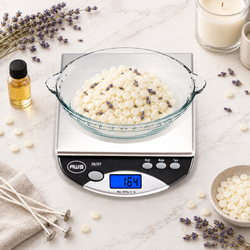
High-protein meal prep can simplify busy workweeks, fitness routines, family meals, and nutrition tracking. Instead of deciding what to cook several times a day, you can prepare proteins, vegetables, grains, and other ingredients in advance and divide them into ready-to-eat portions.
The challenge is making those portions consistent.
One chicken breast might weigh twice as much as another. A scoop of protein powder may contain more or less than the serving listed on the package. Cooked meat loses water, beans absorb water, and an overflowing spoon of peanut butter can contain substantially more than a level serving.
The best kitchen scale for high-protein meal prep replaces these estimates with repeatable measurements. It helps you portion meat, poultry, seafood, eggs, beans, tofu, yogurt, cheese, grains, protein powder, and complete recipes while keeping your meal-preparation process organized.
For most households, the best option is a digital scale with at least a 5-kilogram capacity, readability of 1 gram or better, a tare function, gram and ounce modes, and an easy-to-clean platform. People preparing large family-sized batches may prefer a 10-kilogram model, while a scale with 0.1-gram readability can be useful for smaller ingredients.
American Weigh Scales offers a range of digital kitchen scales for measuring ingredients, dividing recipes, and preparing consistent meals.
What Is the Best Kitchen Scale for Protein Meal Prep?
A practical meal-prep scale should have:
-
Capacity of at least 5 kilograms
-
Readability of 1 gram or finer
-
A tare or zero function
-
Grams and ounces
-
A stable platform
-
A display that remains visible beneath a plate
-
Simple controls
-
An easy-to-clean weighing surface
-
A reasonable automatic-shutoff period
-
A compact design for convenient storage
A 5-kilogram scale is suitable for most individual portions, meal-prep bowls, packaged proteins, and moderate batches. The KF-5KG Digital Kitchen Scale combines a 5-kilogram capacity with 0.1-gram readability for both full portions and smaller ingredients within its stated range.
For heavier mixing bowls, bulk food, or family-sized meal preparation, the PrepLite 10KG Kitchen Scale provides additional capacity.
The ideal model is not necessarily the one with the greatest number of features. It is the scale you can keep accessible, clean easily, and use without interrupting your cooking routine.
Why Use a Food Scale for High-Protein Meals?
A food scale does not determine how much protein a particular person should consume. It measures the amount of food being prepared so that the corresponding nutrition information can be calculated more reliably.
Protein Portions Vary in Size
Descriptions such as “one chicken breast,” “one steak,” or “one scoop” are not precise measurements.
Two chicken breasts from the same package may differ significantly in weight. One piece of salmon may be thick and compact, while another is thin and wide. A scoop packed tightly with protein powder may weigh more than a loosely filled scoop.
A digital scale reveals these differences.
Equal Portions Make Meal Prep Easier
If a batch of cooked chicken weighs 1,200 grams and you need eight equal meals:
1,200 ÷ 8 = 150 grams per meal
Without a scale, several containers may receive noticeably more food than the others. That can create inconsistent meals and inaccurate nutrition estimates.
A Scale Helps Control Food Costs
Protein foods can represent a significant portion of a grocery budget. Dividing a package evenly helps reduce accidental overportioning and makes it easier to estimate the cost of each meal.
If a $24 package produces eight equal portions:
$24 ÷ 8 = $3 per protein portion
This calculation does not include marinades, sides, packaging, labor, or cooking expenses, but it provides a useful starting point.
Weight-Based Recipes Are Easier to Reproduce
When a marinade, seasoning blend, or meal works well, recording the ingredient weights makes it easier to prepare the same recipe again.
Instead of writing “add some seasoning,” you can record:
-
1,000 grams chicken
-
20 grams oil
-
15 grams seasoning
-
30 grams lemon juice
-
10 grams minced garlic
The recorded recipe can then be adjusted for a larger or smaller batch.
Protein Needs Are Individual
Protein contributes to many normal functions in the body, but the appropriate amount depends on factors including body size, age, activity, overall calorie intake, health status, and personal goals.
MedlinePlus provides a general overview of protein in the diet, including common animal and plant sources.
A kitchen scale should be used to measure food—not to diagnose a deficiency, prescribe a diet, or establish a universal protein target. People with kidney disease, liver disease, metabolic conditions, digestive concerns, or other medical needs should seek individualized advice before making a substantial dietary change.
The federal Dietary Guidelines for Americans can also provide a broader reference for building nutrient-dense eating patterns.
Understanding Food Weight and Protein Grams
A common mistake is confusing the weight of the food with the amount of protein it contains.
If a piece of chicken weighs 150 grams, it does not contain 150 grams of protein. The total weight also includes water, fat, minerals, and other components.
To estimate protein, you need:
-
The food’s weight
-
Nutrition information for that food
-
A calculation based on the listed serving
Suppose a cooked food contains 26 grams of protein per 100 grams and your portion weighs 150 grams:
150 ÷ 100 × 26 = 39 grams of protein
This is a mathematical example. Actual nutrition depends on the specific food, cut, preparation, and data source.
For packaged foods, use the product’s current nutrition label. For basic ingredients, the USDA’s FoodData Central provides searchable nutrient information.
Raw Weight vs. Cooked Weight
One of the most important rules in protein meal prep is to match the food’s measured state with the correct nutrition data.
Why Weight Changes During Cooking
Meat, poultry, and fish commonly lose water during cooking. Rice, quinoa, beans, and pasta typically gain water. The protein in the batch does not simply disappear because the final weight changes, but the amount per 100 grams can appear different after cooking.
For example:
-
Raw chicken weight: 1,500 grams
-
Cooked chicken weight: 1,125 grams
The cooked chicken weighs less primarily because it lost moisture. If you use a raw-food database entry for 1,125 grams of cooked chicken, the resulting estimate may be inaccurate.
Two Consistent Methods
You can use either of these methods:
Method 1: Weigh Raw Portions
Weigh each portion before cooking and use nutrition information for the raw food.
This can work well for individually cooked steaks, chicken breasts, fish fillets, or burger patties.
Method 2: Calculate the Batch and Divide the Cooked Yield
Record the raw ingredients used in the complete recipe. Calculate the entire batch’s estimated nutrients. After cooking, weigh the finished yield and divide it into portions.
This method is useful for shredded chicken, ground meat, casseroles, cooked beans, mixed recipes, and family-sized batches.
The most important principle is consistency. Avoid switching between raw and cooked weights without adjusting the nutrition information.
How to Use a Kitchen Scale for Meal Prep
Step 1: Place the Scale on a Level Counter
Use a hard, stable surface. Avoid towels, soft mats, warped boards, and counters that vibrate when appliances are running.
Step 2: Select Grams
Grams are usually the simplest unit for nutrition calculations because many labels and food databases provide gram-based servings.
Step 3: Add an Empty Container
Place your bowl, plate, or meal-prep container on the platform.
Step 4: Press Tare
The display should return to zero. This removes the container from the displayed measurement.
Tare does not remove its physical load. The combined weight of the food and container must remain within the scale’s capacity.
Step 5: Add the Food
Add the ingredient gradually and wait for the reading to stabilize.
Step 6: Record the Amount
Record whether the measurement represents raw or cooked food.
Step 7: Repeat for Every Container
Tare each empty container separately. Containers that look identical may not weigh exactly the same.
Best Capacity for Protein Meal Prep
Five-Kilogram Capacity
A 5-kilogram scale can handle most:
-
Chicken breasts
-
Steaks and chops
-
Fish fillets
-
Bowls of ground meat
-
Containers of yogurt
-
Cooked beans
-
Tofu portions
-
Protein powder
-
Individual meal-prep containers
-
Moderate finished recipes
The CAMEO-5K Digital Kitchen Scale offers a slim tempered-glass platform for general kitchen weighing.
Ten-Kilogram Capacity
A 10-kilogram scale may be more suitable when weighing:
-
Large stockpots
-
Heavy glass bowls
-
Bulk meat packages
-
Multiple portions at once
-
Family-sized recipes
-
Large casserole dishes
-
Several meal-prep containers
-
Large quantities of cooked food
Remember to account for the container. A pot weighing 3 kilograms leaves only 2 kilograms of food capacity on a 5-kilogram scale.
Precision Scales
A smaller precision scale can be useful for spices, salt, powdered ingredients, and lightweight recipe components. It is not designed to hold a heavy plate or mixing bowl.
The AMW-2000 Digital Bench Scale provides 0.1-gram readability for portions and ingredients within its 2,000-gram capacity.
How to Weigh Chicken for Meal Prep
Chicken is a popular meal-prep protein because it can be roasted, grilled, baked, air-fried, poached, or cooked in a pressure cooker.
Portioning Raw Chicken Breasts
If you want similar portions:
-
Place a plate on the scale.
-
Press tare.
-
Add one chicken breast.
-
Record its weight.
-
Repeat with every piece.
-
Group pieces of similar weight and thickness.
Equal weight does not always mean equal cooking time. A thick compact breast may cook differently from a thin wide one.
Dividing Cooked Chicken
For a cooked batch:
-
Weigh the empty bowl.
-
Press tare.
-
Add all the cooked chicken.
-
Record the finished weight.
-
Divide by the desired number of meals.
-
Portion each container.
If the finished batch weighs 1,350 grams and you need nine meals:
1,350 ÷ 9 = 150 grams per meal
Shredded Chicken
Shredded chicken is easy to divide because it can be added or removed in small amounts. Let the food reach a safe handling condition, then weigh it in a tared container.
Store and cool the chicken according to current food-safety guidance.
How to Weigh Beef, Pork, and Ground Meat
Ground Meat
Ground meat is useful for meatballs, burger patties, taco bowls, chili, and mixed recipes.
If 900 grams of ground meat will make six patties:
900 ÷ 6 = 150 grams per patty
Weigh each patty before cooking and shape them to similar dimensions.
Steak
Weight is only part of the cooking equation. Thickness, bone, marbling, and starting temperature also affect preparation.
If you track nutrition, use an entry that matches the cut and whether the weight is raw or cooked.
Pork
Trim and preparation can change the edible weight. If a pork chop includes a bone, the full scale reading is not the same as the amount consumed.
For a post-meal edible-weight estimate:
Starting cooked weight − leftover bone and waste = approximate amount eaten
How to Weigh Fish and Seafood
Fish is often portioned into fillets, but packaged pieces may vary greatly.
Fish Fillets
Weigh each fillet and group pieces with similar thickness. Use a food thermometer rather than judging safety based on weight or appearance alone.
Shrimp
If the shrimp are frozen with an ice glaze, follow the package directions for determining the edible portion. Drain or prepare them consistently before weighing.
Canned Tuna or Salmon
Check whether the nutrition label refers to the total contents or drained product. If draining is required, drain it consistently and weigh the edible portion.
Weighing Eggs and Egg Whites
Eggs are commonly counted rather than weighed, but their sizes vary.
Whole Eggs
If a recipe requires a precise egg weight, crack the egg into a tared bowl. Do not include the shell unless the recipe explicitly specifies shell-on weight.
Liquid Egg Whites
Use the serving information printed on the carton. If the label provides both a volume and gram measurement, weighing the gram amount can simplify portioning.
Scrambled Egg Mixtures
For a batch recipe:
-
Weigh or record every ingredient.
-
Cook the complete mixture.
-
Weigh the finished yield.
-
Divide by the desired number of portions.
Moisture loss during cooking will reduce the finished weight.
Weighing Tofu and Tempeh
Plant-based protein portions are easy to weigh, but water content can affect the result.
Tofu
If the recipe calls for pressed tofu, weigh it after pressing. Unpressed and pressed tofu can have different weights because pressing removes water.
Record the brand and type, since silken, soft, firm, and extra-firm products have different nutrition and moisture levels.
Tempeh
Weigh the edible portion directly and use the nutrition label from the specific package.
Seitan
Commercial seitan products may differ significantly in protein and sodium. Use the current label rather than a generic entry whenever possible.
Weighing Beans, Lentils, and Chickpeas
Dry and cooked legumes have very different weights because they absorb water.
Dry Weight
Use dry weight when following a recipe that begins with uncooked beans or lentils. Calculate nutrition using dry-food information.
Cooked Weight
If meal prepping already-cooked legumes, weigh the drained cooked portion and use matching cooked nutrition data.
Canned Legumes
Determine whether the label’s serving refers to the entire product or the drained contents. Drain and rinse according to your recipe, then weigh the prepared edible portion.
Do not compare the gram weight of dry beans directly with the same gram weight of cooked beans. Their water content is substantially different.
Weighing Greek Yogurt and Cottage Cheese
A scale can make dairy portions faster and reduce dishes.
Direct-in-Bowl Method
-
Place the serving bowl on the scale.
-
Press tare.
-
Add the yogurt or cottage cheese.
-
Stop at the intended weight.
-
Press tare again before adding fruit, nuts, seeds, or another topping.
Reverse-Weighing Method
-
Place the original container on the scale.
-
Press tare.
-
Remove the desired portion.
-
Return the container to the scale.
-
Record the negative value.
If the display reads −170 grams, approximately 170 grams were removed.
Measuring Protein Powder
A package scoop is convenient, but it is a volume measure. The amount it holds can change depending on how tightly the powder is packed and whether the scoop is level.
The FDA explains how serving sizes and nutrients are displayed in its guide to using the Nutrition Facts label.
If the package lists one serving as 32 grams:
-
Place the shaker or bowl on the scale.
-
Press tare.
-
Add powder until the display reaches 32 grams.
-
Add liquid separately.
Do not assume every brand uses the same serving weight or protein concentration.
Protein Powder in Recipes
When protein powder is added to pancakes, oatmeal, baked goods, or smoothies, record its exact weight. Different powders absorb liquid differently, so equal weights of different products may not produce identical results.
Measuring Marinades and Sauces
Marinades can contribute oil, sugar, sodium, and other nutrients. A scale makes it easier to record the amount prepared and estimate the amount used.
Direct Measurement
Place the mixing bowl on the scale, press tare, and add each ingredient one at a time. Record the amount before pressing tare for the next ingredient.
Before-and-After Measurement
Weigh the completed marinade before adding the protein. After removing the food, weigh the remaining marinade.
The difference provides an approximate amount removed from the bowl, although some may be discarded, drip away, or remain on preparation surfaces.
Never reuse marinade that has contacted raw meat, poultry, fish, or seafood unless it is handled according to a trusted food-safety method.
Measuring Spices and Seasonings
A scale with finer readability is helpful when preparing seasoning blends.
A recipe may express seasoning as a percentage of the protein’s raw weight.
If a trusted recipe calls for a seasoning blend equal to 1.5% of the meat’s weight and you have 1,200 grams of meat:
1,200 × 0.015 = 18 grams of seasoning
This is a calculation example, not a universal seasoning recommendation.
When salt is present, follow the recipe and consider the sodium already contained in sauces, packaged foods, broths, cheeses, and seasoning blends.
Dividing a Complete High-Protein Recipe
Mixed recipes require a different method from individually portioned chicken or fish.
Suppose you prepare a turkey-and-bean skillet.
Step 1: Record Every Ingredient
Record the weight and nutrition information for:
-
Ground turkey
-
Beans
-
Vegetables
-
Oil
-
Sauce
-
Cheese
-
Seasonings with meaningful nutritional content
Step 2: Calculate the Batch Totals
Add the estimated protein, calories, carbohydrates, fat, fiber, and other nutrients from every ingredient.
Step 3: Weigh the Finished Recipe
Place an appropriate empty container on the scale, press tare, and add the cooked recipe.
Assume the finished dish weighs 2,400 grams.
Step 4: Determine the Portion Weight
For eight servings:
2,400 ÷ 8 = 300 grams per serving
Step 5: Divide the Batch Nutrition
If the entire batch contains an estimated 240 grams of protein:
240 ÷ 8 = 30 grams of protein per serving
Alternatively, calculate the estimated protein per gram:
240 ÷ 2,400 = 0.1 gram of protein per gram of food
A 350-gram serving would then contain an estimated:
350 × 0.1 = 35 grams of protein
Creating Equal Meal-Prep Containers
A repeatable assembly process saves time.
Prepare the Containers
Arrange the empty containers on the counter. Place the first container on the scale and press tare.
Add the Protein
Add the calculated protein portion. Record the number if needed.
Tare the Scale
Press tare again before adding the next component.
Add Vegetables and Sides
Add each component using your planned portion weight.
Repeat With Every Container
Tare each container individually rather than assuming they all have identical empty weights.
A meal-prep table might look like this:
| Component | Target portion |
|---|---|
| Cooked chicken | 150 g |
| Roasted vegetables | 180 g |
| Cooked rice | 140 g |
| Sauce | 25 g |
These amounts are examples of portioning mechanics, not universal nutrition recommendations.
For a bowl-based weighing setup, the 2K-BOWL Digital Kitchen Scale can be useful for smaller batches and ingredients within its capacity.
Food Safety During High-Protein Meal Prep
Accurate weighing does not make raw or undercooked food safe.
Use a Food Thermometer
The USDA’s safe minimum internal temperature chart provides temperature guidance for poultry, meat, seafood, eggs, casseroles, and leftovers.
A kitchen scale measures mass. It cannot measure doneness or identify pathogens.
Prevent Cross-Contamination
Do not place raw meat, poultry, or seafood directly on the scale platform. Use a clean plate, bowl, or other suitable container.
After handling raw food:
-
Wash hands properly.
-
Clean and sanitize appropriate surfaces.
-
Wash reusable dishes and utensils.
-
Avoid touching cooked food with contaminated tools.
-
Keep raw foods separated from ready-to-eat ingredients.
The FDA offers additional food-safety guidance for the home.
Cool Prepared Foods Properly
Large containers of hot food may cool too slowly. Divide food into appropriate shallow containers and follow current refrigeration guidance.
Do not leave cooked protein sitting on the kitchen scale while assembling meals for an unnecessarily long period.
Calculating Cost per Protein Portion
A scale can help evaluate the real cost of a prepared portion.
Suppose a package of chicken costs $18 and contains 2,700 grams before preparation.
$18 ÷ 2,700 = approximately $0.0067 per raw gram
A 200-gram raw portion costs approximately:
200 × $0.0067 = $1.34
Cooking reduces the food’s weight, so raw and cooked cost-per-gram figures will differ. The total cost of the batch remains the same unless parts are discarded.
To calculate cost by cooked yield:
-
Record the total ingredient cost.
-
Weigh the finished edible yield.
-
Divide total cost by finished grams.
-
Multiply by the portion weight.
This method can be applied to meat, poultry, fish, tofu, beans, and complete recipes.
Common Meal-Prep Scale Mistakes
Confusing Food Weight With Protein Content
A 200-gram portion of food does not contain 200 grams of protein. Use nutrition information to calculate the nutrient content.
Using Raw Nutrition Data for Cooked Weight
Cooking changes moisture and total weight. Match the measured state with the corresponding data.
Forgetting the Tare Function
If the container is not tared, its weight is included in the measurement.
Overloading the Scale
A tared bowl still counts toward the scale’s physical load. Never exceed the listed maximum capacity.
Letting a Large Bowl Touch the Counter
The scale must support the entire load. If the bowl touches another surface, the reading may be incorrect.
Hiding the Display
An oversized plate can cover the display. Choose a scale and container combination that lets you see the number clearly.
Failing to Record Measurements
Write down whether a weight represents raw food, cooked food, edible food, a complete batch, or one portion.
Assuming All Database Entries Are Equal
Nutrition can vary by brand, cut, fat content, preparation method, and added ingredients. Use a specific product label when available.
Ignoring Oils and Sauces
A carefully weighed protein portion can still become difficult to track if oil, dressing, cheese, and sauce are added without measurement.
Leaving Food at Room Temperature Too Long
Work efficiently and refrigerate prepared food according to safe-handling guidance.
How to Maintain Scale Accuracy
For consistent results:
-
Use a hard, level counter.
-
Keep all scale feet in contact with the surface.
-
Avoid drafts from fans and vents.
-
Keep the scale away from vibrating appliances.
-
Center the load.
-
Wait for the display to stabilize.
-
Replace weak batteries.
-
Clean spills promptly.
-
Do not store heavy objects on the platform.
-
Follow the manufacturer’s calibration instructions.
For general kitchen weighing, the Kitchen Pro 5KG provides another option for ingredients and meal-prep portions within its specifications.
Cleaning a Food Scale After Meal Prep
Protein meal prep can involve raw meat juices, marinades, powders, oils, and other residues.
To keep the scale clean:
-
Use a plate or bowl for raw ingredients.
-
Do not cut food directly on the scale.
-
Wipe spills immediately.
-
Follow the manufacturer’s cleaning directions.
-
Do not immerse the scale unless it is specifically rated for immersion.
-
Keep water away from buttons, seams, and the battery compartment.
-
Wash your hands before touching controls after handling raw food.
-
Store the scale dry.
A removable bowl can simplify cleanup, but the scale base still needs protection from liquids.
Frequently Asked Questions
What is the best scale capacity for meal prep?
A 5-kilogram scale works for most individual portions and moderate recipes. A 10-kilogram model is better for heavy bowls, bulk ingredients, and family-sized batches.
Is 1-gram readability enough for protein tracking?
Yes. One-gram readability is sufficient for most meat, poultry, fish, tofu, beans, yogurt, and meal-prep portions. Smaller seasoning quantities may benefit from 0.1-gram readability.
Should I weigh chicken raw or cooked?
Either method can work. Use raw nutrition data with raw weight or cooked data with cooked weight. For batch recipes, calculate the raw ingredients and divide the cooked yield.
Does 100 grams of chicken contain 100 grams of protein?
No. The food’s total weight includes water, fat, minerals, and other components. Check reliable nutrition information for the specific type and preparation.
Should I weigh protein powder?
Weighing can be more consistent than relying on a scoop. Use the serving weight listed on the product label.
How do I portion shredded meat?
Weigh the total cooked amount and divide by the desired number of portions. Place each container on the scale, press tare, and add the calculated portion.
Can I put raw meat directly on the scale?
Use a clean plate, bowl, or food-safe barrier rather than placing raw meat directly on the platform. Clean the scale according to its instructions if contamination occurs.
Can a food scale calculate macros?
A conventional food scale measures weight. Use the weight with a nutrition label or reputable database to calculate protein and other nutrients.
How do I account for bones?
Use nutrition data intended for the bone-in product or subtract the weight of the leftover bone from the served cooked weight to estimate the edible amount consumed.
Is a bowl scale useful for meal prep?
Yes. A bowl scale can be convenient for shredded meat, beans, yogurt, mixed recipes, and ingredients that might roll or spill from a flat platform.
Final Verdict
The best kitchen scale for high-protein meal prep should make portioning faster, not more complicated.
For most people, a digital model with at least a 5-kilogram capacity, 1-gram or finer readability, a dependable tare function, gram and ounce modes, and an easy-to-clean platform offers the best balance of capacity and precision.
Choose a 10-kilogram model if you routinely use heavy bowls or prepare food in bulk. Consider a smaller precision scale as a secondary tool for lightweight seasonings and powdered ingredients.
Use the scale to divide cooked batches, match portions with dependable nutrition information, control ingredient costs, and reproduce successful recipes. Record whether food was weighed raw or cooked, account for the container, and use proper food-safety practices throughout preparation.
With a reliable scale and a consistent process, high-protein meal prep becomes easier to organize, simpler to calculate, and more predictable from one week to the next.