
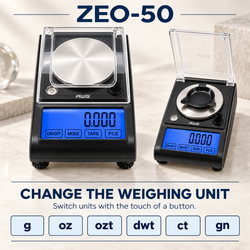
Choosing the best scale for reloading requires more than looking for the model with the most decimal places.
A scale used for very small measurements needs to provide a combination of:
-
Suitable capacity
-
Fine resolution
-
Stable readings
-
Repeatability
-
Proper calibration
-
A level weighing surface
-
Protection from drafts and vibration
-
Clear operating instructions
Just as importantly, scale specifications should never be treated as a substitute for published component-manufacturer guidance or an established reloading manual.
A digital display may look extremely precise, but precision on the screen does not automatically guarantee equivalent real-world accuracy.
Understanding that distinction is the first step toward choosing the right scale.
Quick Answer: What Should You Look for in a Reloading Scale?
A suitable precision scale should offer:
| Feature | Why It Matters |
|---|---|
| Fine resolution | Helps detect small changes in measured mass |
| Appropriate capacity | Prevents overloading while accommodating containers or accessories |
| Repeatability | Helps confirm that repeated measurements remain consistent |
| Calibration capability | Allows the instrument to be checked using the specified calibration procedure |
| Stable platform | Reduces inconsistent readings |
| Tare function | Allows a compatible container to be zeroed |
| Clear display | Makes readings easier to verify |
| Protective environment | Reduces airflow, vibration and static interference |
The best scale is therefore not necessarily:
the scale with the highest capacity
or:
the scale showing the most decimal places.
It is the scale whose measuring range, resolution and operating characteristics match the task.
Resolution Is One of the Most Important Specifications
Resolution describes the smallest increment displayed by the scale.
For example, a precision scale may display measurements in very small increments.
However, it is important to understand:
resolution is not the same thing as accuracy.
A display capable of showing fine increments does not automatically mean every reading is accurate to that same amount.
Other factors influence the measurement, including:
-
Calibration
-
Repeatability
-
Temperature
-
Air movement
-
Surface stability
-
Static electricity
-
Instrument quality
-
Proper operating technique
More Decimal Places Do Not Automatically Mean Better Accuracy
This is one of the most common misunderstandings surrounding precision scales.
A scale showing additional decimal places may offer finer readability.
That does not mean those digits represent guaranteed measurement accuracy.
For example:
readability tells you what the scale displays.
Accuracy describes how close the measurement is to the actual mass.
Repeatability describes whether repeated measurements produce consistent results.
Those are different characteristics.
Why Repeatability Matters
A precision scale should produce consistent results when the same known object is measured repeatedly under stable conditions.
If repeated readings fluctuate significantly, possible causes can include:
-
Drafts
-
Vibration
-
Unstable work surface
-
Temperature changes
-
Static
-
Low battery
-
Improper calibration
-
Overloading
-
Mechanical problems
Repeatability is therefore an important practical characteristic when evaluating any high-precision scale.
Capacity Matters Too
It is easy to focus entirely on resolution while overlooking capacity.
Scale capacity refers to the maximum mass the instrument is designed to measure.
The important point is:
everything placed on the platform contributes to the total load.
That includes:
-
Container
-
Tray
-
Holder
-
Material being weighed
If a scale has limited capacity, the weight of accessories can reduce the remaining usable range.
Tare Does Not Increase Physical Capacity
The tare function allows the displayed weight of a container to be zeroed.
However:
tare does not remove the physical weight from the load cell.
Suppose a container is placed on the platform and then tared.
The display may return to zero, but the scale is still physically supporting that container.
That means the remaining capacity is reduced accordingly.
This principle matters whenever selecting a precision scale.
Higher Capacity Is Not Automatically Better
A very high-capacity scale may be appropriate for larger items.
But applications involving extremely small quantities may benefit more from a scale designed specifically for fine measurements.
That creates a common tradeoff:
capacity versus resolution.
A precision scale should provide enough capacity for the complete weighing setup without sacrificing the level of readability required for the intended task.
Platform Size Is Easy to Overlook
The weighing platform must comfortably support whatever is being placed on it.
An undersized platform can make positioning difficult.
An oversized container may:
-
Touch the surrounding housing
-
Sit unevenly
-
Shift during measurement
Any physical interference can affect measurement consistency.
Choose a scale whose platform dimensions suit the intended containers and accessories.
Calibration Is Essential
Precision scales rely on calibration to maintain useful measurements.
Calibration procedures vary by model.
Always use:
-
The calibration mass specified by the manufacturer
-
The correct calibration procedure
-
A stable environment
Do not assume that any nearby object with an approximate known weight is suitable for precision calibration.
Do Not Use Random Household Objects for Calibration
Objects such as:
-
Coins
-
Hardware
-
Kitchen items
-
Household objects
should not automatically be treated as precision calibration references.
Their actual mass may differ because of:
-
Manufacturing tolerance
-
Wear
-
Dirt
-
Corrosion
-
Material variation
Use a proper calibration weight compatible with the scale's instructions.
Calibration and Verification Are Different
Calibration adjusts or establishes the scale's measurement reference.
Verification checks whether the instrument continues to produce an expected measurement.
For high-precision work, both concepts matter.
A scale may need to be checked periodically, especially if it has been:
-
Moved
-
Stored for a long period
-
Exposed to large temperature changes
-
Subjected to vibration or impact
Stable Surfaces Matter
Fine measurements can be affected by the workbench itself.
Place the scale on a:
-
Firm
-
Level
-
Stable
-
Vibration-resistant
surface.
Avoid surfaces that:
-
Flex
-
Shake
-
Rock
-
Vibrate when touched
Even small movements can affect sensitive instruments.
Airflow Can Affect Precision Scales
Highly sensitive scales can respond to moving air.
Potential sources include:
-
Ceiling fans
-
Air-conditioning vents
-
Open windows
-
Portable fans
-
People walking quickly nearby
Use the scale in a calm environment away from direct airflow.
Temperature Changes Can Affect Measurements
Moving a scale from one temperature environment into another may require time for the instrument to stabilize.
Rapid temperature changes can influence sensitive electronics and load-cell behavior.
For consistent measurements:
-
Use the scale in a stable environment
-
Allow it to acclimate when necessary
-
Follow manufacturer warm-up recommendations
Static Electricity Can Cause Reading Problems
Static electricity can affect very fine measurements.
It can become more noticeable in:
-
Dry rooms
-
Low-humidity environments
-
Certain plastic containers
If readings behave unexpectedly, environmental conditions should be considered before assuming that the scale itself is defective.
Battery Condition Matters
A weak battery can sometimes contribute to unreliable operation.
Before troubleshooting more complicated causes:
-
Check the battery
-
Confirm proper power
-
Inspect the display
If the scale supports an approved power adapter, follow the manufacturer's instructions for its use.
Allow the Reading to Stabilize
Precision measurement should not be rushed.
Place the item or container on the platform and allow the reading to stabilize according to the scale's normal operation.
Avoid:
-
Touching the workbench
-
Moving the scale
-
Creating airflow
-
Handling the platform
while taking the measurement.
Use the Same Measurement Method Consistently
Consistency helps reduce unnecessary variation.
Use the same:
-
Scale location
-
Container style
-
Platform position
-
Environmental conditions
-
Calibration process
whenever practical.
Changing several variables at once makes inconsistent readings harder to diagnose.
Digital vs. Mechanical Scales
Both digital and mechanical scales can be encountered in precision-measurement applications.
Digital Scales
Advantages may include:
-
Fast readings
-
Easy-to-read displays
-
Tare functions
-
Compact size
Potential considerations include:
-
Battery condition
-
Electronic drift
-
Environmental sensitivity
Mechanical Scales
Advantages may include:
-
No batteries
-
Straightforward mechanical operation
Potential considerations include:
-
Slower reading process
-
Proper zeroing
-
Careful visual interpretation
The appropriate choice depends on the user's workflow, equipment requirements and ability to verify measurements reliably.
Pocket Scale vs. Bench Scale
Compact precision scales are useful when:
-
Workspace is limited
-
Portability matters
-
Small items are being measured
Bench-style scales can offer:
-
Larger platforms
-
Greater stability
-
More workspace flexibility
The correct form factor depends on the overall measuring setup.
Why a General Kitchen Scale Is Usually Different
Kitchen scales are designed for food preparation and broader household quantities.
They typically prioritize:
-
Higher capacity
-
Larger platforms
-
Convenient everyday measurements
Precision scales are designed around much smaller measurement increments.
For applications involving tiny quantities, the resolution and repeatability requirements are substantially different.
Safety Comes Before Convenience
Precision weighing associated with ammunition components is a safety-critical activity.
Always follow:
-
The component manufacturer's instructions
-
Equipment manufacturer's instructions
-
A reputable published reloading manual
-
Applicable local laws and regulations
Do not determine a safe ammunition configuration by experimenting with scale readings alone.
A scale measures mass.
It does not determine whether a particular ammunition configuration is safe.
Never Guess From Similar Components
Components that appear similar can have different specifications.
Do not assume that:
-
Similar-looking powders
-
Similar projectiles
-
Similar cases
-
Similar cartridges
are interchangeable.
Use authoritative published information for the exact components involved.
Do Not Rely on Unverified Online Load Data
Precision equipment cannot make unreliable source information safe.
Even a perfectly functioning scale cannot compensate for:
-
Incorrect data
-
Typographical errors
-
Wrong component identification
-
Unsupported substitutions
Use established published references and manufacturer information.
A Scale Should Not Be the Only Safety Check
A scale is one measurement instrument within a larger safety process.
It should never replace:
-
Correct component identification
-
Proper equipment setup
-
Published specifications
-
Visual inspection
-
Manufacturer instructions
Good measurement equipment reduces uncertainty.
It does not eliminate the need for safe procedures.
Common Scale Selection Mistakes
Choosing Only by Decimal Places
More digits do not automatically mean more accuracy.
Ignoring Capacity
Containers and accessories count toward total load.
Assuming Tare Restores Capacity
It does not.
Ignoring Platform Size
The container must sit properly on the platform.
Using Random Items for Calibration
Use the specified calibration weight.
Using the Scale on an Unstable Surface
Vibration can affect fine measurements.
Measuring Near a Fan or Vent
Airflow can affect sensitive readings.
Ignoring Temperature Changes
Give the instrument time to stabilize when appropriate.
Assuming One Reading Is Enough
Consistency and repeatability matter.
Ignoring Battery Condition
Power problems can create unnecessary troubleshooting.
Assuming Resolution Equals Accuracy
They are different specifications.
Precision Scale Buying Checklist
Before choosing a scale, ask:
-
What is the scale's maximum capacity?
-
What is its resolution?
-
What accuracy specification does the manufacturer provide?
-
Is repeatability specified?
-
What calibration weight does it require?
-
Is the calibration weight included?
-
What is the platform size?
-
Will my container fit comfortably?
-
How much does the container weigh?
-
How much capacity remains after adding it?
-
Does the scale provide tare?
-
Is the display easy to read?
-
Does the scale have a stable housing?
-
Will it sit securely on my workbench?
-
Is the room protected from drafts?
-
Is vibration likely?
-
Is static likely to be a concern?
-
Does the manufacturer provide clear calibration instructions?
-
Is battery status easy to monitor?
-
Can readings be verified consistently?
Frequently Asked Questions
What is the best scale for reloading?
Look for a precision scale with suitable resolution, enough capacity for the complete weighing setup, stable repeatability, proper calibration capability and clear manufacturer specifications.
Is higher resolution always better?
Not necessarily.
Resolution is only one specification. Accuracy, repeatability, capacity and stability also matter.
Is resolution the same as accuracy?
No.
Resolution describes the smallest displayed increment.
Accuracy describes how close a measurement is to the actual mass.
Does tare reset the scale's capacity?
No.
Tare resets the displayed value, but the physical container still contributes to the load on the scale.
Why does my precision scale fluctuate?
Possible causes include:
-
Air movement
-
Vibration
-
Temperature variation
-
Static electricity
-
Weak batteries
-
Calibration issues
-
Unstable surfaces
Can I calibrate a scale using coins?
For precision calibration, use the calibration mass specified by the scale manufacturer rather than assuming ordinary objects have an exact enough mass.
Is platform size important?
Yes.
The container or item should fit comfortably without touching surrounding surfaces or sitting unevenly.
Are kitchen scales suitable for very small precision measurements?
Kitchen scales generally emphasize higher capacity and everyday food measurement rather than very fine resolution.
Do more decimal places guarantee better measurements?
No.
Additional displayed digits indicate readability, not necessarily equivalent accuracy.
How often should a precision scale be checked?
Follow the manufacturer's instructions and consider verification after moving the scale, long storage periods, significant environmental changes or whenever readings appear inconsistent.
Can a precision scale determine whether ammunition is safe?
No.
A scale measures mass. Safety depends on using correct components, verified published information, suitable equipment and established procedures.
Final Verdict: Capacity, Resolution and Safety All Matter
The best scale for reloading should not be chosen from resolution alone.
Evaluate the complete measurement system:
resolution + capacity + repeatability + calibration + platform size + environmental stability.
Remember:
more decimal places do not automatically mean more accuracy.
Also remember:
tare does not restore physical capacity.
A container still contributes to the load even after the display returns to zero.
For reliable precision measurement:
-
Use the correct calibration weight
-
Keep the scale level
-
Protect it from drafts
-
Minimize vibration
-
Maintain stable environmental conditions
-
Verify repeatability
-
Follow the manufacturer's operating instructions
And for ammunition-related work specifically, treat the scale only as a measurement instrument—not as a source of safety limits or load data.
Use established manufacturer information and reputable published manuals for all component and safety specifications.