
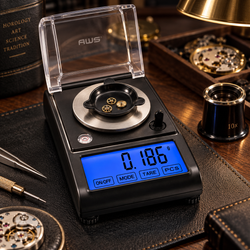
Choosing between a digital and mechanical scale is an important equipment decision for lawful ammunition reloading. Both formats can provide useful measurements when they are appropriately specified, correctly calibrated, and operated in a controlled environment. Neither format is automatically accurate simply because of its underlying technology.
Digital scales provide direct numerical readings, fast tare functions, compact designs, and features such as illuminated displays. Mechanical balance scales require no batteries and can provide an independent measurement method that is unaffected by many electronic power issues.
The better option depends on the user’s workspace, measurement needs, verification practices, and willingness to maintain the equipment properly. Some experienced users keep both types so one instrument can help identify an unexpected problem with the other.
A scale does not establish whether a load is safe. Always use current published data from established manuals and component manufacturers, positively identify every material, follow all equipment instructions, and comply with applicable laws. This comparison covers scale technology and measurement practices without providing charge recipes or load-development instructions.
What Is a Digital Reloading Scale?
A digital scale uses an electronic load cell and internal circuitry to convert applied force into a numerical measurement. The result appears on an LCD or LED screen.
Depending on the model, digital scales may include:
-
Native grain mode
-
Gram and ounce modes
-
Tare or zero
-
Backlit displays
-
Automatic shutoff
-
Low-battery warnings
-
Overload indicators
-
Calibration modes
-
Protective covers
-
Battery or AC operation
Many AWS precision scales provide fine graduations and multiple measurement modes. Each model’s resolution, capacity, accuracy, platform size, and calibration procedure should be reviewed individually.
What Is a Mechanical Reloading Scale?
A mechanical reloading scale commonly uses a balance beam. The load placed in a pan is compared with adjustable weights or poises positioned along a calibrated beam.
The beam settles at a reference position when the selected setting and applied load are balanced.
Mechanical scales generally offer:
-
Operation without electricity
-
No batteries or electronic display
-
A visible physical balancing process
-
Long-term usability with proper maintenance
-
A useful independent check for a digital scale
Mechanical scales still require correct leveling, zeroing, setup, and interpretation. They can be affected by airflow, vibration, contamination, damaged pivots, magnetic damping problems, or incorrect poise positioning.
Quick Comparison
| Feature | Digital scale | Mechanical scale |
|---|---|---|
| Display | Direct numerical reading | Beam and pointer |
| Power | Batteries, AC, or rechargeable | No electrical power |
| Tare | Usually one-button | Requires mechanical adjustment |
| Speed | Usually faster | Generally slower |
| Portability | Often compact | Varies by design |
| Grain mode | Common | Common on reloading models |
| Electronic interference | Possible | Generally not applicable |
| Battery problems | Possible | Not applicable |
| User interpretation | Minimal with stable display | Requires careful beam reading |
| Independent verification | Useful with another scale | Useful alongside a digital scale |
| Draft sensitivity | Depends on resolution | Can also be affected |
| Calibration | Electronic procedure | Mechanical zero and reference checks |
Accuracy: Neither Format Wins Automatically
Accuracy describes how closely a displayed or indicated result agrees with the actual value within stated operating conditions.
A digital scale may display several decimal places but still have an accuracy tolerance larger than its smallest displayed increment. A mechanical scale may appear simple but produce unreliable measurements if its beam is not level, clean, zeroed, or correctly interpreted.
Accuracy depends on:
-
Instrument quality
-
Resolution
-
Calibration
-
Reference weights
-
Correct setup
-
Repeatability
-
Environmental stability
-
Proper maintenance
-
User technique
The NIST Office of Weights and Measures provides general educational information about measurement systems and weighing terminology. Although personal reloading scales are not necessarily regulated commercial devices, the distinction between accuracy, resolution, and repeatability applies to both formats.
Resolution and Readability
Resolution is the smallest change the scale can display or indicate.
Many digital reloading scales provide 0.1-grain resolution. Some finer-resolution models display hundredths of a grain or thousandths of a gram.
Mechanical scales often use marked beam divisions, which require the user to position the poises correctly and observe the pointer carefully.
Digital Scale Readability
A digital display can make results easier to read, particularly when it provides:
-
Large digits
-
Clear unit indicators
-
Backlighting
-
A stable-reading symbol
-
A display angle visible from the normal working position
However, rapidly fluctuating digits can make interpretation difficult. More decimal places do not help if the final digits are unstable.
Mechanical Scale Readability
A mechanical beam must be viewed from the correct angle to avoid parallax errors. The user must confirm that:
-
Every poise is correctly seated
-
The pointer aligns with the reference mark
-
The beam has fully settled
-
The scale is level
-
The pan is hanging freely
Mechanical scales may be less convenient for users who have difficulty reading small markings.
Speed and Workflow
Digital scales are generally faster to operate. The user places the empty pan on the platform, presses tare, and reads the displayed result after stabilization.
A mechanical balance scale requires the beam to move and settle. Adjusting poises can also take additional time.
Digital scales may be preferable for:
-
Repeated verification checks
-
Fast comparison of components
-
Recording multiple measurements
-
Compact workspaces
-
Users who prefer direct numerical displays
Mechanical scales may be preferable when:
-
Electrical independence is important
-
Speed is not the main priority
-
The user prefers a visible balancing process
-
A second technology is desired for verification
-
The scale will remain permanently set up
Convenience should not take priority over dependable measurements. A faster scale is only useful when it is accurate, repeatable, calibrated, and stable.
Calibration Differences
Digital Scale Calibration
Digital calibration typically requires placing a specified reference weight on the platform while the scale is in calibration mode.
A suitable digital scale should provide:
-
Clear calibration instructions
-
The required calibration-weight value
-
Confirmation of successful calibration
-
Guidance about recalibration
-
Information about operating temperature
AWS offers calibration weights for compatible scales. Use the denomination specified in the scale’s instructions.
Mechanical Scale Calibration and Zeroing
Mechanical balance scales generally require leveling and zero adjustment. Some models may allow additional calibration or require servicing if reference checks fail.
The beam should move freely and return to its reference position. Pivot points, bearings, poises, and the pan assembly should remain clean and undamaged.
Do not alter, bend, file, or modify mechanical scale parts in an attempt to correct an unexplained error. Follow the manufacturer’s instructions.
Calibration Is Not Verification
Calibration establishes or adjusts the instrument using a specified reference. Verification tests whether the scale currently produces the expected result.
Both digital and mechanical scales should be checked with appropriate known reference weights. A verification process can help reveal:
-
Drift
-
Incorrect zero
-
Battery problems
-
Misplaced poises
-
Platform contamination
-
Temperature effects
-
Mechanical binding
-
Unexpected disagreement
The current NIST Handbook 44 explains technical concepts used for regulated commercial weighing equipment. Its specific requirements do not automatically apply to personal reloading scales, but it provides useful background about tolerances, divisions, and performance.
Digital Scale Advantages
Direct Numerical Results
A digital display reduces the need to interpret beam alignment or small engraved markings.
Fast Tare
The user can place an empty pan on the platform and reset the display to zero with one button.
Compact Design
Many AWS pocket scales occupy little workbench space and include protective covers for storage.
Multiple Measurement Units
Digital models may support grains, grams, ounces, carats, and other units. Native grain mode is the most convenient for many reloading-related measurements.
Backlit Display
An illuminated screen can improve visibility in dim workspaces.
Portable Operation
Battery-powered models are easy to transport and can serve as secondary verification instruments.
Overload and Battery Warnings
These features can alert the user to conditions that may affect performance or damage the scale.
Digital Scale Disadvantages
Battery Dependence
Weak batteries can contribute to unstable readings. The scale should include a clear low-battery warning.
Automatic Shutoff
A short automatic-shutoff interval can interrupt a measurement session.
Electronic Interference
Phones, chargers, radios, lighting equipment, and other electronics may affect some models.
Temperature Sensitivity
The scale may drift while acclimating after being moved between different environments.
Static Sensitivity
Plastic pans, packaging, synthetic clothing, and dry air may contribute to unstable results.
Hidden Filtering
Digital software may smooth or delay displayed changes. Buyers should evaluate response time and repeatability rather than assuming every immediate-looking result is equally dependable.
Mechanical Scale Advantages
No Batteries or AC Power
A mechanical scale remains usable during a power outage and does not suffer from weak batteries or a defective adapter.
No Digital Display Drift
Mechanical scales do not experience software filtering, electronic display instability, or electromagnetic interference in the same way digital scales can.
Visible Operating Principle
The user can see the beam moving toward balance rather than relying on hidden electronic processing.
Long-Term Service Potential
A properly maintained mechanical scale may remain useful for many years.
Independent Technology
A mechanical balance scale can provide an independent comparison for a digital instrument. Disagreement between different measurement technologies can alert the user to investigate.
Mechanical Scale Disadvantages
Slower Operation
The beam needs time to settle, particularly after adjustments.
More User Interpretation
The user must read the beam and pointer correctly, avoid parallax, and confirm the position of each poise.
Leveling Requirements
The scale must sit level and be correctly zeroed.
Sensitivity to Physical Condition
Dust, residue, damaged pivots, bent components, pan contact, or mechanical wear may affect movement.
Larger Footprint
Some balance scales require more permanent bench space than compact digital models.
Limited Convenience Features
Mechanical scales generally do not offer one-button tare, backlighting, automatic unit conversion, or low-battery warnings.
Capacity Considerations
Whether digital or mechanical, the scale must have sufficient capacity for:
-
The weighing pan
-
The complete intended load
-
Verification weights
-
Any container or accessory
-
A margin below the maximum
For many small measurement applications, approximately 100 to 500 grams of capacity provides more than enough range.
Excessive capacity may not be helpful if it requires accepting coarser resolution. A high-capacity kitchen or shipping scale may be unsuitable even though it can support far more physical weight.
Digital Tare Does Not Increase Capacity
Pressing tare subtracts the pan from the displayed value but does not remove its weight from the load cell.
If a pan weighs 20 grams and the scale has a 100-gram capacity, only 80 grams of physical capacity remains after taring.
Repeatability Comparison
Repeatability is essential for both scale types. The same appropriate reference weight should produce the same or closely grouped results under unchanged conditions.
Testing a Digital Scale
-
Place the scale on a rigid, level surface.
-
Allow it to stabilize.
-
Confirm zero.
-
Apply the check weight.
-
Record the stable reading.
-
Remove the weight.
-
Confirm zero again.
-
Repeat several times.
Testing a Mechanical Scale
-
Place the scale on a rigid, level surface.
-
Confirm that all parts are clean and correctly installed.
-
Zero the beam.
-
Set the appropriate poise positions.
-
Apply the check weight.
-
Allow the beam to settle.
-
Observe the pointer from the correct angle.
-
Remove the weight and recheck zero.
-
Repeat the process.
If either scale fails repeatability checks, stop and identify the cause before using it for critical measurements.
Milligram Digital Scales
A milligram scale displays weight in thousandths of a gram. Since 0.001 gram equals approximately 0.015 grain, it offers fine display resolution.
The selection of AWS milligram scales includes different capacities and platform designs. Fine resolution can be useful, but it also increases sensitivity to drafts, vibration, static, and temperature.
A milligram display does not automatically guarantee better accuracy. Review:
-
Accuracy tolerance
-
Repeatability
-
Grain mode
-
Calibration requirements
-
Capacity
-
Platform dimensions
-
Stabilization time
A model such as the ZEO50 high-precision digital milligram scale may be considered when fine resolution is required. Confirm the current specifications and intended uses before purchasing.
Environmental Factors Affect Both Types
Airflow
Fans, HVAC vents, open windows, and breathing over the pan can disturb both digital and mechanical scales.
Vibration
Presses, tumblers, power tools, speakers, flexible benches, and foot traffic can affect both technologies.
Temperature
Digital electronics and mechanical components should be allowed to acclimate after transportation or storage.
Contamination
Dust, residue, and debris may interfere with a digital platform or mechanical pivot system.
Static
Static is usually a greater concern with sensitive digital scales, although proper handling remains important with any scale and pan system.
Workbench Stability
Both formats perform best on a rigid, level surface separated from active equipment.
Which Scale Is Better for Beginners?
A digital scale may be easier for a beginner to read because it provides a direct numerical result. Tare and backlighting can also simplify operation.
A mechanical scale can help users understand the physical balancing process and provides independence from batteries and electronics. It requires more attention to poise placement, leveling, and pointer alignment.
Beginners should prioritize:
-
Clear instructions
-
Suitable grain resolution
-
Documented accuracy
-
Easy calibration or zeroing
-
Reliable repeatability
-
A stable platform
-
Manufacturer support
-
Appropriate verification weights
Technology alone does not determine suitability. A poorly specified digital scale is not preferable to a well-maintained mechanical scale, and the reverse is also true.
Should You Own Both?
Maintaining both digital and mechanical scales can provide a useful independent comparison. The benefit comes from using two different measurement systems rather than assuming one can never fail.
Use a second instrument when:
-
Beginning a session
-
A measurement appears unexpected
-
The primary scale fails to return to zero
-
Batteries have been replaced
-
The scale has been moved
-
Environmental conditions have changed
-
The instrument has been stored for a long time
-
Impact or overload may have occurred
If the scales disagree, stop. Check both instruments, their units, calibration, reference weights, setup, power, and environments. Do not choose the more convenient result.
Digital Scale Buying Checklist
When selecting a digital scale, confirm:
-
Native grain mode
-
Suitable resolution
-
Documented accuracy
-
Repeatable readings
-
Adequate capacity
-
User calibration
-
Availability of calibration weights
-
Reliable tare
-
Stable response time
-
Clear display
-
Low-battery warning
-
Overload indicator
-
Appropriate automatic shutoff
-
Protective storage
The broader American Weigh Scales product range includes portable, precision, milligram, and higher-capacity options.
Mechanical Scale Buying Checklist
When selecting a mechanical scale, confirm:
-
Suitable grain graduations
-
Adequate capacity
-
Clearly marked poises
-
Easy leveling
-
Accessible zero adjustment
-
Smooth beam movement
-
Stable base
-
Secure pan support
-
Replaceable or serviceable parts
-
Clear instructions
-
Manufacturer support
-
Protective storage
Inspect a used mechanical scale carefully. Missing, bent, worn, corroded, or modified components may affect performance.
Safety and Health Considerations
Whichever scale type you choose:
-
Use current published data from reputable sources
-
Follow all component and equipment instructions
-
Positively identify every material
-
Retain original labels
-
Use approved containers
-
Wear appropriate eye protection
-
Keep the workspace organized
-
Eliminate flames, sparks, and smoking
-
Keep children and unauthorized people away
-
Avoid distractions
-
Stop when tired or uncertain
-
Never exceed published limits
-
Never substitute components unless current published information explicitly permits it
-
Follow applicable laws
The National Shooting Sports Foundation provides general firearm-safety and responsible-storage resources.
Some ammunition components, residues, and work surfaces may create potential lead exposure. Review OSHA’s lead guidance and CDC/NIOSH lead information when developing hygiene, ventilation, and cleaning procedures.
Avoid eating or drinking at the workbench, and wash your hands after handling components or cleaning the area.
Frequently Asked Questions
Is a digital or mechanical scale more accurate?
Neither type is automatically more accurate. Accuracy depends on the individual scale’s specifications, condition, calibration, setup, and operating environment.
Is a digital scale easier to use?
Digital scales usually provide faster, more direct readings and convenient tare functions. Mechanical scales require careful poise positioning and beam interpretation.
Does a mechanical scale need calibration?
It requires proper leveling, zeroing, reference checks, and any manufacturer-specified calibration or service. Lack of electronics does not eliminate the need for verification.
What digital resolution should I look for?
Many users choose at least 0.1-grain resolution. Finer resolution is useful only when supported by appropriate accuracy, repeatability, calibration, and environmental stability.
Can I use a kitchen scale?
Most kitchen scales use gram-level divisions that are too coarse for fine reloading-related measurements. Always check the actual resolution and accuracy specifications.
Is owning two scales worthwhile?
Two suitable instruments using independent technologies can help identify drift or disagreement. If they produce different results, stop and investigate before proceeding.
Final Thoughts
Digital and mechanical reloading scales each offer legitimate advantages. Digital scales are compact, fast, easy to read, and equipped with convenient features. Mechanical scales require no power, provide a visible balancing process, and can serve as an independent comparison for electronic instruments.
For many users, a suitable digital scale provides everyday convenience, while a well-maintained mechanical balance scale offers valuable independent verification. The better choice is the one that provides appropriate resolution, documented accuracy, reliable repeatability, sufficient capacity, and a calibration or zeroing process you can perform correctly.
Whichever format you choose, control the environment, verify the instrument regularly, and stop whenever measurements become inconsistent. A dependable scale supports careful measurement, but it never replaces current published information, correct component identification, manufacturer instructions, or responsible firearm-safety practices.