
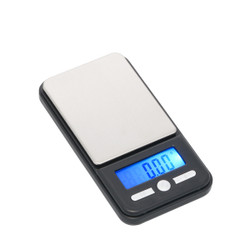
Choosing a scale for essential oils involves more than finding a model that displays several decimal places. The scale must provide enough capacity for your container and ingredients, sufficient resolution for your smallest additions, dependable repeatability, and a practical calibration process.
For many general essential oil formulations, a scale with a capacity of approximately 500 grams and a resolution of 0.01 gram provides a useful balance. Very small experimental formulas may require 0.001-gram resolution, while larger batches may need capacities of 1,000 grams or more.
The best choice depends on what you actually weigh.
Before buying a scale, determine:
-
The weight of your empty mixing container
-
The weight of your largest expected batch
-
The smallest ingredient quantity in your formulas
-
The level of measurement control your process requires
-
Whether the platform can support your preferred vessels
-
Whether your workspace is stable enough for fine-resolution weighing
-
How the scale is calibrated and checked
This essential oils scale buying guide explains accuracy, capacity, resolution, calibration, repeatability, environmental effects, and the features that matter most when comparing digital scales.
Why Use a Scale for Essential Oil Formulation?
Essential oils are often measured in drops, but drops are not standardized units of mass or volume. Their size can vary based on several factors:
-
Oil viscosity
-
Dropper design
-
Bottle angle
-
Dispensing speed
-
Liquid temperature
-
Orifice size
-
Amount of product remaining in the bottle
-
Individual technique
A formula described only as a series of drop counts can therefore produce different results when another person, bottle, or dropper is used.
Weight-based formulation provides a more measurable approach. Instead of recording “10 drops,” a formulator records an ingredient’s mass in grams. The formula can then be expressed as exact weights, percentages, or both.
Weighing ingredients can improve:
-
Batch consistency
-
Formula documentation
-
Percentage calculations
-
Scaling between batch sizes
-
Comparison of test variations
-
Inventory estimates
-
Communication between formulators
-
Investigation of unexpected results
The National Institute of Standards and Technology provides an overview of SI units for mass, including the relationship between kilograms, grams, and milligrams. Using one consistent mass unit throughout a formula reduces conversion mistakes.
A scale supports repeatable measurement, but it does not establish whether an ingredient concentration is safe. Safety limits, intended use, product category, supplier documentation, and applicable regulations must be evaluated separately.
The Four Core Scale Specifications
When comparing scales for essential oils, begin with four related specifications:
-
Capacity
-
Resolution
-
Accuracy
-
Repeatability
These terms are sometimes treated as though they mean the same thing, but each describes a different part of scale performance.
Capacity
Capacity is the maximum physical load the scale is designed to support. It includes the mixing vessel, ingredients, lid, weighing boat, and anything else resting on the platform.
Resolution
Resolution, also called readability or graduation, is the smallest weight increment shown on the display.
A scale with 0.01-gram resolution changes its reading in hundredths of a gram. A scale with 0.001-gram resolution changes its reading in thousandths of a gram.
Accuracy
Accuracy describes how closely a measured value agrees with the accepted or reference value. A scale may display three decimal places without every displayed reading being correct to three decimal places.
Repeatability
Repeatability describes how consistently the scale reports the same load when the measurement is repeated under similar conditions.
A useful scale needs a suitable combination of all four specifications. Fine resolution is of limited value when capacity is insufficient, readings drift constantly, or repeated measurements differ substantially.
Scale Capacity: Include the Container
One of the most common buying mistakes is calculating capacity based only on the ingredients.
The scale must support the total physical load:
Total load = empty container + all ingredients + any other item on the platform
Suppose you plan to prepare a 300-gram batch in a glass vessel weighing 180 grams. The expected load is:
180 g + 300 g = 480 g
A 500-gram scale could technically support that load, but it would leave only 20 grams of margin. A slightly heavier vessel, an overfilled batch, or an accessory placed on the platform could exceed the rated capacity.
A 1,000-gram scale may be the more practical choice if its resolution remains suitable for the formula.
Tare Does Not Increase Capacity
The tare function resets the displayed value to zero after a container is placed on the platform. It does not remove the container’s physical weight from the load cell.
For example:
-
Maximum capacity: 500 g
-
Empty container: 125 g
-
Display after taring: 0.00 g
-
Remaining physical capacity: approximately 375 g
Adding 500 grams of ingredients after taring would place approximately 625 grams on the scale and exceed its rated capacity.
Leave a Capacity Margin
Avoid operating continuously at the scale’s maximum. A reasonable margin provides room for:
-
Differences among containers
-
Accidental over-dispensing
-
Slightly larger formulas
-
Protective liners
-
Lids or mixing accessories
-
Future batch requirements
Extra capacity can be useful, but excessive capacity may come with coarser resolution. Select enough capacity for realistic loads without giving up the detail needed for your smallest ingredients.
Resolution: How Small Are Your Ingredient Additions?
Resolution determines the smallest change the scale displays.
Common configurations include:
| Resolution | Display example | Potential use |
|---|---|---|
| 1 g | 25 g | Large, noncritical quantities |
| 0.1 g | 25.1 g | Larger batches and less-sensitive additions |
| 0.01 g | 25.10 g | General small-batch formulation |
| 0.001 g | 25.100 g | Very small or milligram-level additions |
To identify the required resolution, calculate the lightest ingredient in your formula:
Ingredient weight = total batch weight × ingredient percentage ÷ 100
For a 100-gram formula:
-
5% = 5 g
-
1% = 1 g
-
0.5% = 0.5 g
-
0.1% = 0.1 g
-
0.05% = 0.05 g
-
0.01% = 0.01 g
If your smallest critical target is 0.50 gram, a 0.01-gram scale may offer practical control. If your target is 0.005 gram, a 0.01-gram scale cannot display that value directly.
Do not automatically choose the finest resolution available. High-resolution scales tend to have lower capacities and greater sensitivity to drafts, vibration, static electricity, temperature changes, and movement.
Is 0.01-Gram Resolution Enough?
For many essential oil makers and small-batch formulators, 0.01-gram resolution is a practical starting point.
It can work well for:
-
General essential oil blends
-
Fragrance experiments
-
Candle fragrance development
-
Soap scent blends
-
Room sprays
-
Diffuser formulations
-
Master fragrance blends
-
Small cosmetic test batches
-
Routine percentage-based formulations
A 500 g × 0.01 g scale is often versatile because it accommodates many small containers while providing finer measurement than a typical kitchen scale.
The AWS pocket scales collection includes compact configurations that can be compared by capacity, readability, platform size, and other specifications.
However, 0.01 gram may not be sufficient when the formula depends on ingredient additions below that amount. It may also be inadequate when the smallest critical addition equals only one displayed increment. A process that depends on hitting exactly 0.01 gram on a 0.01-gram scale has very little measurement margin.
When Is 0.001-Gram Resolution Appropriate?
A scale with 0.001-gram resolution displays weight in one-milligram increments. It may be useful for:
-
Very small experimental blends
-
Low-percentage ingredients in small batches
-
Concentrated aromatic compositions
-
Fine adjustments between formula variations
-
Preparing small intermediate blends
-
Research-oriented formulation work
The AWS milligram scales category is the appropriate place to compare scales designed to display 0.001-gram increments.
Milligram resolution introduces additional considerations. Readings can be influenced by:
-
Air conditioning
-
Fans
-
Open windows
-
People walking nearby
-
Static from plastic containers or gloves
-
Heat from hands
-
Temperature changes
-
Product evaporation
-
Uneven work surfaces
-
Low batteries
A 0.001-gram display is useful only when the workspace and weighing method support measurements at that level.
Accuracy Is More Than the Number of Decimal Places
A digital display can create an impression of certainty. If a scale reads 2.347 grams, it may appear that the exact mass is known to the nearest milligram.
That conclusion should not be based on the display alone.
When assessing accuracy, review the available product specifications for:
-
Stated tolerance
-
Repeatability
-
Linearity
-
Minimum recommended load
-
Calibration requirements
-
Operating temperature
-
Stabilization time
-
Overload limits
-
Recommended calibration weight
The scale’s last displayed digit may fluctuate under normal conditions. Even if it remains stable, the displayed value can still be affected by calibration status, environmental conditions, or instrument limitations.
For applications requiring a more stable platform or balance-style configuration, compare the available AWS balance scales.
Accuracy, Precision and Repeatability
These terms should be understood separately.
Accuracy
Accuracy is the closeness of a measured result to an accepted reference value.
If a verified 100.00-gram reference weight reads 100.00 grams, the result agrees with the reference at that point under those conditions.
Precision
Precision concerns how closely repeated measurements agree with one another. A scale can produce tightly grouped readings that are consistently offset from the accepted value.
Repeatability
Repeatability is the scale’s ability to provide similar results when the same load is weighed multiple times under the same conditions.
For example, repeated measurements might produce:
-
25.04 g
-
25.04 g
-
25.05 g
-
25.04 g
-
25.04 g
Those readings demonstrate better repeatability than a sequence that moves between 24.90 and 25.20 grams.
Linearity
Linearity describes performance across the weighing range. A scale that performs well near 100 grams may not necessarily perform identically near 10 grams or close to maximum capacity.
This is one reason a single calibration or check point does not prove perfect performance across the entire range.
Minimum Load Matters
Maximum capacity is prominently advertised, but the lower end of the weighing range is equally important for essential oil formulation.
A scale may display 0.01 gram without being ideal for a critical 0.01-gram addition. Near-zero measurements can be affected by:
-
Zero tracking
-
Instrument sensitivity
-
Environmental noise
-
Static
-
Drift
-
Platform vibration
-
Minimum-load limitations
When possible, choose a process in which the smallest critical ingredient spans multiple displayed increments rather than a single increment.
If an ingredient target is too small for dependable direct measurement, possible alternatives include:
-
Increasing the batch size
-
Using a finer-resolution scale
-
Preparing a documented intermediate blend
-
Revising the workflow with qualified technical guidance
Any dilution or intermediate-blend method must account for ingredient compatibility, stability, concentration, intended use, and safety requirements.
Choosing the Right Capacity and Resolution
The following table provides general starting points:
| Application | Suggested capacity | Suggested resolution |
|---|---|---|
| Tiny formula experiments | 50–100 g | 0.001 g |
| Small concentrated blends | 100–300 g | 0.001–0.01 g |
| General essential oil formulation | Approximately 500 g | 0.01 g |
| Larger development batches | Approximately 1,000 g | 0.01–0.1 g |
| Production-size quantities | 2,000 g or more | Process-dependent |
These ranges are not universal recommendations. The final decision should be based on the actual container weight, total batch weight, smallest addition, acceptable tolerance, and operating environment.
A Practical Selection Formula
Use these two calculations before shopping:
Required capacity = container weight + maximum batch weight + reasonable margin
Required resolution = smaller than the lightest critical ingredient addition
The second formula is intentionally conservative. A target that equals only one display increment may be difficult to approach and verify reliably.
Essential Oil Scale Calibration
Calibration compares the scale’s response with a known reference and, when supported by the instrument, adjusts the response to match the reference.
It is different from simply placing an object of unknown weight on the platform.
A proper calibration process requires:
-
The correct reference weight
-
The correct weight class or suitability for the application
-
The procedure specified for the particular scale
-
A stable, level work surface
-
Minimal air movement and vibration
-
A clean platform
-
Adequate temperature stabilization
Suitable AWS calibration weights can be selected according to the scale model and its specified calibration requirement.
Calibration Is Not the Same as Verification
Calibration and verification serve related but different purposes.
-
Calibration compares or adjusts the instrument using a reference.
-
Verification checks whether the scale produces an acceptable reading.
-
Adjustment changes the scale’s response when the model permits it.
A routine weight check may verify that the scale is performing within the requirements of your process. It does not necessarily adjust the instrument or prove its performance at every possible load.
Internal and External Calibration
Many compact scales use external calibration. The user places a specified calibration weight on the platform while following a button sequence described in the manual.
Some more advanced balances offer internal calibration using a built-in reference mechanism. Internal calibration can be convenient, but it does not eliminate the need for proper placement, maintenance, or performance checks.
Never Use Random Household Objects for Calibration
Coins, jewelry, utensils, and packaged products are not appropriate calibration references. Their actual mass may differ from an assumed or labeled value because of manufacturing tolerances, wear, residue, packaging variation, or damage.
Use the calibration weight specified for the scale and follow the manufacturer’s instructions.
How Often Should an Essential Oil Scale Be Calibrated?
There is no single calibration interval that applies to every scale and process.
Calibration or verification may be appropriate:
-
Before an important formulation session
-
According to the manufacturer’s recommended schedule
-
After moving the scale
-
After a significant temperature change
-
After replacing batteries
-
After an impact or accidental overload
-
When readings drift unexpectedly
-
When a reference check falls outside your acceptable range
-
At intervals required by your quality procedures
A hobbyist making occasional personal blends may use a different schedule from a business documenting production batches.
The appropriate frequency should reflect:
-
How often the scale is used
-
How critical the measurements are
-
The working environment
-
Whether products are sold
-
Applicable quality or regulatory requirements
-
The instrument’s stability history
A Basic Calibration and Verification Procedure
Always follow the manual for the exact scale. A general procedure may include:
-
Place the scale on a firm, level surface.
-
Remove drafts, vibration, and nearby heat sources.
-
Allow the scale and calibration weight to reach room temperature.
-
Confirm that the platform is clean and empty.
-
Turn on the scale and allow the display to stabilize.
-
Enter calibration mode as described in the manual.
-
Place the specified calibration weight in the center of the platform.
-
Wait for the calibration confirmation.
-
Remove the weight as instructed.
-
Perform a separate verification check.
-
Record the result when documentation is required.
Never force the platform, exceed its capacity, or use a reference weight different from the one specified unless the manufacturer explicitly allows it.
What Calibration Cannot Fix
Calibration is important, but it cannot correct every cause of poor readings.
It cannot compensate for:
-
A container touching the counter
-
Air blowing across the platform
-
A flexible or unstable table
-
Excessive vibration
-
Static electricity
-
Product evaporation
-
An overloaded load cell
-
A damaged scale
-
Low batteries
-
A container too large for the platform
-
An ingredient addition below the practical weighing range
-
Improper handling
If readings remain unstable after calibration, investigate the environment and weighing method rather than repeatedly recalibrating without identifying the cause.
Platform Size and Container Selection
Platform dimensions can be as important as capacity.
A container that overhangs the platform may:
-
Cover the display
-
Press against a button
-
Contact the table
-
Shift during dispensing
-
Create an off-center load
-
Increase spill risk
Check both the platform dimensions and the shape of the container’s base.
A tall, narrow vessel can be unstable even when its base fits. A very wide vessel can make it difficult to read the display. Choose containers that sit securely and allow the operator to see the reading while adding ingredients.
Also consider the container material. Essential oils and fragrance ingredients should be handled in vessels compatible with the substances and the intended process. The scale manufacturer’s cleaning and spill-protection instructions should also be followed.
Important Scale Features
After capacity, resolution, and performance specifications, compare these practical features.
Tare Function
Tare subtracts the displayed weight of the container. It can also be used between ingredient additions.
Sequential taring makes individual additions easier to read, but it can hide the accumulated load. Track the running total so the scale is never physically overloaded.
Unit Selection
Gram mode is especially useful for percentage-based formulas. Switching repeatedly between grams, ounces, carats, or other units increases the chance of recording or conversion errors.
Select one unit for the formula and use it consistently.
Calibration Capability
Confirm:
-
Whether the scale can be calibrated
-
Which calibration weight is required
-
Whether the weight is included
-
Whether the procedure is clearly documented
-
Whether settings are retained after battery replacement
Stable Display
A useful scale should provide a readable, stable result under appropriate conditions. Look for a clear display and a visible stable-reading indicator if available.
Auto-Off Settings
Auto-off protects battery life but may interrupt a slow formulation. An adjustable or disableable timer may be helpful when the process includes pauses.
Protective Cover
A cover can protect the platform during storage and transportation. On some pocket scales, the cover can also function as a tray, provided its use is consistent with the manufacturer’s instructions.
Overload Warning
An overload indicator alerts the user when the scale’s capacity has been exceeded. Remove the load promptly if the warning appears.
Platform Material
A smooth platform can make routine cleaning easier. Nevertheless, oils should be weighed in suitable containers rather than placed directly on the scale.
Power Options
Battery power improves portability. USB or AC power may be convenient for frequent use. If external power is available, confirm that the scale performs consistently in that mode and that cables do not create platform vibration or uneven placement.
Environmental Factors That Affect Accuracy
The weighing environment becomes increasingly important as resolution becomes finer.
Drafts
Fans, vents, open doors, air conditioners, and breathing near the platform can cause readings to fluctuate. A draft shield may be appropriate for milligram-resolution work.
Vibration
Footsteps, appliances, machinery, speakers, and unstable furniture can transfer movement to the scale. Use a rigid, level surface away from vibration sources.
Static Electricity
Plastic containers, disposable weighing boats, synthetic clothing, and low humidity can create static. Static forces may cause drifting readings or apparent changes in weight.
Temperature
A scale moved from a cold storage area into a warm room may need time to acclimate. Ingredients and reference weights should also be allowed to stabilize.
Temperature can change how quickly an oil pours or dispenses, which may affect the operator’s ability to stop at the target.
Evaporation
Some aromatic ingredients are volatile. An uncovered sample may lose mass while sitting on the scale, causing the display to fall gradually.
Prepare the workflow in advance, work efficiently, and close ingredient containers promptly.
Moisture and Residue
Residue on the platform changes the load and can damage the instrument. Use secondary containment when appropriate and clean spills according to the manufacturer’s instructions.
The AWS guide to scale maintenance and care provides additional information for protecting scale performance.
How to Test a New Essential Oil Scale
Before using a new scale for important formulas, become familiar with its behavior.
Test 1: Zero Stability
Turn on the scale, allow it to stabilize, and observe the zero reading for several minutes. Investigate persistent drift.
Test 2: Reference-Weight Check
Place an appropriate reference weight in the center of the platform. Record the reading and repeat the test several times.
Test 3: Repeatability
Remove and replace the same reference weight multiple times. Note whether the result returns consistently.
Test 4: Different Loads
If you have suitable reference weights, check performance at more than one point in the weighing range.
Test 5: Tare Operation
Place your usual container on the platform, tare it, and confirm that the scale remains stable.
Test 6: Container Fit
Make sure the vessel does not touch the table, obscure the display, or wobble during dispensing.
Test 7: Realistic Dispensing
Practice adding a noncritical test material slowly. Learn how quickly the reading responds and how much dispensing momentum is needed near the target.
For product manuals and model-specific troubleshooting, visit the AWS support center.
A Reliable Essential Oil Weighing Workflow
Consistency in technique is as important as selecting the right scale.
1. Convert the Formula to Grams
List every ingredient with its target weight. Verify that the percentages and total batch weight agree.
2. Check the Complete Load
Add the empty container weight to the expected finished batch weight. Confirm that the total remains safely below the scale’s capacity.
3. Prepare the Workspace
Eliminate drafts, vibration, clutter, and potential sources of contamination.
4. Prepare Every Ingredient
Arrange bottles and dispensing tools in formula order. Confirm each ingredient’s identity before beginning.
5. Check the Scale
Inspect the platform, battery status, unit setting, calibration status, and zero reading.
6. Place the Container Centrally
Center the vessel on the platform and confirm that it is stable.
7. Tare the Container
Wait for the displayed value to stabilize before pressing tare.
8. Add Ingredients Slowly
Approach each target gradually. Slow down before reaching the desired weight.
9. Record Actual Weights
If the target was 1.00 gram and the actual addition was 1.03 grams, document 1.03 grams. Accurate records make it possible to reproduce or revise the real batch.
10. Monitor the Running Load
If taring between ingredients, maintain a separate running total to avoid exceeding capacity.
11. Close Containers Promptly
This reduces evaporation, contamination, spills, and ingredient mix-ups.
12. Clean and Store the Scale
Remove the weighing vessel and clean the equipment according to its instructions. Store the scale with its platform protected and nothing pressing on the load cell.
Essential Oil Safety and Compliance
A precise scale helps you measure the formula you intend to make. It does not prove that the formula is safe.
The International Fragrance Association publishes the IFRA Standards documentation, which addresses restrictions, prohibitions, and specifications for certain fragrance ingredients and product categories.
Workplace users should review supplier documentation, including Safety Data Sheets. The Occupational Safety and Health Administration explains the structure and required information in Safety Data Sheets.
Essential oils should not be assumed safe merely because they are naturally derived. The National Center for Complementary and Integrative Health provides general information about aromatherapy and essential-oil safety.
If an essential-oil product is marketed to consumers, its intended use and claims can affect its regulatory status. The U.S. Food and Drug Administration discusses this issue in its information about aromatherapy products.
Consult appropriate professionals and current requirements for commercial, therapeutic, workplace, or regulated applications. A weighing instrument cannot determine safe concentration, skin suitability, stability, labeling compliance, or the legal classification of a finished product.
Common Buying Mistakes
Selecting a Scale Based Only on Price
A low price is not useful if the instrument lacks the required capacity, resolution, stability, or calibration capability.
Selecting Based Only on Resolution
A 0.001-gram display does not automatically guarantee milligram-level accuracy in every condition.
Ignoring Container Weight
The container counts toward maximum capacity even after the display has been tared.
Choosing Excessive Capacity
A much higher capacity may come with coarser resolution. Buy enough capacity for your actual process plus a practical margin.
Choosing Insufficient Capacity
A low-capacity scale may be unusable once the mixing vessel is added.
Confusing Calibration With a General Weight Check
Calibration, adjustment, and verification are related but different procedures.
Calibrating With Coins
Coins and household objects are not dependable calibration references.
Ignoring the Minimum Working Range
A displayed increment should not automatically be treated as the smallest dependable working quantity.
Using an Oversized Container
A container that touches surrounding surfaces can produce unreliable results even when the scale itself is functioning correctly.
Assuming More Digits Mean Better Results
Additional digits can create false confidence when the scale, environment, or technique does not support them.
Essential Oils Scale Buying Checklist
Before purchasing, answer the following questions:
Capacity
-
What is the heaviest empty container?
-
What is the largest expected batch?
-
What other items may rest on the platform?
-
Is there enough capacity margin?
-
Will future batches be larger?
Resolution
-
What is the smallest ingredient addition?
-
How many display increments represent that addition?
-
Is 0.01 gram sufficient?
-
Is 0.001 gram truly necessary?
-
Can the workspace support fine-resolution weighing?
Accuracy and Repeatability
-
Does the manufacturer provide relevant performance specifications?
-
Is a minimum load stated?
-
Does the scale return consistent readings?
-
Is the reading stable under proper conditions?
-
Does the instrument suit the importance of the measurement?
Calibration
-
Can the scale be calibrated?
-
What calibration weight is required?
-
Is the procedure available?
-
Can performance be verified between calibrations?
-
Does your process require documented checks?
Physical Design
-
Does the container fit on the platform?
-
Can the display remain visible?
-
Is the vessel stable?
-
Is the platform easy to protect and clean?
-
Will a draft shield be necessary?
Workflow
-
Is the tare function easy to use?
-
Can auto-off be adjusted?
-
Are gram measurements available?
-
Is overload clearly indicated?
-
Is the power source practical?
Frequently Asked Questions
What type of scale is best for essential oils?
For many general formulations, a compact digital scale with approximately 500 grams of capacity and 0.01-gram resolution is a practical starting point. The correct model depends on your container weight, batch size, smallest ingredient, and required accuracy.
Is a kitchen scale accurate enough for essential oils?
Many kitchen scales read in 1-gram or 0.1-gram increments. That may be insufficient for small formulas. Calculate the smallest ingredient addition before deciding.
Is 0.01 gram precise enough for essential oil blending?
It is often suitable for general small-batch blending. It may not be sufficient for very small batches or ingredients used at extremely low percentages.
Do I need a milligram scale?
You may need a 0.001-gram scale when critical ingredient targets fall below 0.01 gram. Milligram scales also require a more controlled environment.
What capacity should I choose?
Add the empty container weight to the largest expected batch, then include a practical margin. Never base capacity on the ingredient weight alone.
Does tare reset the scale’s physical capacity?
No. Tare resets the displayed value, but the container continues to count against maximum capacity.
How often should I calibrate my scale?
Follow the manufacturer’s instructions and your quality requirements. Calibration or verification may also be needed after moving, impact, overload, major temperature change, or unexpected readings.
Can I calibrate a scale with a coin?
No. Use the specified calibration weight. Coins can vary because of manufacturing tolerances, wear, dirt, or damage.
Why does my essential oil scale keep drifting?
Common causes include drafts, vibration, static, changing temperature, evaporation, low batteries, an unstable surface, or an item touching the platform.
Should I measure essential oils in grams or milliliters?
A scale measures mass in grams. Milliliters measure volume. Converting between the two requires dependable density data. For a weight-based formula, keep the measurements in grams.
Can a precise scale determine whether a blend is safe?
No. A scale measures mass. Safety depends on ingredient restrictions, concentration, product category, intended use, exposure, labeling, and other factors.
Final Thoughts
The best scale for essential oils is not necessarily the model with the highest capacity or the greatest number of decimal places. It is the scale whose specifications match your real containers, batches, ingredients, and working environment.
For many small-batch users, approximately 500 g × 0.01 g offers a practical combination of capacity and detail. Very small formulas may require 0.001-gram resolution, while larger vessels and production batches may require 1,000 grams of capacity or more.
Before buying, calculate the complete physical load, identify the smallest critical addition, review the model’s performance specifications, and confirm that the platform fits your containers. Choose proper calibration weights, establish a verification routine, and control drafts, vibration, static, temperature, and evaporation.
A carefully selected and properly maintained scale can make essential oil formulation more consistent, traceable, and repeatable—but reliable results always depend on the scale, the environment, and the weighing procedure working together.