
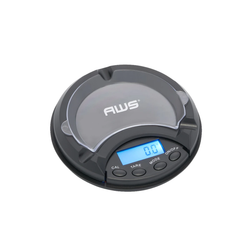
Choosing a scale for collectibles starts with two questions:
What are you weighing?
and:
How small a weight difference do you actually need to see?
A scale for individual collectible coins has different requirements from one used for:
-
Watches
-
Trading-card slabs
-
Medals
-
Figurines
-
Die-cast models
-
Vintage jewelry
-
Pins
-
Tokens
-
Boxed memorabilia
For many small collectible objects:
250–500g capacity with 0.01g readability
provides an excellent general-purpose range.
A:
500g × 0.01g
scale is particularly versatile because it offers fine hundredth-of-a-gram readability while providing enough capacity for many coins, watches, medals, card slabs, jewelry pieces and small miniatures.
For heavier collectibles:
1–5kg+ capacity with 0.1g readability
can be considerably more practical.
And for very tiny objects where hundredths of a gram are genuinely too coarse:
0.001g readability
may be appropriate.
The goal is not to buy the scale with the most decimal places.
The goal is to match:
capacity + readability + repeatability + platform size + calibration
to the objects in your actual collection.
Quick Guide: What Scale Do You Need for Collectibles?
| Collectible | Capacity to Consider | Useful Readability |
|---|---|---|
| Individual coins | 100–250g | 0.01g |
| Coins in capsules | 100–250g | 0.01g |
| Coin groups | 250–500g+ | 0.01g |
| Tiny precious-metal pieces | 20–100g | 0.001g when genuinely needed |
| Tokens | 100–500g | 0.01g |
| Small medals | 250–500g | 0.01g |
| Watches | 250–500g+ | 0.01g–0.1g |
| Trading cards | 100–250g | 0.01g–0.1g |
| Graded card slabs | 250–500g | 0.01g–0.1g |
| Pins and badges | 100–500g | 0.01g |
| Miniatures | 100–500g | 0.01g |
| Small figurines | 500g–2kg | 0.1g |
| Die-cast models | 500g–5kg | 0.1g |
| Memorabilia | 500g–5kg+ | 0.1g |
| Boxed collectibles | 1–5kg+ | 0.1g–1g |
These ranges are starting points rather than universal requirements.
Your best specification depends on:
the lightest meaningful measurement and the heaviest complete load.
Step 1: Decide What You Will Actually Weigh
Do not begin your search by comparing scale specifications.
Begin with your collection.
Write down everything you may want to weigh.
That could include:
-
Coins
-
Tokens
-
Medals
-
Bullion pieces
-
Watches
-
Vintage jewelry
-
Trading cards
-
Sports cards
-
TCG cards
-
Graded slabs
-
Pins
-
Badges
-
Miniatures
-
Figurines
-
Die-cast cars
-
Model trains
-
Small antiques
-
Historical objects
-
Memorabilia
-
Boxed collectibles
Then determine:
your lightest item
and:
your heaviest item.
That immediately narrows the appropriate scale range.
Step 2: Determine Why You Want to Weigh the Collectible
Collectors use scales for different purposes.
You may want to:
-
Document an item
-
Compare two similar pieces
-
Compare a coin against published specifications
-
Catalog inventory
-
Record precious-metal mass
-
Compare production variants
-
Weigh components
-
Measure a collectible before shipping
-
Track modifications
-
Compare holders or packaging
The purpose determines how much measurement detail is useful.
If you are simply documenting a:
1.8kg figurine
you probably do not need 0.01g readability.
If you are comparing individual coins weighing approximately:
20–30g
0.01g may be much more useful.
Step 3: Choose Capacity Before Chasing Precision
Capacity is the maximum total load the scale is designed to support.
Everything placed on the platform counts.
That includes:
-
Collectible
-
Holder
-
Capsule
-
Tray
-
Container
-
Protective dish
Suppose:
Coin collection = 320g
Tray = 85g
Total physical load:
405g
A 500g scale can support it.
But:
Collectible = 460g
Tray = 70g
Total:
530g
A 500g scale is insufficient.
This remains true even if you tare the tray.
Step 4: Leave Capacity Headroom
Avoid choosing a scale whose maximum capacity is almost identical to your heaviest object.
Suppose:
Heaviest normal collectible = 470g
Scale capacity = 500g
That leaves:
30g
for:
-
Tray
-
Holder
-
Unexpectedly heavier objects
A higher-capacity scale may be more practical.
For general collecting, choose enough capacity for your:
heaviest realistic item + holder or tray.
Step 5: Understand What 500g × 0.01g Means
A specification of:
500g × 0.01g
means the scale has:
500g maximum nominal capacity
and:
0.01g readability.
Readability is the smallest increment shown by the display.
AWS explains the terminology in its guide to what 500g × 0.01g means on a digital scale.
That configuration can be attractive for collectors because it combines:
-
Fine readability
-
Useful small-object capacity
-
Portable form factor
-
Enough headroom for many holders and trays
But:
0.01g readability does not mean guaranteed ±0.01g accuracy under every condition.
Step 6: Decide Whether 0.1g Is Enough
A 0.1g scale displays:
845.1g
845.2g
845.3g
For larger collectibles, this can provide all the detail you need.
0.1g may be appropriate for:
-
Figurines
-
Larger medals
-
Die-cast models
-
Heavy watches
-
Large coin lots
-
Boxed collectibles
-
Memorabilia
Suppose your figurine weighs:
1,782.4g
Knowing whether it weighs:
1,782.41g
or:
1,782.42g
usually adds little useful information.
Capacity is more valuable in that application.
Step 7: Decide Whether 0.01g Is Better
A 0.01g scale displays:
26.71g
26.72g
26.73g
This is often the most practical readability for general collectible weighing.
It can work well for:
-
Coins
-
Tokens
-
Small medals
-
Watches
-
Jewelry pieces
-
Pins
-
Badges
-
Miniatures
-
Small components
AWS's current guide to the best digital scale for coins identifies approximately 0.01g readability as a practical general-purpose choice for many coin collectors.
For a mixed small-object collection:
250–500g × 0.01g
is a strong starting range.
Step 8: Decide Whether You Truly Need 0.001g
A 0.001g scale displays:
2.351g
2.352g
2.353g
That is milligram-level readability.
It may be useful for:
-
Tiny gemstones
-
Extremely small metal fragments
-
Lightweight watch components
-
Tiny collectible parts
-
Specialized measurement research
But finer readability usually brings tradeoffs.
A milligram scale may have:
-
Lower capacity
-
Smaller platform
-
Greater sensitivity to drafts
-
Greater sensitivity to vibration
-
Greater sensitivity to static
-
More demanding setup
AWS compares these tradeoffs in 0.001g vs. 0.01g scales.
Do not choose 0.001g simply because:
three decimal places look better than two.
Step 9: Understand Readability vs. Accuracy
This distinction matters.
Readability
The smallest increment displayed.
Accuracy
How close a measurement is to the relevant actual or reference value within the scale's specified performance.
Repeatability
How consistently the same object produces similar measurements under similar conditions.
A scale can display:
25.684g
without automatically guaranteeing that the true mass is exactly 25.684g.
NIST's Calibration of Mass Standards program provides broader technical context for traceable mass measurement and calibration.
Step 10: Pay Attention to Repeatability
For collectors, repeatability is extremely useful.
Suppose you weigh the same medal three times.
Results:
142.36g
142.36g
142.37g
That is relatively consistent.
Now compare:
142.36g
143.21g
141.84g
That deserves investigation.
Changing readings may result from:
-
Drafts
-
Vibration
-
Static
-
Unstable surface
-
Poor object placement
-
Weak batteries
-
Calibration issues
A scale that shows more digits but cannot produce stable readings is not automatically the better choice.
Step 11: Consider Minimum Usable Load
Maximum capacity gets most of the attention.
For very lightweight collectibles, the lower end matters too.
Do not assume:
0.01g readability = reliable measurement of every object weighing 0.01g.
The smallest displayed increment is not necessarily the same as the minimum useful load.
Check the manufacturer's specifications when weighing:
-
Tiny gemstones
-
Small precious-metal fragments
-
Very small components
-
Lightweight watch parts
Step 12: Choose the Right Scale for Coins
Coins are one of the most common collectible weighing applications.
For many individual coins:
100–250g capacity × 0.01g readability
is sufficient.
For:
-
Capsules
-
Groups
-
Tokens
-
Medals
250–500g × 0.01g
provides additional flexibility.
Weight can be compared against published specifications, but it should not be treated as a standalone authentication test.
PCGS describes coin grading as an evaluation of physical condition, while NGC uses an established 1–70 grading scale for problem-free coins. PCGS coin grading overview NGC coin grading scale
Step 13: Do Not Treat Coin Weight as Proof of Authenticity
A coin can differ slightly from its nominal specification because of:
-
Wear
-
Corrosion
-
Damage
-
Residue
-
Contamination
-
Manufacturing tolerances
-
Measurement conditions
Likewise, a counterfeit object could theoretically have a similar mass to an authentic one.
Use weight alongside:
-
Diameter
-
Thickness
-
Composition
-
Surface examination
-
Provenance
-
Professional authentication
The American Numismatic Association's coin collecting basics guidance emphasizes condition, grading issues and careful examination when evaluating collectible coins.
Step 14: Choose the Right Scale for Trading Cards
Trading cards weigh very little.
Possible scale uses include:
-
Documenting cards
-
Comparing sleeves
-
Comparing top loaders
-
Comparing slabs
-
Inventory research
For most collectible cards:
0.01g or 0.1g readability
can provide sufficient detail.
There is rarely a practical reason to sacrifice useful capacity simply to obtain 0.001g readability.
Step 15: Weight Cannot Grade a Trading Card
A card's mass does not determine:
-
Authenticity
-
Grade
-
Centering
-
Surface quality
-
Edge quality
-
Corner condition
-
Alteration status
PSA separates authentication from grading: authentication establishes genuineness, while grading evaluates condition using its grading system. PSA trading-card authentication and grading
A scale can provide:
another documented physical characteristic.
It cannot replace professional card evaluation.
Step 16: Include Card Holders in Capacity
If you weigh a graded card, you are weighing:
card + slab.
If you weigh:
-
Card
-
Sleeve
-
Top loader
you are measuring all three.
Be clear about what your recorded value represents.
For example:
Card only: 1.82g
Card + holder: 9.44g
Card + graded slab: 48.3g
These are not interchangeable measurements.
Step 17: Choose the Right Scale for Watches
Watches can range considerably in mass.
A lightweight watch might weigh:
60–100g
while a large metal watch may weigh:
150–250g+
For many collectible watches:
250–500g capacity
is practical.
Readability of:
0.01g
offers detailed documentation.
For larger watches where extreme detail is unnecessary:
0.1g
may be enough.
Step 18: Do Not Use Weight Alone to Authenticate Watches
Watch authenticity may involve examining:
-
Movement
-
Case
-
Dial
-
Serial number
-
Materials
-
Finishing
-
Documentation
-
Provenance
-
Service history
A mass measurement may support an examination.
It cannot independently determine authenticity.
Step 19: Choose the Right Scale for Medals
Medals vary from small lightweight pieces to large bronze and silver items.
For small medals:
250–500g × 0.01g
can be highly useful.
For large medals:
1kg+ × 0.1g
may be more practical.
Choose enough capacity for:
medal + holder or tray.
Step 20: Choose the Right Scale for Tokens
Tokens generally have requirements similar to coins.
For:
-
Casino tokens
-
Transit tokens
-
Trade tokens
-
Commemorative tokens
a:
100–500g × 0.01g
scale can cover a broad range.
For larger groups, increase capacity.
Step 21: Choose the Right Scale for Collectible Jewelry
Vintage and collectible jewelry can include:
-
Rings
-
Earrings
-
Chains
-
Pendants
-
Bracelets
-
Brooches
-
Precious-metal pieces
-
Gemstones
For many general pieces:
0.01g readability
is practical.
For tiny gemstones and components:
0.001g
may be useful.
AWS provides more application-specific guidance in How to Choose a Scale for Jewelry.
Step 22: Choose the Right Scale for Pins and Badges
Pins and badges usually fall comfortably within:
100–500g capacity.
Useful applications include:
-
Enamel pins
-
Historical badges
-
Military insignia
-
Buttons
-
Lapel pins
For most:
0.01g readability
provides more than enough detail.
A tray may make small pieces easier to handle.
Step 23: Choose the Right Scale for Miniatures
Miniatures can range from:
a few grams
to:
several hundred grams.
For small metal or resin miniatures:
500g × 0.01g
provides useful flexibility.
If you routinely weigh:
-
Large bases
-
Multi-part models
-
Heavy metal miniatures
higher capacity may be preferable.
Step 24: Choose the Right Scale for Figurines
Figurines often require more capacity than coins and jewelry.
Suppose:
Figure = 680g
Base = 240g
Total:
920g
A 500g scale is unusable.
A:
2kg × 0.1g
scale may be substantially better.
For large collectible statues:
5kg+
may be necessary.
Step 25: Choose the Right Scale for Die-Cast Models
Die-cast objects can be deceptively heavy.
A compact:
-
Car
-
Train
-
Aircraft
-
Military vehicle
may contain enough metal to exceed the capacity of a typical pocket scale.
For smaller models:
500g–1kg
may work.
For larger models:
2–5kg
provides more flexibility.
Step 26: Choose the Right Scale for Memorabilia
Memorabilia is an extremely broad category.
It may include:
-
Medals
-
Pins
-
Equipment
-
Signed objects
-
Promotional items
-
Historical items
-
Souvenirs
Do not choose a single specification based on the word "memorabilia."
Instead:
weigh or estimate your heaviest representative objects first.
Step 27: Choose the Right Scale for Boxed Collectibles
Packaging can significantly increase total mass.
Suppose:
Collectible = 1.4kg
Retail box = 0.5kg
Internal inserts = 0.2kg
Total:
2.1kg
If you want to document the complete boxed collectible, choose:
at least 2.1kg capacity plus reasonable headroom.
A 5kg scale may therefore be more practical than a 500g precision scale.
Step 28: Decide Whether You Need One Scale or Two
A single scale works well when your collection stays within a narrow weight range.
Example:
Lightest object = 8g
Heaviest object = 300g
A:
500g × 0.01g
scale can cover the full range.
Now consider:
Lightest coin = 4g
Heaviest statue = 3.2kg
One scale will require significant compromises.
Step 29: Consider a Two-Scale Setup
For mixed collections:
Precision Scale
500g × 0.01g
for:
-
Coins
-
Watches
-
Tokens
-
Medals
-
Cards
-
Jewelry
-
Miniatures
plus:
Higher-Capacity Scale
2–5kg × 0.1g
for:
-
Figurines
-
Die-cast models
-
Boxed collectibles
-
Heavy memorabilia
This arrangement gives you:
fine readability for small items without sacrificing capacity for large ones.
Step 30: Consider Platform Size
Capacity is not enough.
A collectible must be physically supported correctly.
Suppose:
Scale capacity = 500g
Collectible = 330g
But the object:
-
Hangs far beyond the platform
-
Touches the desk
-
Leans against another object
Then the setup may produce an unreliable measurement.
Choose a platform large enough for the objects you plan to weigh.
Step 31: Use a Tray When Appropriate
A tray can help with:
-
Coins
-
Pins
-
Tokens
-
Small components
-
Irregular pieces
It can also protect a collectible from direct contact with the platform.
Remember:
tray weight still counts toward capacity.
Step 32: Understand Tare
Tare allows you to zero a tray or container.
Example:
Tray = 62.45g
Place it on the scale.
Press tare.
Display:
0.00g
Add collectible:
84.37g
The display now shows the collectible's net mass.
This is particularly useful for delicate or irregular objects.
Step 33: Tare Does Not Increase Capacity
Suppose:
Scale capacity = 500g
Tray = 100g
After pressing tare:
Display = 0.00g
But the scale is still physically supporting:
100g
You have approximately:
400g
of nominal remaining load capacity.
Tare changes the displayed zero.
It does not increase the scale's physical limit.
Step 34: Look for Calibration Capability
For regular precision weighing, calibration is important.
Before choosing a scale, check:
-
Can it be calibrated?
-
What calibration weight is required?
-
Is that weight included?
-
Are clear instructions provided?
AWS explains the process in How to Calibrate a Digital Scale for Accurate Results.
The required calibration weight is:
model-specific.
Do not guess.
Step 35: Do Not Use Random Collectibles for Calibration
A collectible coin is not automatically an appropriate calibration weight.
Neither is:
-
Medal
-
Watch
-
Jewelry piece
-
Packaged object
-
Household item
Use the reference specified by the scale manufacturer.
Calibration depends on:
a suitable known reference—not merely an object whose weight you think you know.
Step 36: Use a Hard, Stable Surface
Precision scales should generally be placed on a:
-
Hard
-
Flat
-
Stable
-
Rigid
surface.
Good:
-
Solid desk
-
Workbench
-
Countertop
Poor:
-
Couch
-
Bed
-
Carpet
-
Flexible shelf
-
Foam surface
Fine measurements depend on the weighing environment as well as the scale itself.
Step 37: Protect the Scale From Vibration
Avoid placing the scale:
-
Beside a printer
-
On a table with a loud speaker
-
Near machinery
-
On a shaky display table
Small vibrations can influence fine measurements.
This becomes increasingly important as readability becomes finer.
Step 38: Avoid Strong Airflow
Precision scales can react to drafts.
Avoid measuring directly beneath:
-
Ceiling fan
-
Air-conditioning vent
-
Open window
At:
0.001g
air movement becomes especially important.
This is one reason milligram readability should only be chosen when needed.
Step 39: Consider Static Electricity
Static can become relevant when handling:
-
Plastic card sleeves
-
Capsules
-
Plastic trays
-
Lightweight objects
If very fine readings fluctuate unexpectedly, static is one factor to consider.
The finer the scale, the more demanding the environment may become.
Step 40: Allow the Scale to Stabilize
Do not immediately expect the finest measurement after moving a scale between very different environments.
For example:
cold vehicle → warm room
may involve a temperature transition.
Follow the manufacturer's instructions regarding operating conditions and stabilization.
Step 41: Choose Useful Weighing Units
A collectible scale may support:
-
g
-
oz
-
ozt
-
dwt
-
ct
-
gn
The best units depend on what you collect.
Step 42: Grams Are Best for General Collecting
For mixed collectibles:
grams
are usually the simplest unit.
They work well for:
-
Coins
-
Watches
-
Medals
-
Tokens
-
Cards
-
Miniatures
-
Jewelry
Many published technical specifications for small collectible objects also use grams.
Step 43: Understand Troy Ounces
If you collect:
-
Silver
-
Gold
-
Bullion
-
Precious-metal objects
troy-ounce mode may be useful.
Remember:
a troy ounce is not the same as a standard avoirdupois ounce.
Always confirm the unit before comparing measurements.
Step 44: Consider Carat Mode for Gemstones
Carat mode is useful for:
-
Diamonds
-
Loose gemstones
It is not especially useful for:
-
Figurines
-
Trading cards
-
Coins
-
Memorabilia
Do not pay for specialized units unless they apply to your collection.
Step 45: Consider Portability
A pocket scale can be useful when attending:
-
Coin shows
-
Card shows
-
Antique markets
-
Flea markets
-
Collector conventions
-
Dealer meetings
If portability matters, consider:
-
Size
-
Battery operation
-
Protective cover
-
Carrying case
-
Durable controls
AWS's guide to choosing a pocket scale explains how compact scales balance portability, capacity and readability.
Step 46: Decide Whether a 500g × 0.01g Scale Fits Your Collection
This specification is especially useful if you primarily collect:
-
Coins
-
Tokens
-
Medals
-
Watches
-
Jewelry
-
Trading-card slabs
-
Pins
-
Small miniatures
The AWS SC501g is one example of a:
500g × 0.01g
precision pocket-scale configuration.
A scale in this range offers:
-
Fine general-purpose readability
-
Useful capacity
-
Compact size
-
Tare
-
Multiple weighing units
For many collectors, it is a stronger compromise than either:
-
Very low-capacity 0.001g scale
-
High-capacity whole-gram scale
Example 1: Coin Collector
Collection includes:
Heaviest individual coin = 34g
Capsules = 8g
Small group = 165g
A:
250–500g × 0.01g
scale is appropriate.
Example 2: Watch Collector
Heaviest watch:
218g
Display stand used for weighing:
72g
Maximum physical load:
290g
A:
500g × 0.01g
scale provides comfortable capacity.
Example 3: Trading-Card Collector
Card = 1.8g
Sleeve = 0.7g
Top loader = 7.4g
Combined:
9.9g
A 0.01g scale provides plenty of measurement detail.
0.001g is generally unnecessary for routine documentation.
Example 4: Medal Collector
Medal:
312g
Tray:
85g
Physical load:
397g
A 500g scale can accommodate the combination.
Example 5: Figurine Collector
Figurine:
1.35kg
Base:
0.32kg
Complete piece:
1.67kg
A 500g precision pocket scale is unsuitable.
Choose:
2kg or greater capacity.
Example 6: Mixed Collection
You collect:
Coin = 8g
Watch = 180g
Medal = 410g
Figurine = 2.8kg
One scale is unlikely to be ideal.
A practical setup is:
500g × 0.01g
plus:
5kg × 0.1g.
Example 7: Boxed Memorabilia
Collectible = 1.2kg
Retail box = 450g
Protective inserts = 250g
Total:
1.9kg
A:
2kg scale
technically has little headroom.
A:
5kg scale
may provide a more practical range.
Common Mistakes When Choosing a Scale for Collectibles
Buying the Scale With the Most Decimal Places
More displayed digits do not automatically make a scale better.
Ignoring Capacity
The complete physical load matters.
Forgetting Holders and Trays
They count toward capacity.
Confusing Readability With Accuracy
They are different specifications.
Ignoring Repeatability
Stable measurements matter.
Ignoring Minimum Load
Tiny objects can require additional consideration.
Assuming 0.001g Is Always Better
It can introduce lower capacity and greater environmental sensitivity.
Buying Too Much Capacity
A very high-capacity scale may sacrifice the fine readability needed for small objects.
Ignoring Platform Size
The item must be properly supported.
Allowing the Collectible to Touch the Table
This can interfere with measurements.
Forgetting Tare Capacity
Tare does not restore physical capacity.
Using Random Objects for Calibration
Use the specified calibration reference.
Ignoring Drafts
Fine scales can respond to airflow.
Ignoring Vibration
Use a stable surface.
Ignoring Static
Plastic holders can contribute to unstable fine measurements.
Using Weight as Proof of Authenticity
Weight is only one piece of evidence.
Using Weight to Grade Coins
Coin grading evaluates condition.
Using Weight to Grade Trading Cards
Card grading involves authentication and condition assessment.
Using Weight to Determine Metal Purity
A scale measures mass, not composition.
Using Weight to Determine Value
Collectible value depends on many factors beyond weight.
Collectible Scale Buying Checklist
Before choosing a scale, ask:
-
What collectibles will I weigh?
-
Why am I weighing them?
-
What is my lightest object?
-
What is my heaviest object?
-
What is my heaviest object plus holder?
-
Do I use a tray?
-
Do I need 100g capacity?
-
Do I need 250g?
-
Is 500g better?
-
Do I need 1kg?
-
Do I need 2kg?
-
Do I need 5kg?
-
Is 0.1g readability enough?
-
Do I need 0.01g?
-
Do I genuinely need 0.001g?
-
What accuracy specification is provided?
-
What is the minimum usable load?
-
Are readings repeatable?
-
Does the unloaded scale hold a stable zero?
-
Can it be calibrated?
-
What calibration weight is required?
-
Is that weight included?
-
Does it offer tare?
-
Is the platform large enough?
-
Would a tray help?
-
Does it support grams?
-
Do I need troy ounces?
-
Do I need carats?
-
Do I need pennyweight?
-
Do I need portability?
-
Does it have a protective cover?
-
Is the display easy to read?
-
Is my weighing surface stable?
-
Can I avoid strong airflow?
-
Could vibration interfere?
-
Could static matter?
-
Would two scales cover my collection better?
-
Am I using weight as supporting information rather than proof of authenticity or value?
Frequently Asked Questions
How do I choose a scale for collectibles?
Start by identifying:
your lightest meaningful measurement
and:
your heaviest complete load.
Then choose the capacity and readability that cover both.
For many small collectibles:
250–500g × 0.01g
is a strong range.
What capacity scale do collectors need?
It depends on the collection.
Typical ranges include:
-
Coins: 100–500g
-
Watches: 250–500g+
-
Medals: 250–500g+
-
Miniatures: 100–500g
-
Figurines: 1–5kg+
-
Boxed collectibles: 1–5kg+
Is 500g enough for collectibles?
For many:
-
Coins
-
Tokens
-
Watches
-
Medals
-
Jewelry
-
Card slabs
-
Miniatures
yes.
It will not cover many large figurines or heavy memorabilia.
Is 0.01g good for collectibles?
Yes.
For many small collectible objects:
0.01g
offers an excellent balance between measurement detail and practical capacity.
Is 0.1g enough?
For larger:
-
Figurines
-
Models
-
Memorabilia
-
Boxed objects
0.1g may be entirely sufficient.
Do I need 0.001g?
Only if differences below 0.01g genuinely matter.
For most general collectible weighing, 0.001g is unnecessary.
Is 0.001g more accurate than 0.01g?
Not automatically.
It has finer readability.
Accuracy, repeatability, calibration and environmental conditions also matter.
What scale should I use for coins?
For many individual collectible coins:
100–250g × 0.01g
works well.
For groups and medals:
250–500g × 0.01g
provides more flexibility.
What scale should I use for trading cards?
A 0.01g or 0.1g scale is usually sufficient for documentation.
Weight cannot determine grade or authenticity.
What scale should I use for watches?
For many watches:
250–500g capacity
with:
0.01g or 0.1g readability
is practical.
What scale should I use for figurines?
For many figurines:
1–5kg capacity
with:
0.1g readability
is more practical than a low-capacity pocket scale.
Does tare increase capacity?
No.
Tare changes the displayed zero.
The tray or holder still counts toward physical load.
Is calibration important?
Yes.
Follow the exact calibration instructions for your scale model.
Can I calibrate a collectible scale with a coin?
Do not assume a coin is an appropriate calibration reference.
Use the weight specified by the manufacturer.
Why does my scale give different readings?
Possible causes include:
-
Drafts
-
Vibration
-
Static
-
Unstable surface
-
Weak battery
-
Improper object placement
-
Calibration problems
Can a scale authenticate a collectible?
No.
A scale measures mass.
Authentication can require examination of:
-
Materials
-
Construction
-
Markings
-
Dimensions
-
Condition
-
Provenance
-
Professional expertise
Can a scale tell if a coin is counterfeit?
Not on its own.
Weight is one useful characteristic to compare with authoritative specifications.
Can a scale determine coin grade?
No.
Coin grade reflects condition according to established grading standards.
Can a scale determine trading-card grade?
No.
Professional card grading evaluates authentication and condition, not simply mass.
Can weight determine whether something is gold or silver?
No.
Weight alone does not establish composition or purity.
Can collectible weight determine value?
No.
Value can depend on:
-
Authenticity
-
Condition
-
Rarity
-
Provenance
-
Demand
-
Edition
-
Historical significance
Should collectors own two scales?
If your collection ranges from tiny coins to multi-kilogram figurines:
yes.
A strong combination is:
500g × 0.01g precision scale
plus:
2–5kg × 0.1g higher-capacity scale.
Final Verdict: How to Choose a Scale for Collectibles
Choosing the right scale for collectibles begins with your actual collection—not the number of decimal places printed on the product page.
First determine:
the lightest meaningful measurement you need to see.
Then determine:
the heaviest complete object, including any holder or tray.
For many collectors working with:
-
Coins
-
Tokens
-
Watches
-
Small medals
-
Jewelry
-
Trading-card slabs
-
Pins
-
Miniatures
250–500g capacity with 0.01g readability
provides one of the strongest general-purpose ranges.
A:
500g × 0.01g
scale is especially versatile.
For larger:
-
Figurines
-
Die-cast models
-
Memorabilia
-
Boxed collectibles
move toward:
1–5kg+ capacity with approximately 0.1g readability.
Choose:
0.001g
only when your application genuinely requires measurement differences below 0.01g.
Before buying, compare:
capacity, readability, accuracy specifications, repeatability, minimum load, calibration, tare, platform size, units and operating environment.
And remember what a scale can—and cannot—tell you.
It can provide:
objective mass data.
It cannot independently establish:
authenticity, grade, material purity, rarity or market value.
For a broad collection, the most practical solution may therefore be:
a 500g × 0.01g precision scale for small collectibles
paired with:
a 2–5kg × 0.1g scale for larger pieces.
Choose the scale that fits the collectibles you actually own rather than buying excessive precision or capacity you will never use.