
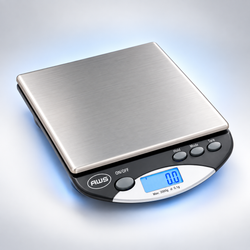
To choose the right scale for farmers market products, begin by identifying what you will weigh, the smallest and largest expected loads and whether the measurement will determine the price paid by a customer.
A digital scale used to portion bread dough in a kitchen has different requirements from a commercial scale used to sell tomatoes by the pound. The first may prioritize one-gram resolution, tare and easy cleaning. The second may need legal-for-trade approval, inspection and a customer-facing display.
The most important selection factors include:
-
Intended use
-
Legal-for-trade requirements
-
Capacity
-
Resolution
-
Minimum load
-
Repeatability
-
Platform size
-
Tare function
-
Display visibility
-
Battery life
-
Cleaning
-
Calibration
-
Outdoor stability
-
Transport protection
For many vendors, one scale cannot effectively cover everything from tiny quantities of dried herbs to large baskets of produce. A two-scale setup may provide better capacity and resolution for a diverse product range.
Step 1: Decide How the Scale Will Be Used
Before comparing technical specifications, define what the scale will do.
Common farmers market applications include:
-
Measuring recipe ingredients
-
Portioning baked goods
-
Filling tea or spice packages
-
Checking net product weight
-
Weighing produce
-
Preparing gift boxes
-
Counting uniform products
-
Tracking inventory
-
Recording harvest quantities
-
Calculating a customer’s price
Divide these tasks into two categories.
Internal Preparation
Internal-use scales may support:
-
Recipes
-
Packaging
-
Inventory
-
Portion control
-
Quality checks
-
Harvest records
A general kitchen, pocket or precision scale may be suitable if its specifications match the task.
American Weigh Scales offers digital kitchen scales for portioning, recipe preparation and general food weighing.
Customer-Facing Sales by Weight
If the scale determines the amount a customer pays, it may be considered a commercial weighing device.
NIST explains commercial scale applications in its weighing and scales FAQs.
Before selling products by weight:
-
Contact the state or local weights-and-measures authority.
-
Ask whether NTEP certification is required.
-
Confirm inspection and registration requirements.
-
Check whether the customer must see the display.
-
Verify approved units and price-computing functions.
-
Ask the farmers market about additional rules.
An accurate kitchen scale is not automatically legal for trade.
Step 2: Identify the Products You Will Weigh
Different products need different scale specifications.
Herbs, Tea and Spices
These products often require:
-
Low capacity
-
Fine resolution
-
Draft protection
-
Small trays
-
Good calibration
Baked Goods
Bakers may prioritize:
-
Five- to 15-kilogram capacity
-
One-gram resolution
-
Large bowl support
-
Tare
-
Easy cleaning
Produce
Produce vendors may need:
-
15 to 30 kilograms of capacity or more
-
Large platform
-
Battery operation
-
Fast stabilization
-
Legal-for-trade approval when required
Honey, Jam and Sauces
Important features include:
-
Capacity for filled jars
-
Stainless-steel platform
-
Sealed controls
-
Tare
-
Easy spill cleanup
Soap and Candles
These products may require:
-
Fine ingredient resolution
-
Capacity for mixing containers
-
Tare
-
Chemical-resistant trays
-
Separate equipment from food preparation
Crafts and Packaged Goods
Useful features include:
-
Portability
-
Package-check functions
-
Moderate capacity
-
Fine-to-medium resolution
-
Battery operation
Step 3: Choose the Correct Capacity
Capacity is the maximum load the scale is designed to support.
Include the weight of:
-
Product
-
Bowl
-
Basket
-
Jar
-
Container
-
Tray
-
Packaging
-
Platform liner
Example
A produce basket weighs two kilograms and holds up to ten kilograms of vegetables.
The combined load is:
2 kg + 10 kg = 12 kg
A 15-kilogram scale provides a more practical range than a 12-kilogram model operating at its limit.
Suggested Capacity by Product
| Product or Task | Suggested Capacity |
|---|---|
| Spices and small samples | 100–500 g |
| Herbs, tea and coffee | 500–2,000 g |
| Packaged foods and crafts | 2–5 kg |
| Baked goods and filled jars | 5–15 kg |
| Produce baskets | 15–30 kg |
| Large harvest containers | 30 kg or more |
These are starting points. Your heaviest product-and-container combination should determine the final capacity.
Leave a Capacity Margin
Extra capacity accommodates:
-
Larger batches
-
Seasonal products
-
Heavier containers
-
Multi-item orders
-
Business growth
Avoid operating continuously at the maximum limit.
Step 4: Understand Tare and Physical Capacity
Tare subtracts the weight of a container from the displayed result.
Typical process:
-
Place the empty container on the platform.
-
Wait for a stable reading.
-
Press tare.
-
Confirm zero.
-
Add the product.
-
Read the net weight.
Tare does not remove the container’s physical load.
If a three-kilogram bowl is placed on a 15-kilogram scale, approximately 12 kilograms of capacity remain after tare.
Step 5: Select the Right Resolution
Resolution is the smallest weight increment shown on the display.
| Product or Task | Useful Resolution |
|---|---|
| Concentrated ingredients and spices | 0.01 g |
| Tea, herbs and small samples | 0.01–0.1 g |
| Coffee, confections and soap additives | 0.1 g |
| Baked goods and packaged foods | 1 g |
| Small produce portions | 1–5 g |
| Heavy produce and bulk containers | 5–10 g |
Fine resolution is useful only when the product and workflow require it.
AWS pocket scales may be appropriate for herbs, tea, spices and other lightweight products.
Step 6: Do Not Confuse Resolution With Accuracy
Resolution is the display increment. Accuracy describes how closely the result agrees with an accepted reference.
A scale showing two decimal places is not automatically accurate to both decimal places.
Measurement quality also depends on:
-
Calibration
-
Repeatability
-
Linearity
-
Minimum load
-
Platform stability
-
Temperature
-
Vibration
-
Wind
-
Power condition
Choose enough resolution to support your work, but do not judge the scale by decimal places alone.
Step 7: Check the Minimum Practical Load
A high-capacity produce scale may not respond dependably to a small quantity of herbs.
Consider:
-
The lightest product portion
-
The smallest package adjustment
-
The weight of a single item
-
Whether the scale detects incremental additions
-
Whether results remain repeatable
If the lightest and heaviest products differ substantially, use separate scales.
Step 8: Test Repeatability
Repeatability describes whether the same load produces similar results under unchanged conditions.
Test it by:
-
Placing the scale on a stable surface
-
Confirming zero
-
Applying a representative load
-
Recording the reading
-
Removing the load
-
Waiting for zero
-
Repeating five to ten times
-
Comparing the results
Inconsistent readings may result from:
-
Wind
-
Vibration
-
Low batteries
-
Temperature
-
Uneven tables
-
Platform debris
-
Off-center loading
-
Improper calibration
-
Overload damage
Repeatability is essential for consistent packages and recipes.
Step 9: Evaluate the Platform
The platform must support the product or container securely.
A basket should not:
-
Touch the table
-
Lean against another object
-
Press on the display
-
Cover the controls
-
Rock or tip
-
Rest on a cable
Any contact outside the platform can transfer part of the load away from the scale.
Platform Features to Consider
-
Stainless-steel surface
-
Raised platform
-
Removable tray
-
Large footprint
-
Non-slip construction
-
Sealed controls
-
Separate display
A large bowl or basket should not prevent the operator from reading the result.
Step 10: Choose a Food-Friendly Design
A market scale used around food should be easy to clean.
Look for:
-
Smooth platform
-
Minimal seams
-
Sealed buttons
-
Removable trays
-
Splash resistance
-
Non-slip feet
-
Corrosion-resistant materials
Do not immerse a scale unless the manufacturer specifically states that it is waterproof.
Federal guidance explains basic cleaning and contamination-prevention practices in the four steps to food safety.
Step 11: Consider Cross-Contact
A shared scale can transfer residue between products.
Potential allergens include:
-
Peanuts
-
Tree nuts
-
Wheat
-
Milk
-
Eggs
-
Soy
-
Sesame
-
Fish
-
Shellfish
Possible controls include:
-
Dedicated trays
-
Cleaning between products
-
Separate utensils
-
Covered containers
-
Documented procedures
-
Avoiding direct food contact with the platform
The appropriate process depends on the products and applicable food-safety rules.
Step 12: Select a Readable Display
Farmers markets have changing light conditions.
A useful display should provide:
-
Large digits
-
High contrast
-
Clear unit symbols
-
Backlighting
-
Stable-weight indicator
-
Battery warning
If customers need to see the measurement, the scale may require a separate or dual-facing display.
Test readability:
-
In direct sun
-
Under a canopy
-
In shade
-
Indoors
-
From the customer’s position
Step 13: Choose Portable Power
Market booths may not provide electricity.
Useful power features include:
-
Long battery life
-
Common battery size
-
Rechargeable battery
-
Battery-level indicator
-
External power option
-
Adjustable auto-off
Carry spare batteries even if the scale normally lasts through several events.
Auto-Off
Auto-off conserves power but can interrupt customer service.
Look for a scale that allows auto-off to be:
-
Adjusted
-
Extended
-
Disabled
-
Bypassed when externally powered
Step 14: Plan for Outdoor Conditions
Wind
Wind can affect lightweight products and fine-resolution scales. Use a windbreak or enclosed weighing area.
Uneven Surfaces
Folding tables can wobble on rough ground. Stabilize and level the station.
Temperature
Allow the scale to acclimate after storage in a hot or cold vehicle.
Sunlight
Direct sun can heat the scale and make the display difficult to read.
Moisture
Protect the scale from rain, condensation and produce water unless it is designed for wet environments.
Vibration
Use a separate weighing surface rather than a table where products, coolers and cash drawers are constantly moved.
Step 15: Consider Product Counting
A scale can estimate the number of uniform items from average piece weight.
Possible applications include:
-
Wrapped candies
-
Soap samples
-
Tea bags
-
Craft pieces
-
Promotional items
AWS counting scales can help with packaging and inventory.
Counting by weight works best when individual products have consistent mass. Handmade or moisture-sensitive products may vary too much for dependable estimates.
Step 16: Review Calibration Capability
Calibration establishes or adjusts the scale’s response using a known reference mass.
Before buying, determine:
-
Whether the scale supports calibration
-
Which mass is required
-
Whether the weight is included
-
Whether compatible weights are available
-
Whether instructions are accessible
-
Whether official service is required
AWS offers calibration weights for compatible scale models.
Do not use coins, packaged products or random household items as permanent calibration references.
Step 17: Understand Calibration and Verification
Calibration establishes or adjusts the scale response.
Verification checks the scale with a known reference to determine whether it performs within an acceptable tolerance.
A basic internal check may include:
-
Leveling the scale
-
Confirming zero
-
Applying a known reference weight
-
Recording the result
-
Removing the weight
-
Repeating the test
-
Documenting any corrective action
An internal check does not replace an official commercial inspection.
Step 18: Create a Verification Schedule
Check the scale:
-
Before the market season
-
After transportation
-
After an overload
-
After a drop
-
When readings appear inconsistent
-
After battery replacement
-
After significant temperature changes
-
At scheduled intervals
A log can include:
-
Date
-
Scale identification
-
Reference weight
-
Expected result
-
Observed result
-
Operator
-
Action taken
Step 19: Protect the Scale During Transport
Farmers market equipment is frequently packed, moved and set up again.
Protect the scale by:
-
Using a padded case
-
Removing loose trays
-
Locking the platform when possible
-
Protecting the display
-
Disconnecting cables
-
Keeping weights in a separate case
-
Preventing objects from resting on the platform
-
Avoiding extreme vehicle temperatures
Never carry the scale by its platform.
For continuing care, review AWS guidance on scale maintenance.
Step 20: Determine Legal-for-Trade Requirements
The NIST National Type Evaluation Program evaluates commercial weighing devices for applicable legal-for-trade requirements.
Depending on your state and locality, a scale used to determine a customer’s price may require:
-
NTEP certification
-
Registration
-
Inspection
-
Security sealing
-
Approved units
-
Customer-facing display
-
Price-computing capability
-
Periodic testing
NIST provides model specifications through its current Handbook 44 resources.
Contact the relevant weights-and-measures authority before purchasing a checkout scale. Requirements can vary by jurisdiction and application.
Step 21: Review Packaging and Labeling Needs
For packaged products:
Net weight = Gross weight − Packaging weight
Packaging may include:
-
Jar
-
Lid
-
Wrapper
-
Bag
-
Label
-
Tie
-
Insert
FDA maintains resources concerning food labeling and nutrition. Vendors should also review applicable state, local and cottage-food requirements.
A precise scale supports package checks, but the vendor remains responsible for compliant labels and net-content declarations.
Step 22: Decide Whether You Need More Than One Scale
A two-scale system may be appropriate when you sell both lightweight and heavy products.
Example Setup
Precision scale
-
Capacity: 500–2,000 g
-
Resolution: 0.01–0.1 g
-
Use: Herbs, tea, spices and samples
General bench scale
-
Capacity: 5–15 kg
-
Resolution: 1 g
-
Use: Baked goods, jars and packaged foods
Commercial produce scale
-
Capacity: 15–30 kg or more
-
Resolution: Application-specific
-
Use: Customer-facing sales by weight
For controlled precision work, compare AWS balance scales.
Recommended Configurations
Herb and Tea Vendor
-
Capacity: 500–2,000 g
-
Resolution: 0.01–0.1 g
-
Features: Tare, draft protection and calibration
-
Best environment: Sheltered preparation area
Baker
-
Capacity: 5–15 kg
-
Resolution: 1 g
-
Features: Large platform, washable surface and tare
-
Best environment: Kitchen or covered booth
Produce Vendor
-
Capacity: 15–30 kg or more
-
Resolution: 5–10 g or as required
-
Features: Large platform, visible display and battery power
-
Requirement: Confirm legal-for-trade rules
Honey or Jam Vendor
-
Capacity: 5–15 kg
-
Resolution: 1 g
-
Features: Stainless platform, tare and sealed controls
Soap or Candle Vendor
-
Capacity: 5–15 kg
-
Resolution: 0.1–1 g
-
Features: Calibration capability and stable container support
Common Buying Mistakes
Buying a General Kitchen Scale for Regulated Sales
Internal-use suitability does not establish legal-for-trade approval.
Choosing Capacity Without the Container
Baskets and bowls consume physical capacity.
Assuming Tare Restores Capacity
Tare changes the display, not the physical load.
Buying Too Much Capacity
Excessive range may reduce useful resolution.
Buying Too Little Capacity
Large produce baskets can overload compact scales.
Focusing Only on Decimal Places
Resolution does not guarantee accuracy or repeatability.
Ignoring Outdoor Conditions
Wind and unstable tables can affect precision.
Selecting an Undersized Platform
A basket touching the table may produce an incorrect result.
Ignoring Cleaning
Food residue can create sanitation problems and interfere with platform movement.
Using Improvised Calibration Weights
Use suitable reference weights and follow the scale manual.
Farmers Market Scale Buying Checklist
Before purchasing, confirm:
-
Products to be weighed
-
Internal or commercial use
-
Local legal requirements
-
Lightest quantity
-
Heaviest product-and-container load
-
Required capacity
-
Required resolution
-
Minimum practical load
-
Repeatability
-
Stabilization speed
-
Platform size
-
Container fit
-
Tare function
-
Display visibility
-
Battery life
-
External power
-
Cleaning procedure
-
Moisture exposure
-
Calibration capability
-
Required test weights
-
Transport protection
-
Registration or inspection requirements
Frequently Asked Questions
What scale is best for farmers market products?
The best scale matches the products, containers and intended use. Fine products need greater resolution, while produce requires higher capacity and a larger platform.
What capacity should I choose?
Use the combined weight of the heaviest product and container, then add a practical margin.
What resolution do I need?
Use 0.01 to 0.1 gram for herbs and spices, approximately one gram for baked goods and packaged foods, and larger increments for heavy produce.
Is tare important?
Yes. Tare subtracts the container from the displayed result so you can measure net product weight.
Does tare increase scale capacity?
No. The container still applies a physical load to the scale.
Can I use a kitchen scale to sell produce?
A kitchen scale may be suitable for internal preparation but may not meet legal-for-trade requirements for customer sales.
Do I need an NTEP-certified scale?
Possibly, if the scale determines a commercial charge. Confirm the requirements with the appropriate local authority.
Can one scale weigh both herbs and pumpkins?
One model may not offer both the fine resolution required for herbs and the capacity needed for pumpkins. Separate scales are often more practical.
How frequently should the scale be checked?
Verify it after transportation, overload, impact, unusual readings and at scheduled intervals.
Can household objects be used for calibration?
Purpose-made calibration weights are preferable because ordinary objects may vary or accumulate wear and contamination.
Final Thoughts
Choosing a scale for farmers market products begins with three questions:
-
What is the lightest quantity you will measure?
-
What is the heaviest product-and-container load?
-
Will the measurement determine a customer’s price?
Those answers reveal the necessary capacity, resolution and regulatory status.
A compact 500- to 2,000-gram precision scale may be ideal for herbs, tea and spices. A 5- to 15-kilogram kitchen or bench scale can handle many baked goods, jars and packaged foods. Produce baskets may require 15 to 30 kilograms or more.
Beyond specifications, consider tare, platform size, sanitation, battery power, display visibility, outdoor stability and transportation. Verify the scale regularly and use suitable calibration weights.
Finally, never assume that a general digital scale is approved for customer-facing sales by weight. Confirm legal-for-trade, inspection and registration requirements before using a scale to determine price. With the right model and procedures, weighing can support consistent products, accurate packages and a smoother farmers market operation.