
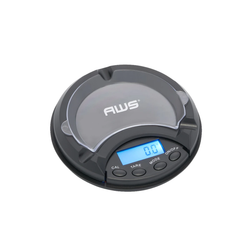
To choose a scale for soap fragrance oils, begin with the smallest fragrance quantity you need to measure—not simply the size of your largest soap batch. Then determine the combined weight of your container and ingredients, select suitable readability, and evaluate tare, calibration, platform size, stabilization speed, and spill protection.
For most soap makers, a digital scale with 0.1-gram readability is a practical choice for regular fragrance measurements. A scale with 0.01-gram readability is more appropriate for sample bars, small test batches, fragrance blending, and formulas that use only a few grams of an ingredient.
Large-batch soap makers may need two scales:
-
A high-capacity scale for base oils, water, containers, and soap batter
-
A smaller precision scale for fragrance oils, essential oils, colorants, antioxidants, and other low-weight additives
The right scale should make your formula easier to repeat without introducing unnecessary sensitivity, limited capacity, or an awkward workflow.
Quick Selection Guide
Use this table as a starting point:
| Application | Suggested Capacity | Suggested Readability |
|---|---|---|
| Tiny fragrance experiments | 100–500 g | 0.01 g |
| Sample and test batches | 500–1,000 g | 0.01–0.1 g |
| Regular home soap batches | 1,000–5,000 g | 0.1 g |
| Large fragrance quantities | 3,000–5,000 g or more | 0.1–1 g |
| Bulk oils and soap batter | Based on vessel and batch weight | 1 g may be sufficient |
| Multi-oil fragrance blending | 500–1,000 g | 0.01 g |
A soap maker who produces both small test bars and large batches should not expect one scale to perform every task equally well. Pairing one of the larger digital kitchen scales with a smaller precision instrument is often the better solution.
Step 1: Identify What You Need to Weigh
Before comparing specifications, list every item you expect to measure.
Your list may include:
-
Fragrance oils
-
Essential oils
-
Base oils
-
Water
-
Colorants
-
Antioxidants
-
Preservatives when applicable
-
Clays
-
Powders
-
Soap batter
-
Finished bars
-
Small fragrance blends
-
Large mixing vessels
This exercise helps separate two different needs: high-capacity weighing and precision weighing.
A large soap pot filled with base oils requires substantial capacity and a broad platform. A small fragrance blend requires finer readability and a smaller, more sensitive scale.
If you only make medium or large batches and never measure tiny quantities, a 0.1-gram scale may handle most fragrance work. If you develop samples or blend several fragrances in low amounts, 0.01 gram will be more useful.
Step 2: Determine Your Smallest Ingredient Quantity
The smallest quantity you measure should guide your choice of readability.
Suppose your smallest fragrance component is 0.35 gram. A scale that displays only whole grams cannot measure it effectively. A 0.1-gram model could display 0.3 or 0.4 gram, but a 0.01-gram model provides more appropriate control.
As a general guide:
-
Choose 1-gram readability for large ingredient quantities.
-
Choose 0.1-gram readability for normal fragrance additions.
-
Choose 0.01-gram readability for small samples and fragrance blends.
-
Consider 0.001 gram only for specialized formulations requiring milligram-level measurement.
The scale’s displayed increment should be meaningfully smaller than the ingredient amount. If the target quantity is close to the scale’s smallest displayed increment, a small rounding difference can represent a large percentage of the intended measurement.
Example
If a formula requires 20 grams of fragrance:
-
A 1-gram scale may be usable, but adjustment is relatively coarse.
-
A 0.1-gram scale offers better control.
-
A 0.01-gram scale provides more digits than most routine batches require.
If a test formula requires 0.45 gram:
-
A 1-gram scale is unsuitable.
-
A 0.1-gram scale offers limited control.
-
A 0.01-gram scale is the better choice.
Step 3: Understand Readability, Accuracy, and Repeatability
These specifications are related, but they do not mean the same thing.
Readability
Readability is the smallest increment shown on the display. A 0.01-gram scale displays hundredths of a gram.
Accuracy
Accuracy describes how closely the measurement agrees with an accepted reference value.
Repeatability
Repeatability describes whether the scale produces similar results when the same load is measured repeatedly under the same conditions.
A scale may display two decimal places without being accurate to the last displayed digit. Additional digits do not independently prove better measurement performance.
When comparing scales, look beyond the resolution printed in the product name. Consider the intended application, calibration method, stability, operating environment, manufacturer instructions, and ability to reproduce readings.
The National Institute of Standards and Technology provides useful background about SI units and mass measurement, including the distinction between mass and the everyday use of the term weight.
Step 4: Calculate the Required Capacity
Capacity is the greatest total load a scale is designed to support. The load includes the container, not only the fragrance oil.
Use this calculation:
Required capacity = heaviest container + maximum ingredient quantity + reasonable margin
Example 1: Small Fragrance Cup
-
Empty container: 40 g
-
Maximum fragrance quantity: 50 g
-
Total expected load: 90 g
A 100-gram scale would leave almost no extra capacity. A 200- or 500-gram model would provide more flexibility.
Example 2: Glass Beaker
-
Empty beaker: 180 g
-
Maximum fragrance quantity: 250 g
-
Total expected load: 430 g
A scale with at least 500 grams of capacity is required. A somewhat higher-capacity model may be more practical.
Example 3: Production Pitcher
-
Empty pitcher: 750 g
-
Maximum fragrance quantity: 600 g
-
Total expected load: 1,350 g
A 1,000-gram scale is insufficient. You would need a model rated above the combined load.
Tare Does Not Restore Capacity
When you place a container on the scale and press tare, the display returns to zero. However, the sensor is still supporting the container’s weight.
If a 500-gram scale holds a 150-gram container, approximately 350 grams of capacity remain. Adding 500 grams of fragrance after taring would overload the instrument.
Step 5: Decide Between 1 g, 0.1 g, and 0.01 g
Choose 1-Gram Readability When:
-
You measure large quantities.
-
The smallest addition is substantial.
-
You need a higher-capacity scale for bulk oils or batter.
-
Small decimal differences do not materially affect the formula.
-
The scale will primarily support production vessels.
A whole-gram scale is usually not the best dedicated fragrance scale for test batches.
Choose 0.1-Gram Readability When:
-
You make regular home or small-business batches.
-
Fragrance quantities are usually several grams or more.
-
You want a balance of capacity and precision.
-
You prefer less sensitivity to ordinary environmental movement.
-
You need one versatile scale for fragrance and moderate additives.
For many soap makers, 0.1 gram is the ideal starting point.
Choose 0.01-Gram Readability When:
-
You formulate small test batches.
-
You blend several fragrance oils.
-
Some components weigh less than one gram.
-
You need detailed records of small adjustments.
-
You compare fragrance ratios during product development.
-
You measure concentrated low-weight additives.
You can compare compact models in the AWS collection of precision pocket scales.
Choose 0.001-Gram Readability When:
-
The formula genuinely requires milligram-level measurement.
-
The ingredient amounts are extremely small.
-
You can control drafts, vibration, static, and temperature.
-
You understand the lower-capacity limitations.
-
You can follow the required calibration and handling procedures.
For specialized applications, review available milligram scales. For ordinary soap fragrance measurement, this level of resolution is usually unnecessary.
Step 6: Choose an Appropriate Platform Size
The platform should support the weighing container without instability or interference.
Before buying, measure the base of your most frequently used containers. Compare that dimension with the scale’s platform dimensions.
A container that is too large may:
-
Block the display
-
Tip or wobble
-
Touch the countertop
-
Press against the scale housing
-
Make pouring difficult
-
Increase spill risk
If the container touches another surface, that surface may support part of the load and cause a falsely low reading.
Small Platform or Large Platform?
A small platform is suitable for:
-
Fragrance cups
-
Small beakers
-
Blending dishes
-
Sample containers
A large platform is better for:
-
Stainless steel pitchers
-
Large glass vessels
-
Soap pots
-
Production containers
If you need both, use separate scales or select a balance-style model whose platform and capacity match your formulation environment. AWS offers digital balance scales for applications that require a different combination of platform size, capacity, and readability.
Step 7: Evaluate the Tare Function
Tare is one of the most important functions for soap formulation. It subtracts the displayed weight of the container, allowing you to measure the fragrance directly.
A good tare function should:
-
Respond quickly
-
Return the display to zero
-
Work consistently
-
Remain stable after taring
-
Be accessible without disturbing the container
Basic Tare Procedure
-
Turn on the scale with the platform empty.
-
Select grams.
-
Place the empty container on the platform.
-
Wait for a stable reading.
-
Press tare.
-
Confirm that the display shows zero.
-
Add fragrance gradually.
If the scale drifts away from zero after taring, check for drafts, vibration, an unstable surface, a weak battery, or contact between the container and surrounding objects.
Step 8: Check the Available Measurement Units
The scale should display grams. Other units may be useful, but grams are generally the easiest for small formulation quantities and percentage calculations.
Common scale units include:
-
Grams
-
Ounces
-
Troy ounces
-
Carats
-
Pennyweight
-
Grains
The presence of multiple units is convenient, but it also creates the possibility of selecting the wrong mode.
Before every measurement:
-
Check the unit symbol.
-
Confirm that it matches the written formula.
-
Verify that the decimal placement looks reasonable.
-
Record the unit with the measured number.
Avoid switching between grams and ounces during the same batch.
Step 9: Consider Stabilization Speed
A scale should respond quickly enough to help you stop pouring near the target, but it should not sacrifice stability.
When fragrance is added, the display may take a moment to settle. If the response is too slow, you may continue pouring and overshoot. If the scale is excessively sensitive, the reading may fluctuate with every small movement.
For the best control:
-
Pour quickly only at the beginning.
-
Slow down as you approach the target.
-
Switch to a pipette or dropper for the final amount.
-
Pause between additions.
-
Wait for the stable reading.
-
Record the actual final weight.
A stable-weight indicator can be helpful when available.
Step 10: Review Calibration Requirements
Calibration compares the scale’s indication with a known reference. Some scales also allow user adjustment through a manufacturer-defined procedure.
Before purchasing, determine:
-
Whether user calibration is supported
-
Which calibration weight is required
-
Whether the weight is included
-
How calibration mode is accessed
-
Whether the instructions are available
-
How the scale indicates successful calibration
Do not assume that any convenient household object can serve as a calibration reference. Use the mass specified by the manufacturer.
AWS offers compatible calibration weights and weight sets for scales that support the appropriate procedure.
When Should You Check a Scale?
Check performance:
-
When the scale is new
-
Before an important production run
-
After moving it
-
After replacing batteries
-
After a drop or impact
-
After an accidental overload
-
When readings become inconsistent
-
According to your quality-control schedule
Calibration cannot correct every problem. A damaged load cell, contaminated mechanism, unstable surface, or weak battery may continue to produce poor results.
Step 11: Consider Environmental Sensitivity
The finer the readability, the more carefully you must control the environment.
Drafts
Air movement from fans, vents, windows, or rapid hand movements can affect high-resolution readings. A draft shield is useful for 0.01- and 0.001-gram scales.
Vibration
Mixers, blenders, washing machines, foot traffic, flexible tables, and other equipment can cause the display to fluctuate.
Temperature
Moving the scale from a cold storage area into a warm workspace may affect stability. Allow it to reach room conditions before use.
Static
Plastic containers, powders, clothing, and dry air can create static effects that are more noticeable with fine-resolution instruments.
Surface Quality
Place the scale on a hard, level, stable countertop. Avoid padded mats, uneven tile, moving carts, or flexible tables.
A highly sensitive scale used in a poor environment may perform worse than a less sensitive model used correctly.
Step 12: Assess Spill Protection and Cleanability
Fragrance oils can leave residue, carry persistent aromas, and enter gaps around buttons or displays.
Look for:
-
Smooth platform surfaces
-
Removable trays
-
Minimal seams near the weighing area
-
Protective covers
-
Buttons positioned away from likely spills
-
Manufacturer-approved cleaning instructions
A stainless steel platform can be easier to wipe, but it does not make the entire scale waterproof. The display, seams, electronics, and battery compartment may remain vulnerable.
To reduce spills:
-
Use a container with adequate headspace.
-
Keep the scale separate from the main mixing area.
-
Pour slowly.
-
Switch to a pipette near the target.
-
Close fragrance bottles promptly.
-
Clean drips immediately.
-
Never spray cleaner directly into the scale.
-
Do not submerge the instrument.
Step 13: Check the Automatic-Shutoff Function
Automatic shutoff conserves battery power, but a very short timer can interrupt fragrance measurement.
This is particularly inconvenient when you:
-
Pause to review the formula
-
Prepare a transfer tool
-
Record a previous ingredient
-
Open a second fragrance bottle
-
Wait for bubbles to settle
-
Work slowly near the target
Look for a scale with:
-
A sufficiently long shutoff delay
-
Adjustable power-saving settings
-
The option to disable auto-off when appropriate
-
An AC adapter option for compatible bench models
If the scale turns off, do not assume it will remember the previous tare. Restart the weighing process according to the manufacturer’s instructions.
Step 14: Look for Overload and Low-Battery Warnings
Overload Indicator
An overload warning tells you that the scale is supporting more than its rated capacity. Remove the load immediately.
Overloading can damage the sensor and affect future measurements.
Low-Battery Indicator
Weak power can cause:
-
Dim displays
-
Slow response
-
Unstable readings
-
Calibration errors
-
Unexpected shutdowns
Keep the correct replacement batteries available and test the scale before beginning a large batch.
Step 15: Decide Whether You Need One Scale or Two
A single scale may work if your containers, batch sizes, and ingredient quantities fall within a narrow range.
Two scales are usually better when you work across dramatically different weights.
One-Scale Setup
A scale with 3,000- to 5,000-gram capacity and 0.1-gram readability may cover:
-
Regular fragrance quantities
-
Moderate base-oil amounts
-
Colorants
-
Additives
-
Small mixing vessels
Confirm that the actual model offers both the required capacity and readability.
Two-Scale Setup
Use:
-
A high-capacity scale for bulk oils, water, soap batter, and heavy vessels
-
A 0.01- or 0.1-gram precision scale for fragrance, essential oils, and small additives
This setup reduces compromise. The bulk scale provides capacity and platform space, while the precision scale provides better control over small additions.
Choosing a Scale by Soap-Making Scenario
Beginner Making Standard Batches
Choose:
-
2,000–5,000 g capacity
-
0.1–1 g readability
-
Gram mode
-
Tare
-
Large visible display
-
Stable platform
Add a smaller 0.01-gram scale when you begin developing samples or complex fragrance blends.
Hobbyist Making Small Test Batches
Choose:
-
500–1,000 g capacity
-
0.01 g readability
-
Draft protection
-
Calibration support
-
Small removable tray
-
Fast stabilization
Fragrance-Blend Developer
Choose:
-
0.01 g readability
-
500 g or greater capacity, based on containers
-
Stable-weight indicator
-
Clear backlit display
-
Protective cover
-
Reliable calibration method
-
Adjustable auto-off when possible
Small Soap Business
Use separate precision and production scales. Create written procedures for:
-
Calibration checks
-
Repeatability tests
-
Cleaning
-
Battery replacement
-
Storage
-
Handling spills
-
Recording actual weights
-
Identifying fragrance lots
Larger Artisan Producer
Use a high-capacity production scale with a broad platform and a dedicated precision balance for fragrance measurement. Consider AC power, larger displays, more formal verification schedules, and traceable records.
Safe Fragrance-Oil Handling
The scale measures an amount; it does not determine whether that amount is appropriate or safe.
Before using a fragrance oil:
-
Obtain current supplier documentation.
-
Confirm the fragrance’s intended applications.
-
Identify the appropriate product category.
-
Review any stated maximum usage level.
-
Read the Safety Data Sheet.
-
Wear suitable protective equipment.
-
Work in an appropriately ventilated area.
-
Label temporary containers.
-
Record the supplier and lot number when applicable.
-
Keep fragrances away from children and pets.
The International Fragrance Association provides information about the IFRA Standards and their documentation. Usage levels can vary among fragrances and product categories, so do not reuse a percentage from an unrelated scent or product.
The Occupational Safety and Health Administration explains the standardized sections and purpose of Safety Data Sheets. Review the document supplied for the specific material you are handling.
Regulatory Considerations for Soap Makers
A product’s regulatory treatment can depend on its composition, intended use, labeling, and claims.
A product marketed solely for cleansing may be treated differently from one promoted as moisturizing, deodorizing, acne-fighting, antimicrobial, or therapeutic.
The U.S. Food and Drug Administration answers common questions about the legal distinctions in its soap regulatory guidance.
Fragrance labeling is another consideration for scented products. The FDA’s information about fragrances in cosmetics provides additional context for U.S. manufacturers and sellers.
An accurate scale supports formula control and documentation. It does not independently demonstrate that a product, claim, label, or fragrance level complies with applicable requirements.
How to Test a Scale Before Production
Perform a basic operating check before relying on a new scale.
Inspect It
Look for cracks, platform damage, loose components, corrosion, and battery-compartment problems.
Place It Correctly
Use a stable, level surface away from vibration and drafts.
Allow It to Initialize
Turn it on with the platform empty and wait for zero.
Confirm the Unit
Select grams and verify the symbol.
Test Tare
Place an empty container on the platform, press tare, and confirm a stable zero.
Test Repeatability
Weigh the same stable object several times, removing it completely between measurements.
Check With an Appropriate Reference
If the scale supports calibration or verification, follow its instructions using the required reference mass.
Evaluate Container Fit
Make sure your usual container does not block the display, wobble, or touch the countertop.
If the scale fails these checks, review the instructions or contact AWS customer support before using it for production.
Common Selection Mistakes
Buying Based Only on Price
An inexpensive scale is not a bargain if it lacks the required capacity, readability, or platform space.
Buying Based Only on Decimal Places
More displayed digits do not guarantee accuracy, repeatability, or suitability.
Forgetting the Container’s Weight
The scale must support both the container and its contents.
Choosing Too Little Capacity
Regularly operating near the maximum increases the risk of overload.
Choosing Too Much Capacity
An unnecessarily high-capacity scale may have coarser readability than your formulation requires.
Ignoring Platform Dimensions
A large container on a tiny scale can block the display and produce an unstable setup.
Assuming Tare Adds Capacity
Tare changes the display, not the physical load.
Ignoring Auto-Off
The scale may shut down during a slow addition and lose the tare state.
Assuming Stainless Steel Means Waterproof
The platform may be metal while the buttons and electronics remain vulnerable.
Using Household Objects for Calibration
An object with an approximate labeled weight is not necessarily an appropriate calibration reference.
Using the Same Scale for Incompatible Tasks
A scale ideal for a full soap pot may be unsuitable for a 0.35-gram fragrance component.
Scale Selection Checklist
Before purchasing, answer these questions:
-
What is the smallest amount I need to measure?
-
What is the heaviest container I will use?
-
What is the maximum combined load?
-
Do I need 1-, 0.1-, or 0.01-gram readability?
-
Does the scale display grams?
-
Does it include tare?
-
Is the platform large enough for my containers?
-
Will the container block the display?
-
How quickly does the reading stabilize?
-
Does the scale support calibration?
-
Which calibration weight is required?
-
Is the platform easy to clean?
-
Is the scale protected from accidental overload?
-
Does it provide a low-battery warning?
-
Will auto-off interrupt my process?
-
Can I control drafts and vibration?
-
Do I need a second scale for bulk ingredients?
-
Is manufacturer support available?
Frequently Asked Questions
What scale is best for soap fragrance oils?
For most soap makers, a digital scale with 0.1-gram readability, sufficient capacity, gram mode, tare, and a suitable platform is the best starting point. Use 0.01 gram for small test batches and fragrance blends.
Is a kitchen scale accurate enough for fragrance oil?
It can be if it provides the required readability. A whole-gram kitchen scale may be too coarse for small amounts, while a 0.1-gram kitchen scale can be suitable for regular batches.
Do I need a 0.01-gram scale?
Choose 0.01 gram when measuring quantities below a few grams, making samples, or combining several fragrance components in small ratios.
How much capacity should I buy?
Add the weight of your heaviest container to your maximum fragrance quantity and select a scale with additional capacity.
Can I use a pocket scale for soap making?
Yes, for fragrance oils and other small ingredients. Do not use it for a soap pot or container that exceeds its platform size or capacity.
Should fragrance oil be measured in grams or ounces?
Both can work when used consistently, but grams are generally easier for small quantities and percentage calculations.
Does tare remove the container’s weight from the capacity?
No. It removes the container weight only from the displayed result.
Can one scale measure everything in a soap formula?
Possibly, but many soap makers obtain better results with a high-capacity bulk scale and a separate precision scale.
How do I know whether a scale is repeatable?
Weigh the same stable object several times under the same conditions. The results should remain reasonably close.
Why does a precision scale fluctuate?
Drafts, vibration, static, unstable surfaces, temperature changes, weak batteries, or a container touching another object can cause movement in the reading.
How often should I check calibration?
Follow the manufacturer’s instructions and your quality schedule. Check after relocation, impact, overload, battery replacement, or unexplained changes in performance.
Can an accurate scale tell me how much fragrance is safe?
No. Use current supplier documentation, applicable fragrance standards, and the requirements relevant to the finished product.
Final Thoughts
To choose a scale for soap fragrance oils, match the scale to your smallest ingredient quantity, heaviest container, and actual production workflow.
For most soap makers:
-
Choose 0.1-gram readability for regular fragrance measurement.
-
Choose 0.01 gram for samples and fragrance blending.
-
Calculate capacity using both the container and its contents.
-
Require gram mode and tare.
-
Select a platform that supports the container without blocking the display.
-
Review calibration requirements before purchasing.
-
Consider stabilization speed, auto-off behavior, and spill protection.
-
Use two scales when bulk and precision measurements differ significantly.
A well-matched scale improves repeatability, reduces ingredient waste, and makes production records more meaningful. Combined with current fragrance documentation, safe handling practices, and disciplined formulation procedures, it provides the measurement control needed for consistent soap production.