
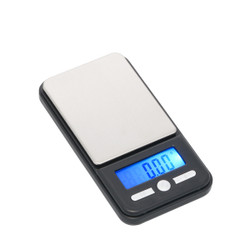
A pocket scale can provide a convenient way to weigh small laboratory samples in classrooms, field settings, product-development spaces, and general research environments. Its compact size, battery operation, protective cover, and simple controls make it useful when a full-size laboratory balance is unnecessary or unavailable.
Portability, however, does not establish laboratory suitability. The scale must still provide enough capacity for the complete physical load and enough resolution for the measurement objective. Accuracy, repeatability, minimum weight, calibration, platform dimensions, and environmental stability also determine whether its results are useful.
A pocket scale may be appropriate for educational experiments, preliminary formulation, material comparison, sample sorting, and other nonregulated tasks. Accredited testing, validated analysis, product-release decisions, or other high-consequence work may require a formally qualified precision or analytical balance.
This guide explains how to select the capacity and resolution of a pocket scale while recognizing the limitations of compact instruments.
What Is a Laboratory Pocket Scale?
A laboratory pocket scale is a compact digital weighing device that can be stored or transported easily. Most models operate on batteries and include a cover to protect the platform.
Potential uses include:
-
Educational science experiments
-
Preliminary sample measurements
-
Small-component comparison
-
Material sorting
-
Fieldwork support
-
Sample-container checks
-
Formulation trials
-
General research support
-
Backup or comparative measurements
-
Nonregulated quality checks
The AWS pocket scale collection includes models with different capacities, resolutions, measurement modes, and platform dimensions. Buyers should evaluate the individual specifications rather than assuming every compact scale is suitable for scientific work.
Understanding Scale Capacity
Capacity is the maximum physical load a scale can support and measure.
The required capacity must include:
-
The laboratory sample
-
The sample container
-
A weighing boat
-
Weighing paper
-
A vial, tube, or dish
-
A platform adapter
-
Any fixture or holder
-
A margin below the scale’s maximum limit
The lightest sample does not determine capacity. A small quantity may require a relatively heavy glass container, causing the gross load to approach or exceed the scale’s limit.
Tare Does Not Increase Capacity
The tare function resets the display to zero after a container is placed on the platform. It does not remove the container’s physical weight from the weighing mechanism.
If a pocket scale has a 200-gram capacity and the empty container weighs 75 grams, only 125 grams of physical capacity remains after taring.
Exceeding capacity can damage the load cell or produce unreliable measurements even if the display was previously reset to zero.
Common Pocket-Scale Capacity Ranges
Pocket scales frequently offer capacities between approximately 20 grams and 1,000 grams.
Possible capacity categories include:
-
20–50 grams: Extremely small samples and components
-
50–100 grams: Fine sample work with lightweight containers
-
100–200 grams: General milligram and centigram measurements
-
200–500 grams: Broader sample and container compatibility
-
500–1,000 grams: Larger samples with potentially coarser resolution
Higher capacity is not automatically better. A scale designed for heavier loads may display larger increments and provide less detail for small samples.
Choose enough capacity for the sample and container without sacrificing the resolution required by the method.
Understanding Resolution
Resolution is the smallest change displayed by the scale. It may also be called readability, graduation, or division size.
Common pocket-scale resolutions include:
-
1 gram
-
0.1 gram
-
0.01 gram
-
0.001 gram
A 0.001-gram scale displays changes in milligrams. A 0.01-gram scale displays changes in hundredths of a gram.
The correct resolution depends on:
-
The smallest sample
-
The required tolerance
-
The purpose of the result
-
Scale repeatability
-
Environmental conditions
-
Applicable procedures
A 0.1-gram scale may be appropriate for classroom demonstrations or approximate sample comparison. A 0.001-gram scale may be needed for milligram-level formulation or small-component measurements.
Resolution Is Not Accuracy
A pocket scale that displays 0.001 gram is not necessarily accurate to exactly 0.001 gram under every condition.
Resolution indicates the smallest displayed step. Accuracy describes how closely the result agrees with an accepted value within stated operating conditions.
The display does not independently reveal:
-
Measurement uncertainty
-
Repeatability
-
Linearity
-
Corner-load performance
-
Temperature effects
-
Long-term drift
-
Calibration uncertainty
-
Minimum reliable sample amount
Review the complete specification instead of choosing according to decimal places alone.
The NIST Office of Weights and Measures provides general information about measurement standards and weighing principles. Laboratories should apply the metrology requirements relevant to their specific methods.
Capacity and Resolution Tradeoffs
Capacity and resolution are often linked. A lower-capacity scale may provide finer divisions, while a high-capacity model may use coarser increments.
| Intended pocket-scale use | Possible capacity | Possible resolution |
|---|---|---|
| Classroom samples | 500–1,000 g | 0.1–1 g |
| General sample comparison | 200–500 g | 0.01–0.1 g |
| Preliminary formulations | 100–300 g | 0.001–0.01 g |
| Small components | 50–200 g | 0.001 g |
| Field sample checks | 200–1,000 g | 0.01–0.1 g |
These are general examples, not method specifications.
The selected scale should have enough capacity to support the heaviest gross load while preserving the resolution needed for the smallest measurement.
Is 0.01-Gram Resolution Enough?
A 0.01-gram pocket scale displays increments of 10 milligrams. It can be suitable for:
-
Approximate formulations
-
Classroom experiments
-
General material comparisons
-
Sample sorting
-
Small-part checks
-
Preliminary research measurements
It may not be suitable when the method requires reliable milligram-level results or when the sample amount is so small that a 0.01-gram division represents a large percentage of the total.
When Do You Need 0.001-Gram Resolution?
A 0.001-gram or milligram scale may be appropriate for:
-
Small formulation samples
-
Lightweight components
-
Filters
-
Material-development work
-
Fine comparative measurements
-
Preliminary milligram-level testing
AWS offers milligram scales with different capacities and designs. A milligram display does not automatically make a scale appropriate for analytical, pharmaceutical, clinical, or regulated testing.
Finer resolution also increases sensitivity to:
-
Drafts
-
Vibration
-
Static electricity
-
Temperature
-
Sample evaporation
-
Moisture absorption
-
Operator movement
Minimum Weight Matters
Minimum weight is the smallest load that can be measured while satisfying an established performance or uncertainty requirement.
It is not necessarily the same as resolution.
For example, a scale displaying 0.001 gram should not automatically be assumed suitable for every 0.001-gram sample. Repeatability and uncertainty may require a substantially larger minimum sample.
The minimum acceptable weight depends on:
-
Scale repeatability
-
Required tolerance
-
Relative error limits
-
Measurement uncertainty
-
Environmental stability
-
The consequences of an incorrect result
Formal laboratory work may require minimum weight to be determined and documented through qualification procedures.
Repeatability
Repeatability describes whether the same item produces closely grouped measurements under unchanged conditions.
A general check can include:
-
Place the scale in its intended location.
-
Allow it to reach room conditions.
-
Confirm that the platform is clean.
-
Verify zero.
-
Apply an appropriate known reference weight.
-
Wait for a stable result.
-
Record the measurement.
-
Remove the weight.
-
Confirm the display returns to zero.
-
Repeat the process several times.
Unexpected variation may be caused by:
-
Airflow
-
Bench movement
-
Static
-
Temperature change
-
Weak batteries
-
Platform contamination
-
Off-center loading
-
Electronic interference
-
Incorrect calibration
-
Physical damage
A fine-resolution scale with poor repeatability is not useful for comparing small sample differences.
Linearity
Linearity describes how well the scale maintains its response throughout the weighing range.
A scale might perform well near one calibration point but show greater error at another load. Laboratories working with both light and heavy samples should consider performance across the relevant range.
Look for:
-
A stated linearity specification
-
Recommended verification points
-
Calibration guidance
-
Multiple-point testing information
-
Maximum permissible errors
A successful single-point adjustment does not confirm perfect performance at every load.
Corner-Load Performance
Corner-load or eccentricity performance describes whether the result changes when the same object is placed at different points on the platform.
Pocket-scale platforms are small, and wide containers may be difficult to center.
A container should not:
-
Hang against the scale housing
-
Touch the protective cover
-
Press a button
-
Rest on the surrounding bench
-
Shift during measurement
Choose a platform that accommodates the laboratory’s normal containers. Consistent centering improves comparability.
Calibration Requirements
Pocket scales typically use external adjustment. The user places a specified weight on the platform while the scale is in calibration mode.
Before purchasing, confirm:
-
The required calibration-weight value
-
Whether the weight is included
-
Whether compatible replacements are available
-
How calibration mode is accessed
-
Whether calibration is retained after power-off
-
When adjustment is recommended
-
How successful calibration is indicated
American Weigh Scales provides calibration weights for compatible models. Use the denomination specified in the scale’s instructions.
Do not use coins, tools, sample containers, or other objects of assumed mass. Ordinary objects may vary because of manufacturing tolerances, contamination, corrosion, or wear.
Calibration, Adjustment, and Verification
These terms should not be treated as identical.
-
Calibration compares an instrument’s indications with suitable reference standards.
-
Adjustment changes the instrument’s response.
-
Verification checks whether the scale produces an expected result.
A pocket scale’s “CAL” mode usually performs an adjustment. Formal laboratory calibration may require traceability, uncertainty information, calibration certificates, and documented procedures.
The NIST calibration services program provides information about measurement and calibration services. Each laboratory should determine the level of documentation and traceability its work requires.
Is a Pocket Scale Suitable for an Accredited Laboratory?
Potentially, but only for tasks the laboratory has evaluated and approved.
A pocket scale should not automatically be used for:
-
Reportable quantitative analysis
-
Product-release testing
-
Clinical decisions
-
Pharmaceutical compounding
-
Forensic evidence
-
Regulatory compliance results
-
Validated methods
Laboratories operating under frameworks such as ISO/IEC 17025 may require equipment qualification, calibration traceability, uncertainty evaluation, controlled procedures, and performance records.
A pocket scale may still be useful for preliminary, educational, comparative, or support tasks when authorized by the quality system.
Platform Size and Container Selection
Pocket scales are designed around compact platforms. They work best with:
-
Small weighing boats
-
Papers
-
Vials
-
Capsules
-
Small dishes
-
Lightweight sample cups
They may be inconvenient for:
-
Wide beakers
-
Large filters
-
Heavy glassware
-
Sample racks
-
Oversized containers
-
Irregular specimens
A compact option such as the ZEO50 high-precision digital milligram scale may be useful for selected fine-resolution tasks. Verify its current capacity, resolution, platform dimensions, calibration requirements, and intended uses.
Tare Function
Tare allows the scale to subtract the empty container and display the net sample mass.
A useful tare function should:
-
Respond promptly
-
Establish a stable zero
-
Handle the intended container
-
Return predictably after unloading
-
Allow easy re-zeroing
Persistent zero drift should be investigated. Repeatedly pressing tare may conceal instability without resolving the cause.
Check for:
-
Platform debris
-
Container contact
-
Drafts
-
Vibration
-
Static
-
Weak batteries
-
Temperature instability
Draft Protection
Fine-resolution pocket scales can be highly sensitive to air movement.
Common draft sources include:
-
HVAC vents
-
Fans
-
Open windows
-
Fume hoods
-
Doors
-
Passing personnel
-
Breathing over the platform
Some compact milligram scales include a small draft shield. If one is not included, the scale should be used in a calm location consistent with the laboratory’s safety procedures.
Never disable ventilation, containment, or other hazard controls merely to stabilize a measurement.
Vibration Control
A pocket scale should be placed on a rigid, level surface away from:
-
Centrifuges
-
Mixers
-
Shakers
-
Pumps
-
Refrigerators
-
Power tools
-
Frequently closed doors
-
Flexible field tables
Do not hold the scale in your hand while making a precision measurement.
For field use, a stable surface may need to be established before the scale can produce meaningful results.
Static Electricity
Plastic containers, dry powders, synthetic gloves, packaging, and low humidity may create static.
Possible signs include:
-
Drifting
-
Slow stabilization
-
Poor repeatability
-
Readings that change when a hand approaches
-
Material adhering to the container
Static-control measures must be approved for the sample and environment. Improvised electrical devices can create serious risks around flammable materials.
Temperature and Humidity
A pocket scale should be allowed to acclimate after being moved between:
-
Indoor and outdoor environments
-
Vehicles and laboratories
-
Cold storage and room temperature
-
Air-conditioned and humid areas
Temperature changes can affect the scale and sample. Humidity may alter hygroscopic materials, while volatile samples may lose mass through evaporation.
Record environmental conditions when required by the procedure.
Portable Power
Pocket scales commonly use replaceable or rechargeable batteries.
Important power features include:
-
Low-battery warning
-
Easily available batteries
-
Accessible battery compartment
-
Stable operation throughout battery life
-
Appropriate automatic shutoff
-
Safe charger or adapter specifications
If batteries are replaced during a measurement session, allow the scale to restart, stabilize, and complete the required verification before continuing.
Automatic Shutoff
Automatic shutoff conserves battery power but may interrupt longer procedures.
Look for:
-
An adjustable timeout
-
A sufficiently long default interval
-
A clear restart process
-
Retained calibration settings
-
Predictable recovery after shutdown
If the scale turns off during a measurement, handle the result according to the approved laboratory procedure rather than assuming continuity.
Cleaning and Contamination Control
Pocket scales are often less protected from spills than larger laboratory balances.
Review:
-
Platform material
-
Housing construction
-
Gaps around the platform
-
Removable trays
-
Approved cleaning agents
-
Chemical compatibility
-
Decontamination limitations
Do not spray cleaning liquid directly onto an ordinary pocket scale. Apply approved cleaning procedures without allowing fluid to enter the housing.
The OSHA laboratory-safety resources provide information relevant to chemical hygiene and safe laboratory practices.
Field Laboratory Use
Pocket scales are attractive for fieldwork because they are compact and battery-powered. However, outdoor conditions can introduce:
-
Wind
-
Unstable surfaces
-
Temperature swings
-
Humidity
-
Dust
-
Rain
-
Direct sunlight
-
Vehicle vibration
A protective case, portable stable surface, suitable draft control, environmental acclimation, and verification weights may be necessary.
The EPA Quality System provides resources concerning quality management for environmental data activities. Applicable sampling and analytical procedures should determine whether a field scale is suitable.
Capacity and Resolution Selection Examples
Lightweight Samples in Small Vials
A 50-to-200-gram capacity with 0.001-gram resolution may be useful if the vial and sample remain within capacity and the method permits a pocket scale.
General Sample Comparison
A 200-to-500-gram capacity with 0.01-gram resolution may provide a practical balance between container flexibility and measurement detail.
Classroom Experiments
A 500-to-1,000-gram capacity with 0.1-gram resolution may be easier to use and more resistant to ordinary classroom disturbances.
Wide or Heavy Containers
A pocket scale may not be appropriate. A larger laboratory-style precision scale from American Weigh Scales or a qualified bench balance may provide a better platform and gross-load capacity.
Pocket Scale Buying Checklist
Before purchasing, confirm:
-
Intended application
-
Smallest sample
-
Heaviest gross load
-
Required resolution
-
Required accuracy
-
Minimum reliable weight
-
Repeatability
-
Linearity
-
Platform dimensions
-
Container compatibility
-
Tare performance
-
Calibration method
-
Reference-weight availability
-
Draft sensitivity
-
Vibration sensitivity
-
Static-control needs
-
Operating-temperature range
-
Battery type
-
Automatic-shutoff behavior
-
Protective cover or case
-
Cleaning compatibility
-
Documentation
-
Warranty and technical support
Common Buying Mistakes
Avoid these common errors:
-
Choosing by decimal places alone
-
Assuming milligram readability guarantees milligram accuracy
-
Ignoring minimum weight
-
Failing to include the container in capacity calculations
-
Assuming tare restores capacity
-
Buying an undersized platform
-
Using a wide container that touches another surface
-
Calibrating with a coin
-
Ignoring drafts and vibration
-
Using the scale immediately after transportation
-
Continuing after verification fails
-
Using a consumer pocket scale for regulated testing without approval
-
Compromising laboratory safety to stabilize a reading
Frequently Asked Questions
What capacity is best for a laboratory pocket scale?
A capacity between approximately 100 and 500 grams works for many small sample and container combinations. The correct capacity depends on the heaviest gross load rather than the sample alone.
Is 0.01-gram resolution sufficient?
It may be suitable for approximate formulation, general comparison, sample sorting, and educational work. Milligram-level measurements may require 0.001-gram resolution or a more specialized balance.
Is a 0.001-gram pocket scale an analytical balance?
No. A milligram pocket scale and an analytical balance are different instrument classes. Analytical balances commonly offer finer readability, draft protection, more detailed specifications, and stronger quality-system support.
Can a pocket scale be used for regulated laboratory results?
Only if it has been evaluated, qualified, and approved for the specific method. Fine resolution alone does not establish regulatory suitability.
How often should a pocket scale be calibrated?
Follow the manufacturer’s instructions and laboratory procedure. Adjustment or verification may also be appropriate after transportation, battery replacement, temperature changes, impact, overload, or unexpected results.
Can the protective cover be used as a weighing tray?
Some models allow this, but the instructions should confirm it. The cover must fit securely, remain within capacity, and be compatible with the sample.
Final Thoughts
The right pocket scale for laboratory samples balances capacity, resolution, portability, and measurement reliability.
For general sample comparisons, 200-to-500-gram capacity with 0.01-gram resolution may be practical. Small-component or preliminary milligram work may require 50-to-200-gram capacity with 0.001-gram resolution. These ranges are starting points rather than substitutes for a method-specific evaluation.
Resolution does not guarantee accuracy, and tare does not restore capacity. Buyers must also consider repeatability, minimum weight, linearity, calibration, platform dimensions, drafts, vibration, static, temperature, and sample behavior.
A pocket scale can be an efficient tool for educational, preliminary, field, and general research applications. When a result supports regulated, accredited, or high-consequence work, use equipment that has been formally selected, qualified, calibrated, and approved for that method.