
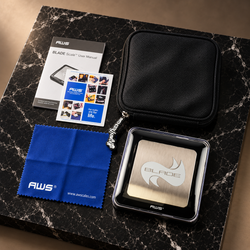
A pocket scale can be a convenient tool for measuring pet food, treats, toppers, and small portions. Its compact size makes it easy to store, carry, and use when traveling with a pet. Many pocket scales also provide finer resolution than standard kitchen scales.
However, pocket scales have important limitations. Their maximum capacities are usually lower, and their weighing platforms may be too small for standard feeding bowls. A model displaying 0.01-gram increments may seem ideal, but it may not support the combined weight of the bowl and food.
For many pet-food applications, a pocket scale with a capacity between 500 and 1,000 grams and a resolution of 0.1 gram provides a useful balance. Small treats and toppers may require less capacity, while full meals and heavier feeding bowls may require a kitchen scale with a capacity of 3,000 to 5,000 grams.
This guide explains how to choose the right capacity and resolution, when a pocket scale is practical, and when a larger food scale is the better option.
What Is a Pocket Pet Food Scale?
A pocket scale is a compact digital weighing device designed for portability and small-load measurements.
Common features include:
-
Battery-powered operation
-
A protective cover
-
A small platform
-
Multiple weighing units
-
A tare function
-
A backlit display
-
Fine resolution
-
Compact storage dimensions
Some covers can also function as weighing trays, making it easier to measure treats, kibble, or toppers.
You can compare different compact formats in the American Weigh Scales collection of digital pocket scales.
What Can You Weigh With a Pocket Scale?
A pocket scale may be useful for:
-
Cat treats
-
Dog treats
-
Training rewards
-
Kibble for small pets
-
Food toppers
-
Small wet-food portions
-
Food for small mammals
-
Portable travel portions
-
Daily treat allowances
-
Individual ingredients
It may be less suitable for:
-
Heavy ceramic bowls
-
Large dog-food portions
-
Full cans of food in a bowl
-
Multiple meals
-
Large recipe batches
-
Wide feeding dishes
Capacity and platform size should both be considered before choosing a pocket scale as your primary pet-food scale.
Understanding Capacity
Capacity is the maximum total weight the scale can support.
Common pocket-scale capacities include:
-
100 grams
-
200 grams
-
500 grams
-
650 grams
-
1,000 grams
-
2,000 grams
The total load includes:
-
Food
-
Bowl or tray
-
Lid
-
Spoon resting on the bowl
-
Any other object on the platform
If a bowl weighs 300 grams and the food weighs 250 grams, the scale supports 550 grams. A 500-gram model would be overloaded.
Pressing tare changes the displayed value but does not remove the bowl’s weight from the scale’s sensor.
Understanding Resolution
Resolution is the smallest increment shown on the display.
A pocket scale may measure in:
-
1-gram increments
-
0.1-gram increments
-
0.01-gram increments
-
0.001-gram increments
Resolution is not the same as accuracy. A scale that displays 25.47 grams does not necessarily measure the true weight within 0.01 gram.
Accuracy describes closeness to the actual mass. Repeatability describes whether the scale provides the same result when the same item is weighed several times under identical conditions.
Recommended Capacity and Resolution
| Pet-food application | Suggested capacity | Suggested resolution |
|---|---|---|
| Small treats | 100–500 g | 0.01–0.1 g |
| Daily treat allowance | 500–1,000 g | 0.1 g |
| Food toppers | 200–500 g | 0.1 g |
| Small cat-food portions | 500–1,000 g | 0.1–1 g |
| Small-dog kibble portions | 1,000–2,000 g | 0.1–1 g |
| Standard feeding bowls | 3,000–5,000 g | 1 g |
| Large-dog portions | 5,000 g or more | 1 g |
| Batch food preparation | 5,000–10,000 g | 1 g |
These ranges are general. Your veterinarian’s recommendations and the combined bowl-and-food weight should determine the final choice.
Is a 100-Gram Pocket Scale Enough?
A 100-gram model is suitable only for very small quantities.
It may work for:
-
Individual treats
-
Small training rewards
-
Tiny topper portions
-
Small amounts of kibble
-
Lightweight ingredients
The container must be very light. A small dish or cup can consume most of the available capacity before any food is added.
A 100-gram scale is best used as a secondary tool for small items rather than as the primary scale for regular meals.
When to Choose a 500-Gram Scale
A 500-gram pocket scale offers greater flexibility.
It can be useful for:
-
Daily treat allowances
-
Cat-food portions
-
Small-dog snacks
-
Food toppers
-
Kibble for small animals
-
Lightweight containers
Suppose the tray weighs 100 grams. That leaves up to 400 grams for food, although leaving additional headroom is wise.
A 500-gram model may work well if you use the protective cover as a lightweight tray. It may not be suitable for a ceramic or glass feeding bowl.
When to Choose a 1,000-Gram Scale
A capacity of 1,000 grams is a practical choice for many portable pet-food applications.
It can accommodate:
-
Lightweight pet bowls
-
Small dog-food portions
-
Cat meals
-
Wet food
-
Kibble
-
Treats and toppers
A 1-kilogram capacity gives you more flexibility than a 500-gram scale while remaining compact.
However, verify the platform dimensions. A scale may support 1,000 grams but still be too small to hold the feeding bowl securely.
When to Choose a 2,000-Gram Scale
A 2-kilogram pocket or compact scale may be suitable for:
-
Larger cat meals
-
Small- and medium-dog portions
-
Lightweight bowls
-
Multiple treat portions
-
Travel meal preparation
At this capacity, platform size may become a greater limitation than weight.
A wide bowl may cover the display, block the buttons, or touch the counter. If you regularly need 2,000 grams or more, compare compact models with the larger platforms in the AWS kitchen scale collection.
When a Kitchen Scale Is Better
A kitchen scale is generally the better choice when:
-
The pet bowl weighs more than 500 grams
-
You have a medium or large dog
-
You prepare several meals at once
-
You divide large cans or food batches
-
The bowl does not fit on a pocket scale
-
You need more than 2,000 grams of capacity
-
You regularly use wet or fresh food
The Neptune 5-kilogram kitchen scale represents the type of higher-capacity format that may better accommodate full feeding bowls.
Some pet owners may benefit from using a kitchen scale for meals and a pocket scale for treats or small toppers.
Do You Need 0.01-Gram Resolution?
Most pet-food portions do not require 0.01-gram resolution.
Hundredth-of-a-gram measurements are generally unnecessary for:
-
Dog meals
-
Cat meals
-
Normal kibble portions
-
Wet-food servings
-
Most treats
A 0.01-gram scale may be helpful for extremely small quantities, but it can be more sensitive to:
-
Air movement
-
Vibration
-
Temperature changes
-
Static electricity
-
Food movement
-
Off-center loads
Do not use an ordinary pocket scale to determine medication doses unless your veterinarian specifically approves the scale and method. Medications require appropriate veterinary dosing equipment.
Why 0.1-Gram Resolution Is Often Ideal
A 0.1-gram scale is detailed enough for many small food measurements without the extreme sensitivity of an ultra-fine model.
It can be useful for:
-
Treats
-
Toppers
-
Small cat-food portions
-
Small-dog meals
-
Training rewards
-
Detailed intake records
A compact or kitchen model with 0.1-gram resolution and several kilograms of capacity can provide more flexibility. For example, the Barista 3-kilogram coffee and kitchen scale is listed with 3-kilogram capacity and 0.1-gram readability.
When One-Gram Resolution Is Enough
One-gram readability is sufficient for many normal meals.
It is appropriate for:
-
Medium- and large-dog portions
-
Standard cat meals
-
Wet food
-
Dry kibble
-
Fresh-food portions
-
Larger treats
If a feeding target is approximately 120 grams, a result of 119 or 121 grams is normally useful.
Whole-gram resolution may also produce a steadier display in a normal home environment.
Choose Capacity Before Resolution
Capacity should be selected before resolution.
Follow this process:
-
Weigh the empty bowl or tray.
-
Identify the largest food portion.
-
Add the values.
-
Add extra headroom.
-
Choose the necessary resolution within that capacity range.
If the bowl and food weigh 750 grams together, a 500-gram scale is unsuitable regardless of how finely it reads.
Do not sacrifice necessary capacity to obtain decimal places that will not affect the feeding plan.
Why Platform Size Matters
Pocket scales achieve portability by using small platforms. That can create problems with pet bowls.
An oversized bowl may:
-
Cover the display
-
Block the buttons
-
Tip or wobble
-
Touch the surrounding countertop
-
Make centering difficult
-
Produce incorrect results
Measure the bottom of the bowl and compare it with the platform dimensions.
A bowl may extend past the platform if it remains stable and entirely supported. If the bowl touches the counter, part of its weight bypasses the sensor and the displayed result will be too low.
Using the Tare Function
Tare lets you measure food without including the bowl in the displayed result.
To use it:
-
Place the pocket scale on a hard, level surface.
-
Turn it on.
-
Wait for zero.
-
Center the empty bowl or tray.
-
Press tare.
-
Confirm that the display returns to zero.
-
Add the food slowly.
-
Wait for a stable result.
The bowl’s physical weight continues to count toward maximum capacity after taring.
If adding multiple foods, record the first ingredient, press tare again, and then add the next one.
Useful Pocket-Scale Features
Protective Cover
A rigid cover protects the platform during transportation and storage. Some covers can also be used as trays.
If using the cover as a food tray, make sure it is clean, stable, and appropriate for the intended contact.
Clear Display
Look for:
-
Large digits
-
Backlighting
-
A clear unit indicator
-
A low-battery warning
-
An overload message
-
A stable-reading indicator
Multiple Units
Grams and ounces are the most useful units for pet food.
Confirm the selected unit before measuring. Confusing ounces with grams can result in a significant error.
Automatic Shutoff
Automatic shutoff preserves batteries, but the timer should not be so short that it interrupts meal preparation or erases the tare value.
Responsive Controls
The tare and unit buttons should respond without requiring enough pressure to move the scale.
Easy-to-Clean Platform
A smooth platform is easier to wipe after measuring kibble, treats, or wet food. Do not immerse the scale unless it is specifically rated as waterproof.
Calibration and Performance
Calibration compares the scale’s reading with a known reference mass.
Check calibration:
-
When the scale is new
-
After traveling
-
After a drop or impact
-
Following major temperature changes
-
When readings become inconsistent
-
When an appropriate test mass produces an unexpected result
Use the exact calibration weight required by the manufacturer. Pet-food packages, cans, coins, and phones are not calibration standards.
AWS offers calibration weights and scale accessories for compatible models.
The National Institute of Standards and Technology’s Office of Weights and Measures provides broader information about weighing and reliable measurement.
Testing Repeatability
To check whether a pocket scale produces consistent results:
-
Select a stable object.
-
Weigh it in the center of the platform.
-
Record the result.
-
Remove the object.
-
Wait for the scale to return to zero.
-
Replace it in the same position.
-
Repeat several times.
The results should remain consistent within the scale’s stated tolerance.
If they vary substantially:
-
Replace the batteries.
-
Use a harder surface.
-
Eliminate vibration.
-
Move away from fans or vents.
-
Allow the scale to reach room temperature.
-
Check calibration.
-
Inspect for overload damage.
Using a Pocket Scale for Treats
A pocket scale can be especially useful for managing a daily treat allowance.
Try this process:
-
Place a lightweight container on the scale.
-
Press tare.
-
Add all treats planned for the day.
-
Store them separately.
-
Use only that supply for training and rewards.
This helps prevent several family members from independently estimating treats.
The World Small Animal Veterinary Association nutrition guidelines provide broader resources related to nutritional assessment. Ask your veterinarian how treats and toppers should fit into the overall feeding plan.
Using a Pocket Scale for Travel
A pocket scale can help maintain a familiar feeding routine when traveling.
Pack:
-
The scale
-
Protective cover
-
Spare batteries
-
Lightweight feeding bowl
-
Pet food
-
Written target portion
-
Cleaning wipes appropriate for the scale
Test the scale after arrival because transportation and temperature changes can affect performance.
If possible, premeasure individual food portions before travel. This can simplify feeding when a stable surface is unavailable.
Interpreting Pet-Food Labels
Pet-food labels commonly provide feeding directions based on weight or life stage. These recommendations are starting points rather than guarantees for every animal.
The FDA provides information about regulation and labeling through its pet-food resources. The Association of American Feed Control Officials also explains pet-food labels and nutritional adequacy information.
Individual food needs can vary according to:
-
Species
-
Age
-
Current and ideal weight
-
Body condition
-
Activity
-
Reproductive status
-
Environment
-
Health
-
Treat intake
The scale makes a selected target repeatable. It does not establish the target.
Body Condition and Veterinary Guidance
Two pets with the same body weight may have different feeding needs.
The AAHA nutrition and weight-management guidelines discuss individualized nutritional assessment in veterinary care.
Consult your veterinarian if your pet:
-
Gains or loses weight unexpectedly
-
Has a major appetite change
-
Develops vomiting or diarrhea
-
Refuses food
-
Requires a therapeutic diet
-
Has a condition affecting nutrition
-
Needs significant portion adjustments
Do not use scale measurements alone to make major changes to a medically managed diet.
Common Buying Mistakes
Choosing Fine Resolution Without Enough Capacity
The scale must support the container and food before decimal places become useful.
Forgetting Container Weight
The tare function does not increase physical capacity.
Ignoring the Platform
A feeding bowl may be too large even when the scale can support its weight.
Buying Exactly Enough Capacity
Choose headroom to reduce the risk of overload.
Assuming Resolution Equals Accuracy
A detailed display does not prove that the measurement is correct.
Using a Pet-Food Package for Calibration
Use the specified reference mass instead.
Treating a Pocket Scale as a Medication Scale
Medication dosing should follow veterinary instructions and use appropriate equipment.
Maintaining a Pocket Pet Food Scale
To preserve performance:
-
Store it with the cover in place.
-
Keep it in a dry area.
-
Wipe food residue promptly.
-
Prevent liquid from entering the controls.
-
Do not immerse it.
-
Avoid drops and impacts.
-
Replace weak batteries.
-
Do not store heavy items on the platform.
-
Check calibration after travel.
-
Never exceed maximum capacity.
More care recommendations are available in the AWS guide to digital scale maintenance.
Frequently Asked Questions
What capacity is best for a pocket pet food scale?
A capacity between 500 and 1,000 grams is practical for treats, toppers, cat food, and small-dog portions. Larger meals or heavier bowls may require 2,000 grams or more.
Is 0.1-gram resolution good for pet food?
Yes. It is useful for smaller portions, treats, toppers, and detailed measurements.
Do I need 0.01-gram resolution?
Usually not. It is unnecessary for most pet meals and may reduce capacity and platform size.
Can I weigh a full dog meal on a pocket scale?
Possibly, if the food and bowl remain below capacity and fit on the platform. A kitchen scale is usually better for medium and large dogs.
Does tare remove bowl weight from capacity?
No. Tare changes the displayed result, but the bowl still counts toward the total physical load.
Can a pocket scale determine how much my pet should eat?
No. It measures the amount served. Feeding targets should come from appropriate label information and veterinary guidance.
Can I use a pocket scale for wet food?
Yes, provided the bowl fits and the total load remains below capacity. Protect the scale from spills and clean residue promptly.
How often should the scale be calibrated?
Follow the manual. Check calibration after transportation, impact, major environmental changes, or unexpected readings.
Why does the reading fluctuate?
Possible causes include drafts, vibration, weak batteries, an uneven surface, temperature changes, or food movement.
Can a pet food scale measure medication?
Do not use a general food scale for medication unless your veterinarian specifically approves the scale, method, and required accuracy.
Final Thoughts
The best pocket scale for pet food should balance portability, capacity, resolution, and platform size.
For treats, toppers, cat food, and small-dog portions, a capacity between 500 and 1,000 grams with 0.1-gram resolution is often practical. A 2,000-gram model provides more flexibility, but a full kitchen scale may be easier to use once feeding bowls and portions become larger.
Choose capacity before resolution. Weigh the empty bowl, add the largest expected food portion, and include additional headroom. Then select the finest resolution that provides meaningful information for that load.
A responsive tare function, protective cover, clear display, calibration capability, and stable platform can make a pocket scale useful for daily feeding and travel.
Most importantly, use the scale to measure an appropriate feeding target consistently. The target itself should come from reliable pet-food information and individualized veterinary guidance.