
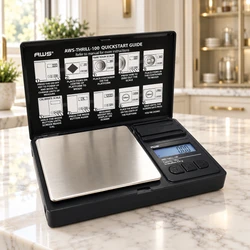
Meta Title: Best Digital Scale for Archery Components
Meta Description: Find the best digital scale for archery components. Learn how to weigh arrows, points, inserts, nocks, vanes, broadheads, and finished builds accurately.
Suggested URL Slug: /best-digital-scale-for-archery-components/
Primary Keyword: best digital scale for archery components
Secondary Keywords: archery component scale, arrow scale, grain scale for arrows, digital scale for broadheads, arrow-building scale, precision scale for archery
Best Digital Scale for Archery Components
Arrow building depends on small components that can influence total arrow weight, balance, consistency, and setup documentation. Points, inserts, nocks, vanes, wraps, bushings, collars, adhesives, and broadheads may look identical while varying slightly in mass.
The best digital scale for archery components allows archers and arrow builders to measure those differences instead of relying exclusively on nominal package labels.
A precision scale can be used to weigh:
-
Bare shafts
-
Completed arrows
-
Field points
-
Broadheads
-
Inserts
-
Outserts
-
Nocks
-
Vanes
-
Arrow wraps
-
Collars
-
Bushings
-
Small hardware
-
Adhesive additions
For most arrow-building work, choose a scale with grain mode, 0.01-gram readability or better, and enough capacity to hold a completed arrow or a suitable supporting tray. A capacity between 200 and 1,000 grams is more than sufficient for many individual components, but platform length and proper arrow support also matter.
American Weigh Scales offers a selection of digital pocket scales for parts, hobbies, component sorting, and precision measurement.
What Is the Best Scale for Archery Components?
A useful archery scale should include:
-
Grain measurement mode
-
Gram mode
-
Readability suitable for lightweight parts
-
Enough capacity for a completed arrow and its supports
-
A reliable tare function
-
A stable weighing platform
-
A protective cover
-
A clear backlit display
-
Calibration capability
-
Fast stabilization
-
Battery operation
-
Automatic shutoff
-
Overload indication
For general arrow building, a 0.01-gram scale is a practical choice. Since one grain is approximately 0.0648 gram, a scale displaying hundredths of a gram offers enough detail for many component comparisons.
Builders who need direct whole-grain or tenth-grain readings should choose a model that explicitly provides the desired grain resolution.
Why Weigh Archery Components?
Component weight affects the completed arrow. Weighing makes it easier to build sets, document changes, troubleshoot inconsistencies, and verify what is actually installed.
Package Labels Usually Show Nominal Weight
A package may identify a field point or broadhead as 100 grains, but individual pieces can vary slightly because of manufacturing tolerances, coatings, assembled hardware, or wear.
A digital scale lets you measure the actual component.
Small Differences Accumulate
An arrow contains several parts:
-
Shaft
-
Point or broadhead
-
Insert
-
Nock
-
Vanes
-
Wrap
-
Collar
-
Adhesive
A small difference in several components can create a larger difference in the finished arrow.
Finished Arrows Can Be Matched
Weighing every completed arrow allows you to group arrows with similar total weights.
Weight matching does not guarantee identical flight because straightness, spine consistency, component alignment, vane condition, dynamic behavior, and bow setup also matter. It does provide one objective quality-control measurement.
Build Records Become Repeatable
A useful build record can include:
-
Shaft model and cut length
-
Bare shaft weight
-
Insert weight
-
Point or broadhead weight
-
Nock weight
-
Vane and wrap weight
-
Completed arrow weight
-
Front-of-center measurement
-
Notes about adhesives and collars
Grains vs. Grams
Archery components are commonly specified in grains, while many precision scales use grams as their primary unit.
Grain Conversion
One grain equals approximately:
0.0648 gram
One gram equals approximately:
15.43 grains
Common conversions include:
| Grains | Approximate grams |
|---|---|
| 50 gr | 3.24 g |
| 75 gr | 4.86 g |
| 85 gr | 5.51 g |
| 100 gr | 6.48 g |
| 125 gr | 8.10 g |
| 150 gr | 9.72 g |
| 200 gr | 12.96 g |
These are unit conversions. They do not guarantee that a component marketed with a particular nominal weight will measure exactly that amount.
Why Grain Mode Is Convenient
A scale with grain mode removes the need to convert every measurement manually. It is particularly helpful for:
-
Field points
-
Broadheads
-
Inserts
-
Outserts
-
Completed arrows
-
Weight-system components
Always check the unit indicator. Grains and grams are not interchangeable.
Choosing the Right Readability
Readability is the smallest increment displayed by the scale.
One-Gram Readability
A whole-gram scale is too coarse for detailed arrow-building work. One gram equals approximately 15.43 grains, so meaningful component differences could disappear between display increments.
One-Tenth-Gram Readability
A 0.1-gram scale corresponds to approximately 1.54 grains per displayed increment.
It may be suitable for:
-
Rough arrow sorting
-
Heavy components
-
Completed-arrow comparisons
-
Bulk component groups
It may not offer enough detail for builders trying to compare small differences in points, nocks, or inserts.
One-Hundredth-Gram Readability
A 0.01-gram scale provides increments equivalent to approximately 0.15 grain.
This is a useful general-purpose level for:
-
Points
-
Broadheads
-
Inserts
-
Nocks
-
Vanes
-
Collars
-
Bushings
-
Completed arrows
American Weigh Scales offers precision scales with multiple capacity and readability combinations.
One-Thousandth-Gram Readability
A 0.001-gram scale provides much finer displayed increments, but it is also more sensitive to environmental conditions.
American Weigh Scales’ milligram scale collection includes models for measurements requiring greater sensitivity.
Milligram readability may be useful for detailed component research, but most ordinary arrow-building work does not require it.
Readability Is Not the Same as Accuracy
A scale displaying several decimal places is not automatically accurate to every displayed digit.
Measurement can be affected by:
-
Calibration
-
Repeatability
-
Minimum useful load
-
Temperature
-
Air movement
-
Static electricity
-
Vibration
-
Weak batteries
-
An uneven workbench
-
Off-center placement
-
Incorrect support
-
Overloading
NIST’s Office of Weights and Measures provides broader information about measurement standards and weighing practices.
Choosing the Right Capacity
Archery components are relatively light, so capacity is rarely the most difficult requirement. Platform size and arrow support often matter more.
100- to 300-Gram Capacity
This range is suitable for:
-
Points
-
Broadheads
-
Inserts
-
Nocks
-
Vanes
-
Small hardware
-
Most individual arrows
The AC PRO-200 Digital Pocket Scale is a compact option for appropriately sized components within its maximum capacity.
500- to 1,000-Gram Capacity
Additional capacity may be helpful for:
-
Multiple arrows
-
Component packages
-
Heavier support trays
-
Arrow-building kits
-
Groups of broadheads
-
Inventory work
Two Kilograms or More
A higher-capacity scale may be useful for:
-
Bulk component inventory
-
Multiple arrow sets
-
Packaged products
-
Heavy containers
-
Shipping preparation
The American Weigh 2000 × 0.1-gram Bench Scale provides additional capacity where 0.1-gram readability is sufficient.
How to Weigh a Full-Length Arrow
A complete arrow may be much longer than the scale’s platform. The challenge is supporting it without allowing another surface to carry part of the load.
Use an Appropriate Support
A purpose-built arrow holder, balanced cradle, or lightweight tray can keep the arrow centered above the platform.
Place the support on the scale and press tare before adding the arrow.
Avoid Outside Contact
The arrow must not touch:
-
The workbench
-
A wall
-
A tool
-
Your hand
-
Another arrow
-
An external stand not supported by the scale
If another surface supports part of the arrow, the displayed result will be too low.
Keep the Arrow Balanced
Position the arrow so it cannot roll or fall. Protect broadhead blades and use a safe component whenever a sharp point is unnecessary.
Using the Tare Function
Tare removes the displayed weight of the tray or arrow support.
Tare Procedure
-
Place the scale on a hard, level workbench.
-
Turn it on.
-
Select grains or grams.
-
Place the empty support on the platform.
-
Press tare.
-
Confirm that the display returns to zero.
-
Add the component or arrow.
-
Wait for a stable reading.
-
Record the measurement.
The support’s physical weight still counts toward the scale’s maximum capacity.
Weighing Arrow Shafts
Weigh the shaft at a consistent stage.
Possible stages include:
-
Full-length uncut shaft
-
Cut shaft
-
Squared shaft
-
Shaft with insert
-
Fletched shaft
-
Completed arrow
Record the stage with the number. A “shaft weight” that includes an insert cannot be compared directly with a bare shaft.
Matching Bare Shafts
If you are sorting shafts:
-
Cut and prepare them consistently.
-
Clean away debris.
-
Weigh each shaft using the same support.
-
Record the results.
-
Group similar weights.
-
Complete the arrows consistently.
Shaft weight is only one characteristic and should not replace appropriate spine selection or manufacturer recommendations.
Weighing Field Points
Field points are commonly marketed by nominal grain weight.
To compare them:
-
Use a small tared tray.
-
Weigh each point individually.
-
Record the result.
-
Repeat questionable measurements.
-
Group similar points.
A scale can identify weight variation, but it cannot determine whether threads, diameter, shape, or material are compatible with the arrow setup.
Weighing Broadheads
Broadheads combine weight measurement with additional safety concerns.
Protect the Blades
Use a stable tray or holder. Avoid handling exposed blades more than necessary, and follow the manufacturer’s safety instructions.
Weigh the Complete Broadhead
Unless you are testing individual parts, weigh the complete assembled broadhead in the configuration that will be installed.
Record Replaceable Components
A replacement blade or screw can alter the total weight. Record the exact broadhead model and configuration.
Do Not Assume Weight Confirms Suitability
A broadhead measuring the expected nominal weight is not automatically compatible with an arrow, bow, draw weight, or intended use. Follow component and bow manufacturers’ recommendations.
USA Archery provides general archery education and safety resources for archers, coaches, and clubs.
Weighing Inserts, Outserts and Collars
Insert systems can include multiple pieces that contribute to the arrow’s total front weight.
Measure:
-
Insert
-
Outsert
-
Collar
-
Additional weights
-
Retaining hardware
-
Complete assembled system
If the components are installed with adhesive, weigh before and after assembly to estimate the added mass.
For example:
-
Dry components: 48.2 grains
-
Installed assembly: 49.1 grains
-
Approximate added mass: 0.9 grain
This difference may include adhesive as well as normal measurement variation.
Weighing Nocks
Nocks are light, making appropriate scale resolution important.
Use a clean tared tray and keep the work area free from drafts.
Record:
-
Nock model
-
Size
-
Color if materials differ
-
Lighted or standard design
-
Bushing, if present
-
Measured weight
Lighted nocks can weigh substantially more than standard nocks, so they should not be compared as though they were the same component type.
Weighing Vanes and Wraps
Individual vanes and wraps may be very light.
Individual Measurement
Use a scale with suitable readability in a draft-protected workspace.
Batch Averaging
If one vane does not register consistently, weigh several matching vanes.
If 12 vanes weigh 36 grains:
36 ÷ 12 = 3 grains per vane on average
Batch averaging provides an average, not the exact weight of each vane.
Complete Fletching Weight
For a three-vane arrow:
Average vane weight × 3 = estimated vane contribution
Add the wrap and adhesive if calculating the complete rear-component weight.
Matching Completed Arrow Weights
After assembly, weigh every arrow in the set.
An arrow-matching table might look like this:
| Arrow | Finished weight |
|---|---|
| 1 | 421.4 gr |
| 2 | 421.8 gr |
| 3 | 421.5 gr |
| 4 | 422.0 gr |
| 5 | 421.6 gr |
| 6 | 421.3 gr |
The preferred tolerance depends on the builder’s purpose, equipment, and standards.
Do not remove material from an arrow or modify safety-critical components merely to match a number unless the procedure is approved by the relevant manufacturer and performed correctly.
Calculating Total Arrow Weight
If every component is measured separately, the expected finished weight can be estimated.
Example:
-
Shaft: 280 grains
-
Insert system: 50 grains
-
Point: 100 grains
-
Nock: 10 grains
-
Vanes: 24 grains
-
Wrap: 8 grains
Expected total = 472 grains
Compare that number with the completed arrow.
A difference may result from:
-
Adhesive
-
Measurement rounding
-
Component tolerances
-
Unrecorded hardware
-
Scale variability
-
Material removed during preparation
Arrow Weight per Pound
Some archers compare total arrow weight with bow draw weight using grains per pound.
The basic calculation is:
Finished arrow weight in grains ÷ measured bow draw weight in pounds
For example:
450 grains ÷ 60 pounds = 7.5 grains per pound
This calculation alone does not establish whether an arrow is safe for a particular bow. Always follow the minimum arrow-weight requirements and compatibility instructions supplied by the bow and arrow manufacturers.
The Archery Trade Association provides industry education and resources, while equipment manufacturers remain the primary source for model-specific requirements.
Scale Calibration
Calibration helps align a scale with a known reference mass.
Calibration may be appropriate after:
-
Transportation
-
Battery replacement
-
Extended storage
-
Significant temperature changes
-
Minor impact
-
Questionable readings
American Weigh Scales offers compatible calibration weights for scale maintenance.
Do Not Calibrate With an Arrow Point
A point labeled 100 grains is a manufactured archery component, not a certified calibration standard. Its actual weight may differ from the nominal label.
Use only the calibration mass and procedure specified by the scale manufacturer.
Calibration Procedure
The exact sequence varies by model, but it generally involves:
-
Placing the scale on a level surface
-
Allowing it to acclimate
-
Entering calibration mode
-
Applying the requested reference weight
-
Waiting for confirmation
-
Removing the weight
-
Verifying normal operation
Calibration Is Not Commercial Approval
Calibration does not automatically make a personal scale legal for retail transactions based on weight.
NIST’s current Handbook 44 addresses specifications and tolerances for commercial weighing equipment in the United States.
If archery components are being sold by measured weight, consult the appropriate state or local weights-and-measures authority.
Environmental Factors
Drafts
Fans and air-conditioning can affect lightweight components and sensitive scales.
Vibration
Keep the scale away from arrow saws, compressors, speakers, and unstable workbenches.
Temperature
Allow the scale and components to adjust after moving between a cold vehicle, hot garage, or climate-controlled room.
Static
Carbon shafts, plastic nocks, vanes, wraps, and packaging can generate static. Avoid rubbing plastic immediately before measurement.
Adhesive and Debris
Glue residue, carbon dust, and shaft-cutting debris can change a component’s weight and contaminate the scale.
Safety at the Arrow-Building Bench
Sharp broadheads and carbon-fiber debris require careful handling.
Use appropriate tools, follow manufacturer instructions, and keep damaged arrows out of service until they are evaluated correctly.
The National Archery in the Schools Program maintains safety-focused archery education resources, while World Archery publishes international competition rules and equipment requirements.
A digital scale is a measurement tool. It cannot confirm that a shaft, point, broadhead, or completed arrow is safe or compatible.
Cleaning and Storing the Scale
Use a Tray
Keep adhesives, lubricants, carbon dust, and sharp components away from the platform.
Wipe the Platform
Follow the scale manufacturer’s cleaning instructions. Avoid solvents that could damage plastic, markings, or the display.
Store It Covered
Close the protective cover and keep the scale away from heavy tools.
Remove Batteries for Extended Storage
Follow the manufacturer’s recommendations to reduce the risk of battery leakage.
Common Archery-Scale Mistakes
Confusing Grains With Grams
Always check the unit indicator before recording a result.
Using a Whole-Gram Scale
One gram equals approximately 15.43 grains, making whole-gram readings too coarse for many components.
Supporting the Arrow Outside the Scale
Every support must transfer the arrow’s full load to the weighing platform.
Applying Pressure to the Platform
Do not install points, push nocks, or assemble arrows while they are resting on the scale.
Calibrating With a Field Point
Nominal component weights are not calibration references.
Weighing Components at Different Assembly Stages
Compare bare shafts with bare shafts and completed arrows with completed arrows.
Treating Weight as the Only Quality Measure
Spine, straightness, component alignment, damage, and compatibility also matter.
Frequently Asked Questions
What scale is best for arrow building?
A scale with grain mode, 0.01-gram readability, tare, calibration capability, and enough capacity for the arrow plus its support works for most builders.
How much capacity is needed?
A 200-gram capacity can accommodate many individual arrows and components. Choose more if using heavy supports, weighing multiple arrows, or packaging parts.
Is 0.1-gram readability enough?
It may be sufficient for rough arrow sorting, but 0.01 gram provides better component-level comparison.
Should the scale display grains?
Grain mode is highly convenient because archery components are commonly specified in grains.
Can I calibrate the scale with a 100-grain point?
No. Use the reference weight specified by the scale manufacturer.
How do I weigh a long arrow on a small platform?
Use a lightweight cradle or holder entirely supported by the platform, tare it, and confirm that the arrow touches nothing else.
Can the scale calculate front of center?
No. A scale measures mass. Front of center also requires accurate balance-point and arrow-length measurements.
Do equal-weight arrows always fly identically?
No. Weight is only one variable. Spine, straightness, alignment, component condition, and bow setup also affect performance.
Final Verdict
The best digital scale for archery components should combine grain mode, useful precision, adequate capacity, repeatable readings, and safe support for complete arrows.
For most arrow builders, a model with 0.01-gram readability and a capacity between 200 and 1,000 grams provides an effective balance. It can weigh points, inserts, nocks, vanes, collars, broadheads, bare shafts, and finished arrows.
Choose a milligram scale only for highly detailed lightweight-component work under controlled conditions. Choose a higher-capacity bench scale for multiple arrows, bulk components, and packaged inventory.
Use a lightweight arrow cradle, press tare before each measurement, and keep every part of the arrow supported by the scale. Calibrate only with the correct reference mass and protect the instrument from drafts, vibration, static, adhesives, carbon dust, and overload.
A dependable digital scale cannot replace safe component selection or manufacturer guidance, but it can make arrow-building records more accurate, component comparisons more useful, and finished sets more consistent.