
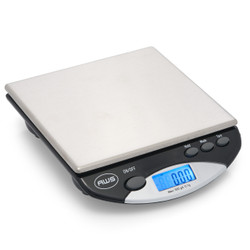
The best kitchen scale for making homemade candy and caramel should provide accurate gram measurements, a dependable tare function, fast stabilization, and enough capacity for your bowls and ingredients. For most home confectioners, a digital scale with 0.1-gram readability and a capacity between 2,000 and 5,000 grams offers the best combination of precision and versatility.
Candy making requires more than following a list of ingredients. The final texture can depend on ingredient ratios, temperature, timing, agitation, cooling conditions, and moisture. A small measurement change may affect whether a recipe becomes smooth caramel, soft fudge, crisp brittle, chewy nougat, or a grainy mass.
A scale cannot replace a candy thermometer or proper technique, but it creates a dependable starting point. It lets you measure sugar, glucose syrup, cream, butter, chocolate, flavorings, nuts, and finished portions consistently.
It also helps you scale recipes, calculate yield, divide batches, portion fillings, standardize individual candies, and control ingredient costs.
This guide explains how to choose a candy-making scale, what capacity and readability you need, how to weigh sticky ingredients, how to scale confectionery recipes, and how to avoid common measurement mistakes.
Why Candy Making Requires Accurate Measurements
Candy recipes rely on controlled relationships among sugar, liquid, fat, chocolate, and other ingredients.
If a recipe contains too much liquid, the mixture may require additional cooking time to reach the intended concentration. Too little liquid can make the early cooking stage difficult and increase the risk of scorching.
Incorrect quantities can contribute to:
-
Caramel that is too soft
-
Caramel that is excessively firm
-
Grainy fudge
-
Sticky brittle
-
Poorly set gummies
-
Chocolate fillings with the wrong consistency
-
Unbalanced flavor
-
Unexpected yield
-
Inconsistent pieces
-
Increased ingredient waste
Temperature and technique remain important, but weighing eliminates one significant source of variation.
Browse American Weigh Scales kitchen scales to compare models for sugar, chocolate, caramel ingredients, mixing bowls, and finished candy portions.
Quick Answer: What Is the Best Scale for Candy Making?
For most home candy makers, choose a scale with:
-
Readability of 0.1 gram
-
Capacity of at least 2,000 grams
-
Preferably 5,000 grams for larger batches
-
Gram measurement mode
-
Reliable tare function
-
Fast, stable readings
-
Platform large enough for bowls
-
Display visible beneath containers
-
Simple controls
-
Easy-to-clean surface
-
Practical automatic shutoff timing
A five-kilogram scale is a versatile choice because it can support large ingredient quantities and substantial bowls. A smaller precision scale can complement it when measuring powdered flavorings, acids, colorants, or other minor ingredients.
The KF-5KG digital kitchen scale combines a 5,000-gram capacity with 0.1-gram readability, making it suitable for large quantities of sugar as well as smaller ingredients.
Why Grams Are Better Than Cups for Candy
Measuring cups determine volume. A scale determines mass.
Volume can be inconsistent for ingredients such as:
-
Brown sugar
-
Powdered sugar
-
Chopped chocolate
-
Chocolate chips
-
Nuts
-
Marshmallows
-
Cocoa powder
-
Coconut
-
Dried fruit
-
Crushed cookies
A cup of firmly packed brown sugar contains more than a loosely packed cup. Large chocolate pieces leave more empty space than small pieces. Chopped nuts settle differently according to their size.
Sticky liquid ingredients introduce another issue. Some syrup remains inside the measuring cup, so the quantity entering the recipe may be lower than the quantity originally measured.
With a scale, you can weigh the syrup directly into the mixing container. There is no need to estimate how much remained on the sides of a cup.
The National Institute of Standards and Technology recommends using an appropriate kitchen scale when measuring ingredients by mass to improve recipe accuracy. Its metric kitchen guidance explains the practical differences between mass and volume measurements.
Understanding Scale Capacity
Capacity is the maximum total mass the scale can safely support.
The total load includes:
-
Empty bowl
-
Sugar
-
Syrup
-
Cream
-
Butter
-
Chocolate
-
Nuts
-
Other ingredients
Pressing tare does not remove the container’s physical mass. It only resets the displayed value.
Suppose:
-
Scale capacity: 5,000 grams
-
Empty bowl: 1,000 grams
-
Ingredients: 2,800 grams
The scale supports a total of 3,800 grams, which is within capacity.
If the bowl weighs 1,500 grams and the ingredients weigh 3,700 grams, the combined load becomes 5,200 grams and exceeds the scale’s limit—even if the display was set to zero after the bowl was added.
Is Two-Kilogram Capacity Enough?
A two-kilogram scale is sufficient for many small candy recipes, test batches, ingredients, and finished portions.
The AMW-2000 compact digital bench scale provides a 2,000-gram capacity with 0.1-gram readability. It can work well for chocolate, nuts, sugar, individual candies, and moderate ingredient bowls.
Always calculate the bowl’s mass before loading a complete recipe.
When Is Five-Kilogram Capacity Better?
Choose a five-kilogram model if you:
-
Make large caramel batches
-
Use heavy glass bowls
-
Prepare candy commercially
-
Weigh full containers of chocolate
-
Make multiple gift boxes
-
Work with large quantities of sugar
-
Want one scale for all kitchen tasks
The KITCHEN Pro-5KG digital bowl scale offers a five-kilogram capacity, 0.1-gram readability, and an included bowl for containing dry or sticky ingredients.
Understanding Scale Readability
Readability is the smallest increment shown on the display.
A one-gram scale shows:
-
98 grams
-
99 grams
-
100 grams
A 0.1-gram scale can show:
-
99.8 grams
-
99.9 grams
-
100.0 grams
A 0.01-gram scale may show:
-
99.98 grams
-
99.99 grams
-
100.00 grams
Is One-Gram Readability Enough?
One-gram readability is sufficient for large quantities of sugar, cream, butter, and chocolate.
It may be less suitable for:
-
Concentrated flavoring powders
-
Citric or malic acid
-
Food coloring
-
Salt
-
Small gelatin quantities
-
Tiny test batches
-
Formula development
Why 0.1-Gram Readability Is a Good Choice
A 0.1-gram scale provides enough detail for most homemade candy recipes without requiring laboratory-style conditions.
You can distinguish between 4.5 and 5.5 grams rather than seeing both as approximately five grams.
When Would You Need 0.01-Gram Readability?
Hundredth-gram readability may help when measuring:
-
Concentrated powdered flavoring
-
Small amounts of coloring
-
Acids for sour candy
-
Tiny test batches
-
Minor recipe corrections
-
Individual decorations
-
High-value ingredients
The ACPRO-220 digital pocket scale offers a 220-gram capacity with 0.01-gram readability. It can complement a larger kitchen scale for minor confectionery ingredients.
Accuracy, Readability, and Repeatability
These terms describe different characteristics.
Accuracy
Accuracy indicates how close the measurement is to the actual mass.
Readability
Readability is the smallest displayed increment.
Repeatability
Repeatability describes whether the same item produces the same or nearly the same reading when measured several times under stable conditions.
A useful candy scale should return to zero after taring and provide stable, repeatable readings.
More decimal places do not guarantee better accuracy. Proper setup, suitable calibration, stable temperature, appropriate capacity, and careful handling all matter.
Important Features in a Candy-Making Scale
Reliable Tare
Tare resets the display after a bowl or container is added.
It makes sticky ingredients much easier to measure because you can weigh them directly into the container used for preparation.
Fast Stabilization
A slow display can cause overshooting, especially when pouring syrup or cream. A responsive scale gives you time to stop near the target.
Large Platform
The container must sit securely without touching the counter or another surface.
A bowl that contacts the countertop may produce an incorrect measurement because part of its mass is supported outside the scale.
Visible Display
A large bowl should not block the screen. Look for a display positioned far enough forward to remain readable.
Easy Cleaning
Candy ingredients can be sticky. Choose a smooth platform that is easy to wipe.
Do not assume a scale is waterproof. Keep syrup, melted chocolate, water, and oils away from openings and buttons.
Useful Auto-Off Timing
A short automatic shutoff interval may be inconvenient when several ingredients are being added. If the scale turns off under a loaded bowl, the tare value may be lost.
Best Scale for Caramel
Caramel recipes may include:
-
Granulated sugar
-
Corn syrup or glucose
-
Water
-
Cream
-
Butter
-
Salt
-
Vanilla
-
Chocolate
-
Flavorings
The scale should measure both large and small quantities reliably.
A removable bowl can simplify ingredient preparation. The 2K-BOWL digital bowl scale provides a 2,000-gram capacity, 0.1-gram readability, and a removable bowl for weighing sugar, chocolate, nuts, and other ingredients.
Do not place a hot saucepan directly on the scale unless the manufacturer explicitly states that the platform is designed for it. Heat can affect readings or damage the scale.
Weigh the empty saucepan while it is cool if you need its tare mass. Add ingredients before heating whenever the recipe permits.
Best Scale for Chocolate Work
Chocolate can be weighed in blocks, wafers, chips, or chopped pieces.
Mass is preferable to cups because differently shaped pieces leave different quantities of empty space.
A scale helps with:
-
Tempering batches
-
Ganache ratios
-
Mold filling
-
Truffle centers
-
Chocolate shells
-
Bark
-
Dipped candy
-
Ingredient costing
-
Packaging
For example, a ganache formula might use:
-
400 grams chocolate
-
200 grams cream
To prepare half:
-
200 grams chocolate
-
100 grams cream
To prepare 1.5 batches:
-
600 grams chocolate
-
300 grams cream
Different chocolate types do not behave identically, so preserve both the formula and the specified chocolate.
Best Scale for Fudge
Fudge texture depends on recipe composition, temperature, crystallization, cooling, and mixing.
A scale helps ensure that sugar, dairy, chocolate, and fat remain in the intended relationship.
Weigh ingredients separately before heating. Candy preparation moves quickly once the mixture reaches certain temperatures, so having everything measured in advance reduces mistakes.
King Arthur Baking’s fudge and candy recipes demonstrate the importance of following specific ingredient quantities and preparation instructions for different confections.
Best Scale for Toffee and Brittle
Toffee and brittle often involve high cooking temperatures and ingredients such as:
-
Sugar
-
Butter
-
Syrup
-
Water
-
Nuts
-
Salt
-
Baking soda
-
Chocolate
A large kitchen scale can measure the primary ingredients. A precision scale is useful for salt and baking soda.
Baking soda should be measured carefully because it may cause rapid foaming when added to a hot sugar mixture. Prepare it in advance and keep it in a separate container.
Keep the scale away from the hot cooking area so that steam, splashes, and heat do not reach it.
Best Scale for Gummies
Homemade gummies may involve:
-
Gelatin
-
Sugar
-
Glucose syrup
-
Water or juice
-
Flavoring
-
Acid
-
Coloring
Gelatin and acid amounts can be relatively small, making 0.1-gram readability useful.
Weigh each ingredient separately, especially concentrated acids and flavorings. Follow the recipe and ingredient manufacturer’s directions.
Do not make casual substitutions among gelatin products. Bloom strength and formulation may vary.
How to Weigh Candy Ingredients Properly
Step 1: Choose a Stable Surface
Place the scale on a hard, level counter away from the stove, mixer, and strong airflow.
Step 2: Turn On the Empty Scale
Wait for the display to show zero.
Step 3: Select Grams
Confirm the unit before weighing ingredients.
Step 4: Add the Container
Center the bowl or saucepan securely on the platform while it is cool.
Step 5: Press Tare
Wait for the display to return to zero.
Step 6: Add the Ingredient Slowly
Pour quickly at first and reduce the flow near the target.
Step 7: Weigh Minor Ingredients Separately
Measure salt, acids, baking soda, gelatin, flavorings, and coloring in individual containers.
Step 8: Record Actual Quantities
If the target was 250 grams and you used 253 grams, record the true quantity.
Step 9: Remove the Container Before Mixing or Heating
Do not stir vigorously, press ingredients, or place the scale near active heat.
How to Weigh Sticky Ingredients
Sticky syrups are difficult to transfer from measuring cups because some product remains on the sides.
Weighing directly into the cooking container reduces this loss.
Direct-Weighing Method
-
Place the cool saucepan or bowl on the scale.
-
Press tare.
-
Pour the syrup slowly.
-
Stop near the target.
-
Use a clean utensil for the final small adjustment.
Difference Method
The difference method is useful when pouring from a large container.
-
Weigh the syrup container.
-
Dispense syrup into the recipe.
-
Weigh the container again.
-
Subtract the second mass from the first.
If the container weighs 850 grams before pouring and 600 grams afterward:
You added 250 grams of syrup.
This method also works for nut butter, caramel paste, fondant, and other sticky ingredients.
How to Use the Tare Function
Tare Between Ingredients
-
Add the bowl.
-
Press tare.
-
Add sugar.
-
Press tare.
-
Add water.
-
Press tare.
-
Continue with the next ingredient.
This method minimizes dishes but can create problems if you add too much of a difficult-to-remove ingredient.
Use Running Totals
Suppose a recipe begins with:
-
500 grams sugar
-
150 grams water
-
100 grams syrup
Your targets would be:
-
Sugar: 500 grams
-
Sugar plus water: 650 grams
-
Sugar, water, and syrup: 750 grams
Weigh Ingredients Separately
Separate measurement is often the safest method for candy making. Once ingredients enter a saucepan, correcting an error can be difficult.
Prepare every ingredient before applying heat.
Scaling a Candy Recipe
Suppose a caramel recipe contains:
-
500 grams sugar
-
200 grams glucose syrup
-
350 grams cream
-
150 grams butter
-
5 grams salt
To make 1.5 batches, multiply every ingredient by 1.5:
-
Sugar: 750 grams
-
Glucose syrup: 300 grams
-
Cream: 525 grams
-
Butter: 225 grams
-
Salt: 7.5 grams
To make half:
-
Sugar: 250 grams
-
Glucose syrup: 100 grams
-
Cream: 175 grams
-
Butter: 75 grams
-
Salt: 2.5 grams
Changing batch size can also affect cooking time, saucepan suitability, heat distribution, and cooling. Use an appropriately sized pan and monitor temperature rather than assuming time will scale proportionally.
Calculating Ingredient Percentages
Percentages help preserve formulas when changing batch size.
Suppose sugar is treated as 100%:
-
Sugar: 1,000 grams
-
Syrup: 400 grams
-
Cream: 700 grams
-
Butter: 300 grams
-
Salt: 10 grams
The percentages are:
-
Sugar: 100%
-
Syrup: 40%
-
Cream: 70%
-
Butter: 30%
-
Salt: 1%
Use:
If you later use 600 grams of sugar, calculate every other ingredient from the same percentages:
-
Syrup: 240 grams
-
Cream: 420 grams
-
Butter: 180 grams
-
Salt: 6 grams
Measuring Candy Temperature
Ingredient mass and cooking temperature control different variables.
A scale tells you how much of each ingredient is present. A thermometer tells you how hot the mixture has become.
Sugar concentration changes as water evaporates during cooking. This is why candy recipes often specify a temperature or stage.
Use a reliable thermometer appropriate for candy making. Position it according to the manufacturer’s instructions and avoid allowing the sensing area to rest incorrectly against the pan.
The Exploratorium’s explanation of sugar syrup stages describes how increasing sugar concentration and temperature correspond to different candy textures.
Always follow the individual recipe because altitude, thermometer accuracy, pan shape, batch size, and local conditions may affect the process.
Weighing Finished Caramel for Cutting
Once caramel has cooled and set, a scale can help create equal pieces.
Suppose the slab weighs 1,500 grams and you want 60 candies:
Each piece should weigh approximately 25 grams.
You can:
-
Cut the slab into approximate rows.
-
Weigh representative pieces.
-
Adjust the cutting pattern.
-
Trim oversized pieces when appropriate.
-
Record the actual yield.
Avoid cutting directly on the scale. Use a cutting board and transfer each piece to a tared tray.
Portioning Truffles
Truffle centers can be standardized before rolling or coating.
Common portion sizes may range from approximately 8 to more than 25 grams, depending on the desired finished product.
If the ganache weighs 800 grams and each center should be 16 grams:
The theoretical yield is 50 centers.
Some ganache will remain on the bowl and utensils, so actual yield may be slightly lower.
Equal centers help create consistent coating requirements, package counts, and customer expectations.
Weighing Chocolate Molds
A scale can determine how much chocolate or filling a mold requires.
Fill-and-Difference Method
-
Weigh the chocolate container.
-
Fill the mold.
-
Weigh the container again.
-
Subtract the second reading from the first.
Repeat several times and calculate an average.
This information helps you estimate:
-
Chocolate needed per mold
-
Number of molds per batch
-
Cost per piece
-
Packaging weight
-
Production time
Dividing Candy Into Flavors or Colors
Suppose a 1,200-gram batch must be divided into three flavors:
-
Vanilla: 50%
-
Raspberry: 30%
-
Lemon: 20%
Calculate:
-
Vanilla: 600 grams
-
Raspberry: 360 grams
-
Lemon: 240 grams
Transfer each portion into a tared bowl.
Work efficiently because some candy mixtures begin setting quickly. Confirm that dividing the batch is appropriate for the recipe before starting.
Using a Scale for a Candy Business
A reliable scale can support:
-
Standardized recipes
-
Predictable yield
-
Consistent piece size
-
Filling control
-
Cost calculations
-
Inventory planning
-
Package consistency
-
Quality-control records
-
Reduced overportioning
-
Production scheduling
Suppose a batch should make 100 caramels at 20 grams each:
If pieces average 23 grams, a 2,000-gram batch produces only:
The business loses approximately 14 expected pieces.
If pieces are too small, customers may receive less than intended. Consistency protects both the business and the customer.
Net Weight and Commercial Use
Businesses selling packaged candy should verify applicable labeling and commercial-weighing regulations.
A scale suitable for recipe preparation is not automatically legal for determining a sale price by weight.
NIST’s Handbook 133 provides official procedures for checking the net contents of packaged goods.
Local authorities may impose additional requirements. Commercial users should select equipment appropriate for the intended legal and operational application.
Calculating Cost per Candy
Suppose a caramel batch costs:
-
Sugar and syrup: $6
-
Cream and butter: $9
-
Flavorings and salt: $2
-
Chocolate: $8
-
Nuts: $5
Total ingredient cost:
If the batch produces 100 pieces:
The ingredient cost is $0.30 per candy before labor, packaging, utilities, delivery, equipment, marketing, transaction fees, overhead, and taxes.
Accurate batch yield and portion size improve the cost calculation.
Candy Allergens and Labeling
Candy may contain or contact major allergens such as:
-
Milk
-
Peanuts
-
Tree nuts
-
Soy
-
Eggs
-
Wheat
-
Sesame
Some chocolate, flavoring, sprinkle, and decoration products may also carry allergen statements.
Businesses should maintain clear ingredient records and prevent unintended cross-contact.
The FDA provides information about major allergens and labeling through its food-allergy resources.
A scale helps record ingredient quantities, but it cannot detect allergens or prevent cross-contact by itself.
Common Candy-Weighing Mistakes
Weighing a Hot Pan
Heat can damage the scale or affect readings. Weigh ingredients before heating.
Exceeding Capacity
Include the pan or bowl when calculating the physical load.
Letting the Bowl Touch the Counter
Part of the mass may be supported outside the scale.
Measuring on an Unstable Surface
Use a rigid, level counter away from a running mixer or heavy appliance.
Adding Minor Ingredients Directly to the Main Batch
A large error in salt, acid, or baking soda may ruin the recipe. Weigh them separately.
Allowing Syrup Into the Controls
Use a sufficiently large container and clean spills promptly.
Assuming Tare Increases Capacity
Tare resets the display but does not reduce the physical load.
Mixing on the Scale
Remove the container before stirring, beating, or scraping forcefully.
Ignoring Actual Measurements
Record what you truly added, including accidental overshoots.
Troubleshooting Candy With Measured Ingredients
Caramel Is Too Soft
Possible causes include:
-
Insufficient cooking temperature
-
Thermometer error
-
Incorrect ingredient ratio
-
Excess liquid
-
High humidity
-
Inadequate cooling
Caramel Is Too Hard
Possible causes include:
-
Excessive cooking temperature
-
Too little liquid
-
Formula error
-
Continued cooking after the target
-
Incorrect thermometer placement
Fudge Is Grainy
Possible causes include:
-
Uncontrolled crystallization
-
Stirring at the wrong time
-
Sugar crystals on the pan
-
Formula error
-
Cooling or beating problems
Brittle Is Sticky
Possible causes include:
-
Insufficient final temperature
-
Humid storage
-
Excess moisture
-
Incorrect ingredient quantity
-
Inadequate packaging
A scale confirms the starting formula, helping you focus on temperature and technique during troubleshooting.
Food Safety During Candy Making
Candy making involves hot sugar, which can cause severe burns. Use appropriate equipment and keep children and pets away from the cooking area.
Additional precautions include:
-
Use a stable saucepan.
-
Keep handles positioned safely.
-
Avoid splashing hot syrup.
-
Use heat-resistant utensils.
-
Do not touch hot caramel.
-
Keep water away from hot fat or chocolate when inappropriate.
-
Clean spills carefully.
-
Store dairy-based fillings properly.
-
Prevent cross-contamination.
-
Follow tested recipes.
The USDA’s food-safety basics outline fundamental practices for cleaning, separating, cooking, and chilling food safely.
Cleaning and Maintaining a Candy Scale
After use:
-
Allow nearby hot equipment to cool.
-
Remove dry sugar with a soft brush.
-
Wipe the platform with a lightly damp cloth.
-
Dry it immediately.
-
Clean syrup before it hardens.
-
Keep water away from buttons and openings.
-
Do not submerge the scale.
-
Avoid abrasive cleaning tools.
-
Remove chocolate and fat residue.
-
Wash removable bowls according to instructions.
-
Store the scale without weight on it.
-
Replace weak batteries.
-
Follow the manufacturer’s calibration procedure.
Do not pour boiling water onto hardened sugar while it is on the scale. Remove washable containers and clean them separately.
Calibration and Accuracy Checks
If readings appear inconsistent:
-
Move the scale to a hard, level surface.
-
Remove all objects.
-
Clean around the platform.
-
Replace weak batteries.
-
Allow the scale to reach room temperature.
-
Test it with an appropriate reference weight.
-
Calibrate it according to the manual.
Do not use a bag of sugar, chocolate bar, or butter package as a calibration standard. Labeled product quantities are not necessarily exact calibration references.
Keeping a Candy-Making Journal
Record:
-
Recipe name
-
Sugar mass
-
Syrup mass
-
Liquid mass
-
Butter or fat mass
-
Chocolate type and mass
-
Salt
-
Flavoring
-
Coloring
-
Minor ingredients
-
Pan size
-
Batch size
-
Target temperature
-
Actual temperature
-
Cooking time
-
Room humidity
-
Finished batch mass
-
Portion mass
-
Actual yield
-
Texture
-
Storage method
-
Planned adjustment
Detailed records help you determine whether a change in result came from the formula, temperature, technique, or environment.
Frequently Asked Questions
What is the best kitchen scale for candy making?
Choose a digital scale with 0.1-gram readability, at least 2,000 grams of capacity, reliable tare, and a platform large enough for your ingredient containers.
Is a five-kilogram scale enough for caramel?
Yes, for most home batches. Include the cool saucepan or bowl when calculating the total load.
Do I need a precision scale for candy?
A 0.1-gram model is suitable for most recipes. A 0.01-gram scale may help with concentrated colors, flavors, acids, and very small test batches.
Can I weigh a hot saucepan?
Avoid placing hot cookware on a scale unless the manufacturer specifically states that it is safe. Heat may damage the platform or affect readings.
Can I weigh corn syrup directly in the pan?
Yes, while the pan is cool and within the scale’s capacity. Place it on the scale, tare it, and add the syrup slowly.
Does tare increase scale capacity?
No. The container still counts toward the physical maximum load.
How do I weigh sticky ingredients without wasting them?
Use direct weighing or weigh the ingredient container before and after dispensing. The difference equals the quantity used.
Can a food scale replace a candy thermometer?
No. The scale measures mass, while the thermometer measures temperature. Many candy recipes require both.
How do I portion caramel evenly?
Weigh the cooled slab, divide its mass by the desired number of pieces, and use the result as the target mass per candy.
Can I use a pocket scale for candy?
Yes, for small ingredients and individual pieces. Its capacity and platform may be too small for a saucepan or full batch.
Why does my scale fluctuate?
Possible causes include vibration, an uneven surface, heat, airflow, weak batteries, a container touching the counter, excessive load, or debris around the platform.
Can I use the same scale for chocolate and baking?
Yes. Keep the platform clean and use appropriate containers to prevent residue and cross-contact.
Final Verdict
The best kitchen scale for making homemade candy and caramel combines fine readability, sufficient capacity, reliable tare, and a surface that can be cleaned easily.
For most home confectioners, look for:
-
0.1-gram readability
-
Capacity between 2,000 and 5,000 grams
-
Gram measurement mode
-
Reliable tare
-
Fast stabilization
-
Stable platform
-
Visible display
-
Simple controls
-
Easy cleaning
-
Practical auto-off timing
A five-kilogram model provides flexibility for large ingredient bowls, while a small 0.01-gram scale can handle concentrated flavors, acids, colors, and experimental batches.
Candy making still requires careful temperature control and proper technique. However, weighing gives every recipe a consistent foundation. It helps you preserve ingredient ratios, scale batches, portion finished pieces, calculate yield, control costs, and troubleshoot with dependable information.
Once your measurements are reliable, you can focus on the details that transform sugar and a few carefully chosen ingredients into smooth caramel, crisp brittle, creamy fudge, glossy chocolate, and consistently beautiful homemade candy.