
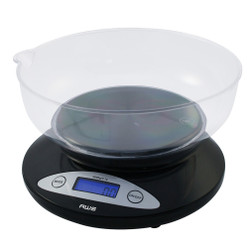
The best scale for coffee beans and espresso dosing should provide 0.1g readability, a fast tare function, enough capacity for your brewing equipment, and a platform large enough to support your cup, dosing container, portafilter, or pour-over brewer.
For complete coffee preparation, the American Weigh Scales BARISTA-3KG is the strongest overall choice. It combines a 3,000g capacity, 0.1g readability, built-in timer, splash-resistant construction, silicone mat, and coffee-specific accessories.
For espresso dosing or travel, a compact 500g pocket scale may provide all the accuracy you need in a smaller footprint. For heavier brewing machines, bowls, and everyday kitchen use, a 5kg kitchen scale provides greater capacity.
This guide compares the best scales for coffee beans, espresso dosing, pour-over brewing, and everyday coffee preparation.
Why Weigh Coffee Beans?
Measuring coffee by volume can produce inconsistent results because beans differ in size, density, roast level, and shape.
A tablespoon of dark-roasted coffee may not weigh the same as a tablespoon of light-roasted coffee. Scoops can also vary depending on how full they are.
Measuring by weight helps you:
- Repeat successful recipes
- Maintain a consistent coffee-to-water ratio
- Dose espresso more accurately
- Reduce wasted beans
- Compare different grind sizes
- Adjust recipes systematically
- Track espresso input and output
- Improve consistency between brews
A digital coffee scale replaces guesswork with repeatable measurements.
Best Coffee Scales at a Glance
| Model | Capacity | Readability | Best For |
|---|---|---|---|
| BARISTA-3KG | 3,000g | 0.1g | Best overall coffee and pour-over scale |
| KF-5KG | 5,000g | 0.1g | Espresso machines, larger brewers and kitchen use |
| AWS-501 | 500g | 0.1g | Espresso dosing and portable coffee kits |
| AWS-600 | 600g | 0.1g | Coffee beans, grounds and small containers |
| CARDV2-200 | 200g | 0.01g | Very small coffee doses and compact travel use |
| LB-3000 | 3,000g | 0.1g | Coffee ingredients and bowl-based weighing |
Best Overall Coffee Scale: BARISTA-3KG
The BARISTA-3KG Coffee and Kitchen Scale is designed specifically for coffee preparation.
It offers a 3,000g maximum capacity with 0.1g readability, providing enough room for beans, grounds, cups, drippers, and many complete brewing setups.
Its built-in timer allows users to monitor brewing time and weight from the same device. This is especially useful for pour-over coffee, where both water weight and extraction time influence the final cup.
BARISTA-3KG Specifications
- Maximum capacity: 3,000g
- Readability: 0.1g
- Units: Grams, pounds, ounces and pounds
- Platform: Approximately 3.94 by 4.72 inches
- Display: Approximately 3.1 by 0.9 inches
- Dimensions: Approximately 5.77 by 5.04 by 0.9 inches
- Power: Three AAA batteries
- Included accessory: Collapsible silicone cup
- Warranty: 10-year manufacturer’s warranty
Coffee-Specific Features
- Built-in brewing timer
- Bright backlit LCD
- Color-changing display mode
- Splash-resistant design
- Removable silicone mat
- Collapsible coffee cup
- Microfiber cleaning cloth
- Tare function
- Compact brewing-friendly platform
Best For
- Pour-over coffee
- Espresso dosing
- Measuring espresso yield
- Coffee beans and grounds
- AeroPress recipes
- Manual brewing
- Coffee-to-water ratio control
- Home coffee stations
- Travel brewing kits
The combination of 0.1g readability, a timer, and a 3kg capacity makes the BARISTA-3KG the most versatile AWS option for coffee enthusiasts.
Best High-Capacity Coffee Scale: KF-5KG
The KF-5KG Digital Kitchen Scale provides a maximum capacity of 5,000 grams with 0.1g readability.
Its higher capacity is useful for heavier cups, bowls, carafes, brewers, and kitchen containers. The scale has a 4.5-by-4.5-inch stainless steel platform, bright red LED display, tare function, and rechargeable internal lithium battery.
The KF-5KG can be used for coffee preparation as well as general cooking, baking, and ingredient measurement.
KF-5KG Specifications
- Maximum capacity: 5,000g
- Readability: 0.1g
- Units: Grams, pounds and ounces
- Platform: Approximately 4.5 by 4.5 inches
- Dimensions: Approximately 6.7 by 5.1 by 1 inch
- Display: Approximately 1 by 2.5 inches
- Power: USB-rechargeable lithium battery
- Charging cable: Included
- Operating temperature: 50°F to 86°F
- Warranty: 10-year manufacturer’s warranty
Key Features
- High 5kg capacity
- Fine 0.1g readability
- Rechargeable battery
- USB charging
- Stainless steel platform
- Tare function
- Bright LED display
- Cover that can function as a weighing tray
Best For
- Espresso yields
- Heavy portafilters
- Large coffee containers
- Coffee carafes
- Brewing machines
- Large pour-over setups
- Everyday kitchen use
- Coffee and food preparation
The KF-5KG does not have the coffee-specific timer found on the BARISTA-3KG. It is better for users who prioritize capacity, a rechargeable battery, and general kitchen versatility.
Best Portable Espresso Dosing Scale: AWS-501
The AWS-501 Digital Pocket Scale offers a 500g capacity with 0.1g readability.
Its compact dimensions—approximately 5 by 3 by 0.9 inches—make it convenient for measuring coffee beans or grounds without occupying much counter space.
The AWS-501 includes a collapsible silicone cup and microfiber cloth. Its color-changing weighing modes help users identify the selected unit.
AWS-501 Specifications
- Maximum capacity: 500g
- Readability: 0.1g
- Units: Grams, ounces, troy ounces and pennyweights
- Platform: Approximately 2.5 by 3 inches
- Dimensions: Approximately 5 by 3 by 0.9 inches
- Power: Two included AAA batteries
- Accessories: Collapsible silicone cup and microfiber cloth
Best For
- Measuring espresso beans
- Dosing grounds
- Small dosing cups
- Travel coffee kits
- Office coffee stations
- Compact kitchens
- Pre-portioning coffee
The AWS-501 is most useful for measuring the coffee dose itself. Its 500g capacity and smaller platform may not accommodate a complete portafilter, mug, brewer, or carafe.
Best Basic Pocket Scale for Coffee: AWS-600
The AWS-600 Digital Pocket Scale provides 600g capacity with 0.1g readability.
It includes a stainless steel weighing platform, hinged protective cover, backlit LCD, one-touch calibration, and two AAA batteries.
AWS-600 Specifications
- Maximum capacity: 600g
- Readability: 0.1g
- Units: Grams, ounces, troy ounces and pennyweights
- Platform: Approximately 1.9 by 3.3 inches
- Dimensions: Approximately 5 by 3 by 0.9 inches
- Power: Two included AAA batteries
- Warranty: 10-year manufacturer’s warranty
Best For
- Coffee beans
- Ground coffee
- Small ingredient portions
- Lightweight dosing cups
- Travel
- Office use
- Pre-measuring daily coffee
Its narrow platform makes the AWS-600 better for beans and grounds than for complete brewing equipment.
Best Fine-Readability Scale for Small Coffee Doses: CARDV2-200
The CARDV2-200 Compact Digital Pocket Scale provides a 200g capacity with 0.01g readability.
It displays weight in finer increments than the 0.1g models in this guide. This can be helpful for extremely small doses, recipe testing, or comparing very small quantities.
However, most coffee recipes do not require 0.01g readability. The scale’s lower capacity also limits the size of the container that can be used.
Best For
- Small espresso doses
- Comparing individual beans
- Fine recipe adjustments
- Lightweight travel kits
- Measuring coffee directly on a small tray
For normal pour-over brewing or espresso-yield measurement, a larger 0.1g scale is generally more practical.
Is 0.1g Accurate Enough for Coffee?
A scale with 0.1g readability is sufficient for most coffee preparation.
It allows you to measure:
- 18.0g of espresso beans
- 36.0g of espresso output
- 15.0g of pour-over coffee
- 250.0g of brewing water
A difference of one-tenth of a gram is small enough to produce repeatable recipes without making the scale unnecessarily sensitive to minor environmental changes.
A 0.01g scale may be useful for experimentation, but it is not required for most espresso or brewed-coffee recipes.
A 0.001g milligram scale is generally unnecessary for coffee. Its limited capacity, small platform, and sensitivity to airflow make it less practical than a dedicated coffee scale.
Coffee Scale Readability Compared
| Readability | Smallest Display Increment | Coffee Application |
| 1g | One gram | Basic kitchen measurements |
| 0.1g | One-tenth of a gram | Best for coffee and espresso |
| 0.01g | One-hundredth of a gram | Very small doses and experiments |
| 0.001g | One milligram | Usually unnecessary for coffee |
For most users, 0.1g provides the best balance of detail, stability, capacity, and affordability.
What Capacity Do You Need?
Capacity is the maximum total weight the scale can support.
Remember that the total includes:
- Coffee beans or grounds
- Dosing cup
- Portafilter
- Mug
- Dripper
- Filter
- Carafe
- Brewing water
200g–600g Capacity
Choose a pocket scale in this range for:
- Coffee beans
- Espresso grounds
- Small dosing cups
- Pre-portioned coffee
- Travel kits
3,000g Capacity
Choose a 3kg coffee scale for:
- Pour-over brewers
- Cups and mugs
- Small carafes
- AeroPress setups
- Espresso cups and yield measurement
- General coffee brewing
5,000g Capacity
Choose a 5kg kitchen scale for:
- Heavy portafilters
- Large carafes
- Full brewing setups
- Heavy bowls and containers
- Coffee and general kitchen use
Always select a scale with more capacity than your heaviest expected setup.
Why Container Weight Matters
The tare function resets the display to zero after a container is placed on the platform. It does not remove the container’s physical weight from the load cell.
For example:
- Coffee beans: 20g
- Dosing cup: 80g
- Total load: 100g
A 200g scale can support this setup.
Now consider:
- Coffee beans: 20g
- Portafilter: 450g
- Total load: 470g
A 200g scale cannot support the setup. A 500g scale technically can, but it leaves almost no capacity headroom. A 3kg or 5kg model is the safer choice.
Best Scale for Espresso Dosing
Espresso preparation involves several possible measurements.
Input Dose
The input dose is the dry coffee placed in the portafilter. Common recipes may use a dose such as 18g, although the appropriate amount depends on the basket and recipe.
A 500g pocket scale is usually sufficient if you weigh beans or grounds in a lightweight dosing cup.
Espresso Yield
Yield is the weight of the brewed espresso in the cup.
A coffee scale with 0.1g readability allows you to monitor the output and stop the extraction at the desired ratio.
Extraction Time
Time is another essential espresso variable. A scale with a built-in timer lets you monitor weight and extraction time together.
The BARISTA-3KG is the strongest option when you want to measure dose, espresso output, and brewing time with one device.
Best Scale for Pour-Over Coffee
Pour-over brewing requires both sufficient capacity and a timer.
A typical setup includes:
- Coffee beans or grounds
- Paper or reusable filter
- Dripper
- Cup or carafe
- Brewing water
The total can easily exceed the limits of a pocket scale.
A 3kg scale with a built-in timer is ideal because it allows you to track:
- Coffee dose
- Total water weight
- Pouring intervals
- Bloom time
- Overall brewing time
- Final coffee-to-water ratio
The BARISTA-3KG is designed for this type of complete brewing workflow.
Why a Built-In Timer Matters
Coffee extraction depends on both weight and time.
A timer can help monitor:
- Espresso shot duration
- Pour-over bloom time
- Pouring intervals
- Total brewing time
- Recipe consistency
Using a separate timer is possible, but an integrated scale simplifies the process and reduces the number of devices on the counter.
Why Tare Is Essential
Tare subtracts the displayed weight of the cup, portafilter, dosing container, or brewing equipment.
To use it:
- Place the empty container on the scale.
- Wait for the display to stabilize.
- Press tare.
- Confirm that the display returns to zero.
- Add the coffee or water.
- Record the displayed weight.
You can tare between different stages of a recipe, but the physical weight of everything on the platform still counts toward maximum capacity.
What Platform Size Should You Choose?
Platform size determines what can sit securely on the scale.
A small pocket-scale platform is suitable for:
- Beans
- Grounds
- Small trays
- Dosing cups
A larger coffee-scale platform is better for:
- Portafilters
- Mugs
- Drippers
- Carafes
- AeroPress brewers
The container must rest entirely on the weighing surface without touching the table, controls, display, or surrounding scale body.
An oversized container can block the display or create an inaccurate reading if it touches anything outside the weighing platform.
Splash Resistance and Coffee Brewing
Coffee scales frequently operate near water, steam, and spills.
A splash-resistant scale with a removable silicone mat is easier to protect and clean during brewing. The mat can help prevent cups from sliding and shield the weighing surface from minor splashes.
Splash-resistant does not mean waterproof. Never immerse a digital scale or allow water to enter its battery compartment, charging port, display, or controls.
Battery-Powered vs. Rechargeable Coffee Scales
AAA Battery Models
Advantages include:
- Easy battery replacement
- No charging cable required
- Convenient for travel
- Long storage life when batteries are removed
The BARISTA-3KG, AWS-501, and AWS-600 use AAA batteries.
Rechargeable Models
Advantages include:
- No disposable batteries during normal use
- Convenient USB charging
- Suitable for permanent coffee stations
- Easy to recharge with common power sources
The KF-5KG includes an internal rechargeable lithium battery and USB cable.
How to Weigh Coffee Beans Correctly
- Place the scale on a stable, level counter.
- Turn it on and wait for zero.
- Select grams.
- Place the dosing cup on the platform.
- Press tare.
- Add beans gradually.
- Stop at the desired dose.
- Grind the beans.
- Reweigh the grounds if the grinder retains coffee.
- Record the dose for future use.
Weighing beans before and grounds after grinding can help identify retention inside the grinder.
How to Weigh Espresso Output
- Place the scale on the espresso machine’s drip tray.
- Confirm that it sits flat and stable.
- Place the empty espresso cup on the scale.
- Press tare.
- Start the timer and extraction.
- Monitor the displayed weight.
- Stop the extraction at the desired yield.
- Record the final time and weight.
Check that the scale fits safely beneath the group head before beginning.
How to Calculate an Espresso Brew Ratio
An espresso ratio compares the dry coffee dose with the liquid espresso yield.
The formula is:
Espresso ratio = output weight ÷ input weight
For example:
- Input dose: 18g
- Espresso yield: 36g
- Ratio: 36 ÷ 18 = 2
This is expressed as a 1:2 ratio.
Another example:
- Input dose: 20g
- Espresso yield: 50g
- Ratio: 50 ÷ 20 = 2.5
This is expressed as a 1:2.5 ratio.
There is no single correct ratio for every coffee. Roast level, grinder, basket, machine, temperature, and taste preference can all influence the ideal recipe.
How to Calculate a Pour-Over Ratio
A coffee-to-water ratio compares the dry coffee dose with the brewing-water weight.
For example:
- Coffee: 20g
- Water: 320g
Divide 320 by 20:
320 ÷ 20 = 16
The recipe uses a 1:16 coffee-to-water ratio.
Using a scale allows you to repeat that exact recipe or adjust it intentionally.
Common Coffee Scale Mistakes
Choosing Too Little Capacity
A 200g scale may weigh beans perfectly but cannot support a heavy portafilter or pour-over setup.
Ignoring Container Weight
The cup, brewer, and container all count toward maximum capacity—even after taring.
Using a Scale With 1g Readability
One-gram increments may be too broad for espresso dosing and recipe adjustments. A 0.1g scale provides more useful detail.
Using an Oversized Container
A large container may touch the counter or block the scale’s display.
Placing the Scale on an Unstable Surface
Vibration from an espresso machine, grinder, or uneven drip tray can affect readings.
Allowing Water Into the Scale
Wipe spills promptly and never immerse the scale.
Forgetting to Tare
Failing to tare causes the container’s weight to be included in the displayed result.
Letting the Auto-Off Feature Interrupt Brewing
Review the scale’s operation before a long brew. A coffee-specific timer can help simplify the workflow.
How to Care for a Coffee Scale
- Wipe the surface after each use.
- Remove coffee grounds from platform edges.
- Dry splashes immediately.
- Never immerse the scale.
- Keep water away from buttons and charging ports.
- Store the scale in a dry location.
- Avoid placing heavy objects on it during storage.
- Replace weak batteries promptly.
- Use the protective cover when available.
- Calibrate according to the manufacturer’s instructions.
- Do not exceed maximum capacity.
Coffee grounds can collect beneath mats, trays, and platform edges, so clean removable accessories regularly.
Frequently Asked Questions
What is the best scale for coffee beans?
The BARISTA-3KG is the best overall AWS scale for coffee beans and brewing. It offers 3,000g capacity, 0.1g readability, a built-in timer, splash-resistant construction, and coffee-specific accessories.
What is the best scale for espresso dosing?
A 0.1g scale is ideal for most espresso dosing. Use a pocket scale for beans and grounds or the BARISTA-3KG when you also want to measure espresso yield and extraction time.
Is 0.1g accurate enough for espresso?
Yes. A scale that reads in 0.1g increments is suitable for most espresso doses and yields.
Do I need a 0.01g coffee scale?
Most coffee preparation does not require 0.01g readability. It can be useful for very small doses or detailed experiments, but 0.1g is more practical for everyday brewing.
Can I use a pocket scale for coffee?
Yes. A pocket scale works well for beans, grounds, and small dosing cups. Its capacity and platform may be too limited for a portafilter, mug, dripper, or carafe.
Can I put a portafilter on a pocket scale?
Only if the total weight remains within capacity and the portafilter rests securely on the platform. A larger 3kg or 5kg scale is generally safer and easier to use.
Why does a coffee scale need a timer?
A timer helps monitor espresso extraction, bloom time, pouring intervals, and total brewing time.
What capacity should a coffee scale have?
Choose 200g to 600g for beans and dosing cups, approximately 3kg for most brewing setups, or 5kg for heavier equipment and general kitchen use.
Does tare restore the scale’s full capacity?
No. Tare resets the display, but the container’s physical weight still counts toward maximum capacity.
Can I weigh coffee in ounces?
Yes, but grams provide finer and more convenient measurements for most coffee recipes.
Can I use a kitchen scale for espresso?
Yes, if it provides 0.1g readability, responds quickly, fits beneath the espresso machine, and has a suitable platform.
Is the BARISTA-3KG waterproof?
It is designed with splash-resistant features, but it should not be submerged or treated as fully waterproof.
Which Coffee Scale Should You Choose?
Choose the BARISTA-3KG if you want:
- The best all-purpose coffee scale
- A built-in timer
- 0.1g readability
- Pour-over and espresso capability
- Splash-resistant construction
- Coffee-specific accessories
Choose the KF-5KG if you want:
- Greater 5kg capacity
- A rechargeable battery
- A stainless steel platform
- Coffee and general kitchen use
- Room for heavier brewing equipment
Choose the AWS-501 or AWS-600 if you want:
- A portable dosing scale
- A compact travel option
- A scale primarily for beans and grounds
- 0.1g readability without a large platform
For most coffee lovers, the BARISTA-3KG provides the best combination of precision, capacity, timing, platform size, and brewing-focused features.
Explore the BARISTA-3KG Coffee Scale or compare all American Weigh Scales kitchen scales and digital pocket scales.