
Choosing a scale for fishing tackle starts with one practical question: what exactly do you need to weigh?
An angler sorting large sinkers has different requirements from a fly tier comparing tiny bead heads. A custom lure maker may need to document the weight added by hooks, split rings, paint, and coatings, while a tackle business may need to assemble consistent hardware kits.
No single scale specification is ideal for every task.
The most important factors are readability, maximum capacity, minimum useful load, platform size, measurement units, calibration capability, tare, portability, and resistance to the conditions in which the scale will be used.
For most fishing-tackle applications, a digital precision scale with 0.01-gram readability and a capacity between 200 and 1,000 grams provides a useful balance. Extremely lightweight fly-tying components may require milligram readability, while heavy sinkers, bulk hardware, and complete packages may require a higher-capacity bench scale.
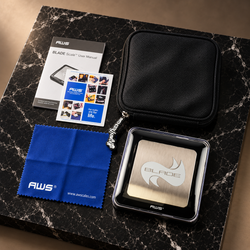
American Weigh Scales offers numerous digital pocket scales suitable for small components, hobbies, inventory work, and portable measurement.
Start With the Tackle You Need to Weigh
Before comparing scale models, make a list of the tackle and components you plan to measure.
Possible items include:
-
Hooks
-
Jig heads
-
Sinkers
-
Swivels
-
Snaps
-
Split rings
-
Beads
-
Blades
-
Lure blanks
-
Fly-tying weights
-
Soft-plastic baits
-
Completed lures
-
Finished rigs
-
Bulk hardware
-
Tackle kits
-
Packaged inventory
Record the approximate lightest and heaviest items.
If the lightest hook weighs less than one gram, a whole-gram scale will not provide enough detail. If your heaviest container of sinkers weighs 800 grams, a 200-gram pocket scale will be too small.
The Three Measurements That Determine Your Choice
A suitable fishing-tackle scale should be selected according to three numbers:
-
The lightest item you need to weigh
-
The heaviest item, including its container
-
The smallest weight difference that matters
Suppose you want to weigh individual hooks, completed lures, and small hardware kits.
Your requirements might be:
-
Lightest item: approximately 0.4 gram
-
Heaviest item and tray: approximately 600 grams
-
Smallest meaningful difference: 0.01 gram
A scale with a 1,000-gram capacity and 0.01-gram readability could be a reasonable choice.
If you need to detect differences of 0.001 gram, you may require a milligram scale and a more controlled environment.
Step 1: Select the Right Readability
Readability is the smallest increment displayed by the scale.
A scale with 0.01-gram readability displays hundredths of a gram. A 0.1-gram scale displays tenths, while a 0.001-gram model displays thousandths.
One-Gram Readability
A scale reading in whole grams may work for:
-
Large sinkers
-
Heavy saltwater lures
-
Tackle-box inventory
-
Bulk packages
-
Shipping preparation
It is generally too coarse for hooks, split rings, swivels, and small jig heads.
A 1-gram scale could display two different hooks as zero grams or show two distinct jig heads as the same weight.
One-Tenth-Gram Readability
A 0.1-gram scale is useful for:
-
Medium and large lures
-
Larger jig heads
-
Completed rigs
-
Tackle kits
-
Bulk hardware
-
Groups of identical hooks
-
Larger sinkers
This readability works well when greater capacity matters more than very fine component comparisons.
One-Hundredth-Gram Readability
A 0.01-gram scale is the most versatile general-purpose option for fishing tackle.
It can be used for:
-
Individual hooks
-
Jig heads
-
Small sinkers
-
Swivels
-
Snaps
-
Split rings
-
Beads
-
Blades
-
Lure hardware
-
Small soft plastics
-
Finished freshwater lures
American Weigh Scales offers multiple precision scales with different capacity and readability combinations.
One-Thousandth-Gram Readability
A 0.001-gram scale may be appropriate for:
-
Very small fly-tying hooks
-
Tiny bead heads
-
Fine wire
-
Lightweight material comparisons
-
Product-development testing
-
Controlled laboratory-style measurements
Higher readability increases sensitivity to:
-
Air movement
-
Static electricity
-
Vibration
-
Temperature changes
-
Uneven surfaces
-
Human movement around the scale
American Weigh Scales’ milligram scale collection includes models intended for measurements requiring finer increments.
Step 2: Choose Enough Capacity
Capacity is the maximum weight the scale can safely support.
Up to 300 Grams
This capacity is suitable for:
-
Hooks
-
Swivels
-
Split rings
-
Snaps
-
Beads
-
Jig heads
-
Small sinkers
-
Freshwater lures
-
Fly-tying hardware
The AC PRO-200 Digital Pocket Scale is an example of a compact scale for appropriately sized components within its stated capacity.
Between 500 and 1,000 Grams
This range is more flexible for:
-
Larger sinkers
-
Saltwater jig heads
-
Several lures
-
Hardware kits
-
Packaged components
-
Small tackle containers
-
Bulk hooks
-
Completed rigs
For many anglers, this range provides the best combination of portability and usefulness.
Two Kilograms or More
Higher capacity may be necessary for:
-
Bulk sinker collections
-
Heavy saltwater tackle
-
Large lure-making batches
-
Product inventory
-
Tackle kits
-
Shipping preparation
-
Heavy containers
The American Weigh 2000 × 0.1-gram Bench Scale offers additional capacity for tackle jobs that do not require 0.01-gram readability.
Step 3: Include the Container’s Weight
Hooks, beads, split rings, and sinkers should often be weighed in a tray. The container prevents components from rolling away, catching under the platform, or contacting the scale directly.
The container’s physical weight counts toward the scale’s capacity after tare.
Suppose:
-
Tray weight: 75 grams
-
Sinkers: 180 grams
-
Total physical load: 255 grams
A 200-gram scale would be overloaded, even if it was tared before the sinkers were added.
Choose a capacity that accommodates:
-
The weighing tray
-
The heaviest tackle load
-
A reasonable safety margin
Never plan to operate a precision scale continuously at its maximum capacity.
Step 4: Consider the Minimum Useful Load
Maximum capacity is easy to find in product specifications, but the lightest usable load also matters.
A large-capacity scale may display 0.01 gram while responding inconsistently to a tiny component near the bottom of its range.
If one hook is too light to measure reliably, weigh a group and calculate the average.
If 30 identical hooks weigh 15 grams:
15 ÷ 30 = 0.5 gram per hook on average
This gives you the average mass. It does not prove that every individual hook weighs exactly 0.5 gram.
Step 5: Match the Platform to Your Tackle
A small pocket-scale platform works well for compact components. Long or unusually shaped lures may require a larger platform or a suitable tray.
Small Platform
A small platform is suitable for:
-
Hooks
-
Swivels
-
Jig heads
-
Split rings
-
Beads
-
Small sinkers
-
Compact lures
Larger Platform
A larger platform may be better for:
-
Spinnerbaits
-
Long hard baits
-
Umbrella-rig components
-
Bulk hardware
-
Tackle kits
-
Product packages
-
Larger trays
The entire load must be supported by the scale. If part of a lure or tray rests on the table, the displayed weight will be incorrect.
Step 6: Look for a Tare Function
Tare resets the display to zero after a container is placed on the platform.
Why Tare Is Important
Tare lets you weigh:
-
Hooks in a tray
-
Beads in a cup
-
Split rings in a dish
-
Oily soft plastics on a protective surface
-
Bulk sinkers in a container
-
Packaged tackle without manual subtraction
How to Use Tare
-
Place the scale on a stable surface.
-
Turn it on.
-
Select the required unit.
-
Place the empty tray on the platform.
-
Press tare.
-
Confirm that the display returns to zero.
-
Add the tackle.
-
Wait for a stable reading.
-
Record the result.
Tare changes the displayed value, not the physical load supported by the scale.
Step 7: Compare Measurement Units
Grams
Grams are generally the most useful unit for small component comparisons.
They use a decimal system and make addition easy.
For example:
-
Lure body: 5.60 grams
-
Hook: 1.15 grams
-
Split rings: 0.35 gram
-
Added weight: 2.50 grams
-
Finished lure: 9.60 grams
Ounces
Many fishing products in the United States are labeled in fractional ounces.
A scale displaying decimal ounces can help, but it may not show familiar fractions directly.
Common approximate conversions include:
| Nominal weight | Approximate grams |
|---|---|
| 1/32 oz | 0.89 g |
| 1/16 oz | 1.77 g |
| 1/8 oz | 3.54 g |
| 3/16 oz | 5.32 g |
| 1/4 oz | 7.09 g |
| 3/8 oz | 10.63 g |
| 1/2 oz | 14.17 g |
| 3/4 oz | 21.26 g |
| 1 oz | 28.35 g |
A nominally labeled tackle component may not match the conversion exactly.
Grains
Grain mode may be useful for small tackle and components when you are accustomed to that unit.
A grain is not a gram. Check the unit indicator before recording a reading.
Other Units
Some precision scales include carats, pennyweights, or troy ounces. These units are less common for fishing tackle, but they may be helpful if the scale serves several hobbies.
Step 8: Check Calibration Features
A scale used for comparative tackle work should offer a clear calibration process.
Calibration may be appropriate when:
-
The scale has been transported.
-
It has experienced a temperature change.
-
It was stored for an extended period.
-
Batteries were replaced.
-
It suffered an impact.
-
Measurements appear questionable.
-
Consistent production records are required.
American Weigh Scales offers compatible calibration weights for scale testing and maintenance.
Never Use a Sinker as a Calibration Standard
A sinker marked 1/4 ounce is a fishing product, not a certified reference mass.
Its actual weight may differ because of:
-
Material composition
-
Production tolerance
-
Coatings
-
Embedded hardware
-
Surface wear
-
Manufacturer definitions
Use the calibration weight and procedure specified by the scale manufacturer.
NIST’s Office of Weights and Measures provides broader information about measurement standards and traceability.
Step 9: Evaluate Repeatability
Repeatability describes how closely repeated measurements agree under unchanged conditions.
Simple Repeatability Test
-
Place the scale on a level workbench.
-
Allow it to initialize.
-
Tare the tray.
-
Weigh one jig head.
-
Record the result.
-
Remove it.
-
Wait for the display to return to zero.
-
Repeat five times.
If the readings vary significantly, check for:
-
Drafts
-
Vibration
-
Low batteries
-
Debris
-
Temperature changes
-
An unstable tray
-
Incorrect calibration
-
Off-center placement
A consistent scale should produce closely grouped readings when conditions remain unchanged.
Step 10: Consider Stabilization Time
When sorting hundreds of hooks or sinkers, a slow scale can become frustrating.
Look for a model that settles quickly without sacrificing useful stability.
Do not record the first rapidly changing number. Wait for the reading to stabilize or for the stability indicator to appear.
Stabilization may take longer when:
-
The table is vibrating.
-
The component is moving.
-
Wind reaches the platform.
-
The tray is flexible.
-
The object is off-center.
-
The scale has just experienced a temperature change.
Step 11: Choose a Visible Display
A bright backlit display is useful in garages, workshops, vehicles, cabins, and low-light storage areas.
Consider:
-
Digit size
-
Backlight brightness
-
Viewing angle
-
Unit indicator
-
Stability indicator
-
Overload warning
-
Low-battery symbol
Check whether a long lure or large tray blocks the display. Display placement can be as important as brightness.
Step 12: Review Automatic Shutoff
Automatic shutoff preserves battery life but can interrupt lure assembly.
If you pause while adding hooks, split rings, or finishing material, the scale may turn off and lose its tare value.
Look for:
-
A reasonable shutoff delay
-
Adjustable shutoff settings
-
The ability to disable shutoff
-
A warning before power-off
-
Quick restart
A short timer is adequate for fast sorting. Longer workbench sessions benefit from more control.
Step 13: Evaluate the Protective Cover
A protective cover helps prevent damage during storage and transportation.
This is particularly useful when the scale is kept in a:
-
Tackle box
-
Boat compartment
-
Backpack
-
Tool drawer
-
Lure-making station
-
Fishing cabin
The cover should prevent hooks, weights, and tools from pressing against the platform.
On some models, the cover may be used as a weighing tray. Follow the product instructions before using it this way.
Step 14: Consider Power Options
Most pocket scales use batteries, making them convenient for travel.
Check:
-
Battery type
-
Battery availability
-
Low-battery indicator
-
Expected runtime
-
Automatic shutoff
-
Battery-compartment construction
-
Whether batteries are included
Some bench scales may also support USB or adapter power.
Loose batteries should be stored separately from hooks, sinkers, and other metal components to prevent electrical contact.
Step 15: Decide Where the Scale Will Be Used
Tackle Workbench
A stable indoor workbench provides the best environment for precision weighing.
Choose a scale with:
-
Suitable readability
-
Convenient platform size
-
Clear display
-
Adjustable shutoff
-
Calibration capability
Tackle Box or Backpack
Portability becomes more important.
Choose:
-
Compact dimensions
-
A protective cover
-
Secure buttons
-
Battery operation
-
A durable storage case
Boat
Movement, vibration, wind, moisture, and temperature changes can make a boat a difficult place for precision measurement.
Use the scale only when the boat is stable and the scale can be protected.
Retail or Packaging Area
Higher capacity, a larger platform, faster stabilization, and repeatable results may be more important than extreme readability.
If products are sold by weight, confirm whether a legal-for-trade scale is required.
Step 16: Protect the Scale From Water
A fishing scale used for tackle is not automatically waterproof.
Keep it away from:
-
Rain
-
Spray
-
Wet bait
-
Saltwater
-
Fish slime
-
Condensation
-
Damp tackle
-
Puddles
Dry tackle before weighing when possible.
Do not rinse or submerge the scale unless the manufacturer provides a specific water-resistance rating and cleaning procedure.
Step 17: Account for Wind and Movement
Sensitive scales can react to air currents and vibration.
Avoid weighing:
-
Beside a fan
-
Under an air vent
-
Near a running motor
-
On a rocking boat
-
On a flexible folding table
-
In direct outdoor wind
-
Near people repeatedly bumping the workbench
For 0.001-gram measurements, a draft shield may be necessary.
Step 18: Consider Static Electricity
Plastic lures, line, synthetic packaging, and dry air can create static electricity.
Static may cause lightweight components or the displayed reading to behave unpredictably.
To reduce static-related problems:
-
Use a clean, stable surface.
-
Avoid rubbing plastic trays immediately before weighing.
-
Keep the platform free from plastic film.
-
Use manufacturer-approved antistatic measures.
-
Avoid improvised electrical grounding.
Step 19: Keep Magnetic Objects Away
Hooks, blades, steel weights, magnetic trays, and tool holders can create complications near a sensitive scale.
Keep the work area away from:
-
Magnetic parts trays
-
Speakers
-
Motors
-
Strong closure magnets
-
Magnetized tools
Use a nonmagnetic weighing tray when appropriate.
Choosing a Scale for Sinkers
Sinkers range from tiny split shot to heavy offshore weights.
For small and medium sinkers, prioritize:
-
0.01-gram readability
-
500- to 1,000-gram capacity
-
A tare function
-
A tray with raised edges
-
Gram and ounce modes
For heavy saltwater sinkers or bulk collections, consider:
-
0.1-gram readability
-
2,000 grams or more capacity
-
A larger platform
-
Overload protection
If the sinkers may contain lead, dedicate the scale and tray to nonfood use.
Choosing a Scale for Jig Heads
Jig heads may need to be measured before and after painting or assembly.
Look for:
-
0.01-gram readability
-
Fast stabilization
-
A platform suited to the hook shape
-
A protective tray
-
Repeatable measurements
-
Easy calibration
Record whether the weight includes:
-
Hook
-
Paint
-
Eyes
-
Clear coat
-
Skirt
-
Trailer keeper
-
Attached blade
Choosing a Scale for Hooks and Swivels
Hooks, swivels, snaps, and split rings are lightweight.
Prioritize:
-
0.01-gram readability or finer
-
Low minimum useful load
-
A small tray
-
Draft protection
-
Repeatability
When one component is too light to register consistently, use batch averaging.
Choosing a Scale for Fly Tying
Fly tying may require a 0.001-gram scale for extremely lightweight parts.
Important features include:
-
Milligram readability
-
Draft shield
-
Small capacity
-
Calibration weight
-
Stable platform
-
Controlled work environment
A milligram scale will perform poorly on a windy table or moving boat, regardless of its specifications.
Choosing a Scale for Custom Lure Making
Custom lure makers should consider both component and completed-lure weights.
A practical setup may include:
-
A 0.01-gram pocket scale for parts
-
A 0.1-gram higher-capacity scale for larger builds
-
Calibration weights
-
Nonmagnetic trays
-
A build-record spreadsheet or notebook
Record the lure at multiple stages:
-
Blank
-
Added ballast
-
Hardware
-
Paint
-
Clear coat
-
Completed assembly
Choosing a Scale for Tackle Kits
When assembling kits, you may need enough capacity for multiple components and packaging.
Look for:
-
0.1-gram readability
-
1,000- to 2,000-gram capacity
-
A larger platform
-
Fast stabilization
-
A tare function
-
A clear display
Use the expected kit weight as a quality-control reference, but remember that component variation may create small differences.
Lead Tackle Safety
Some sinkers and jig heads contain lead. EPA provides information about lead exposure, and the CDC explains ways to reduce lead exposure.
When handling tackle that may contain lead:
-
Keep it away from children.
-
Do not place it in your mouth.
-
Wash your hands afterward.
-
Keep it away from food surfaces.
-
Avoid grinding or sanding it.
-
Clean the workspace.
-
Follow product warnings.
-
Observe applicable restrictions.
Do not use a tackle scale for food after it has been exposed to lead, bait, lubricant, dirty gear, or unknown residue.
Environmental and Regulatory Considerations
Fishing regulations can vary by state, waterbody, species, season, and protected area. Some locations restrict particular tackle materials or fishing methods.
The U.S. Fish and Wildlife Service provides general fishing information and resources, but anglers should verify current rules with the authority responsible for their specific destination.
Lost line and tackle can also contribute to aquatic debris. NOAA discusses the environmental effects of lost and abandoned fishing gear.
Responsible tackle management includes:
-
Securing tackle-box compartments
-
Checking knots and connections
-
Retrieving gear when safe
-
Recycling fishing line where programs exist
-
Disposing of damaged tackle properly
-
Following local material requirements
Calibration and Commercial Use
Calibration does not automatically make a scale approved for commercial transactions.
If tackle is sold by weight, determine whether local rules require:
-
A legal-for-trade device
-
Inspection
-
Certification
-
Sealing
-
Specific displayed units
-
Approved tare procedures
-
Customer-visible weight
-
Recordkeeping
NIST’s current Handbook 44 provides technical requirements for commercial weighing and measuring equipment in the United States.
Consult the appropriate state or local weights-and-measures authority before selling products based on measured weight.
One Scale or Two?
One scale may work if your tackle falls within a relatively narrow range.
Two scales may be better when you regularly weigh both tiny parts and bulk components.
Recommended Two-Scale Setup
Precision pocket scale:
-
0.01-gram readability
-
200- to 1,000-gram capacity
-
Used for hooks, swivels, jig heads, and lures
Higher-capacity bench scale:
-
0.1- or 1-gram readability
-
2,000 grams or more capacity
-
Used for bulk tackle, kits, containers, and packages
This avoids forcing one scale to perform outside its most useful range.
Scale-Selection Table
| Primary task | Suggested capacity | Suggested readability |
|---|---|---|
| Tiny fly components | 20–100 g | 0.001 g |
| Hooks and swivels | 100–300 g | 0.01 g |
| Jig heads and small sinkers | 200–1,000 g | 0.01 g |
| Completed lures | 500–2,000 g | 0.01–0.1 g |
| Bulk tackle kits | 2,000 g or more | 0.1–1 g |
| Shipping parcels | Based on parcel | Carrier-appropriate |
These are general starting points. Review the complete specifications of any model before purchasing it.
Common Buying Mistakes
Buying Only for Maximum Capacity
A scale with high capacity may not be sensitive enough for lightweight tackle.
Buying Only for Decimal Places
A 0.001-gram display does not guarantee useful results in a windy or unstable environment.
Forgetting the Tray Weight
The container reduces the scale’s remaining capacity.
Choosing a Platform That Is Too Small
Long lures and larger trays may touch the workbench and create an inaccurate reading.
Assuming the Scale Is Waterproof
Compact electronics are not necessarily protected against rain or saltwater.
Ignoring Calibration
Even a precision scale should be checked and maintained according to its instructions.
Using Sinkers as Calibration Weights
Nominal tackle weights are not certified standards.
Buying One Scale for Unrelated Tasks
Tiny fly components and shipping boxes require very different specifications.
Using a Fish Scale for Tackle
A hanging scale designed for fish is generally too coarse for individual tackle components.
Questions to Ask Before Buying
Before choosing a model, ask:
-
What is the lightest component I need to weigh?
-
What is my heaviest expected load?
-
How much does my tray weigh?
-
What difference do I need to detect?
-
Do I need grams, ounces, or grains?
-
Will I use the scale outdoors?
-
Do I need a protective cover?
-
Is the platform large enough?
-
Can I adjust automatic shutoff?
-
Does the scale include calibration instructions?
-
Is a calibration weight included or sold separately?
-
Will the scale be used commercially?
-
Could it be exposed to lead?
-
Will I need a second scale for heavier loads?
Frequently Asked Questions
What readability is best for fishing tackle?
A 0.01-gram scale is the best general choice for most hooks, swivels, jig heads, sinkers, and lures.
What capacity should I choose?
A capacity of 200 to 1,000 grams works for many anglers. Choose more capacity for heavy saltwater tackle, bulk sinkers, or packaged kits.
Is 0.001 gram better than 0.01 gram?
Not automatically. Milligram readability is useful for extremely light components but requires a more controlled environment.
Can I use a fish scale?
A hanging fish scale is designed for much heavier loads and is generally unsuitable for small tackle.
Can I calibrate a scale with a known sinker?
No. Use the calibration mass specified by the scale manufacturer.
Why do I need a weighing tray?
A tray contains hooks and round components, protects the platform, and reduces the chance of hardware becoming trapped beneath the weighing surface.
Can I use the scale outdoors?
Yes, but wind, vibration, moisture, temperature changes, and boat movement can affect precision measurements.
Can I weigh lead tackle safely?
Use a dedicated nonfood scale and tray, keep lead tackle away from children and food, and wash your hands after handling it.
Can one scale weigh both hooks and bulk sinkers?
Possibly, but two complementary scales often provide better readability for light components and safer capacity for heavy loads.
Does calibration make a scale legal for trade?
No. Commercial approval depends on the scale design and applicable regulatory requirements.
Final Verdict
To choose the right scale for fishing tackle, begin with your actual components rather than the scale’s marketing claims.
Identify the lightest item, the heaviest load, and the smallest difference you need to see. For most anglers and lure makers, a scale with 0.01-gram readability and a capacity between 200 and 1,000 grams provides the best all-purpose combination.
Choose a milligram scale for extremely light fly-tying parts only when you can control drafts, vibration, static, and temperature. Choose a higher-capacity bench scale for bulk sinkers, heavy lures, tackle kits, and packaging.
Look for tare, a protective cover, useful measurement units, a visible display, calibration capability, fast stabilization, and a platform that supports your tackle without outside contact.
Protect the scale from water, salt, bait residue, dirt, wind, and overload. Use only the recommended calibration mass, and dedicate any scale exposed to lead tackle to nonfood use.
A carefully selected scale can help you organize tackle, reproduce custom lures, compare hardware, assemble consistent kits, and make more informed decisions before the next fishing trip.