
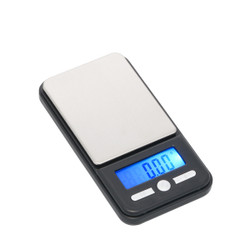
A pocket scale can help anglers sort mixed sinkers, compare jig heads, weigh hooks and swivels, document custom lures, and assemble consistent tackle kits. Choosing the correct model, however, requires balancing two specifications: capacity and resolution.
Capacity tells you the maximum load the scale can support. Resolution—often described as readability—tells you the smallest weight increment shown on the display.
A scale with excellent resolution may have insufficient capacity for heavy sinkers or bulk tackle. A high-capacity scale may support an entire tackle tray but lack the sensitivity needed to distinguish between two small hooks.
For most fishing-tackle applications, a pocket scale with 0.01-gram readability and a capacity between 200 and 1,000 grams offers the most useful balance. Fly tiers measuring extremely lightweight components may need 0.001-gram readability, while anglers weighing heavy saltwater tackle or bulk hardware may prefer 0.1-gram readability with greater capacity.
American Weigh Scales offers multiple digital pocket scales for components, hobbies, parts organization, and portable precision measurement.
Quick Recommendation by Tackle Type
| Fishing-tackle application | Suggested capacity | Suggested resolution |
|---|---|---|
| Tiny fly-tying components | 20–100 g | 0.001 g |
| Individual hooks and swivels | 100–300 g | 0.01 g |
| Jig heads and small sinkers | 200–500 g | 0.01 g |
| Larger sinkers and lures | 500–1,000 g | 0.01–0.1 g |
| Bulk tackle and kits | 1,000–2,000 g | 0.1 g |
| Shipping packages | Based on parcel | Carrier-appropriate |
These ranges are general starting points. The best specifications depend on the lightest component, the heaviest total load, and the smallest difference that matters to you.
What Does Scale Capacity Mean?
Capacity is the maximum physical weight a scale is designed to support.
A 200-gram pocket scale should not be used for an object or container weighing more than 200 grams. Exceeding its capacity can produce an error message, inaccurate results, or permanent load-cell damage.
The Container Counts Toward Capacity
Fishing tackle should often be weighed in a tray. Hooks can catch around platform edges, while swivels, beads, and round sinkers can roll away.
The tray’s weight remains part of the physical load after you press tare.
For example:
-
Empty tray: 60 grams
-
Sinkers: 150 grams
-
Total physical load: 210 grams
This combination would overload a 200-gram scale, even though the tared display shows only 150 grams.
Leave a Capacity Margin
Avoid selecting a scale whose capacity exactly matches your expected maximum load. A margin provides room for:
-
The weighing tray
-
Slightly heavier components
-
Additional hardware
-
Packaging
-
Future projects
If your heaviest typical load is approximately 400 grams, a 500- or 1,000-gram scale may be more practical than a model with a 400-gram maximum.
What Does Resolution Mean?
Resolution is the smallest change the scale can display.
Examples include:
-
1 gram
-
0.1 gram
-
0.01 gram
-
0.001 gram
A scale with 0.01-gram resolution displays two decimal places in gram mode. It may show a hook as 0.48 gram and another as 0.53 gram.
A scale reading only whole grams might display both as zero or one gram, making the distinction useless.
American Weigh Scales offers precision scales with different capacity and displayed-increment combinations.
Is Resolution the Same as Accuracy?
Not exactly.
Resolution describes the smallest displayed increment. Accuracy describes how closely a result agrees with the object’s actual weight under specified conditions.
A scale can display 0.001 gram without guaranteeing that every final digit is accurate in an uncontrolled environment.
Results can be affected by:
-
Calibration
-
Temperature changes
-
Wind
-
Vibration
-
Static electricity
-
Weak batteries
-
Off-center loading
-
Platform contamination
-
Overloading
-
The scale’s minimum useful load
NIST’s Office of Weights and Measures provides broader information about measurement standards and traceability.
When to Choose a 0.1-Gram Pocket Scale
A 0.1-gram scale displays tenths of a gram.
It is suitable for:
-
Medium and large lures
-
Larger jig heads
-
Heavy sinkers
-
Completed rigs
-
Groups of hooks
-
Bulk swivels
-
Tackle kits
-
Product packages
A 0.1-gram scale may be insufficient for comparing individual lightweight hooks, split rings, or fly-tying beads.
Its advantage is that it can often provide more capacity at a practical price.
When to Choose a 0.01-Gram Pocket Scale
A 0.01-gram scale is the best general-purpose choice for most anglers and lure makers.
It can measure:
-
Individual hooks
-
Swivels
-
Split rings
-
Snaps
-
Beads
-
Small sinkers
-
Jig heads
-
Lure blades
-
Soft-plastic baits
-
Completed freshwater lures
The AC PRO-200 Digital Pocket Scale is a compact option for lightweight tackle that remains within its stated maximum capacity.
Why 0.01 Gram Is Usually Enough
Fishing-tackle construction rarely requires laboratory-level measurement. A hundredth of a gram provides enough detail to compare most components without the environmental sensitivity of a milligram scale.
For example:
-
Jig head: 7.08 grams
-
Hook: 1.12 grams
-
Split ring: 0.18 gram
-
Skirt: 0.55 gram
-
Completed lure: 8.93 grams
These measurements are detailed enough for build records and component comparisons.
When to Choose 0.001-Gram Resolution
A milligram scale displays thousandths of a gram.
It may be appropriate for:
-
Tiny fly hooks
-
Fine wire
-
Small bead heads
-
Extremely light tying components
-
Controlled product comparisons
-
Detailed development work
American Weigh Scales’ milligram scales are designed for applications requiring finer displayed increments.
Milligram Scales Need Controlled Conditions
At 0.001-gram resolution, ordinary environmental effects become more visible.
A changing display may be caused by:
-
Breathing over the platform
-
Air-conditioning
-
A fan
-
Footsteps
-
Table movement
-
Static from plastic packaging
-
Rapid temperature change
-
A moving boat
A milligram scale is most useful on a stable indoor workbench with draft protection.
Choosing Capacity for Hooks and Swivels
Individual hooks and swivels are light, so capacity is less important than resolution and minimum useful load.
A scale with:
-
100- to 300-gram capacity
-
0.01-gram resolution
-
A small weighing tray
-
A protective cover
-
Fast stabilization
will handle most individual terminal-tackle measurements.
Batch Averaging for Lightweight Hooks
If one hook does not produce a stable reading, weigh several matching hooks.
If 25 hooks weigh 10.50 grams:
10.50 ÷ 25 = 0.42 gram per hook on average
This provides an average rather than the exact weight of every hook.
Choosing Capacity for Jig Heads
Jig heads can range from tiny crappie jigs to heavy offshore designs.
For small and medium jig heads, consider:
-
200- to 500-gram capacity
-
0.01-gram resolution
-
A protective tray
-
Gram and ounce modes
For large saltwater jigs or bulk groups, consider:
-
500- to 1,000-gram capacity
-
0.01- or 0.1-gram resolution
-
A larger platform
Remember that a finished jig can weigh more than the molded head because of paint, eyes, coating, skirt, blade, hook, and trailer keeper.
Choosing Capacity for Sinkers
Small Freshwater Sinkers
For split shot, drop-shot weights, and small bullet weights, use:
-
200- to 500-gram capacity
-
0.01-gram resolution
Large Saltwater Sinkers
For heavy egg, bank, pyramid, or trolling weights, use:
-
1,000 grams or more capacity
-
0.1-gram resolution when appropriate
-
A durable tray
-
A larger platform
Bulk Sinker Collections
If you routinely weigh containers of sinkers, a bench scale may be more suitable than a pocket scale.
The American Weigh 2000 × 0.1-gram Bench Scale offers additional capacity for bulk tackle and heavier containers.
Choosing Capacity for Custom Lures
A lure maker may need to weigh both individual components and the completed build.
A 500- or 1,000-gram scale with 0.01-gram resolution can accommodate:
-
Lure blanks
-
Hooks
-
Split rings
-
Blades
-
Beads
-
Internal weights
-
Skirts
-
Paint
-
Clear coat
-
Finished assemblies
Record the Lure at Each Stage
A build record might include:
| Build stage | Example weight |
|---|---|
| Blank | 6.80 g |
| Added ballast | 3.50 g |
| Hooks and rings | 2.20 g |
| Paint and coating | 0.35 g |
| Finished lure | 12.85 g |
These numbers are examples rather than a lure recommendation.
Recording each stage shows how modifications affect the finished weight.
Fractional Ounces and Grams
Fishing tackle is frequently labeled in fractions of an ounce. Precision scales commonly display decimal ounces or grams.
| Nominal weight | Approximate grams |
|---|---|
| 1/32 oz | 0.89 g |
| 1/16 oz | 1.77 g |
| 1/8 oz | 3.54 g |
| 3/16 oz | 5.32 g |
| 1/4 oz | 7.09 g |
| 3/8 oz | 10.63 g |
| 1/2 oz | 14.17 g |
| 3/4 oz | 21.26 g |
| 1 oz | 28.35 g |
These are unit conversions. A finished jig or sinker may not match its nominal marketed weight exactly.
Potential reasons include:
-
Manufacturing tolerance
-
Material differences
-
Attached hooks
-
Paint
-
Coatings
-
Hardware
-
Surface wear
Why Gram Mode Is Usually Best
Grams make small comparisons easier because they use decimal increments.
Adding component weights is also straightforward:
-
Lure body: 5.70 grams
-
Two hooks: 1.90 grams
-
Split rings: 0.35 gram
-
Internal weight: 2.50 grams
Expected total = 10.45 grams
You can then compare the calculated result with the actual finished lure.
Ounce mode remains useful when comparing the item with familiar fractional-ounce product sizes.
Tare Capacity and Platform Size
A suitable pocket scale needs more than the correct numerical specifications.
Tare
Tare lets you exclude the tray from the displayed result. It is essential for loose hooks, beads, swivels, and round sinkers.
Platform Size
The platform must support the complete object without allowing it to touch the table.
A lure can extend beyond the platform if:
-
The scale supports its total weight.
-
The lure remains balanced.
-
No part touches another surface.
-
The display remains accessible.
A long spinnerbait or hard bait may require a wider tray or higher-capacity scale.
Calibration Requirements
Choose a pocket scale with a clear calibration procedure.
Calibration may be needed after:
-
Transportation
-
Battery replacement
-
Long storage
-
Temperature changes
-
Minor impact
-
Questionable readings
American Weigh Scales offers compatible calibration weights for scale maintenance.
Do Not Use a Sinker for Calibration
A sinker labeled 1/2 ounce is not a certified calibration standard. Its actual weight may differ from the nominal label.
Follow the manufacturer’s instructions and use the specified calibration mass.
NIST’s current Handbook 44 explains broader technical requirements for commercial weighing equipment. A personal tackle scale may not be legal for trade simply because it can be calibrated.
Outdoor Conditions Affect Resolution
A scale capable of 0.01- or 0.001-gram resolution may not produce stable readings on a moving boat or windy dock.
Wind
Use the scale in a sheltered location. Even a light breeze can affect sensitive measurements.
Boat Movement
Precision weighing requires a stable platform. A rocking boat may prevent the display from settling.
Moisture
Most pocket scales should not be assumed waterproof. Keep them away from rain, spray, bait residue, and saltwater.
Temperature
Allow the scale to acclimate after moving it between a cold vehicle, warm room, or sunny deck.
Vibration
Keep it away from running engines, pumps, speakers, and unstable tables.
Lead Tackle Precautions
Some sinkers and jig heads contain lead. The EPA provides information about lead exposure and safety, while the CDC explains ways to prevent lead exposure.
When working with tackle that may contain lead:
-
Keep it away from children.
-
Never place it in your mouth.
-
Wash your hands afterward.
-
Keep it away from food-preparation areas.
-
Avoid sanding or grinding it.
-
Clean the workbench.
-
Follow product warnings.
-
Check local tackle regulations.
Dedicate the pocket scale and tray to tackle use. Do not reuse them for food after exposure to lead, bait, oils, or contaminated fishing equipment.
Environmental Responsibility
Lost fishing tackle and discarded line can harm wildlife and contribute to aquatic debris.
NOAA identifies abandoned or lost fishing gear as marine debris.
Responsible tackle management includes:
-
Securing weights and hooks in divided containers
-
Checking knots and connections
-
Retrieving tackle when safe
-
Recycling fishing line where programs exist
-
Disposing of damaged gear properly
-
Following local material restrictions
The U.S. Fish and Wildlife Service provides general fishing information and resources, but anglers should verify current regulations for the specific state, waterbody, and protected area they plan to visit.
Do You Need One Scale or Two?
One pocket scale may be sufficient if your tackle falls within a narrow range.
Two scales may be more practical if you weigh both tiny components and heavy bulk tackle.
Precision Pocket Scale
Suggested specifications:
-
200- to 1,000-gram capacity
-
0.01-gram resolution
-
Protective cover
-
Tare
-
Gram and ounce modes
Use it for hooks, swivels, jig heads, sinkers, beads, and completed lures.
Higher-Capacity Scale
Suggested specifications:
-
2,000 grams or more capacity
-
0.1- or 1-gram resolution
-
Larger platform
-
Tare
-
Stable bench design
Use it for bulk sinkers, tackle kits, containers, and packages.
Common Selection Mistakes
Choosing Resolution Without Capacity
A 0.001-gram scale is not useful if your completed lure exceeds its maximum load.
Choosing Capacity Without Resolution
A 5-kilogram scale may support a tackle box but fail to distinguish between lightweight jig heads.
Forgetting the Tray
Include the container when calculating required capacity.
Assuming More Decimal Places Are Always Better
Higher resolution also increases environmental sensitivity.
Choosing Too Small a Platform
Long lures and large trays must not touch the workbench.
Assuming the Scale Is Waterproof
Pocket scales are electronic instruments unless specifically rated otherwise.
Calibrating With Tackle
Nominal sinkers and jig heads are not reference weights.
Using a Hanging Fish Scale
A fish scale is designed for pounds or kilograms, not small terminal-tackle components.
Frequently Asked Questions
What is the best pocket-scale capacity for fishing tackle?
A capacity between 200 and 1,000 grams works for most hooks, swivels, jig heads, sinkers, and completed lures.
What resolution should I choose?
Choose 0.01 gram for general tackle. Use 0.001 gram for exceptionally light components and 0.1 gram for heavier bulk tackle.
Is a 200-gram scale large enough?
It is large enough for individual hooks, jig heads, swivels, and small lures, provided the item and tray stay below 200 grams.
Can I weigh 1/4-ounce sinkers on a gram scale?
Yes. One-quarter ounce converts to approximately 7.09 grams, although the actual tackle may differ from its nominal weight.
Can a pocket scale identify unknown sinkers?
It can provide actual weight, which helps with sorting. It cannot independently identify the material, brand, or manufacturer designation.
Why does the displayed number keep changing?
Wind, vibration, temperature changes, static, weak batteries, off-center loading, or an unstable surface may cause fluctuation.
Can I calibrate the scale with a coin?
Use only the reference mass and calibration procedure specified by the manufacturer.
Can I use the scale on a boat?
Only when the boat and weighing surface are sufficiently stable and protected from wind and water. Land-based measurements are generally more dependable.
Should I choose grams or ounces?
Use grams for detailed comparisons and ounces when matching familiar tackle labels.
Can I use the tackle scale for cooking?
A scale exposed to lead, bait, saltwater, lubricants, or dirty gear should remain dedicated to nonfood use.
Final Verdict
For most anglers, the best pocket scale for fishing tackle has a capacity between 200 and 1,000 grams and a resolution of 0.01 gram.
That combination is sensitive enough for hooks, swivels, split rings, jig heads, and small sinkers while providing enough capacity for most completed lures and small tackle kits.
Choose 0.001-gram resolution only when working with extremely lightweight components in a controlled environment. Choose 0.1-gram resolution with greater capacity when weighing heavy sinkers, bulk tackle, or larger containers.
Include the tray when calculating capacity, choose a platform that supports the complete item, and look for tare, calibration capability, useful measurement units, a protective cover, and a clear display.
With the right balance of capacity and resolution, a pocket scale can help you sort mixed tackle, reproduce custom lure builds, compare components, verify nominal sizes, and assemble more consistent fishing kits.