
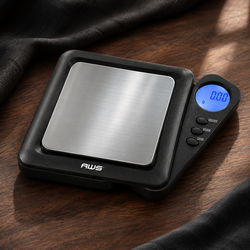
A digital scale taken out of storage may power on immediately and show a normal-looking zero. That is a useful start, but it does not establish that the instrument is ready for its usual measurements. Storage conditions, battery condition, handling, accessories, and the intended task all deserve attention.
The practical question is: What should you check before using a digital scale that has been stored for months? Identify the exact instrument, inspect its accessible condition, establish the correct power and setup, and perform suitable checks before relying on the result.
Storage does not automatically damage a scale or create a universal recalibration requirement. The useful decision depends on the model's instructions, known history, current condition, and measurement performance. This guide provides a practical return-to-use sequence without assuming that a familiar display answers every question.
Identify the instrument before reconnecting it
Confirm the model and, where relevant, the individual instrument identifier. Similar scales can have different capacities, power requirements, functions, and preparation procedures.
Use the AWScales product manuals to locate the correct instructions. A manual belonging to a similar model may suggest an unsuitable adapter, loading limit, or calibration sequence.
Keep the instrument connected with its own accessories and records. If several units were stored together, resolve any mix-ups before starting. Correct identification is a simple step that prevents later troubleshooting from being based on another scale's requirements.
Review why it entered storage
A scale stored after satisfactory routine use has a different history from one put away because its readings were inconsistent. An unresolved problem does not disappear merely because time has passed.
Look for notes about faults, repairs, impact, overload, liquid exposure, or an incomplete assessment. Do not treat the absence of a note as proof that none occurred.
Record what is known and what remains uncertain. The history helps determine which checks or service questions are appropriate. It should guide the return-to-use plan rather than become a reason to invent a precise performance condition.
Distinguish storage conditions from operating conditions
A model may permit storage under conditions that differ from its operating limits. Being kept within a storage range does not mean it can be used immediately at every temperature within that range.
The A&D GX series manual illustrates model-specific preparation, handling, and transport requirements. Its instructions belong to that series rather than every digital scale.
Read the relevant requirements for your instrument. A cupboard, warehouse, or vehicle can create different exposure histories. Establish appropriate operating conditions before interpreting indications or beginning a calibration procedure.
Inspect the accessible exterior
Look for cracks, displaced covers, missing feet, trapped debris, loose accessories, or another visible change. Check the platform arrangement without pressing or bending components.
An external inspection can reveal a reason to pause. It cannot independently establish that the weighing system is correct.
Keep observations factual. A pan touching the housing is an observable condition; a damaged sensor is a diagnosis requiring appropriate evidence. Describe what you see and follow the permitted user procedures. Seek guidance when damage prevents a normal, supported installation.
Check the battery compartment appropriately
If the model uses replaceable batteries, inspect the accessible compartment according to the instructions. Confirm the required battery type and correct installation.
Visible leakage, corrosion, or damaged contacts needs an appropriate response rather than repeated power attempts. Do not improvise chemical cleaning or scrape sensitive parts without supported guidance.
If replacement is needed, use the specified arrangement. A new battery does not establish the instrument's weighing performance, but a suitable power supply is necessary before the rest of the assessment can be interpreted usefully.
Treat rechargeable models according to their instructions
A rechargeable scale needs its specified charging method and permitted power accessories. Do not assume that a fitting connector makes an unrelated charger appropriate.
Follow the model's instructions for charging after storage and for operation while connected. If the equipment or battery shows a visible abnormal condition, obtain appropriate guidance before continuing.
Separate charging behavior from measurement behavior in the record. Failure to power on, an unexpected restart, and a stable but unsuitable indication are different observations. Describing the actual symptom helps identify the relevant next step.
Confirm the adapter belongs to this model
Storage boxes often contain several similar adapters. Their appearance and connector fit do not establish electrical compatibility.
Check the supplied identification and model requirements. Use the original or explicitly approved replacement rather than trying several supplies to see which one makes the display behave better.
Keep the cable relaxed and clear of the weighing platform. An appropriate electrical supply can still be installed poorly if the lead pulls on a light instrument or touches the sample. Power and mechanical arrangement both matter.
Inspect removable accessories
A pan, draft shield, tray, separate display, or protective cover may have been removed for storage. Identify which components belong in the operating arrangement and which are transport accessories.
Assemble only according to the model instructions. A protective insert left in place or an incorrectly seated accessory can interfere with normal operation.
Do not assume a part should be forced into position because it almost fits. If an accessory appears to belong to another model, resolve the identification first. Proper assembly is a prerequisite to meaningful checks rather than a cosmetic detail.
Establish a suitable location
Use a firm support that allows the instrument to sit normally. Follow its leveling requirements where applicable and keep avoidable vibration and airflow away.
Shimadzu's balance installation precautions address support, leveling, sunlight, airflow, and temperature variation. These practical conditions can explain behavior that is incorrectly attributed to storage.
Treat the workstation as a new installation when necessary. The old scale may be unchanged while the new table or container arrangement is unsuitable. Assess the actual location rather than relying on where the instrument worked months earlier.
Allow the specified preparation after relocation
A stored instrument may arrive from a colder or warmer area than its intended workspace. Its reference weights and accessories may also need appropriate preparation.
Follow the model's instructions rather than assigning a universal waiting period. The relevant conditions and performance requirements differ between instruments.
Do not immediately adjust calibration in response to a changing indication during preparation. Establish the required operating state first. A comparison made during an uncontrolled transition may not describe performance once the system is properly installed and ready.
Clean with a method suited to the instrument
Dust or residue can affect platform clearance, support, or later samples. Use only the cleaning methods permitted for the model and its condition.
Follow AWScales scale maintenance guidance alongside the exact instructions. A removable washable vessel and the electronic instrument may require very different treatment.
After cleaning, confirm that the platform and surrounding parts remain correctly assembled and ready. Cleaning should not introduce liquid, pressure, or new residue. Keep any maintenance action in the record when it affects the interpretation of subsequent checks.
Follow the normal startup sequence
Prepare the platform in the condition required by the manual, select the supported power arrangement, and start the instrument as instructed.
Record unusual messages exactly. Do not assume a familiar letter or symbol has the same meaning as on another model.
For common operating questions, consult the AWScales product FAQ. A restart may resolve an ordinary state issue in a supported procedure, but repeated restarts are not a substitute for investigating persistent behavior. Preserve the initial observations before they are lost.
Confirm the unit and operating mode
A scale can retain or reset units and functions depending on its implementation. Verify that the current mode matches the intended measurement.
A display in ounces can appear unexpectedly different from an earlier gram record. A hold value, counting result, or percentage indication can also be mistaken for an ordinary live mass reading.
Check the symbol as well as the number. Record the unit with every observation during the assessment. This prevents a normal interface state from becoming a false conclusion that storage changed the instrument's calibration.
Clear outdated references through supported procedures
Stored tare, sample reference, or other retained settings may belong to an earlier container or task. Determine how the model handles them before beginning new measurements.
Do not assume an empty display means every reference has been cleared. Conversely, do not perform a factory reset merely because the history is unclear without understanding its effects.
Use the documented starting procedure and establish the reference state needed for the task. If an important setting remains uncertain, obtain guidance. A clear starting state makes later results easier to interpret and reproduce.
Zero is not a complete performance check
A normal-looking zero describes the current empty indication or reference state. It does not establish the correct response to every added load.
The instrument can show zero while a loaded observation is unsuitable. A tared container can also produce zero without restoring physical capacity or proving the net method is appropriate.
Use the empty indication as one observation in a broader assessment. Follow relevant loaded checks and record the conditions. Avoid turning a reassuring screen into a conclusion that the instrument is fully ready for every previous application.
Review the reference weight as well
A stored reference may have been contaminated, damaged, mixed up, or separated from its documentation. Its nominal marking alone does not answer every suitability question.
Use an appropriate characterized reference and its handling procedure. NIST's work on calibration of mass standards explains the role of supported reference mass information.
If the scale and reference shared an adverse storage event, agreement between them may not resolve their independent condition. Keep both histories clear and obtain suitable assessment when needed. A questionable reference should not be used to make the instrument match a preferred number.
Preserve initial readings before adjustment
Where the instrument can be checked appropriately, record the initial indications before performing a permitted calibration adjustment. Include reference identity, unit, setup, and conditions.
This preserves evidence about the return-from-storage state. A later adjustment and its verification can then be described separately.
If a supported procedure requires another sequence, follow it and document what occurred. The aim is a clear history rather than an unexplained statement that the scale was calibrated. Knowing what was observed and what changed makes future comparisons more useful.
Check the range relevant to the intended task
A single satisfactory reference reading supports a limited conclusion. The application may involve larger loads, smaller quantities, different placement, or a heavy tared vessel.
Choose suitable checks under the model's instructions and the task requirements. Do not exceed capacity or improvise heavy loading to search for problems.
If the intended use changed during the storage period, assess that new use rather than assuming earlier suitability carries over. An instrument can remain functional while being inappropriate for the smaller differences now required by the workflow.
Assess consistency with a stable load
Where appropriate, repeat a suitable reference measurement using consistent placement and handling. Record the spread instead of selecting only the expected result.
A tightly grouped sequence shows consistency under the tested conditions. It does not independently prove that the reference and instrument response are correct.
If the observations vary too much for the task, investigate setup, power, clearance, reference condition, and supported operating behavior. Do not average an unresolved problem into a tidy number and call the instrument ready. The variability is evidence that the method still needs attention.
Use a relevant routine-check plan
Once returned to use, the instrument needs monitoring appropriate to its task and history. Storage does not create a permanent exception from normal checking.
Mettler Toledo's guidance on routine testing of balances discusses methods, references, and tolerances for identifying performance problems between calibrations.
Define what to check, what criteria apply, and which events require reassessment. A useful plan is specific enough to guide action without adding arbitrary checks that do not address the measurement requirement.
Review calibration timing in context
The need for recalibration or service depends on applicable instructions, requirements, history, and evidence. Months of nonuse alone do not supply a universal answer for every instrument.
NIST's guidance on recommended calibration intervals explains that it generally does not prescribe a fixed interval for all instruments or standards. Requirements and observed behavior inform the decision.
Do not assume time in storage automatically extends an established schedule. Likewise, do not invent a new interval without considering the relevant procedure. Review the current requirement and document the basis for the return-to-use decision.
A historical certificate needs current context
A calibration report describes results under stated conditions at an earlier time. It does not prevent subsequent storage damage, identity errors, or unsuitable use.
NIST's explanation of metrological traceability emphasizes documented measurement relationships and associated uncertainty. A certificate alone does not establish every future result's suitability.
Keep the report with the instrument's history and current checks. This connects earlier information with the present assessment rather than treating the report as either a permanent guarantee or a document that becomes meaningless merely because the instrument was stored.
Example of a normal display with a wrong unit
Imagine a scale returned from storage showing a stable value that differs greatly from an old record. A review finds the current unit is ounces and the earlier observation was in grams.
The numerical difference is explained by the unit mismatch rather than demonstrated calibration change. The original values should be compared using compatible units.
This resolves that specific interpretation issue. Appropriate performance checks are still needed for the intended task. Discovering a simple explanation for one discrepancy should not be stretched into verification of every aspect of the instrument.
Example of an incorrectly seated accessory
Imagine a removable pan was packed separately and reinstalled incorrectly. It touches the housing, and repeated loaded readings are inconsistent.
Following the documented assembly procedure may remove the contact. That is a useful setup correction rather than evidence that calibration alone was required.
After proper assembly, perform the relevant checks before routine use. Record the original condition and subsequent observations. This separates an identified installation problem from the wider question of whether the instrument now meets the task's requirements.
Example of unresolved storage history
Imagine a scale with no clear service record, an unknown adapter, and an unidentified reference weight. It powers on and displays zero.
Those observations do not establish a suitable measurement system. Resolve the power requirements, reference information, and relevant instrument checks before relying on a demanding result.
Do not fill the gaps with assumptions based on appearance. A clear assessment may lead to supported setup, service, a suitable reference, or replacement equipment. The next action should address the missing evidence rather than simply make the display look familiar.
Decide when to seek service
Persistent errors, visible damage affecting normal use, unsuitable reference-check results, or behavior outside permitted user procedures justify model-specific assistance.
Do not open sealed mechanisms or adjust internal components to make one weight read correctly. A successful-looking number after an improvised repair does not establish restored performance.
Describe the exact symptoms, known storage conditions, and actions already taken. A service provider can help determine whether further assessment, repair, adjustment, or replacement fits the condition and intended task.
Keep the return-to-use record clear
Record instrument identity, known history, inspection, power, accessories, setup, references, initial observations, maintenance or adjustment, and subsequent checks.
The AWScales knowledge center provides additional weighing explanations. For model-specific guidance, contact AWScales customer support with the actual task and observations.
If considering replacement, review AWScales pocket scales by individual specifications and intended use. A new instrument still needs suitable preparation and a method matched to the required quantity. Replacement is not a substitute for defining the task.
Make the current status visible to the next operator
If assessment is incomplete, identify the unresolved question and keep the instrument's status clear. Another person should not have to infer readiness from a clean platform or a powered display.
When the assessment is complete, record the task and conditions it supports. Include any relevant limitations and the next planned review under the applicable procedure.
This handover matters particularly when equipment returns to a shared cupboard or rotating workstation. A clear status prevents the same uncertain starting condition from being rediscovered during the next session.
Prepare storage differently if the problem can recur
Review the model's storage instructions before putting the instrument away again. Keep accessories identified, retain useful records, and use the supported packing arrangement.
Document any unresolved issue before storage rather than relying on memory. The next return-to-use assessment will be easier when the last known condition and required follow-up are available.
Frequently asked questions
Does storage automatically make a scale inaccurate?
No. Assess the model's requirements, history, current condition, and performance. Storage duration alone does not establish the result.
Is a new battery enough to return the scale to use?
A suitable power source is necessary, but it does not verify weighing performance, assembly, or reference state.
Should I perform a factory reset first?
Only use a reset when supported and appropriate. Understand its effects on settings and records before changing the instrument's state.
Does an old calibration report remain useful?
Yes, as historical evidence under its stated conditions. Connect it with the current condition and checks rather than treating it as a permanent guarantee.
What if I do not have a suitable reference weight?
Do not substitute an assumed household mass for a demanding check. Obtain appropriate guidance or reference information for the intended procedure.
Establish readiness through a defined assessment
A stored scale should return to use through the correct instructions, suitable power, proper assembly, and an appropriate workstation. Preserve its known history and current observations.
Check relevant performance with suitable references, document any supported adjustment, and verify the resulting method. Keep readiness tied to the intended task rather than the appearance of the display.
The useful outcome is a clear, reviewable decision about present suitability. That approach makes an old instrument's next measurement more dependable than simply switching it on and trusting the first number.