
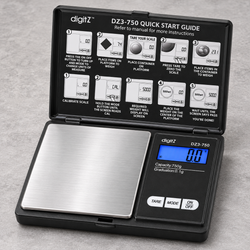
Two scales have the same model name, capacity, and display increment. You place the same object on each, expecting identical results, but the numbers differ. Buying matching instruments seemed like a way to avoid this problem, so the disagreement can feel especially confusing.
The practical question is: Why can two identical digital scales disagree, and how should you compare them?
Matching specifications do not make two individual instruments physically identical or eliminate differences in setup, adjustment, handling history, and measurement variability. Comparing them can reveal a concern, but disagreement alone does not identify which result is closer to the intended value. A suitable independent reference and controlled method provide stronger evidence.
Begin with the exact model's directions in the AWS product manuals. Confirm the full product identity and prepare each instrument separately before drawing conclusions from a side-by-side comparison.
Matching model names do not guarantee matching states
Two units can share a design while having different adjustment histories, operating settings, contamination, battery condition, or exposure to impact.
One may have been moved from storage recently while the other remained in a stable location. One may retain a tare or active application mode that the other does not.
Record each instrument's identity and current state. Do not assume that similar screens imply identical preparation. A comparison becomes more useful when the instruments' relevant differences are known rather than ignored.
Confirm that the variants really match
A model family can include several capacities, display increments, revisions, or regional options. Similar appearance and packaging may conceal a different specification.
Check the label, manual, product code, and active unit. Record any differences instead of treating the instruments as interchangeable by assumption.
If documentation is unclear, ask the manufacturer which specification applies to each unit. A difference in readability can explain different-looking results without establishing a fault. Accurate product identification should precede adjustment or a replacement decision.
Agreement and accuracy are different questions
Two scales can agree while sharing a similar error. They can also disagree while each remains within the requirements relevant to a particular task.
NIST's measurement terminology guidance distinguishes accuracy, precision, repeatability, and uncertainty. A pairwise comparison addresses only part of that picture.
Do not treat one instrument as the truth merely because it is newer, more expensive, or more familiar. Those facts can be relevant to selection or history, but an adequate reference and method are needed to assess indication agreement.
Define the task before judging the difference
A discrepancy that is minor for a large batch can matter greatly for a tiny addition. Identify the smallest intended quantity, required tolerance, normal range, and vessel.
The purpose may be choosing one instrument for a task, checking consistency between workstations, or investigating a suspected fault. Those purposes can require different evidence.
Write the requirement before collecting preferred readings. Otherwise, it is easy to reinterpret the numbers until one scale appears acceptable. A defined criterion provides a clearer basis for action than a general impression that matching models should always display exactly the same value.
Check units and application modes first
Confirm that both displays represent the same unit. Grams, grains, ordinary ounces, troy ounces, and carats are different units.
Also confirm normal weighing mode. Hold, counting, percentage, or other applications can display something other than a current ordinary mass indication.
The AWS product FAQ provides common operating explanations. Use the exact manual for symbols and controls. Resolve interpretation problems before treating the numerical difference as evidence of poor measuring performance.
Net and gross readings must not be mixed
One scale may retain a vessel tare while the other shows the complete load. The numbers then describe different quantities even if the same bowl is transferred between them.
Establish the intended baseline separately on each instrument using its documented procedure. Include lids, liners, and accessories consistently.
Do not assume that restarting clears or preserves tare in the same way without checking the manual. Record every baseline action so a later comparison can distinguish a real indication difference from a changed reference.
Display rounding can create a small mismatch
Digital screens report discrete increments. Small differences in underlying response near a display boundary can produce adjacent displayed values.
An apparent one-step disagreement therefore needs interpretation in context. It is not automatically a failure, but it is not automatically acceptable either.
Check readability, relevant specifications, repeatability, and the task's requirement. Avoid a universal rule that matching models must show the same last digit or that any one-digit difference can be ignored. The meaning depends on what the method needs to establish.
Repeated observations are more informative than one pair
A single reading on each scale can be disturbed or unrepresentative. Repeated loading under a defined method helps reveal whether each instrument is consistent.
METTLER TOLEDO's routine testing guidance identifies sensitivity, repeatability, and eccentricity as separate considerations. A comparison should address the aspects relevant to the task rather than only one favorable observation.
Preserve the full sequence. Do not select the reading from each instrument that makes the pair agree best. That conceals information rather than demonstrating dependable performance.
Stable readings can still disagree consistently
Each scale may settle quickly and hold its own value. The difference between them can remain even though neither screen appears unstable.
That pattern suggests a consistent difference worth investigating, but it does not identify its cause. Baseline, response, reference, and setup still matter.
A stable symbol reports the instrument's programmed assessment of recent behavior. It does not independently establish agreement with an adequate reference. Treat within-trial stability and between-instrument comparison as different observations.
Support can differ on the same counter
Two nearby positions can differ in flatness, vibration, debris, or contact with the instrument's feet. A wide shared table may flex differently at its edges.
Prepare each scale on suitable firm, level support. Confirm all intended supports are seated and that no cable or object presses on the housing.
Do not hold either instrument down while weighing. Correct the support and allow normal preparation before repeating the comparison. A side-by-side arrangement is not automatically an identical-condition arrangement.
Nearby airflow can affect one position more
A vent, fan, open doorway, or passing person can disturb one setup more than the other. A broad light vessel can make the effect more noticeable.
Compare in a suitable calm location and note any relationship between display movement and nearby activity. Keep the sample and operating method consistent.
Shimadzu's balance installation guidance identifies airflow, temperature stability, and leveling as relevant factors. Apply the actual model's requirements rather than expecting proximity alone to equalize conditions.
Temperature histories can be different
One scale may have come from a cold cabinet or vehicle while the other remained at room conditions. Identical models can therefore be in different thermal states.
Follow the preparation specified for each instrument. Do not impose a universal waiting time or assume both are ready because they were switched on together.
The sample and reference also need appropriate handling. A warm vessel can change during transfer between scales, making a time-related effect look like an instrument difference. Record the order and relevant conditions.
Transferring the sample can change it
Powder can spill, liquid can evaporate, and small objects can remain on a utensil or be lost during handling. The second scale may receive a different load.
Use a suitable stable reference for an initial comparison. It reduces complications from changing sample mass while leaving instrument and setup questions visible.
For the actual sample, define the transfer and timing procedure. Do not claim both instruments measured exactly the same quantity merely because the same container was used. Its contents and condition must also remain sufficiently unchanged.
Position and contact can change between platforms
A vessel can clear one housing but touch the other because its placement differs. A bag may sag onto a counter or an attached cable may pull differently.
Inspect the complete arrangement on each instrument. Center the load consistently and keep all intended weight supported by the platform.
Do not force an oversized container into a comparison just because both scales have the same rated capacity. Capacity does not establish physical fit. Correct contact problems before comparing the readings or changing adjustment.
Use a suitable independent reference
An adequately known reference helps determine how each indication relates to a common value. An unknown household object can reveal disagreement but cannot settle accuracy.
The NIST mass standards program describes formal mass calibration. Choose a reference whose value, condition, and uncertainty suit the instruments and required decision.
Keep its identity connected to the record and handle it appropriately. Do not use one unverified scale to assign a value and then declare the other wrong solely for disagreeing with it.
A shared reference does not remove every limitation
Using the same reference improves comparability, but each instrument still has its own method, response, and conditions.
The reference can also contribute shared uncertainty to the assessment. That relationship matters when evaluating a formal difference or combining results.
NIST's guidance on combined standard uncertainty describes assessing relevant contributions through a measurement model. Do not assume that every shared influence cancels or that every uncertainty should be added without considering its relationship to the results.
Choose loads relevant to the intended range
A comparison at one reference load gives evidence at that point. It does not automatically establish agreement across every quantity or net addition.
Select suitable verification loads according to the task, model, and applicable procedure. Stay within capacity, including all vessels and accessories.
Do not invent extra adjustment points or use unknown heavy objects to fill gaps. If adequate references are unavailable, document the limited coverage. A qualified service may be needed for a broader performance assessment.
Loading order can reveal time-related changes
Always measuring Scale A first and Scale B second can make elapsed-time effects look like a fixed instrument difference.
An appropriate comparison design may include a return observation or a planned change in order. The exact method should suit the instrument and task.
Do not move equipment repeatedly without allowing required preparation, since that adds new variables. Record the sequence and timing. The objective is to distinguish relevant influences, not to create a large collection of observations under changing conditions.
Use a controlled comparison sequence
Follow any required method first. For ordinary troubleshooting, this framework keeps the comparison interpretable:
-
Identify both instruments and their exact variants.
-
Define the intended quantity and required tolerance.
-
Prepare each unit in a suitable fixed position.
-
Confirm units, normal mode, power, and baseline.
-
Inspect platform clearance and accessible condition.
-
Apply a suitable reference centrally using a consistent method.
-
Record each settled indication and timing.
-
Remove the reference and observe unloaded return.
-
Repeat appropriate checks without selecting preferred values.
-
Preserve the complete sequence and any conditions that changed.
This framework is not a formal calibration or universal statistical comparison. Its purpose is a clear record that supports the next decision.
Record each instrument separately
A useful worksheet preserves observations by instrument, load, trial, and condition. Keep calculations distinct from directly displayed values.
|
Hypothetical observation |
Scale A |
Scale B |
|---|---|---|
|
First 50 g reference trial |
50.01 g |
50.04 g |
|
Second trial |
50.00 g |
50.03 g |
|
Third trial |
50.01 g |
50.04 g |
This example shows a relatively consistent pairwise difference within the illustrated sequence. It does not establish an AWS tolerance, identify the correct value, or prove either instrument is defective.
Use adequate reference information and the relevant requirements before interpreting the result.
Compare results with their uncertainty context
Different numerical values can be compatible within the uncertainty relevant to the measurements, while identical displayed values can still leave important shared effects unresolved.
NIST's discussion of combining evaluations of the same measurand explains that measurement results include values and associated uncertainty, and addresses metrological compatibility.
For demanding work, use an appropriate assessment rather than judging compatibility from digit equality alone. A routine owner comparison can identify a concern without supplying all information needed for a formal conclusion.
Do not average two scales as an automatic solution
The midpoint between disagreeing indications is not guaranteed to be closer to the intended value. Both instruments can share a bias, or one can be affected by a setup problem.
Combining measurement results requires an appropriate basis, including their uncertainty and relevant relationships. A simple average can conceal the disagreement without resolving it.
Preserve both results and investigate the cause. Do not use the midpoint merely because it looks like a compromise. The correct method should follow the task's requirement rather than a preference for numerical agreement.
Adjustment should use the prescribed reference
If approved verification indicates a need for user adjustment, follow each model's directions with the specified reference and preparation.
Do not adjust one instrument to imitate the other's current display. That substitutes an unverified indication for an adequate standard.
Record before-and-after results and verify appropriately afterward. If the difference persists, seek manufacturer advice. Repeating adjustment until selected readings coincide can hide variability or setup problems while weakening the record of what changed.
Current suitability matters more than matching appearance
Two units can be equally suitable for one task while differing slightly, or one can meet a requirement that the other does not currently meet.
NIST's metrological traceability guidance explains that traceability alone does not establish fitness for purpose. The complete result and uncertainty need to suit the measurement requirement.
Choose the instrument based on demonstrated performance for the actual task. Matching model labels are useful for standardizing operation, but they do not replace relevant verification of each individual unit.
Inspect care and damage histories
A spill, impact, overload, residue, or misplaced tray can affect one unit differently. Include those events in the comparison record.
Follow AWS maintenance guidance and the exact manual. Remove only user-removable components and avoid forcing the mechanism.
After permitted cleaning or reassembly, prepare and verify the instrument again. Persistent rubbing, warnings, or unexplained inconsistency warrants manufacturer assessment. Do not dismiss visible damage because another matching unit behaves well.
Select equipment around the complete workflow
When comparing or replacing AWS pocket scales, consider the smallest net quantity, largest gross load, platform fit, intended application, and documented performance.
A matching replacement may not resolve a capability mismatch or poor environment. Define the limitation before purchasing.
If two units serve different locations, each working setup needs appropriate consideration. Standardizing a model can simplify training and accessories, but it does not establish identical conditions or eliminate the need for individual checks.
Keep instrument identities with the records
Record model, variant, serial or other identifier, location, settings, reference, observations, maintenance, and adjustment history.
The AWS Knowledge Center provides related weighing information. Your own records should allow later users to distinguish the units even when their appearance is identical.
A note saying only “the AWS scale passed” can become ambiguous when several matching instruments are present. Clear identification prevents results and service histories from being assigned to the wrong unit.
Ask support with the complete comparison
Contact American Weigh Scales support when controlled checks remain questionable or a difference cannot be explained through the documented operation.
Provide both instrument identities, reference details, units, preparation, ordered observations, required tolerance, and relevant history. Describe whether the issue is scatter, drift, or consistent disagreement.
Ask for the approved next verification, adjustment, or service step. Do not open the housing or create an internal correction based on a pairwise comparison. A clear record supports a more reliable decision about each unit.
Turn the comparison into a clear operating decision
After reviewing the evidence, state which tasks each instrument is suitable for and whether further assessment is needed. Keep that decision tied to the tested loads, conditions, and relevant requirements.
If one setup was corrected during the investigation, document the final arrangement and keep the earlier observations separate. Do not combine measurements from several configurations into one apparent assessment of an unchanged method.
For shared use, identify the instruments visibly through an appropriate labeling method that does not interfere with operation. Make the normal unit, vessel, preparation, and check procedure clear to users.
Review the decision when an instrument moves, a vessel changes, the required tolerance tightens, or an unusual event occurs. Previous agreement does not establish permanent equivalence. A short documented operating rule helps prevent a useful comparison from becoming an unsupported assumption that the units can be exchanged for every task without further thought or preparation.
Frequently asked questions
Should identical scales always show exactly the same number?
Not necessarily at every observation. Individual performance, rounding, setup, and measurement variability can produce differences that require interpretation.
Which scale should I trust?
Use appropriate reference verification and the task's requirements. Age, appearance, price, or agreement with a remembered number is not sufficient evidence.
Does agreement prove both are accurate?
No. The instruments can share an error or unsuitable method while agreeing with each other.
Can I calibrate one scale using the other?
Do not substitute an unverified scale reading for the prescribed adjustment reference. Follow the manufacturer's approved procedure.
Is a one-digit difference always acceptable?
No universal rule applies. Consider readability, specifications, uncertainty, and the actual tolerance.
Should I replace the unit that reads higher?
The direction of disagreement does not identify the faulty unit. Investigate both against suitable evidence before deciding.
Compare instruments without turning one into an assumed standard
Identical models can provide useful comparable equipment, but each unit still needs suitable preparation and evidence of performance.
Use a common adequate reference, preserve the ordered observations, and evaluate the task's requirements. That makes disagreement a problem you can investigate rather than a reason to guess which screen is correct.