
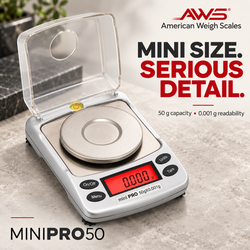
A digital scale showing negative weight is often displaying a normal result relative to its current zero or tare reference. If you tare a container and then remove it, the display may show a minus sign because the load is now below that reference.
A negative reading that appears unexpectedly, keeps changing or remains after the correct empty-platform setup needs further investigation.
Start by removing the load and checking how zero and tare were established. Do not assume a minus sign means the scale needs calibration.
What Does Negative Weight Mean on a Digital Scale?
A negative reading means the scale is indicating a value below its current reference point. It does not mean an object has physically negative mass.
For example:
- Place a 40g container on the scale.
- Press tare and wait for zero.
- Remove the container.
- The display may show approximately −40g.
That result can be expected. Display behavior and available negative range vary by model.
The AWS product FAQ provides additional guidance on tare and common operating questions.
Quick Negative-Weight Troubleshooting Guide
| When the negative number appears | What to investigate | First action |
|---|---|---|
| After removing a tared container | Normal tare behavior | Restore the container or establish empty zero as instructed |
| After removing an item present during startup | Startup reference included the item | Restart with the platform empty |
| Slowly develops on an empty platform | Drift, temperature or interference | Check conditions and platform clearance |
| Changes when the container moves | Outside contact or loading position | Center the container and check clearance |
| Appears after removing a pan or accessory | Required component is missing | Refit it according to the manual |
| Persists after a drop or overload | Possible damage | Stop using the scale and contact support |
1. Check Whether You Removed a Tared Container
Tare is the first thing to check.
When you tare a container, the scale uses that load as the displayed reference. Removing it can produce a negative number approximately equal to its weight.
How to Return to Normal Weighing
If you want to continue weighing contents in the same container, replace it and follow the normal procedure.
If you want to weigh directly on an empty platform:
- Remove the container and contents.
- Confirm that required platform components remain fitted.
- Use the documented zero or tare procedure.
- Wait for a stable zero.
If necessary, restart according to the manual. Do not assume every model clears stored tare in the same way.
NIST’s weighing and scales FAQs provides background on tare and related weighing concepts. www.nist.gov
2. Restart With the Correct Platform Setup
Some scales establish an initial zero during startup. If an item is present at that time, removing it afterward may produce a negative indication. Other models may reject the loaded startup with an error.
Try the normal startup procedure:
- Remove anything being weighed.
- Leave permanent platform components in place.
- Turn the scale off.
- Place it on a firm, level surface.
- Restart and allow initialization to finish.
Check your exact model in the AWS product manuals. Follow its requirements for removable pans, trays and accessories.
3. Check for a Missing Pan or Accessory
If the scale normally operates with a removable weighing pan, taking that pan off after zeroing can reduce the load below the reference.
Refit required components as instructed before restarting.
Do not remove permanent parts, pull up the platform or add random objects to compensate for a negative reading.
A protective storage cover is not necessarily a weighing pan. Use accessories only as described by the manufacturer.
4. Watch for Drift Rather Than a Stable Offset
A stable negative number after removing a tared container differs from a reading that gradually moves below zero.
Possible influences include:
- Temperature changes
- Airflow
- Vibration
- Static electricity
- Platform interference
- Power problems
- A sensor or electronic fault
Avoid repeatedly pressing tare to hide ongoing movement. First identify why the reference is changing.
Stabilize the Environment
Move the scale away from fans, open windows, vents and vibrating appliances. Use a firm support surface and stop touching the table during measurements.
NIST’s guidance for sensitive weighing applications explains the importance of sturdy support and protection from air movement and vibration. www.nist.gov
5. Allow Temperature Adjustment
A scale moved from a cold vehicle into a warm room may need time to reach suitable operating conditions. Direct sunlight, heaters and hot containers can also affect readings.
Follow the model’s operating-temperature and warm-up instructions. There is no single waiting time for every digital scale.
The AWS maintenance guide provides storage and care guidance.
If condensation is present, leave the device disconnected and consult the manufacturer before use.
6. Inspect Platform Clearance
A weighing platform must operate without unintended pressure or contact.
Check whether:
- A container touches the housing.
- A bag rests partly on the table.
- A cable pulls on the load.
- A cover interferes with the platform.
- Loose debris is trapped around accessible edges.
- A removable pan is incorrectly seated.
Turn the scale off before cleaning, and follow the manufacturer’s instructions.
Do not insert tools beneath the platform, bend it or attempt an internal sensor adjustment.
7. Check the Power Source
If negative readings occur alongside flickering, resets or a low-battery message, check power.
For replaceable-battery models, install fresh, matching batteries of the specified type and polarity. For rechargeable models, follow the documented charging procedure.
Energizer’s battery-care guidance advises against mixing old and new batteries or different battery types. energizer.com
Correct power problems before evaluating measurement performance.
8. Verify With an Appropriate Reference
Once the scale holds a stable empty zero:
- Select ordinary weighing mode and the intended unit.
- Place an appropriate reference weight gently in the center.
- Wait for the reading to settle.
- Record the result.
- Remove the reference.
- Check return to zero.
- Repeat using the same method if appropriate.
Compare results with the manufacturer’s specifications.
NIST’s guide to uncertainty for balances and scales discusses reference quality, repeatability and other influences relevant to evaluating results. www.nist.gov
Use a Suitable Reference Weight
Do not use an object’s approximate weight as the basis for a precise adjustment.
The U.S. Mint publishes nominal coin specifications, but an individual coin is not an equivalent substitute for the calibration weight required by your scale manufacturer. www.usmint.gov
Does Negative Weight Mean the Scale Needs Calibration?
Not necessarily.
A negative reading after removing a tared container can be normal. An incorrect reference point may only require the documented zeroing or startup procedure.
Calibration may be appropriate when a suitable reference produces a stable result outside the applicable tolerance after setup problems have been ruled out.
Use the exact model’s instructions and specified weight. Read the AWS guide on how to calibrate a digital scale before proceeding.
Calibration cannot repair physical damage or eliminate ongoing interference.
When a Negative Reading Can Be Useful
Some suitable scales support weighing by difference: establishing a reference with a loaded container, removing material and observing the decrease.
Whether that procedure is appropriate depends on the model, negative display range and measurement requirements.
Do not assume every scale supports it. Also remember that a tared load still counts toward maximum capacity.
For ordinary ingredient additions or object weighing, follow the standard procedure in your manual.
When to Contact Support
Seek help if:
- The empty platform will not hold zero.
- A reference produces an unexpected negative result after correct setup.
- Required platform parts are fitted but the problem remains.
- The issue began after a drop, overload or spill.
- The platform is visibly displaced.
- Model-specific troubleshooting does not resolve the problem.
The AWS scale FAQs provides additional troubleshooting guidance. Contact American Weigh Scales support with the model number, exact display behavior and steps completed.
If weight determines a sale price, do not rely on uncertain results. NIST Handbook 44 provides technical requirements for applicable commercial weighing devices; state and local requirements also matter. www.nist.gov
Frequently Asked Questions
Why does my scale show negative weight with nothing on it?
A container or item may have been included in the tare or startup reference and then removed. If that does not explain it, check drift, platform clearance and the model’s instructions.
Is negative weight always an error?
No. It can be a normal indication that the load is below the current tare reference.
Should I press tare to remove the minus sign?
Use the documented zero or tare procedure with the correct platform setup. Do not repeatedly zero away a reading that continues drifting.
Why does removing the bowl produce a negative number?
If the bowl was tared, removing it reduces the load below that reference.
Can calibration fix a persistent negative reading?
It depends on the cause. Rule out tare, startup, missing components and interference first. Seek support if the scale remains outside specifications.