
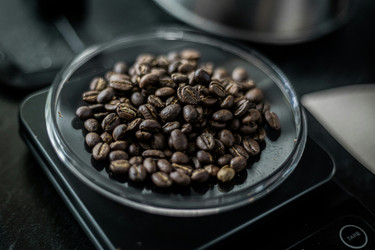
The best digital scale for coffee beans should make it easy to measure a
repeatable dose, maintain a consistent coffee-to-water ratio, and adjust
recipes without guessing. For most home brewers and espresso users,
0.1g readability is the practical sweet spot. Capacity depends on
whether you are weighing only beans and grounds or placing a complete
mug, portafilter, pour-over brewer, carafe, or bowl on the platform.
For coffee preparation, a scale is more than a way to measure beans. It
becomes part of the recipe.
A 20g coffee dose today can be repeated tomorrow. A pour-over recipe can
be scaled from one serving to two. An espresso recipe can track both the
dry dose and beverage output. Instead of relying on scoops, you can
measure ingredients by mass and make deliberate adjustments.
American Weigh Scales offers several formats suitable for coffee,
ranging from compact pocket
scales for beans and espresso
dosing to larger-capacity brewing and kitchen scales.
This guide explains which specifications matter most and how to choose
the best digital scale for coffee beans based on your brewing method.
Quick Answer: What Is the Best Scale for Coffee Beans?
For most coffee users, look for:
-
0.1g readability
-
500g+ capacity for beans and small dosing containers
-
2,000--3,000g+ capacity for complete pour-over setups
-
Tare function
-
Gram measurement
-
Fast, stable readings
-
A platform large enough for your equipment
-
Built-in timer if you brew pour-over or espresso on the scale
-
Splash-resistant design for brewing near water
AWS's current coffee-scale guide identifies the BARISTA-3KG as its
strongest all-around coffee option, with 3,000g capacity, 0.1g
readability, a built-in timer, splash-resistant construction, silicone
mat, and coffee-specific accessories.
For bean dosing alone, a compact 500--750g scale can be more portable
and economical.
Coffee Scale Comparison by Use
Coffee task Suggested capacity Suggested readability
Weighing beans only 100--750g 0.1g
Espresso dose 200--750g 0.1g
Grounds in dosing cup 200--750g 0.1g
Portafilter weighing 500--1,000g+ 0.1g
AeroPress ingredients 500--2,000g+ 0.1g
Pour-over brewing 2,000--3,000g+ 0.1g
Mug + brewed coffee 1,000--3,000g+ 0.1g
Carafe + brewer + water 2,000--5,000g 0.1g
Tiny experimental doses 100--250g 0.01g
These are practical ranges rather than universal requirements. Always
calculate the complete load.
Why Weigh Coffee Beans?
Coffee beans differ in:
-
Size
-
Density
-
Roast level
-
Shape
A scoop therefore does not provide the same level of repeatability as a
mass measurement.
Weighing beans helps you:
-
Repeat recipes
-
Maintain coffee-to-water ratios
-
Compare coffees
-
Control espresso doses
-
Reduce waste
-
Scale recipes
-
Track changes systematically
The Specialty Coffee Association Brewing Control
Chart
uses coffee-to-water ratios by weight in its brewing guidance,
reinforcing why a scale is such a useful brewing tool.
Why 0.1g Readability Is Usually Best
For most coffee preparation, 0.1g provides useful detail without
unnecessary complexity.
A scale with 0.1g readability can display:
-
15.0g
-
18.0g
-
18.5g
-
20.0g
-
30.0g
This is detailed enough for typical bean dosing and recipe adjustments.
The Specialty Coffee Association Sample Preparation
Standard
calls for coffee samples to be weighed with a scale providing 0.1g or
higher accuracy for its cupping procedure.
For home coffee, this makes 0.1g a sensible benchmark.
Do You Need 0.01g for Coffee?
Usually not.
A 0.01g scale can be useful for:
-
Very small experimental doses
-
Comparing tiny quantities
-
Specialized recipe testing
-
Measuring individual beans for experimentation
But most espresso and filter-coffee recipes do not require
hundredth-of-a-gram readings.
A finer scale may also have:
-
Lower capacity
-
Smaller platform
-
Greater sensitivity
-
Less room for brewing equipment
For most coffee users, capacity and platform size are more valuable than
moving from 0.1g to 0.01g.
Is 1g Readability Enough?
A 1g kitchen scale can measure coffee, but it is relatively coarse.
If your target dose is 18g, a scale reading in whole grams gives you
less information than one reading in tenths.
For casual batch brewing, 1g may be workable.
For espresso, small pour-over recipes, and systematic recipe
development, 0.1g is substantially more useful.
Capacity: The Other Half of the Decision
Capacity is the maximum total load the scale can support.
This includes everything on the platform:
-
Beans
-
Grounds
-
Dosing cup
-
Mug
-
Portafilter
-
Brewer
-
Carafe
-
Water
If you only weigh beans before grinding, 500--750g capacity is generous.
If you brew directly on the scale, you may need 2,000--5,000g.
AWS explains how capacity and readability work together in What Does
500g x 0.01g Mean on a Digital
Scale?.
100g Capacity for Coffee
A 100g scale can easily handle typical individual coffee doses.
For example, a 15--30g bean dose leaves plenty of nominal capacity.
AWS's AWS-100 is currently specified at 100g x 0.01g and lists coffee
beans among its intended applications.
However, 100g becomes limiting when you add:
-
Dosing cup
-
Portafilter
-
Mug
-
Brewer
It is best suited to weighing beans or grounds directly.
200g Capacity
A 200g scale offers additional room for:
-
Beans
-
Grounds
-
Lightweight dosing cups
-
Small containers
This can be useful for travel or highly compact coffee setups.
It is still too limited for many complete brewing assemblies.
500g Capacity
A 500g scale is an excellent portable range for:
-
Espresso beans
-
Ground coffee
-
Dosing cups
-
Small containers
-
Travel brewing kits
AWS's current coffee guide lists the AWS-501 at 500g x 0.1g as a
portable espresso-dosing option.
The limitation is that a complete portafilter, mug, brewer, or carafe
may exceed either the platform dimensions or available capacity.
600--750g Capacity
Around 600--750g is a versatile range for bean-focused use.
AWS's Best Pocket Scales for Jewelry, Coins, Coffee and
Crafts
identifies the AWS-600 as a coffee option with 600g capacity and 0.1g
readability.
A scale in this class is useful for:
-
Beans
-
Grounds
-
Small containers
-
Travel
-
Office coffee
-
Pre-measuring doses
A 750g model provides slightly more headroom.
1,000g Capacity
A 1kg scale can accommodate more containers and some compact brewing
equipment.
However, you still need to calculate:
brewer + cup/carafe + water + coffee
before deciding that 1,000g is enough.
For larger pour-over recipes, 2--3kg is safer.
3,000g Capacity: Excellent for Brewing
A 3kg scale is highly versatile for coffee.
It can support:
-
Coffee beans
-
Grounds
-
Cups
-
Mugs
-
Pour-over drippers
-
Small carafes
-
Brewing water
-
Many complete manual-brewing setups
AWS's current Best Scale for Coffee Beans and Espresso
Dosing
guide recommends the BARISTA-3KG as its strongest overall coffee scale.
Its specification combines:
-
3,000g capacity
-
0.1g readability
-
Built-in timer
-
Splash-resistant design
-
Silicone mat
That combination is much more brewing-oriented than a basic pocket
scale.
5,000g Capacity
A 5kg scale provides extra headroom for:
-
Large brewers
-
Heavy carafes
-
Bowls
-
Larger batch preparation
-
General kitchen use
If you want one scale for coffee plus cooking and baking, 5kg can be
practical.
The tradeoff is that the scale may be physically larger and less
portable.
Capacity Headroom
Do not choose a scale that barely accommodates your normal setup.
Suppose:
-
Brewer = 350g
-
Carafe = 300g
-
Water = 600g
-
Coffee = 36g
Total:
1,286g
A 1kg scale cannot support that setup.
A 2kg scale can, but a 3kg scale provides much more headroom.
Calculate the complete load before purchasing.
Tare Is Essential for Coffee
Tare allows you to zero the displayed weight of a container.
For example:
-
Place your dosing cup on the scale.
-
Press tare.
-
Display returns to zero.
-
Add beans.
-
Read the bean mass directly.
You can repeat this process during brewing when the scale and recipe
allow it.
Tare is one of the most important coffee-scale features.
Tare Does Not Increase Physical Capacity
If a carafe weighs 400g and you tare it, the load cell is still
supporting 400g.
A 3,000g scale therefore has less than 3,000g of remaining physical load
capacity after a 400g carafe is placed on it.
Always calculate gross load.
Why a Timer Matters
A timer is not necessary if you only weigh beans before grinding.
It becomes extremely useful for:
-
Pour-over
-
Espresso
-
AeroPress
-
Manual brewing
Coffee extraction depends on time as well as ingredient ratio and grind.
A built-in timer lets you monitor weight and time from one device.
This reduces clutter and makes recipes easier to repeat.
Coffee-to-Water Ratio
One of the main reasons to own a coffee scale is ratio control.
The Specialty Coffee Association's brewing materials use coffee-to-water
ratios by weight. Its Protocols and Best
Practices
have referenced approximately 55g of coffee per liter of water as a
standard brewing ratio.
A home recipe might use another ratio according to preference and
brewing method.
The important point is consistency.
If you know exactly how much coffee and water you used, you can repeat
or deliberately modify the recipe.
Ratio Example: 1:16
Suppose you use:
20g coffee
At a 1:16 coffee-to-water ratio:
20 × 16 = 320g water
The scale allows you to stop near 320g rather than estimating water by
volume.
If the cup tastes too weak or strong for your preference, you can adjust
the ratio systematically.
Ratio Example: 1:17
For 30g of coffee at 1:17:
30 × 17 = 510g water
Because both ingredients are measured by mass, scaling recipes becomes
simple.
Best Digital Scale for Espresso Beans
Espresso typically uses relatively small coffee doses.
Specialty Coffee Association research on
espresso
reported an average dose around 18--20g and an average beverage output
around 36.5g in its survey.
For espresso dosing, prioritize:
-
0.1g readability
-
Fast response
-
Tare
-
Compact platform
-
200--750g capacity for beans/grounds
-
Timer if weighing the shot during extraction
If the scale must fit under an espresso machine, physical dimensions can
be just as important as capacity.
Best Scale for Espresso Yield
If you place the cup on the scale beneath the espresso machine, you
need:
-
Compact dimensions
-
Fast response
-
0.1g readability
-
Tare
-
Timer
-
Water resistance or splash resistance
A large kitchen scale may have plenty of capacity but physically fail to
fit beneath the group head.
For espresso, footprint matters.
Best Scale for Pour-Over Coffee
Pour-over requires more capacity because the scale supports:
-
Cup or carafe
-
Dripper
-
Filter
-
Coffee
-
Brewing water
A 2--3kg+ capacity is therefore much more practical than a 500g pocket
scale.
Ideal features include:
-
0.1g readability
-
Built-in timer
-
Large platform
-
Tare
-
Splash resistance
-
Easy-to-read display
For this workflow, the coffee-specific BARISTA-3KG format is better
suited than a small bean-dosing pocket scale.
Best Scale for French Press
A French press can be heavy even before water is added.
Calculate:
empty press + coffee + water
A 3kg or 5kg scale may be appropriate depending on press size.
A large stable platform is particularly useful.
Best Scale for AeroPress
AeroPress setups are lighter than many carafe-based pour-over systems,
but capacity still depends on whether you weigh:
-
Beans only
-
Brewer and cup
-
Complete water dose
A 1--3kg scale with 0.1g readability provides plenty of flexibility.
A timer is useful for repeatable immersion recipes.
Best Scale for Cold Brew
Cold brew can involve large quantities of coffee and water.
A pocket scale is fine for weighing the dry coffee dose separately.
If you want to place the complete brewing container on the scale, choose
a much higher capacity.
For large batches, 3--5kg or more may be appropriate depending on the
vessel.
Best Scale for Travel Coffee
Travel coffee setups prioritize:
-
Compact dimensions
-
Battery power
-
Protective cover
-
0.1g readability
-
200--750g capacity
If you only need to pre-weigh beans, a pocket scale is ideal.
If you plan to brew directly on the scale, confirm that your travel
brewer, cup, and water remain within capacity.
Best Scale for Office Coffee
A compact 500--750g scale is excellent for:
-
Pre-measuring beans
-
Portioning grounds
-
Small coffee stations
-
Desk storage
A larger 3kg scale is better if coworkers brew directly on the scale.
Pocket Scale vs. Coffee Scale
A pocket scale is designed around portability.
A dedicated coffee scale is designed around brewing.
Pocket Scale Advantages
-
Compact
-
Portable
-
Protective cover
-
Good for beans
-
Good for dosing
-
Lower storage requirements
Dedicated Coffee Scale Advantages
-
Larger platform
-
Higher capacity
-
Built-in timer
-
Better fit for brewers
-
Often more splash resistant
-
Better for measuring water during brewing
Choose based on whether you are weighing ingredients or performing the
entire brew on the scale.
Coffee Scale vs. Kitchen Scale
A kitchen scale can work well if it provides:
-
0.1g readability
-
Fast response
-
Tare
-
Suitable platform
-
Enough capacity
Many kitchen scales, however, read only in 1g increments.
That may be acceptable for large batch recipes but less useful for
espresso dosing.
A coffee-focused scale combines fine readability with brewing-specific
features.
0.1g vs. 0.01g for Coffee
Choose 0.1g if you:
-
Brew espresso
-
Make pour-over
-
Use AeroPress
-
Make French press
-
Dose ordinary beans
-
Want higher capacity
Consider 0.01g if you:
-
Experiment with extremely small doses
-
Compare individual beans
-
Conduct specialized tests
-
Need finer readings for another application
For everyday coffee, 0.1g is generally the better balance.
Calibration
A precision coffee scale should have a clear calibration procedure.
Calibration is especially worth checking:
-
After transportation
-
After long storage
-
After major temperature changes
-
When readings seem unusual
AWS explains the process in How to Calibrate a Digital Scale for
Accurate
Results.
Use the calibration mass specified by the manufacturer.
Do not improvise with a coffee mug, bag of beans, or other household
object.
Repeatability
A useful coffee scale should give consistent readings when the same
stable load is measured repeatedly.
You can check this with a dosing cup or other stable object:
-
Confirm zero.
-
Place the object in the center.
-
Record the result.
-
Remove it.
-
Wait for zero.
-
Repeat.
If readings fluctuate unexpectedly, investigate:
-
Surface stability
-
Drafts
-
Battery condition
-
Calibration
-
Platform contact
Platform Size
Platform size is critical for coffee.
A scale may have enough capacity but still be too small for:
-
Portafilter
-
Mug
-
Carafe
-
Pour-over brewer
-
French press
Before purchasing, compare the scale's platform dimensions with your
equipment.
Nothing should rest partly on the counter while being weighed.
Response Speed
Coffee brewing is dynamic.
During pour-over, water is continuously added.
During espresso, beverage mass increases rapidly.
A slow scale can lag behind the actual pour.
For brewing directly on the scale, fast response is therefore more
important than it is for static bean dosing.
Splash Resistance
Coffee scales operate around:
-
Hot water
-
Espresso
-
Steam
-
Wet cups
-
Condensation
Splash resistance is therefore valuable.
It does not necessarily mean the scale can be submerged.
Follow the manufacturer's cleaning and water-exposure instructions.
Silicone Mat
A removable silicone mat can help:
-
Protect the platform
-
Improve cup grip
-
Catch minor drips
-
Simplify cleanup
This is a useful coffee-specific accessory, particularly for brewing
directly on the scale.
Display Visibility
Look for:
-
Large digits
-
Backlighting
-
Clear timer
-
Visible units
-
Good viewing angle
During pour-over, you need to read the scale while actively pouring.
A display hidden beneath a large carafe is frustrating even if the scale
itself is accurate.
Battery vs. Rechargeable Scale
Replaceable Batteries
Advantages:
-
Easy to replace
-
Good for travel
-
No charging cable required
Rechargeable Battery
Advantages:
-
Convenient for permanent coffee stations
-
Reduces disposable battery use
-
Easy to recharge between brewing sessions
Neither is inherently better.
Choose the power system that fits your routine.
Auto-Off
Auto-off conserves power but can be inconvenient during longer coffee
preparation.
A scale that shuts off during setup or bloom time can interrupt a
recipe.
Check the auto-off behavior if you frequently use manual brewing
methods.
Grams Are the Most Useful Coffee Unit
For specialty coffee, grams make recipe calculations straightforward.
NIST's SI mass guidance
identifies the gram as a decimal submultiple of the SI unit of mass, the
kilogram.
Using grams also makes coffee-to-water ratios easy:
-
15g coffee / 240g water
-
20g coffee / 320g water
-
30g coffee / 500g water
There is little need to convert between volume and mass during the
brewing process.
Why Measuring Water by Weight Is Convenient
Water can be poured directly onto a brewing setup while the scale
displays the added mass.
This allows you to follow recipes such as:
-
Bloom to a target weight
-
Pour to an intermediate weight
-
Finish at a final target
A timer and scale together make these stages easy to track.
Best Scale Capacity by Brewing Method
Method Recommended starting capacity
Bean dosing only 500--750g
Espresso dosing 500--750g
Espresso under machine 500--1,000g+
AeroPress 1,000--3,000g
Pour-over 2,000--3,000g+
French press 2,000--5,000g
Cold brew ingredients only 500--1,000g
Complete cold brew vessel 3,000--5,000g+
Always verify your actual equipment weight.
Coffee Scale Buying Checklist
Before buying, ask:
-
Will I weigh beans only or brew on the scale?
-
What is my normal coffee dose?
-
What is the heaviest container?
-
What is the heaviest complete brewing setup?
-
Is 500--750g enough?
-
Do I need 3kg?
-
Would 5kg be more versatile?
-
Is 0.1g readability available?
-
Do I actually need 0.01g?
-
Does it have tare?
-
Does it measure grams?
-
Does it have a timer?
-
Is the platform large enough?
-
Will it fit beneath my espresso machine?
-
Is the response fast?
-
Is it splash resistant?
-
Is the display visible during brewing?
-
Does it have a silicone mat?
-
Can it be calibrated?
-
What calibration mass is required?
-
Is it battery powered or rechargeable?
-
Does auto-off interfere with brewing?
-
Will I travel with it?
-
Does it have a protective cover?
-
Can it handle other kitchen tasks?
Common Coffee Scale Buying Mistakes
Buying by Capacity Alone
A 5kg scale that reads only to 1g may be less useful for espresso than a
lower-capacity 0.1g scale.
Buying by Resolution Alone
A 0.01g pocket scale may be too small for your pour-over setup.
Forgetting the Brewer's Weight
Capacity must include the entire setup.
Forgetting Platform Size
Numerical capacity does not guarantee physical fit.
Ignoring Tare
Tare is essential for convenient coffee dosing.
Assuming Tare Restores Capacity
It does not.
Ignoring Timer Features
A timer is extremely useful for pour-over and espresso.
Buying 0.001g for Normal Coffee
Milligram readability is generally unnecessary for ordinary brewing.
Using an Unstable Surface
A scale needs a hard, stable base.
Ignoring Water Exposure
Brewing happens around liquid. A coffee-oriented design is valuable.
How to Weigh Coffee Beans Correctly
-
Place the scale on a hard, stable surface.
-
Turn it on with the platform empty.
-
Select grams.
-
Place the dosing container on the platform.
-
Press tare.
-
Add beans gradually.
-
Stop at your target dose.
-
Record the dose if testing recipes.
-
Grind and brew.
This simple workflow makes recipes much easier to repeat.
How to Use a Scale for Pour-Over
-
Put the scale on a stable surface.
-
Place the carafe and brewer on the platform.
-
Add the filter and coffee.
-
Tare.
-
Start the timer.
-
Add bloom water to the target mass.
-
Continue pouring according to your recipe.
-
Watch cumulative water mass.
-
Stop at the final target.
-
Record total brew time.
The exact recipe is up to you; the scale makes it measurable.
How to Use a Scale for Espresso
For bean dosing:
-
Place the dosing cup on the scale.
-
Tare.
-
Add beans.
-
Stop at the target dose.
For beverage output:
-
Place the cup on a compact scale under the espresso machine.
-
Tare.
-
Start extraction and timer.
-
Monitor beverage mass.
-
Stop according to your recipe.
SCA discussions of espresso commonly describe brew ratios using beverage
output mass relative to dry coffee dose, making a scale particularly
useful.
Frequently Asked Questions
What is the best digital scale for coffee beans?
For bean dosing alone, a 500--750g scale with 0.1g readability is an
excellent choice. For full brewing setups, a 3kg x 0.1g coffee scale
with a timer is more versatile.
Is 0.1g accurate enough for coffee?
For most coffee dosing and brewing applications, 0.1g readability
provides useful precision.
Do I need 0.01g?
Usually not. It is most useful for specialized tiny doses and
experimentation.
Do I need 0.001g?
No for ordinary coffee preparation.
Is 500g capacity enough?
It is generally enough for beans, grounds, and small dosing containers.
It may not be enough for a complete brewer or carafe.
Is 600g enough?
For bean-focused use, yes. It is a practical pocket-scale capacity.
Is 3kg better for coffee?
For brewing directly on the scale, 3kg is substantially more versatile.
Do I need 5kg?
A 5kg scale is useful for heavy brewers, large batches, and general
kitchen use.
Does a coffee scale need tare?
Yes. Tare makes dosing and brewing much easier.
Does tare increase capacity?
No. The container remains part of the physical load.
Do I need a timer?
Not for bean dosing alone. A timer is highly useful for espresso,
pour-over, and other manual brewing methods.
Should a coffee scale measure grams?
Yes. Grams are the most convenient unit for coffee recipes and ratios.
Can I use a kitchen scale?
Yes if it has suitable readability, capacity, response speed, platform
size, and tare. Many basic kitchen scales are coarser than dedicated
coffee scales.
Can I use a pocket scale?
Yes. Pocket scales are excellent for beans and grounds. They are less
suitable for full brewing setups if capacity or platform size is
limited.
What is the best scale for espresso?
Look for 0.1g readability, fast response, tare, a timer, compact
dimensions, and enough capacity for the cup and beverage.
What is the best scale for pour-over?
A 2--3kg+ scale with 0.1g readability, tare, timer, large platform, and
splash resistance is ideal.
Why should I weigh coffee instead of using a scoop?
Weight makes it easier to repeat a recipe despite differences in bean
size, density, roast, and scoop filling.
What coffee-to-water ratio should I use?
Ratios vary by brewing method and preference. SCA materials commonly
discuss filter-coffee ratios around the mid-to-high teens of water per
unit of coffee by mass. Use a starting recipe, taste the result, and
adjust systematically.
Should I calibrate my coffee scale?
Follow the manufacturer's instructions. Calibration or verification is
especially worth checking after transport, storage, major temperature
changes, or unexplained readings.
Final Verdict: Best Digital Scale for Coffee Beans
For most coffee drinkers, 0.1g readability is the best starting
point.
Then choose capacity according to how you use the scale:
-
100--250g: tiny doses and specialized bean-only measurement
-
500--750g: coffee beans, grounds, espresso dosing, travel, and
small containers -
1--2kg: compact brewing setups
-
3kg: excellent all-purpose capacity for pour-over, espresso,
AeroPress, mugs, and carafes -
5kg: large brewers, batches, bowls, and multipurpose kitchen use
For a scale dedicated mainly to weighing beans, a compact 500--750g x
0.1g model is a strong choice.
For someone who wants to weigh beans and brew directly on the scale,
a 3,000g x 0.1g coffee scale with tare and a built-in timer is the
more versatile option.
The most important features are not extreme resolution or maximum
capacity. They are the specifications that match your actual workflow:
0.1g readability, enough capacity, fast tare, appropriate platform
size, stable readings, and a timer when brewing requires it.
A good digital coffee scale turns recipes into repeatable numbers---and
makes it much easier to learn which dose, ratio, and brewing process
produces the cup you prefer.