
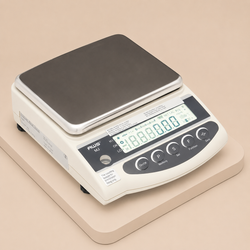
The best precision scale for supplements is not automatically the model with the most decimal places.
Supplement formulations can include ingredients measured in hundreds of grams, a few grams, fractions of a gram, or—in specialized applications—milligrams.
That means scale selection should be based on:
capacity + readability + minimum usable load + repeatability + accuracy requirements + calibration + environmental stability.
For many small supplement-formulation applications:
100–500g × 0.01g
is a useful precision range.
For broader versatility:
500g × 0.01g
can be especially practical.
For larger bulk powders:
1–5kg × 0.1g
may be more suitable.
And when the application genuinely requires milligram-level measurement:
0.001g
or appropriately specified professional equipment may be necessary.
The right scale is the one that performs well within the measurement range you actually use.
Quick Answer: Which Precision Scale Features Matter Most?
| Feature | What to Look For |
|---|---|
| Capacity | Enough for container + all ingredients |
| Readability | 0.01g for many small quantities; 0.001g only when required |
| Minimum usable load | Critical for very small ingredient masses |
| Repeatability | Consistent results with the same stable load |
| Accuracy | Evaluate separately from readability |
| Tare | Essential for cups, trays and containers |
| Calibration | Clear model-specific procedure |
| Platform size | Large enough for your normal container |
| Stability | Reliable zero under appropriate conditions |
| Display | Clear decimal placement and backlighting |
| Environment | Protection from drafts and vibration |
| Surface | Easy to maintain |
| Units | Gram mode is especially useful |
| Power | Battery or AC depending on workflow |
For many small formulation tasks, 500g × 0.01g is one of the most useful combinations.
Feature 1: Readability
Readability describes the smallest increment shown on the display.
1g Readability
Displays:
10g
11g
12g
This may work for larger bulk powder quantities.
0.1g Readability
Displays:
10.0g
10.1g
10.2g
This can work well for medium and large formulation quantities.
0.01g Readability
Displays:
10.00g
10.01g
10.02g
This provides much finer measurement detail for smaller ingredients.
AWS explains the relationship between capacity and readability in What Does 500g × 0.01g Mean on a Digital Scale?.
0.001g Readability
Displays:
10.000g
10.001g
10.002g
This is milligram readability.
It may be appropriate when the actual measurement requirement genuinely calls for milligram-level resolution.
AWS compares these precision levels in 0.001g vs. 0.01g Scales: Which Precision Do You Need?.
Feature 2: 0.01g vs. 0.001g
This is one of the most important decisions when choosing a precision scale for supplements.
Choose 0.01g When:
You typically measure quantities such as:
-
10.00g
-
5.25g
-
2.50g
-
1.25g
-
0.50g
A 0.01g scale is useful for:
-
Small powder blends
-
Herbal formulations
-
Flavoring tests
-
Capsule-batch preparation
-
Recipe development
-
Small formulation adjustments
Choose 0.001g When:
Your actual application requires measurement in thousandths of a gram.
Examples:
0.050g
0.025g
0.010g
However, the presence of a third decimal place does not automatically mean a scale is appropriate for every milligram-level task.
You still need to consider:
-
Minimum load
-
Accuracy
-
Repeatability
-
Calibration
-
Environmental conditions
Feature 3: More Decimal Places Do Not Automatically Mean More Accuracy
A common mistake is assuming that:
0.001g must be better than 0.01g.
That is not necessarily true.
A scale showing:
1.235g
has 0.001g readability.
But readability alone does not tell you:
-
Actual accuracy
-
Repeatability
-
Measurement uncertainty
-
Minimum usable load
-
Linearity
NIST's Calibration of Mass Standards provides broader context on how reference mass standards and calibration support reliable measurement.
The important principle is:
Readability is only one specification.
Feature 4: Minimum Usable Load
Minimum usable load is especially important for supplements.
Suppose a scale is rated:
500g × 0.01g
It can display changes of 0.01g.
That does not automatically mean:
0.01g
is an appropriate minimum quantity to measure.
A scale may require a larger load before its measurements meet the accuracy or repeatability requirements of your application.
This matters significantly when weighing very small supplement ingredients.
Before selecting a scale for tiny quantities, review available information regarding:
-
Minimum load
-
Accuracy
-
Repeatability
-
Tolerance
-
Calibration
Feature 5: Repeatability
Repeatability tells you how consistently the same stable load produces the same result under similar conditions.
Suppose you place the same reference on a scale five times.
A repeatable scale might show:
5.25g
5.25g
5.24g
5.25g
5.25g
Now compare:
5.25g
5.42g
5.12g
5.36g
5.18g
The second result would make formulation consistency much harder.
AWS explains several causes of unstable readings in Why Does My Digital Scale Give Different Readings?.
Feature 6: Capacity
Precision is useless if the scale cannot support your complete load.
Suppose:
Container = 120g
Powders = 300g
Additional ingredients = 40g
Total physical load:
460g
A 500g scale can accommodate that load.
But if your container weighs:
200g
and your ingredients total:
350g
the complete load becomes:
550g
A 500g scale is too small.
Always calculate:
container + ingredients + everything supported by the platform
Feature 7: Capacity Headroom
Avoid choosing a scale that normally operates near its limit.
If your typical load is:
490g
on a:
500g
scale, you have almost no room for:
-
Heavier containers
-
Larger batches
-
Additional ingredients
A 1kg scale may provide better headroom.
For small formula development, however, a 500g scale may provide more than enough capacity.
Feature 8: Tare
Tare is one of the most useful scale features for supplement formulation.
Suppose your empty container weighs:
85.00g
Place it on the scale.
Display:
85.00g
Press tare.
Display:
0.00g
Now add your ingredient.
The scale displays the ingredient mass directly.
Feature 9: Tare Does Not Restore Capacity
This is important.
Suppose:
Scale maximum = 500g
Container = 150g
Press tare.
Display:
0.00g
The scale is still physically supporting 150g.
You have approximately:
350g
of nominal physical capacity remaining.
Tare changes the displayed value.
It does not increase the scale's maximum load.
Feature 10: Platform Size
A scale may have ideal precision specifications but still be impractical if the platform is too small.
Your:
-
Powder cup
-
Weighing paper
-
Bowl
-
Capsule tray
-
Container
should sit securely without touching the countertop or surrounding objects.
A container that rests partially on another surface can distort measurements.
Feature 11: Weighing Trays
Fine powders are easier to manage when the scale includes or supports a suitable weighing tray.
A practical workflow is:
-
Place the empty tray on the scale.
-
Wait for stability.
-
Press tare.
-
Confirm zero.
-
Add powder gradually.
-
Record the mass.
Expansion trays can also help protect the main weighing platform.
Feature 12: Clear Display
Precision measurements require easy decimal recognition.
There is a significant difference between:
0.25g
and:
2.50g
Look for:
-
Clear digits
-
Backlighting
-
Easy decimal visibility
-
Good viewing angle
-
Display visibility with your normal container installed
Feature 13: Stable Zero
Before weighing, your precision scale should settle appropriately at zero under suitable operating conditions.
If the display continuously changes between:
0.00g
0.03g
-0.02g
0.01g
investigate the environment before assuming the scale needs calibration.
Possible causes include:
-
Air movement
-
Vibration
-
Static
-
Weak batteries
-
Surface instability
-
Temperature changes
-
Platform interference
Feature 14: Calibration
A precision scale should have a clear calibration procedure appropriate to the specific model.
Do not assume a scale's maximum capacity automatically tells you which calibration mass it requires.
For example, one 500g scale may require:
500g
while another may require:
200g
or another specified reference.
AWS explains the general process in How to Calibrate a Digital Scale for Accurate Results.
Feature 15: Correct Calibration Weight
Do not use random objects as calibration references.
Avoid:
-
Coins
-
Supplement jars
-
Bottles
-
Phones
-
Batteries
-
Food packages
Use the reference required for the exact scale model.
NIST's Calibration Procedures for Weights and Measures Laboratories provides broader technical context for mass-calibration procedures.
Feature 16: Airflow Control
Fine powders and high-resolution scales can both react to airflow.
Avoid weighing directly beside:
-
HVAC vents
-
Fans
-
Open windows
-
Air purifiers
-
Strong air-conditioning flow
The finer the resolution, the more environmental stability can matter.
Feature 17: Vibration Control
Precision scales should be placed away from equipment producing vibration.
Examples include:
-
Blenders
-
Grinders
-
Mixers
-
Capsule machines
-
Packaging equipment
-
Motors
Use a rigid, stable work surface.
Feature 18: Temperature Stability
Electronic precision scales should be used within their specified operating conditions.
Avoid making fine measurements immediately after moving a scale between very different environments.
For example:
cold warehouse → warm formulation room
or:
hot vehicle → air-conditioned workspace
Allow the scale to acclimate according to manufacturer guidance.
Feature 19: Static
Static electricity can become relevant when measuring:
-
Fine powders
-
Lightweight materials
-
Small quantities
-
Materials handled with plastic scoops
Static can make powders cling to:
-
Trays
-
Containers
-
Scoops
and may also influence very fine weighing systems.
As your measurement requirements become smaller, environmental control becomes more important.
Feature 20: Stainless-Steel Weighing Surface
A stainless-steel weighing surface can be practical for powder formulation because it is smooth and easier to maintain.
However, stainless steel does not automatically mean the entire scale is:
-
Waterproof
-
Washable
-
Chemical resistant
Follow manufacturer cleaning instructions and keep powders and liquids out of:
-
Button openings
-
Display seams
-
Platform gaps
-
Battery compartments
Feature 21: Gram Mode
For supplement formulation, grams are typically the easiest unit for documentation.
A formula might look like:
| Ingredient | Mass |
|---|---|
| Powder A | 50.00g |
| Powder B | 20.00g |
| Powder C | 5.50g |
| Flavor | 2.25g |
| Ingredient E | 0.75g |
Mass-based formulas can then be scaled proportionally.
Feature 22: Battery vs. AC Power
Battery Power
Useful for:
-
Portable formulation
-
Small workstations
-
Occasional use
AC Power
Useful for:
-
Permanent formulation stations
-
Long weighing sessions
-
Repeated daily use
Power source should generally be chosen after the correct capacity and readability have been determined.
Best Precision Scale for Supplement Powders
For many small powder formulations:
100–500g × 0.01g
is a useful range.
For larger batches:
1–5kg × 0.1g
may provide better capacity.
For genuinely milligram-level quantities:
0.001g
or appropriately specified professional equipment may be required.
Best Precision Scale for Capsule Making
Capsule formulation can involve relatively small quantities.
For batch preparation where ingredients remain comfortably above the minimum usable range of the instrument:
100–500g × 0.01g
may be practical.
If individual formulation quantities move into genuine milligram-level ranges, choose equipment specifically suited to those requirements.
Do not infer safe capsule dosage from scale readability.
Best Precision Scale for Protein Powders
Protein-based formulations usually involve larger quantities.
For example:
Protein powder = 250g
Flavor = 20g
Additional ingredients = 10g
A:
1–2kg × 0.1g
scale may be more practical for the main mixture.
A separate 0.01g precision scale can handle smaller components.
Best Precision Scale for Herbal Supplements
Herbal powders may be relatively lightweight.
For small formulation quantities:
100–500g × 0.01g
can provide a useful combination of capacity and fine measurement.
Keep fine powders away from drafts.
Best Precision Scale for Amino Acid Blends
The best specification depends on ingredient quantity.
If ingredients are typically:
10–100g
a 0.1g scale may provide sufficient detail.
If quantities are:
below a few grams
0.01g may be more practical.
If genuine milligram-level quantities are required, choose appropriately specified equipment.
Best Precision Scale for Mineral Powders
Mineral-containing formulations can include relatively small ingredient quantities.
For measurements such as:
0.50g
1.25g
2.50g
a 0.01g precision scale may provide useful readability.
When quantities become substantially smaller, review minimum-load and accuracy requirements rather than relying on display resolution alone.
When 500g × 0.01g Makes Sense
A:
500g × 0.01g
precision scale is especially useful when you want:
-
Fine readability
-
Moderate capacity
-
Room for weighing trays
-
Small formulation flexibility
-
Better measurement detail than a whole-gram scale
This makes it a strong general specification for small supplement-formulation workflows.
A Practical AWS Option
The AWS SC501g Precision Digital Pocket Scale provides:
500g capacity × 0.01g readability
Features include:
-
Stainless-steel weighing surface
-
Backlit LCD
-
Tare
-
Multiple weighing units
-
Expansion trays
-
Battery operation
You can review the AWS SC501g Precision Digital Pocket Scale for current specifications.
For many small powders and formulation ingredients, 500g × 0.01g offers a useful balance between capacity and fine readability.
When a 500g × 0.01g Scale Is Not Appropriate
Choose another instrument when:
-
Total physical load exceeds 500g.
-
The container does not fit securely.
-
The application requires genuine milligram-level measurement beyond the instrument's usable range.
-
Your quality system specifies a different equipment class.
-
Professional validation requirements call for laboratory equipment.
A single compact precision scale cannot cover every supplement application.
Should You Use One Scale or Two?
For users working across a wide measurement range, two scales can be considerably more practical.
Precision Scale
100–500g × 0.01g
for:
-
Small powders
-
Herbal ingredients
-
Flavoring
-
Recipe development
-
Capsule-batch preparation
Higher-Capacity Scale
1–5kg × 0.1g
for:
-
Protein powders
-
Bulk blends
-
Larger containers
-
Base ingredients
If true milligram-level measurement is required, an additional appropriately specified instrument may be necessary.
Precision Measurement Does Not Determine Safe Supplement Dosage
A precision scale measures mass.
It does not determine:
-
Appropriate dosage
-
Safe intake
-
Ingredient suitability
-
Medical appropriateness
-
Drug interactions
-
Regulatory status
A display reading of:
1.00g
only tells you the measured mass according to that weighing system.
It does not tell you whether consuming 1.00g is appropriate.
Commercial Supplement Manufacturing Requires More Than a Precision Scale
Commercial dietary-supplement production may require controls covering:
-
Ingredient identity
-
Specifications
-
Equipment
-
Calibration
-
Sanitation
-
Batch records
-
Quality control
-
Packaging
-
Labeling
-
Documentation
FDA's Current Good Manufacturing Practices for Dietary Supplements provides broader information on applicable manufacturing requirements.
A precision scale is only one component of the process.
A Consumer Precision Scale Is Not Automatically Laboratory Equipment
High displayed precision does not automatically make an instrument laboratory grade.
Professional applications may require documented:
-
Calibration traceability
-
Minimum weight
-
Measurement uncertainty
-
Equipment qualification
-
Environmental controls
-
Maintenance procedures
Choose the instrument based on the quality requirements of your application.
Common Mistakes When Choosing a Precision Supplement Scale
Choosing Based Only on Decimal Places
0.001g is not automatically superior to 0.01g.
Confusing Readability With Accuracy
They are different specifications.
Ignoring Minimum Usable Load
This is particularly important for tiny quantities.
Buying Too Little Capacity
Your container counts toward the total load.
Assuming Tare Restores Capacity
It does not.
Ignoring Repeatability
Consistent formulas require consistent measurements.
Choosing Too Small a Platform
Your normal container should fit securely.
Ignoring Calibration Requirements
Use the exact model procedure.
Using Random Objects for Calibration
Use an appropriate reference mass.
Ignoring Drafts
Fine powders and scales can be affected by airflow.
Ignoring Vibration
Nearby equipment can destabilize measurements.
Ignoring Static
Static can complicate lightweight powder handling.
Assuming 0.001g Is Appropriate for Any Tiny Supplement Quantity
Minimum load, accuracy and equipment suitability still matter.
Using a Scale to Decide Dosage
A scale measures mass; it does not determine medically appropriate intake.
Precision Supplement Scale Buying Checklist
Before buying, ask:
-
What ingredients will I weigh?
-
What is my smallest normal quantity?
-
What is my largest normal quantity?
-
What is my largest complete batch?
-
How much does my container weigh?
-
What is my total physical load?
-
Do I need 0.1g readability?
-
Do I need 0.01g?
-
Do I genuinely require 0.001g?
-
What accuracy specifications are available?
-
What repeatability information is provided?
-
What minimum usable load applies?
-
Does the scale have tare?
-
Does it measure in grams?
-
Is the platform large enough?
-
Will the container obscure the display?
-
Is the display backlit?
-
Does the scale stabilize properly at zero?
-
What calibration procedure is required?
-
What calibration weight is required?
-
Is the weight included?
-
Are trays included?
-
Is the surface easy to maintain?
-
Can airflow be controlled?
-
Can vibration be controlled?
-
Is static likely to be a problem?
-
Is the working temperature appropriate?
-
Does the scale provide enough capacity headroom?
-
Would two scales cover the measurement range better?
-
Does the equipment meet the quality requirements of the application?
Frequently Asked Questions
What is the best precision scale for supplements?
For many small formulation applications:
100–500g × 0.01g
is a useful starting range.
For larger blends:
1–5kg × 0.1g
may be more practical.
Is 0.01g precision good for supplements?
Yes, for many small powder quantities and formulation applications.
However, suitability depends on minimum load, accuracy, repeatability and the actual ingredient quantity.
Is 0.001g better for supplements?
Only when your actual application requires milligram readability.
More decimal places do not automatically mean better performance.
What is a milligram scale?
A scale with:
0.001g readability
displays changes of approximately one milligram.
Its suitability still depends on other performance characteristics.
Is 500g × 0.01g good for supplement powders?
Yes.
It provides a useful combination of moderate capacity and fine displayed increments for many small formulation tasks.
Can a 0.01g scale measure milligrams?
A 0.01g increment equals:
10 milligrams.
Therefore, it cannot display individual 1mg increments.
For genuine 1mg readability, a 0.001g scale is required.
Does 0.001g mean the scale is accurate to 1mg?
Not necessarily.
0.001g describes readability.
Accuracy, repeatability and minimum usable load must be evaluated separately.
Does the container count toward maximum capacity?
Yes.
Everything resting on the platform contributes to the physical load.
Does tare restore scale capacity?
No.
Tare changes the displayed value but not the actual load.
What scale is best for capsule making?
For many small batch preparations:
100–500g × 0.01g
may be useful.
For genuine milligram-level formulations, appropriately specified equipment may be required.
What scale is best for protein powder?
For larger powder formulations:
1–5kg × 0.1g
may be more practical.
Use a smaller precision scale for fine ingredients.
Should a supplement scale be calibrated?
Follow the exact scale manufacturer's calibration instructions and any applicable quality requirements.
Why does my precision scale fluctuate?
Possible causes include:
-
Drafts
-
Vibration
-
Static
-
Weak batteries
-
Temperature instability
-
Unstable surfaces
-
Platform interference
-
Calibration problems
Can a precision scale tell me the correct supplement dose?
No.
A scale measures mass.
It does not determine safe dosage or medical suitability.
Should I use one scale or two?
If your formulation range extends from fractions of a gram to several kilograms, two scales are often more practical:
500g × 0.01g precision scale
plus:
1–5kg × 0.1g higher-capacity scale.
Final Verdict: Which Features Matter Most in a Precision Supplement Scale?
The best precision scale for supplements should be chosen according to the actual measurement range—not simply the number of decimal places on the display.
For many small supplement-formulation applications:
100–500g × 0.01g
is a strong starting range.
For many users:
500g × 0.01g
is especially versatile because it provides:
-
Fine displayed increments
-
Useful capacity
-
Space for small containers
-
Tare
-
Flexibility for powder formulations
For larger batches:
1–5kg × 0.1g
may be more appropriate.
And when a formulation genuinely requires milligram-level measurement:
0.001g
or appropriately specified professional equipment may be necessary.
The most important features to evaluate are:
readability, minimum usable load, accuracy specifications, repeatability, capacity, tare, calibration, platform size, display visibility, environmental stability and application requirements.
For users working across both small and large ingredient quantities, the strongest setup may be:
one 500g × 0.01g precision scale for small formulation ingredients
plus:
one 1–5kg × 0.1g scale for bulk powders and larger batches.
And regardless of scale precision:
measurement accuracy does not determine supplement safety, dosage or regulatory compliance.