
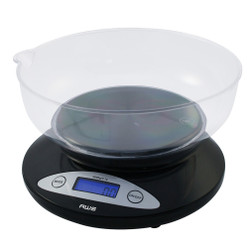
The best scale for soap making must do more than display a number. It needs enough capacity for oils, water, containers, and the complete batch while providing enough readability for lye, fragrance, colorants, and other small ingredients.
For many small-batch soap makers, a digital scale with 0.1g readability and at least 2,000g to 3,000g capacity offers a useful balance. Larger batches may require a 5kg or higher-capacity model from the AWS kitchen scales collection. Very small formula tests, concentrated colorants, and lightweight additives may benefit from a separate 0.01g precision scale.
Because sodium hydroxide and potassium hydroxide are caustic, scale selection is also a safety decision. The CDC/NIOSH sodium hydroxide guidance identifies serious exposure hazards, including burns to the eyes and skin. A soap maker should use a verified formula from a reputable soap calculator, follow supplier guidance, wear appropriate protective equipment, work in a suitable ventilated area, and keep dedicated equipment away from food preparation. A precise scale supports the process, but it does not replace correct formulation or safe handling.
This guide explains how to choose the best scale for soap making, which readability level fits each ingredient, why a two-scale setup can improve small-batch consistency, and which mistakes to avoid.
Why Soap-Making Ingredients Should Be Weighed
Cold-process and hot-process soap recipes depend on the mass and composition of fats and alkali. Measuring oils, water, or lye with cups and spoons introduces unnecessary uncertainty.
Volume can change with:
-
Ingredient density
-
Temperature
-
Container markings
-
Surface tension
-
Meniscus reading
-
Material left behind during transfer
-
Inconsistent filling technique
A gram remains a gram regardless of the container's shape. Weight-based formulas are easier to repeat, document, scale, and verify.
This is especially important because different oils have different saponification values. Do not calculate lye by applying one simple percentage to every oil blend. Enter the exact oil types and weights into a reputable tool such as the SoapCalc recipe calculator and review the result carefully before beginning.
Quick Scale Recommendations by Task
| Soap-making task | Suggested capacity | Suggested readability |
|---|---|---|
| Tiny colorant or additive tests | 100–500g | 0.01g |
| Fragrance and essential-oil trials | 500–1,000g | 0.01g or 0.1g |
| Lye for small batches | 500–2,000g | 0.1g |
| Water for small batches | 1,000–3,000g | 0.1g or 1g |
| Oils for small and medium batches | 2,000–5,000g | 0.1g or 1g |
| Larger soap batches | 5kg or more | 1g may be suitable for bulk oils |
These are general starting points, not formula instructions. Select a scale based on the smallest ingredient, the heaviest container-plus-batch load, and the tolerance required by the validated recipe.
The Best Overall Approach: Use Two Scales
One scale can handle many hobby batches, but a two-scale setup gives soap makers greater flexibility.
High-Capacity Scale for Oils and Water
Choose a kitchen, bowl, or bench scale with:
-
3kg, 5kg, or greater capacity
-
0.1g or 1g readability
-
A platform large enough for mixing bowls and pitchers
-
A visible display
-
A clear tare function
-
Stable controls
-
A cleanable surface
Precision Scale for Lye, Fragrance, and Additives
Choose a smaller scale with:
-
500g to 2,000g capacity, depending on batch size
-
0.1g readability for lye and many fragrance quantities
-
0.01g readability for very small tests or concentrated additives
-
A platform that securely supports the dedicated container
-
Straightforward calibration
-
A protective cover or removable tray
The high-capacity scale handles the physical size and weight of the batch. The precision scale handles smaller ingredients without forcing the main scale to perform below its useful range.
What to Look for in a Soap-Making Scale
1. Maximum Capacity
Capacity is the heaviest total load the scale can support. It includes:
-
The mixing bowl or pitcher
-
Oils or water
-
The lye-safe container
-
Any tray, liner, or secondary vessel
-
Every ingredient added before the container is removed
Tare returns the visible display to zero, but it does not reduce the physical load.
If a bowl weighs 900g and the scale's capacity is 3,000g, only about 2,100g remains for ingredients. Choose a scale with comfortable headroom rather than regularly operating at the maximum.
2. Readability
Readability is the smallest increment shown on the display.
-
1g shows whole grams.
-
0.1g shows tenths of a gram.
-
0.01g shows hundredths of a gram.
A whole-gram scale can work for a large quantity of base oils, but it may round too heavily for a small lye or fragrance amount. A 0.01g scale provides finer detail but usually offers lower capacity and greater sensitivity to air movement and vibration.
3. Accuracy and Repeatability
Decimal places do not independently guarantee accuracy. Review the scale's stated tolerance and repeatability where available.
A repeatable scale should produce similar results when the same appropriate reference weight is measured several times under the same conditions.
Check the scale before a critical batch if it was transported, dropped, overloaded, stored for a long time, or exposed to a major temperature change.
4. Minimum Usable Load
A scale that displays 0.1g increments may not reliably detect an object weighing exactly 0.1g. The minimum usable load may be greater than one display division.
For tiny colorant, antioxidant, chelator, or other additive tests, use a model designed for that lower range and confirm the ingredient instructions carefully.
5. Platform Size
The platform must support the container without rocking or touching another surface. Oversized bowls can block the display, cover controls, or rest partly on the counter.
If a container touches the counter, the scale is not supporting the full load and the result is unreliable.
6. Tare Function
Tare subtracts container weight from the displayed result.
-
Place the empty dedicated container in the center.
-
Wait for the reading to stabilize.
-
Press tare.
-
Confirm the display returns to zero.
-
Add the ingredient gradually.
Removing the container may produce a negative reading equal to its weight. Clear the tare or restart the scale before the next task.
7. Display Visibility
Choose a scale whose display remains visible behind the container. A backlight and large digits help, but container placement is equally important.
8. Power and Auto-Off
Fresh batteries, rechargeable power, or an approved adapter help keep readings stable. An overly short auto-off timer can interrupt slow additions, so check whether the setting can be adjusted.
9. Cleanability and Chemical Separation
Use dedicated soap-making equipment and keep caustic materials away from household food equipment. A removable tray, bowl, or cover can protect the scale, but the electronic body itself should not be exposed to liquids unless specifically rated for them.
Is 1g Readability Accurate Enough for Soap Making?
A 1g scale may be suitable for larger quantities of oils and water when a one-gram increment is small relative to the total formula and the validated recipe allows it.
It is not the ideal choice for every lye quantity or small test batch. Rounding becomes more significant as ingredient weights shrink.
For example, a one-gram step represents:
-
0.1% of 1,000g
-
1% of 100g
-
10% of 10g
The same display increment has a very different impact depending on the ingredient quantity.
Is 0.1g Readability Best for Small Batches?
For many hobby and small-batch soap makers, 0.1g is the most practical precision level. It provides more control than a whole-gram scale while remaining available in models with useful capacity.
A 0.1g scale can suit:
-
Lye for small batches
-
Fragrance and essential oils
-
Water and liquid additives
-
Small oil batches
-
Rebatch ingredients
-
Formula-development trials
The scale must still have an appropriate minimum usable load and stated tolerance.
When Is a 0.01g Scale Helpful?
A 0.01g scale is useful for very small test batches, concentrated colorants, and lightweight additives where 0.1g is too coarse.
It should generally supplement a higher-capacity scale rather than replace it. Pocket platforms and low capacity make many 0.01g models unsuitable for large oil bowls or lye containers.
More precise scales are also more sensitive to drafts, vibration, static, and temperature change. Use them on a hard, stable surface in a controlled area.
Best AWS Scale Types for Soap Making
American Weigh Scales offers several formats that fit different parts of the process.
Compact Bowl Scale
A 3,000g x 0.1g bowl scale can serve many small-batch makers. It provides room for oils, water, fragrance, and additives while retaining tenth-of-a-gram readings. A removable bowl and tare function add convenience.
The bowl and every ingredient count toward the 3kg limit. Larger batches need more capacity.
Compact Bench Scale
A bench scale with a larger flat platform can support dedicated cups and small pitchers more securely than a tiny pocket model. A 500g x 0.1g bench scale is useful for fragrance, colorants, and other small ingredients, while higher-capacity versions can serve small oil batches. If the capacity notation is unfamiliar, see the AWS guide to what 500g x 0.01g means on a digital scale.
Precision Pocket Scale
A 500g x 0.01g model from the AWS pocket scales collection is well suited to tiny test formulas and concentrated additives. Use a compatible dedicated container and keep the scale away from the main mixing zone to reduce spills.
High-Capacity Kitchen Scale
A 5kg or higher-capacity kitchen scale is practical for base oils, water, and heavier bowls. If it reads only in whole grams, pair it with a 0.1g or 0.01g precision scale. The AWS comparison of a pocket scale versus a kitchen scale explains the tradeoff between finer readability and greater working capacity.
Soap-Making Scale Safety
Treat Lye as a Serious Caustic Material
Wear appropriate chemical-resistant gloves and eye protection, cover exposed skin, follow the lye supplier's safety data, and keep children and animals out of the work area. Review the supplier's safety data sheet using OSHA's explanation of SDS sections and required information. Work with suitable ventilation and containers designed for the material.
Never use aluminum with sodium hydroxide. Confirm material compatibility before selecting any lye container, utensil, tray, or surface. The NIH PubChem sodium hydroxide profile provides additional chemical hazard and handling information.
Keep the Scale Outside the Splash Zone
Position the scale where spills are less likely. A secondary tray may help contain material, but it must sit entirely on the platform and remain within capacity.
If lye contacts the scale, follow the chemical and scale manufacturers' instructions. Do not continue using damaged electronics or a scale with residue trapped around the platform.
Use Dedicated Containers
Clearly label soap-making containers and do not return them to food use. Use a lye-compatible dedicated container for dry lye and another compatible vessel for the lye solution.
Never Guess a Lye Quantity
If you overshoot the target, do not casually scoop lye back into the original supply or improvise a recipe change. Stop and follow a safe, validated correction process appropriate to the situation. When uncertain, discard the measurement safely according to supplier and local guidance and start again.
Review the Formula Before Weighing
Double-check:
-
Every oil type and weight
-
Lye type and purity
-
Desired superfat or lye discount
-
Water calculation method
-
Fragrance or essential-oil limits
-
Additive rates
-
Final batch size
Use a reputable soap calculator and keep the written formula visible.
How to Weigh Oils
-
Place the high-capacity scale on a hard, level surface.
-
Turn it on with an empty platform.
-
Place the dedicated oil container in the center.
-
Wait for stability and press tare.
-
Add each oil gradually.
-
Record the actual weight before adding the next oil.
-
If using one bowl for several oils, confirm each cumulative target carefully.
-
Keep the combined bowl and oils within capacity.
Weighing oils into separate containers can make corrections easier, while cumulative weighing reduces dishes. Choose the method that provides the clearest verification for your workflow.
How to Weigh Lye More Safely
-
Put on required protective equipment before opening the container.
-
Confirm the formula and target weight.
-
Place a clean, dry, compatible dedicated container on the precision scale.
-
Wait for stability and press tare.
-
Add lye slowly with a dry, dedicated utensil.
-
Stop before the target and make small final additions.
-
Let the display stabilize.
-
Confirm the written unit is grams.
-
Close the lye supply container promptly.
-
Move the measured lye according to the safe process.
Do not weigh near fans or open windows. Avoid static-generating materials and keep all moisture away from the dry lye supply.
How to Weigh Water
Use a compatible container large enough for the full solution with appropriate headspace. Tare the empty container and add water to the calculated target.
Water is often a larger quantity than lye, so a high-capacity scale may be appropriate. Keep the display visible and verify grams before recording the value.
Always add lye to water according to established soap-making safety guidance—never water onto dry lye—because the reaction releases significant heat and can create a dangerous eruption.
How to Weigh Fragrance, Essential Oils, and Colorants
Follow supplier usage rates, applicable fragrance standards, and the validated formula. Do not assume that more fragrance produces a better or safer soap.
For fragrance:
-
Tare a clean, compatible cup.
-
Add slowly as the target approaches.
-
Let the liquid settle.
-
Record the final weight.
For concentrated colorants or lightweight additives, use a 0.01g scale when the formula requires finer readings. Powders can be affected by airflow and static, so shield the area and avoid breathing over the platform.
Calibration and Pre-Batch Checks
Before a batch, especially after moving or storing the scale:
-
Inspect the platform and housing.
-
Install fresh batteries or verify power.
-
Confirm zero on the empty platform.
-
Test with an appropriate check weight.
-
Repeat the test several times.
-
Compare the result with the manufacturer's tolerance.
-
Calibrate only with the specified weight and procedure when necessary.
Coins, packaged ingredients, and household objects are not dependable calibration standards. Follow the manufacturer's procedure and use the specified test weight; the AWS guide on calibrating a digital scale explains the general process.
Calibration cannot repair a bent platform, overloaded load cell, chemical damage, or failing electronics.
Cleaning and Maintaining the Scale
-
Wear appropriate protection when handling contaminated equipment.
-
Turn off and disconnect the scale before cleaning.
-
Remove detachable trays only if the instructions allow it.
-
Use the scale manufacturer's approved cleaning method.
-
Do not immerse the electronic scale unless explicitly rated for it.
-
Keep liquid out of buttons, seams, and the battery compartment.
-
Do not scrape the platform with sharp tools.
-
Store the scale clean, dry, and protected from caustic ingredients.
-
Do not store heavy containers on the platform.
If caustic material enters the scale body or damages the housing, stop using the scale and contact the manufacturer.
Common Scale Mistakes in Soap Making
Forgetting Container Weight
Taring hides container weight from the display but not from the load cell.
Using the Wrong Unit
Confirm grams before every critical measurement. Standard ounces and fluid ounces are not interchangeable.
Using a 1g Scale for Tiny Lye Quantities
Whole-gram rounding may be too coarse for small batches. Match readability to the formula.
Placing the Scale on a Silicone Mat
A soft or flexible mat can let the scale tilt or sink. Use a rigid level surface unless the manufacturer specifies otherwise.
Letting a Bowl Touch the Counter
The reading becomes unreliable when the full load is not supported by the platform.
Pouring Too Quickly
Liquids and fine powders can overshoot the target before the display settles.
Using a Food Scale Without Dedication
Keep soap-making equipment separate from food preparation, especially when it may contact lye or fragrance materials.
Relying on Decimal Places Alone
Readability does not guarantee accuracy. Check tolerance, minimum load, calibration, and repeatability.
Changing the Recipe Without Recalculation
Substituting one oil for another changes the lye requirement. Run the revised formula through a reputable calculator.
Scale Recommendations by Experience Level
Beginner Soap Maker
Choose a 3kg to 5kg digital scale with tare for oils and water, plus a 0.1g precision scale for lye and fragrance. Use clearly labeled, compatible dedicated containers.
Small-Batch Formulator
Add a 0.01g scale for tiny colorant and additive tests. Keep written batch records and verify scale performance regularly.
Growing Soap Business
Standardize scales, containers, formulas, calibration checks, batch records, safety procedures, and ingredient traceability. Determine which commercial, labeling, insurance, quality, and regulatory requirements apply. In the United States, begin with the FDA's explanation of how soap is regulated, since a product's composition and marketing claims can affect its regulatory category.
Product Developer
Use separate high-capacity and precision scales so experimental quantities can be measured without compromising capacity or lower-range performance.
Frequently Asked Questions
What is the best scale for soap making?
For many small batches, use a 3kg to 5kg scale for oils and water plus a 0.1g precision scale for lye, fragrance, and additives. A 0.01g scale is useful for tiny formulation tests.
Is 1g accuracy enough for soap making?
Whole-gram readability may be acceptable for larger oil quantities, but it can be too coarse for lye and other small ingredients. Choose based on the validated recipe and batch size.
Do I need a separate scale for lye?
A dedicated precision scale is a strong choice because it supports finer measurement and helps keep caustic-material equipment separate from food use.
Can I use a kitchen scale for soap making?
Yes, a kitchen-style scale can handle oils, water, and larger batches if it has enough capacity and is dedicated to soap making. Use a precision scale for smaller ingredients when needed.
Is a 0.1g scale precise enough for lye?
It is suitable for many small-batch formulas when the scale's accuracy, minimum load, and capacity meet the requirement. Very tiny batches may require a different approach or finer verified equipment.
Should soap ingredients be measured in grams or ounces?
Either mass unit can work if used consistently, but grams make decimal calculations and small quantities easier. Confirm the unit before every critical measurement. For formal definitions and conversion guidance, consult the NIST SI Units—Mass resource.
Does tare increase capacity?
No. It subtracts container weight from the displayed number, but the container still counts toward maximum load.
Can I calibrate a soap scale with coins?
Coins are not reliable calibration standards because individual masses vary. Use the exact calibration weight specified by the manufacturer.
Why does my scale reading drift?
Common causes include drafts, vibration, temperature change, static, weak batteries, a soft surface, material movement, or residue around the platform.
Can I put a hot oil container on the scale?
Only if the scale manufacturer permits the temperature and load. Heat can affect readings or damage the scale. Weigh ingredients before heating when possible.
What happens if I use a different oil than the recipe lists?
The lye requirement changes. Recalculate the complete formula with the exact oils and weights before making the batch.
Is a consumer scale legal for trade?
Do not assume it is approved for commercial transactions based on weight. Confirm applicable certification and local requirements.
Final Verdict: The Best Scale for Small-Batch Soap Making
The best scale for small-batch soap making combines enough capacity for oils, water, and containers with enough readability for lye, fragrance, colorants, and additives.
For most makers, the strongest setup is a high-capacity 3kg to 5kg scale paired with a 0.1g precision scale. Add a 0.01g pocket scale when very small formulation tests require finer readings.
American Weigh Scales offers pocket, bowl, kitchen, and compact bench models across these ranges. Choose by capacity, readability, minimum load, platform size, calibration, and cleanability—not by decimal places alone.
A dependable scale supports consistency, but safe soap making also requires a correctly calculated formula, compatible dedicated equipment, appropriate protective gear, careful handling, and complete batch records. When those elements work together, small batches become easier to repeat and easier to evaluate with confidence.