
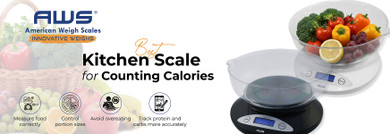
A lot of people think they are eating the right portions until they actually start weighing their food. That’s where a kitchen scale helps. Instead of guessing how much rice, chicken, oats, or peanut butter you are eating, you get the exact weight in seconds.
If you are trying to lose weight, gain muscle, or simply track your daily calories properly, a good kitchen scale can make your routine much easier. Small portion mistakes may not feel important at first, but they can easily increase your calorie intake without you realizing it.
Why People Use Kitchen Scales for Calorie Counting
Most calorie tracking apps work better when your food measurements are accurate. Measuring food with spoons or cups usually creates uneven portions because every ingredient looks different.
For example, one bowl of rice may look the same as another, but the actual weight - and calories - can be completely different.
That’s why many fitness coaches, nutrition experts, and people following meal plans prefer using digital kitchen scales. They help you:
- Measure food correctly
- Control portion sizes
- Avoid overeating
- Track protein and carbs more accurately
- Stay consistent with diet goals
Once people start using a kitchen scale daily, they usually realize how inaccurate visual estimates actually are.
What Makes a Good Kitchen Scale?
Not every kitchen scale works well for calorie tracking. Some scales only give basic readings, while others include advanced nutrition features and mobile app support.
Here are a few things that actually matter when choosing one:
Accurate Readings
Accuracy is the biggest factor. Even small weight differences can affect calorie tracking, especially for foods like nuts, oils, peanut butter, cereal, or protein powder.
Tare Function
This feature saves time during meal prep. It removes the weight of the bowl or plate so you only measure the food itself.
Easy-to-Read Display
A clear digital screen makes things easier while cooking or preparing meals quickly.
Multiple Units
A good scale should switch easily between grams, ounces, pounds, and milliliters depending on what you are measuring.
Compact Design
Most people don’t want a bulky scale sitting on the kitchen counter all day. Slim digital scales are easier to store and clean.
Are Smart Kitchen Scales Worth Buying?
Some modern kitchen scales connect with apps and show nutrition details like calories, carbs, protein, and fat. These can help people who follow strict meal plans or detailed fitness programs.
But honestly, a simple digital kitchen scale works perfectly fine for most people.
You really don’t need complicated features if your main goal is accurate portion control and calorie tracking.
How Accurate Are Kitchen Scales for Calories?
Kitchen scales do not directly count calories. They measure food weight accurately, and then you compare that weight with nutrition labels or calorie apps.
For example, if 40 grams of oats contain 150 calories, the scale helps you measure that exact amount instead of guessing.
That simple difference improves calorie tracking a lot.
Foods People Commonly Measure With a Kitchen Scale
Kitchen scales become especially useful for foods that are hard to estimate by eye.
Some common examples include:
- Rice
- Pasta
- Chicken
- Peanut butter
- Nuts
- Protein powder
- Fruits
- Vegetables
- Oats
- Snacks and cereals
Many people accidentally eat larger portions of calorie-dense foods because they rely on visual estimates instead of actual measurements.
Simple Tips for Better Food Tracking
Measure Food Before Cooking
Raw food measurements are usually more accurate because cooking changes food weight.
Use Grams Instead of Cups
Grams give much more accurate results, especially for calorie tracking.
Keep the Scale on a Flat Surface
Uneven counters can affect accuracy.
Don’t Obsess Over Every Gram
A kitchen scale should make food tracking easier, not stressful. Use it as a helpful tool, not something that creates frustration.
Final Thoughts
A kitchen scale is one of the easiest tools for improving portion control and calorie tracking. It helps people understand what they are actually eating instead of relying on rough guesses.
Whether your goal is weight loss, fitness, meal prep, or healthier eating habits, accurate food measurement makes a real difference over time.
Many people looking for reliable digital weighing products often explore trusted brands like American Weigh Scales for dependable kitchen scales and food weighing solutions.
FAQs
1. Is there a food scale that counts calories?
Yes, some smart food scales connect with mobile apps and estimate calories using built-in nutrition databases. Standard kitchen scales mainly measure weight.
2. What are the best calorie counting scales?
The best calorie-counting scales usually offer accurate readings, tare functionality, multiple measurement units, and an easy-to-read display.
3. Are food scales accurate for calories?
Food scales improve calorie accuracy because they measure exact food weight. The calorie calculation still depends on the nutrition information you use.
4. Can a kitchen scale help with weight loss?
Yes. A kitchen scale helps control portion sizes and improves calorie tracking, which can support weight-loss goals.
5. Should I measure food before or after cooking?
Most people prefer measuring food before cooking because cooking changes the weight of many ingredients