
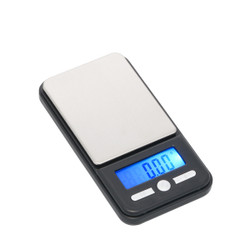
Choosing the right scale for model making requires more than comparing the number of decimal places on the display.
A good model-making scale should match the actual materials, containers and batch sizes used on your workbench.
For some projects, you may be weighing:
-
0.25g of pigment
-
1.50g of filler
-
5g of model paint
For others, you may be mixing:
-
500g of resin
-
1kg of silicone
-
2kg of plaster or casting compound
That means the ideal scale should balance:
accuracy + capacity + readability + repeatability + calibration
rather than maximizing one specification at the expense of everything else.
For many fine model-making tasks:
100–500g × 0.01g
is a useful precision range.
For broader compact-scale versatility:
500g × 0.01g
can be especially practical.
For larger resin, silicone, plaster and casting batches:
1–5kg × 0.1g
may make more sense.
The best scale is the one that matches your actual working range.
Quick Model Making Scale Buying Guide
| Application | Suggested Capacity | Suggested Readability |
|---|---|---|
| Pigment mixing | 100–500g | 0.01g |
| Model paint formulation | 100–500g | 0.01g |
| Fine fillers | 100–500g | 0.01g |
| Small adhesives | 100–500g | 0.01g |
| Lightweight miniature parts | 100–500g | 0.01g |
| Small resin batches | 200–500g | 0.01–0.1g |
| Medium resin batches | 500g–2kg | 0.1g |
| Silicone mold making | 500g–2kg+ | 0.1g |
| Plaster and terrain material | 1–5kg+ | 0.1g |
| Larger casting batches | 2–5kg+ | 0.1g |
| Genuine milligram-level work | Low-capacity precision scale | 0.001g when required |
For many hobbyists:
500g × 0.01g
is one of the most flexible compact configurations.
1. Accuracy Should Be Evaluated Separately From Readability
One of the most common mistakes when buying a model-making scale is assuming that more decimal places automatically mean greater accuracy.
They do not.
If a scale displays:
5.25g
that tells you it has hundredth-of-a-gram readability.
It does not automatically guarantee that the true mass is exactly 5.25g.
Accuracy is a separate performance characteristic.
When comparing scales, consider:
-
Readability
-
Accuracy specifications
-
Repeatability
-
Minimum usable load
-
Calibration
-
Linearity
-
Environmental conditions
NIST's Calibration of Mass Standards provides broader background on mass calibration and measurement traceability.
2. Understand Readability
Readability is the smallest increment shown on the display.
AWS explains how this type of specification works in What Does 500g × 0.01g Mean on a Digital Scale?.
1g Readability
Displays:
10g
11g
12g
Suitable primarily for larger quantities.
0.1g Readability
Displays:
10.0g
10.1g
10.2g
Useful for:
-
Resin
-
Silicone
-
Plaster
-
Larger fillers
-
Casting materials
0.01g Readability
Displays:
10.00g
10.01g
10.02g
Useful for:
-
Pigments
-
Model paint
-
Fine fillers
-
Small adhesives
-
Lightweight parts
-
Small resin additives
0.001g Readability
Displays:
10.000g
10.001g
10.002g
This is milligram readability.
Most ordinary model-making applications do not require it.
AWS compares these precision classes in 0.001g vs. 0.01g Scales: Which Precision Do You Need?.
3. When 0.1g Is Enough
A 0.1g scale can be a strong choice when your materials are measured in larger quantities.
Example:
Resin = 250.0g
Hardener = 125.0g
Filler = 20.0g
For this type of batch:
0.1g readability
may provide sufficient measurement detail while allowing greater capacity.
4. When 0.01g Is Better
A 0.01g scale becomes more useful when working with small materials.
Examples:
Pigment = 0.45g
Mica = 0.30g
Paint component = 1.25g
Fine filler = 2.50g
For these tasks:
100–500g × 0.01g
is a useful range.
5. When 0.001g Is Actually Needed
A 0.001g scale displays changes of one milligram.
Because:
0.001g = 1mg
it can be useful when your project genuinely requires measurements at that level.
However, finer-resolution scales can also be more sensitive to:
-
Airflow
-
Vibration
-
Static
-
Temperature
-
Surface instability
Do not buy a milligram scale simply because it appears more precise.
Choose it only when the actual measurement requirement justifies it.
6. Minimum Usable Load Matters
Suppose you buy a:
500g × 0.01g
scale.
It displays changes of 0.01g.
That does not necessarily mean:
0.01g
is an appropriate working quantity.
The minimum usable load may be higher depending on the instrument and the level of performance required.
This is especially important when weighing:
-
Tiny pigment quantities
-
Fine mica
-
Small paint additions
-
Lightweight parts
Do not confuse the smallest display increment with the smallest reliably usable quantity.
7. Repeatability Is Critical
Repeatability refers to how consistently a scale gives the same reading for the same stable load.
Suppose the same reference object is weighed repeatedly.
A consistent result might be:
10.25g
10.25g
10.24g
10.25g
10.25g
A poor result might look like:
10.25g
10.43g
10.12g
10.38g
10.18g
AWS explains several common causes of changing measurements in Why Does My Digital Scale Give Different Readings?.
For model makers who want to recreate paint, pigment or resin recipes, repeatability can be extremely important.
8. Capacity Is the Second Major Buying Decision
After determining how finely you need to measure, calculate how much total mass the scale must support.
Capacity includes:
container + materials + everything resting on the platform.
Example:
Mixing cup = 75g
Resin = 250g
Hardener = 125g
Pigment = 2g
Total:
452g
A 500g scale can accommodate the load.
But only barely.
9. The Container Counts Toward Capacity
This catches many hobbyists by surprise.
Suppose:
Scale capacity = 500g
Mixing cup = 150g
Materials = 300g
Total physical load:
450g
You are already very close to maximum capacity.
The cup cannot be ignored.
10. Tare Does Not Restore Capacity
Place the 150g container on the scale.
Press tare.
Display:
0.00g
The scale is still physically supporting 150g.
Approximate remaining nominal capacity:
350g
Tare resets the displayed number.
It does not increase the scale's physical load limit.
11. Leave Capacity Headroom
If your normal complete load is:
485g
and your scale capacity is:
500g
you have only:
15g
of headroom.
That is not much flexibility.
A slightly heavier container or larger batch could exceed capacity.
If your normal loads regularly approach 500g, a 1kg or 2kg model may be more practical.
12. Choosing Between 100g, 200g and 500g
100g Capacity
Useful for:
-
Tiny pigment tests
-
Small paint formulations
-
Lightweight parts
Main limitation:
Container weight can consume a large portion of the capacity.
200g Capacity
Useful for:
-
Small pigment batches
-
Fine fillers
-
Paint
-
Small resin samples
-
Small adhesive mixtures
More flexible than 100g while remaining compact.
500g Capacity
Useful for:
-
Pigments
-
Model paint
-
Fine fillers
-
Small resin batches
-
Adhesives
-
Putty
-
Lightweight components
-
Small mixing cups
For many model makers, this is the most versatile compact capacity.
13. When to Choose 1kg or More
A larger scale is better for:
-
Medium resin pours
-
Silicone molds
-
Plaster
-
Terrain materials
-
Heavy casting compounds
-
Large containers
For these applications:
1–5kg × 0.1g
may be much more practical than a low-capacity precision scale.
14. Why 500g × 0.01g Is a Strong Middle Ground
A 500g × 0.01g scale provides:
-
Fine readability
-
Moderate capacity
-
Room for trays
-
Room for small cups
-
Useful detail for pigments
-
Compact dimensions
It works especially well for model makers who primarily work with fine materials but occasionally weigh larger small-batch components.
15. Platform Size Matters
Capacity alone does not guarantee usability.
Your mixing container should:
-
Sit securely
-
Stay centered
-
Avoid touching the countertop
-
Avoid leaning against nearby tools
-
Leave the display visible
A large resin cup on a tiny platform can be awkward even when the total load is technically below capacity.
16. Tare Is Essential for Model Making
Tare removes the displayed weight of the empty container.
Example:
Empty cup = 45.00g
Press tare.
Display:
0.00g
Add material:
25.50g
The display now directly shows the material mass.
17. Sequential Tare Can Simplify Formulation
Suppose a model-making formula uses:
Base = 20.00g
Filler = 2.50g
Pigment = 0.50g
You may tare between additions when useful.
Just remember:
all materials still count toward physical capacity.
18. Calibration Is a Major Buying Consideration
A precision scale should have a clear calibration procedure.
Before buying, determine:
-
Can it be calibrated?
-
What calibration weight does it require?
-
Is the weight included?
-
Are instructions available?
-
Is calibration easy to repeat?
AWS provides a general walkthrough in How to Calibrate a Digital Scale for Accurate Results.
Always follow the exact instructions for the specific model.
19. Do Not Assume Capacity Equals Calibration Weight
A 500g scale does not necessarily use:
500g
for calibration.
Depending on the model, it might require:
-
200g
-
500g
-
Another specified reference mass
Check the manufacturer's instructions.
20. Use the Correct Calibration Weight
Avoid calibrating with:
-
Coins
-
Batteries
-
Hobby tools
-
Paint jars
-
Miniature parts
-
Resin containers
These are not appropriate substitutes for a suitable reference mass.
NIST's Calibration Procedures for Weights and Measures Laboratories provides broader technical context on mass calibration.
For hobby equipment, follow the scale manufacturer's specified calibration procedure.
21. Calibration and Verification Are Not Exactly the Same
Calibration establishes or adjusts the scale relative to an appropriate reference.
Verification checks whether the scale is behaving as expected.
A simple hobby workflow might include:
-
Place the scale on a stable surface.
-
Allow it to stabilize if necessary.
-
Confirm zero.
-
Place an appropriate reference mass.
-
Check the result.
-
Calibrate according to manufacturer instructions when needed.
The exact process varies by model.
22. Stable Zero Is Important
A scale should settle appropriately under suitable conditions.
If the display constantly jumps between:
0.00g
0.02g
-0.01g
0.03g
investigate the environment before assuming the scale itself is defective.
Possible causes include:
-
Airflow
-
Vibration
-
Static
-
Temperature
-
Weak batteries
-
Platform interference
-
Unstable surface
23. Airflow Can Affect Precision Scales
Model-making rooms commonly contain:
-
Airbrush booths
-
Fans
-
Air purifiers
-
Exhaust systems
-
Open windows
These can create drafts.
A scale with 0.01g or 0.001g readability may respond to subtle air movement.
Keep fine weighing away from strong airflow.
24. Vibration Can Affect Accuracy and Repeatability
Common workshop vibration sources include:
-
Air compressors
-
Rotary tools
-
Sanders
-
Drills
-
Mixers
-
3D printers
Take fine measurements on a stable surface away from running equipment.
25. Static Can Affect Fine Powders
Pigments, mica and plastic containers can develop static.
Static may cause powder to cling to:
-
Scoops
-
Trays
-
Mixing cups
-
Packaging
This can make very small transfers difficult to reproduce.
Static becomes more important as measurement quantities decrease.
26. Temperature Stability Matters
Avoid expecting immediate precision after moving the scale between very different temperatures.
Examples:
cold garage → warm studio
hot storage area → air-conditioned workshop
Allow the scale to stabilize according to manufacturer instructions.
27. Choose a Clear Display
A precision scale should make decimal places easy to distinguish.
Compare:
0.25g
and:
2.50g
Useful features include:
-
Backlighting
-
Good contrast
-
Clear decimal position
-
Easy viewing angle
Make sure your normal mixing cup does not block the display.
28. Consider Weighing Trays
Trays are useful for:
-
Pigments
-
Mica
-
Fillers
-
Small components
-
Fine powders
Basic workflow:
-
Place tray on platform.
-
Confirm stability.
-
Press tare.
-
Add material.
-
Record the mass.
The tray still counts toward maximum capacity.
29. Protect the Scale From Resin and Paint
Precision scales can be damaged by:
-
Resin
-
Paint
-
Adhesives
-
Solvents
-
Water
Keep materials away from:
-
Buttons
-
Display seams
-
Platform gaps
-
Electronics
-
Battery compartments
A stainless-steel platform may make surface cleanup easier, but it does not make the full scale waterproof or chemical-resistant.
30. Best Scale for Model Paint
Custom model-paint mixtures often use small quantities.
Example:
Base = 5.00g
White = 1.20g
Blue = 0.35g
Metallic pigment = 0.15g
For this type of work:
100–500g × 0.01g
is a practical range.
31. Best Scale for Pigments
Pigments may be weighed in fractions of a gram.
Example:
Black pigment = 0.40g
Silver mica = 0.30g
Blue pigment = 0.15g
For these quantities:
0.01g readability
can provide useful measurement detail.
32. Best Scale for Resin Model Making
Resin projects may involve much larger quantities than pigments.
AWS goes deeper into resin weighing in Best Digital Scale for Resin.
A useful general setup can be:
Small resin and pigments
500g × 0.01g
Medium or larger resin batches
1–5kg × 0.1g
depending on batch size.
33. Follow the Resin Manufacturer's Ratio
A scale measures mass.
It does not determine the proper resin-to-hardener ratio.
For example:
2:1 by volume
does not automatically mean:
2:1 by weight.
The two components may have different densities.
TotalBoat's guide to mixing epoxy by weight provides a useful example of manufacturer-specific weight guidance.
Only use a weight ratio when it is specifically provided or approved for that resin system.
34. Weight and Volume Ratios Can Differ
Mass and volume are different properties.
Two liquids can occupy the same volume while having different masses.
TotalBoat further explains the distinction in its guide to measuring epoxy by weight versus volume.
A precise scale cannot compensate for using the wrong ratio.
35. Best Scale for Fillers
Small filler quantities such as:
0.75g
1.25g
2.50g
may benefit from:
0.01g readability.
Larger quantities such as:
25.0g
or:
50.0g
may only require:
0.1g readability.
36. Best Scale for Adhesives
Small adhesive batches can involve only a few grams.
Example:
Component A = 5.00g
Component B = 2.50g
A 0.01g scale can provide useful detail.
Only use weight-based mixing when the manufacturer supports it.
37. Best Scale for Silicone
Small silicone mold projects may fit within:
500g–2kg
depending on the container and batch.
Larger mold-making projects may require:
2–5kg+ capacity.
Always follow the silicone manufacturer's exact mixing instructions.
38. Best Scale for Plaster and Terrain Materials
Plaster and casting materials become heavy quickly.
Suppose:
Container = 300g
Plaster mixture = 1,500g
Total:
1,800g
A 500g precision scale is unsuitable.
A:
2kg or larger scale
is much more appropriate.
39. Pocket Scale vs. Larger Scale
A compact precision scale generally provides:
-
Smaller platform
-
Fine readability
-
Portability
A larger scale usually provides:
-
Higher capacity
-
Larger platform
-
Better support for bowls and mixing cups
For model makers with a wide working range, owning both can make more sense than forcing one scale to do everything.
40. One Scale or Two?
Ask whether your model-making range is:
0.25g → 300g
or:
0.25g → 3kg.
In the first case, one:
500g × 0.01g
scale may cover most work.
In the second case, two scales are usually more practical.
Recommended Two-Scale Model-Making Setup
Fine Precision Scale
500g × 0.01g
for:
-
Pigments
-
Model paint
-
Fine fillers
-
Lightweight parts
-
Small adhesive batches
-
Small material tests
Higher-Capacity Scale
1–5kg × 0.1g
for:
-
Resin
-
Silicone
-
Plaster
-
Terrain compounds
-
Casting materials
-
Large mixing cups
This gives each scale a more appropriate working range.
A Practical AWS Choice for Fine Model-Making Work
For many precision hobby applications, the AWS SC501g Precision Digital Pocket Scale provides:
500g capacity × 0.01g readability
Useful features include:
-
Stainless-steel weighing platform
-
Backlit LCD
-
Tare
-
Multiple weighing units
-
Two expansion trays
-
Compact design
-
Battery operation
You can review the AWS SC501g Precision Digital Pocket Scale for current specifications.
For pigments, model paint, fillers, lightweight components and smaller batches, this capacity-resolution combination provides excellent versatility.
When a 500g × 0.01g Scale Is Not Enough
Choose a higher-capacity scale when:
-
Your complete load exceeds 500g.
-
You use heavy mixing containers.
-
You regularly make larger resin pours.
-
You work with larger silicone molds.
-
You mix plaster or casting compounds.
Choose a finer-resolution instrument only when your actual application genuinely requires measurement below the practical range of a 0.01g scale.
Example 1: Model Paint Formula
Suppose:
Gray = 5.00g
White = 1.25g
Blue = 0.30g
Metallic pigment = 0.15g
Total:
6.70g
A 0.01g scale provides useful resolution for recording this formula.
Example 2: Pigment Blend
Suppose:
Black pigment = 0.40g
Gold mica = 0.25g
Blue pigment = 0.15g
Total:
0.80g
A whole-gram scale is far too coarse.
A 0.01g scale provides much more useful detail.
Example 3: Small Resin Project
Suppose:
Mixing cup = 50g
Resin system = 150g
Pigment = 0.75g
Total physical load:
200.75g
A 500g scale provides sufficient capacity.
Example 4: Large Casting Project
Suppose:
Container = 350g
Casting material = 1,500g
Total:
1,850g
A 500g scale is completely unsuitable.
A:
2kg or greater
scale should be considered.
Common Model Making Scale Buying Mistakes
Buying Only by Decimal Places
0.001g is not automatically better than 0.01g.
Confusing Readability With Accuracy
They are separate specifications.
Ignoring Minimum Usable Load
The smallest display increment may not equal the smallest reliable working quantity.
Buying Too Little Capacity
The container counts.
Assuming Tare Restores Capacity
It does not.
Ignoring Repeatability
Repeatable recipes require consistent measurements.
Ignoring Platform Size
Your mixing container needs to fit securely.
Ignoring Calibration
A precision scale should have a clear calibration process.
Using Random Objects for Calibration
Use the correct reference mass.
Ignoring Airflow
Fans and airbrush systems can affect fine measurements.
Ignoring Vibration
Workshop tools can destabilize readings.
Ignoring Static
Fine pigments may cling to plastic tools and containers.
Allowing Resin Onto the Scale
Protect the instrument from spills.
Assuming Resin Weight and Volume Ratios Match
They may not.
Follow the exact manufacturer instructions.
Model Making Scale Buying Checklist
Before buying, ask:
-
What materials will I weigh?
-
What is my smallest normal quantity?
-
What is my largest individual quantity?
-
What is my largest complete batch?
-
How heavy is my normal mixing container?
-
Do I need 1g readability?
-
Do I need 0.1g?
-
Do I need 0.01g?
-
Do I genuinely need 0.001g?
-
What accuracy specifications are provided?
-
What repeatability information is available?
-
What minimum usable load applies?
-
Does the capacity include enough headroom?
-
Does the scale have tare?
-
Is sequential tare useful?
-
Is the platform large enough?
-
Can I see the display with my normal container?
-
Does the scale stabilize correctly?
-
Can it be calibrated?
-
What calibration mass does it require?
-
Is the calibration weight included?
-
Are weighing trays included?
-
Is the weighing surface easy to maintain?
-
Can I protect the scale from resin and paint?
-
Is my work surface stable?
-
Is there nearby vibration?
-
Is there strong airflow?
-
Could static affect fine powders?
-
Would a second scale provide a better measurement range?
-
Does the scale match the projects I actually build?
Frequently Asked Questions
What is the best scale for model making?
For many fine model-making tasks:
100–500g × 0.01g
is a useful range.
For broader compact versatility:
500g × 0.01g
is particularly practical.
Is 500g × 0.01g good for model making?
Yes.
It provides a strong balance between capacity and fine readability for pigments, paint, fillers and small material batches.
Is 0.01g accurate enough for model making?
0.01g readability is useful for many fine model-making tasks.
Whether a specific scale is sufficiently accurate depends on its actual accuracy, repeatability, minimum usable load and calibration.
Do I need 0.001g?
Usually not.
Choose milligram readability only when your application genuinely requires it.
What scale should I use for resin?
For smaller batches, 500g–2kg may be enough.
For larger pours, 2–5kg or more may be necessary.
0.1g readability is often useful for main resin batches, while 0.01g can be useful for pigments.
What scale should I use for model paint?
For small paint mixtures:
100–500g × 0.01g
is a practical range.
What scale should I use for pigments?
For many pigments:
100–500g × 0.01g
provides useful fine readability.
Does the mixing cup count toward capacity?
Yes.
Everything resting on the platform contributes to the maximum load.
Does tare restore maximum capacity?
No.
Tare changes the displayed value but does not remove the physical mass.
What scale should I use for plaster?
A:
1–5kg+
scale is generally more useful for larger plaster and terrain projects.
Why does my model-making scale fluctuate?
Possible causes include:
-
Airflow
-
Vibration
-
Static
-
Temperature changes
-
Weak batteries
-
Unstable surfaces
-
Platform interference
-
Calibration issues
How often should I calibrate a model-making scale?
Follow the manufacturer's instructions for the exact model.
Calibration frequency can depend on usage, movement, environmental changes and how repeatable your workflow needs to be.
Can I calibrate a model-making scale with coins?
Coins and random household objects should not replace a suitable calibration reference when accurate calibration matters.
Use the calibration mass specified for the scale.
Should I buy one model-making scale or two?
If your projects range from tiny pigment quantities to kilogram-sized casting batches, two scales are often more practical:
500g × 0.01g
for fine materials,
plus:
1–5kg × 0.1g
for larger batches.
Final Verdict: How to Buy the Right Model Making Scale
The right model making scale should balance:
accuracy, capacity and calibration
with the actual materials you use.
Start by identifying:
your smallest normal measurement
and:
your largest complete physical load.
For pigments, model paint, fine fillers, small adhesives and lightweight miniature components:
100–500g × 0.01g
is a strong range.
For broad precision hobby use:
500g × 0.01g
is especially versatile.
For larger resin, silicone, plaster and casting batches:
1–5kg × 0.1g
may be much more practical.
Do not choose a scale based only on how many decimal places it displays.
Compare:
accuracy specifications, readability, minimum usable load, repeatability, total capacity, tare, platform size, calibration procedure and environmental stability.
For model makers working across a wide range of project sizes, one of the strongest setups is:
a 500g × 0.01g precision scale for fine materials
paired with:
a 1–5kg × 0.1g higher-capacity scale for larger batches.
That combination covers a far wider range of model-making applications than trying to force one scale to handle everything from fractions of a gram to several kilograms.