
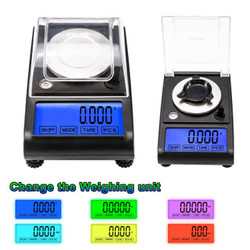
A pocket scale for diamonds needs to solve two very different measurement problems:
How little weight do you need to distinguish?
and:
How much total weight does the scale need to hold?
Those questions determine the two specifications that matter most:
resolution and capacity.
For small loose diamonds, a common starting point is:
20–50 g capacity × 0.001 g readability.
For finished diamond jewelry and broader jewelry weighing:
500 g × 0.01 g
can be more practical.
The reason is simple.
Individual diamonds weigh very little.
A 1-carat diamond weighs only:
0.20 g.
Even a 10-carat diamond weighs just:
2 g.
That means you usually do not need hundreds of grams of capacity to weigh an individual loose diamond.
However, you may need much more capacity if the same pocket scale will also handle:
-
Diamond rings
-
Pendants
-
Bracelets
-
Gemstone parcels
-
Weighing trays
-
Finished jewelry
-
Precious-metal items
American Weigh Scales offers a range of digital pocket scales with different capacity and readability combinations.
The best choice depends on balancing:
fine enough resolution + enough capacity + a practical portable format.
Quick Answer: What Capacity and Resolution Do You Need?
Use this table as a practical starting point:
| Diamond Application | Suggested Capacity | Suggested Readability |
|---|---|---|
| Tiny loose diamonds | 20–50 g | 0.001 g |
| General loose diamonds | 20–50 g | 0.001 g |
| Larger loose diamonds | 20–50 g | 0.001–0.01 g |
| Small diamond parcels | 20–50 g | 0.001 g |
| Larger diamond parcels | 50 g+ | 0.001–0.01 g |
| Diamond rings | 100–500 g | 0.01 g |
| Finished diamond jewelry | 200–500 g | 0.01 g |
| General jewelry + diamonds | Around 500 g | 0.01 g |
| Fine diamond sorting | 20–50 g | 0.001 g |
| Portable dealer setup | 20–50 g | 0.001 g |
| Mixed professional workflow | Two scales | 0.001 g + 0.01 g |
The simplest rule is:
Loose diamonds → prioritize resolution.
Finished jewelry → prioritize capacity.
What Does Capacity Mean on a Diamond Pocket Scale?
Capacity is the maximum total physical load the scale is designed to support.
A specification such as:
50 g × 0.001 g
means:
-
50 g maximum capacity
-
0.001 g displayed resolution
Those two numbers describe different characteristics.
Capacity tells you:
how much the scale can hold.
Resolution tells you:
how small a displayed change it can show.
What Does Resolution Mean?
Resolution, also commonly called readability, is the smallest increment shown on the display.
For diamond pocket scales, two important specifications are:
0.01 g
and:
0.001 g.
0.01 g Scale
A 0.01 g scale might display:
0.18 g
0.19 g
0.20 g
0.21 g
0.001 g Scale
A 0.001 g scale might display:
0.198 g
0.199 g
0.200 g
0.201 g
The second scale shows ten times finer displayed increments.
For lightweight loose diamonds, that difference can be important.
Why Carat Weight Changes the Calculation
Diamonds are measured in metric carats.
According to the Gemological Institute of America:
1 carat = 0.20 gram.
That means:
1 gram = 5 carats.
A carat is also divided into:
100 points.
Common conversions include:
| Grams | Carats |
|---|---|
| 0.001 g | 0.005 ct |
| 0.01 g | 0.05 ct |
| 0.02 g | 0.10 ct |
| 0.05 g | 0.25 ct |
| 0.10 g | 0.50 ct |
| 0.20 g | 1.00 ct |
| 0.40 g | 2.00 ct |
| 1.00 g | 5.00 ct |
| 2.00 g | 10.00 ct |
This is why diamond scales generally need much finer resolution than ordinary household scales.
Is 0.01 g Enough for Diamonds?
Sometimes.
A:
0.01 g
scale changes in increments equivalent to:
0.05 ct.
That can be useful for:
-
Finished diamond jewelry
-
General jewelry inventory
-
Rings
-
Pendants
-
Larger objects
But for very small loose diamonds, that displayed increment may be too coarse.
When Is 0.001 g Better?
A:
0.001 g
scale changes in displayed increments equivalent to:
0.005 ct.
That makes it much more useful for:
-
Small loose diamonds
-
Fine sorting
-
Diamond parcels
-
Lightweight stones
-
Situations where smaller differences in carat weight matter
For diamond-specific loose-stone weighing:
0.001 g is generally the more relevant resolution class.
0.001 g vs. 0.01 g for Diamonds
| Specification | 0.001 g | 0.01 g |
|---|---|---|
| Gram increment | 0.001 g | 0.01 g |
| Carat equivalent | 0.005 ct | 0.05 ct |
| Fine loose diamonds | Better | Coarser |
| Finished jewelry | Often capacity-limited | Better |
| Typical capacity | Lower | Higher |
| Draft sensitivity | Greater | Lower |
| Vibration sensitivity | Greater | Lower |
| Best use | Fine loose stones | General jewelry |
The question is not:
Which number looks more precise?
The correct question is:
What level of weight differentiation does the application actually require?
Resolution Is Not the Same as Accuracy
This distinction matters.
A scale labeled:
50 g × 0.001 g
does not automatically guarantee every measurement is accurate to:
±0.001 g.
The specification describes readability.
Readability
The smallest displayed increment.
Accuracy
How close the result is to the relevant true or reference mass.
Repeatability
How consistently the same object produces similar readings under similar conditions.
A useful diamond scale needs more than fine-looking decimal places.
How Much Capacity Does an Individual Diamond Need?
Surprisingly little.
Because:
1 g = 5 ct
then:
20 g = 100 ct
50 g = 250 ct
100 g = 500 ct
500 g = 2,500 ct
Even:
20 g
is enormous capacity relative to most individual diamonds.
This is why low-capacity milligram scales can be perfectly practical for loose stones.
Is 20 g Enough for Diamonds?
For individual loose diamonds:
often, yes.
A:
20 g × 0.001 g
pocket scale can be well matched to:
-
Tiny loose diamonds
-
Individual larger diamonds
-
Small parcels
-
Lightweight trays
Twenty grams equals:
100 carats.
Very few individual diamonds will come anywhere near that weight.
When 20 g Becomes Limiting
The problem is usually not the diamond.
It is everything else placed on the scale.
Examples include:
-
Gem tray
-
Cup
-
Container
-
Parcel of multiple diamonds
Suppose:
Tray = 8 g
Diamond parcel = 11 g
Total physical load:
19 g.
A 20 g scale would technically be near its limit.
A slightly larger tray or parcel could exceed capacity.
Is 50 g Better?
For many diamond professionals:
50 g × 0.001 g
provides a more flexible balance.
Fifty grams equals:
250 carats.
That allows more room for:
-
Heavier trays
-
Larger parcels
-
Multiple stones
while maintaining fine milligram readability.
20 g vs. 50 g Diamond Pocket Scale
| Feature | 20 g × 0.001 g | 50 g × 0.001 g |
|---|---|---|
| Maximum carat equivalent | 100 ct | 250 ct |
| Resolution | 0.001 g | 0.001 g |
| Individual diamonds | Excellent | Excellent |
| Small parcels | Excellent | Excellent |
| Larger parcels | More limited | Better |
| Tray flexibility | Lower | Higher |
| Capacity headroom | Lower | Better |
| Portability | Excellent | Excellent |
If both offer the same resolution, the 50 g option provides more usable headroom.
Gemini-20 vs. Gemini-50
The AWS Gemini-20 vs. Gemini-50 comparison illustrates this tradeoff.
Gemini-20
20 g × 0.001 g
Gemini-50
50 g × 0.001 g
Both retain fine milligram readability.
The main difference is available capacity.
For diamond weighing, the 20 g model can be sufficient for individual stones.
The 50 g model gives more flexibility for:
-
Diamond parcels
-
Larger trays
-
Multiple stones
What About 500 g Capacity?
A:
500 g
diamond pocket scale may sound excessive.
For a loose diamond:
it usually is.
But the same scale may also need to weigh:
-
Rings
-
Bracelets
-
Necklaces
-
Pendants
-
Precious metals
-
Larger gemstone parcels
-
Containers
That changes the equation.
When 500 g × 0.01 g Makes Sense
A:
500 g × 0.01 g
scale is highly practical for mixed jewelry work.
It sacrifices one decimal place compared with a milligram scale but provides dramatically more capacity.
The SC501g Precision Digital Pocket Scale is one example of this configuration.
It offers:
-
500 g capacity
-
0.01 g readability
-
Carat mode
-
Gram mode
-
Multiple weighing units
-
Tare
This type of scale can be useful for:
diamonds + gemstones + finished jewelry.
Compact Higher-Capacity Option
The SM-501-BLK ScaleMate also provides:
500 g × 0.01 g
in a compact pocket-scale format.
That combination works well when portability matters but you also want enough capacity for:
-
Rings
-
Pendants
-
General jewelry
-
Larger containers
It serves a different role from a milligram diamond scale.
Why One Scale May Not Be Enough
A single scale often forces a tradeoff between:
fine resolution and high capacity.
That may be unnecessary.
A jeweler or diamond dealer could use:
Fine Diamond Pocket Scale
20–50 g × 0.001 g
for:
-
Loose diamonds
-
Fine sorting
-
Diamond parcels
General Jewelry Pocket Scale
500 g × 0.01 g
for:
-
Rings
-
Pendants
-
Bracelets
-
Finished jewelry
American Weigh Scales' milligram scale comparison covers several finer-resolution options.
Capacity Includes the Tray
This is one of the easiest mistakes to make.
Suppose you have:
50 g capacity.
You place a:
12 g tray
on the scale.
You now have approximately:
38 g
of physical load capacity remaining.
The tray counts even if you tare it.
Tare Does Not Give the Capacity Back
Tare changes the displayed zero point.
It does not remove the physical tray from the scale.
Example:
50 g scale
10 g tray
Press tare.
Display:
0.000 g.
The load cell is still supporting:
10 g.
Therefore, you do not have another full 50 g available.
Build in Capacity Headroom
Avoid choosing a scale whose maximum rating barely accommodates your normal setup.
If your typical total load is:
18 g,
a 20 g scale may work.
But it gives very little flexibility.
A 50 g model may be more practical if:
-
Parcel sizes vary
-
Different trays are used
-
Several stones are sometimes weighed together
Choose the Scale Around the Complete Load
Calculate:
tray + diamonds + container = total load.
Then choose capacity above that number.
Do not calculate only:
diamond weight.
Direct Carat Mode Is Valuable
A diamond pocket scale should ideally support:
ct
as a weighing unit.
Otherwise:
grams × 5 = carats.
Examples:
0.10 g = 0.50 ct
0.20 g = 1.00 ct
0.30 g = 1.50 ct
0.50 g = 2.50 ct
Direct carat mode reduces the need for repeated calculations.
Carat Is Weight, Not Size
A carat measures:
mass.
It does not measure:
-
Diameter
-
Width
-
Length
-
Face-up appearance
Two diamonds can weigh exactly:
1.00 ct
while appearing different in size.
Why?
Because their:
-
Shape
-
Depth
-
Cut
-
Proportions
may differ.
The GIA's diamond carat-weight explanation discusses carat weight as the standardized measurement used for diamond mass.
Round Diamonds and Visual Size
A deeper-cut diamond may carry more of its weight vertically.
A shallower diamond may appear wider from above.
That means:
same carat weight ≠ identical visible diameter.
Use:
scale for weight
and:
measurements for dimensions.
Does Higher Capacity Mean Better Accuracy?
No.
A:
500 g scale
is not automatically better than a:
50 g scale.
If the 500 g model reads only to:
0.1 g
while the 50 g model reads to:
0.001 g,
they serve very different purposes.
Match:
capacity to the largest load
and:
resolution to the smallest meaningful difference.
Does Finer Resolution Mean Better Accuracy?
Also no.
A scale may display:
0.001 g
without every measurement necessarily being correct to:
±0.001 g.
Fine displayed resolution should be considered together with:
-
Calibration
-
Repeatability
-
Environmental stability
Why Repeatability Matters
Suppose the same diamond is weighed repeatedly.
If readings are:
0.203 g
0.203 g
0.203 g
the scale appears stable under those conditions.
If readings are:
0.197 g
0.206 g
0.201 g
0.209 g
something may be affecting the measurement.
Possible causes include:
-
Drafts
-
Vibration
-
Static
-
Calibration
-
Temperature
-
Platform contamination
Calibration Is Important
A precision pocket scale should be calibrated according to:
the manufacturer's instructions.
Different scales may require different calibration masses.
Do not assume:
20 g
50 g
100 g
500 g
works for every model.
Use the specified reference weight.
Do Not Calibrate With Coins
A coin is not the same thing as an appropriate calibration standard.
Actual coin mass can vary because of:
-
Manufacturing tolerance
-
Wear
-
Dirt
-
Damage
-
Corrosion
For precision weighing, use the calibration mass specified for the scale.
Why 0.001 g Scales Need a Better Environment
The finer the displayed resolution:
the more environmental influences matter.
A milligram-scale reading can be affected by:
-
Airflow
-
Vibration
-
Static
-
Temperature
This is why a 0.001 g scale requires more careful operation than a basic household scale.
Avoid Airflow
Keep a milligram pocket scale away from:
-
Air-conditioning vents
-
Fans
-
Open windows
-
Strong breathing over the platform
A draft shield or protected weighing area can improve stability.
Use a Stable Surface
Place the scale on a:
-
Hard
-
Flat
-
Stable
-
Level
surface.
Avoid:
-
Wobbly tables
-
Flexible shelves
-
Counters attached to moving equipment
Watch for Static
Plastic trays and packaging can accumulate static.
At fine resolution, that can contribute to unstable readings.
If measurements fluctuate after checking:
-
Calibration
-
Drafts
-
Vibration
consider static as another possible factor.
Keep the Platform Clean
Diamonds are lightweight.
At milligram resolution, even tiny contaminants become more relevant.
Before weighing:
-
Inspect the platform
-
Remove dust
-
Check the tray
-
Make sure no other stone remains behind
This is also good practice for preventing lost stones.
Platform Size Matters
The diamond may be tiny.
Your tray may not be.
Choose a scale whose platform comfortably accommodates the weighing container.
The tray should not touch:
-
Scale housing
-
Table
-
Nearby objects
while the measurement is being taken.
A Small Platform Can Be Ideal for Loose Diamonds
If the scale is used exclusively for:
-
Individual diamonds
-
Tiny stones
-
Small gem cups
a compact platform may be sufficient.
This keeps the complete scale small and portable.
A Larger Platform Helps With Jewelry
If the scale also handles:
-
Rings
-
Pendants
-
Bracelets
-
Larger trays
more platform space becomes useful.
This is one reason higher-capacity 0.01 g pocket scales can be better for mixed jewelry work.
Best Pocket Scale for Tiny Diamonds
Prioritize:
0.001 g readability.
A:
20–50 g
capacity range is often more than sufficient.
Also look for:
-
Carat mode
-
Tare
-
Calibration capability
-
Stable zero
-
Protective enclosure or cover
Best Pocket Scale for a 1-Carat Diamond
A 1-carat diamond weighs:
0.20 g.
Capacity is therefore not a major challenge.
Fine measurement is the bigger concern.
For loose-diamond work:
0.001 g readability
provides more useful detail than:
0.01 g.
Best Pocket Scale for a 5-Carat Diamond
A 5-carat diamond weighs:
1 g.
Again, even:
20 g capacity
is far more than the diamond itself requires.
The relevant questions remain:
-
Resolution
-
Repeatability
-
Calibration
-
Tray weight
Best Pocket Scale for a 10-Carat Diamond
A 10-carat diamond weighs:
2 g.
A 20 g scale still has considerable room.
High capacity is generally not necessary merely because the diamond has a large carat weight.
Best Pocket Scale for Diamond Parcels
For parcels, calculate total mass.
Example:
Diamonds = 16 g
Tray = 11 g
Total:
27 g.
A 20 g scale will not work.
A:
50 g × 0.001 g
model may be a much better fit.
Best Pocket Scale for Diamond Rings
A finished ring may weigh several grams or significantly more.
Capacity therefore matters more.
A:
500 g × 0.01 g
pocket scale is generally more versatile for complete jewelry items.
But remember:
ring weight is not diamond weight.
Mounted Diamond Weight Is Not Isolated Diamond Weight
If a ring weighs:
7.25 g,
that measurement includes:
-
Diamond
-
Metal
-
Prongs
-
Setting
-
Additional stones
You cannot simply convert:
7.25 g
to carats and claim that as the center diamond's weight.
Best Pocket Scale for Jewelers
For jewelers working with both loose stones and finished pieces, consider:
Scale 1
20–50 g × 0.001 g
for loose diamonds.
Scale 2
500 g × 0.01 g
for finished jewelry.
This provides better coverage than forcing one scale to do everything.
AWS's broader digital scale for jewelry guide explains why different jewelry tasks can require different combinations of resolution and capacity.
Best Pocket Scale for Diamond Dealers
Diamond dealers should prioritize:
-
0.001 g readability when appropriate
-
Carat mode
-
Calibration
-
Repeatability
-
Compact size
-
Protective cover
-
Stable operating environment
For parcel work:
50 g capacity may provide greater flexibility than 20 g.
Best Pocket Scale for Collectors
Collectors may value:
-
Portability
-
Direct carat mode
-
0.001 g readability
-
Tare
-
Easy calibration
-
Battery operation
-
Protective storage
For individual loose diamonds, very high capacity is generally unnecessary.
Pocket Scale vs. Bench Scale for Diamonds
Pocket scales offer major convenience.
Pocket Scale Advantages
-
Compact
-
Portable
-
Easy to store
-
Useful for trade shows
-
Convenient for mobile buying
-
Battery-powered options
Bench-Scale Advantages
Depending on the instrument:
-
Larger platform
-
Permanent setup
-
More specialized weighing environment
The right option depends on how and where the scale will be used.
Portability Introduces New Challenges
A portable scale may be used in:
-
Trade shows
-
Jewelry stores
-
Auctions
-
Offices
-
Customer appointments
These environments may have:
-
Vibrating tables
-
Heavy foot traffic
-
HVAC airflow
-
Temperature changes
The finer the scale's resolution, the more important proper setup becomes.
Diamond Weight and Commercial Claims
Diamond weight is often included in:
-
Product listings
-
Advertising
-
Certificates
-
Sales materials
The FTC's guidance for advertising diamonds and gemstones states that when diamond weight is expressed in decimal carats, the figure should be accurate to the final decimal place stated.
This makes precise and appropriate measurement especially important for sellers.
Decimal Diamond Weight Matters
For example, FTC guidance explains that a representation such as:
0.30 carat
corresponds to an underlying weight range determined by normal rounding conventions.
A scale used for commercial diamond descriptions therefore needs to support the level of measurement required for the claim being made.
Fractional and Decimal Carat Weight Are Different
A diamond described as:
1/2 carat
is not necessarily being represented as exactly:
0.500 ct.
The FTC provides different guidance for fractional and decimal weight representations. Its consumer guidance also explains these distinctions for diamond buyers.
For inventory and product data, precise decimal weight can therefore be useful when the application requires it.
Legal-for-Trade Considerations
A pocket scale displaying 0.001 g should not automatically be assumed to qualify for every regulated commercial transaction.
The current 2026 NIST Handbook 44 contains specifications, tolerances and other technical requirements for commercial weighing and measuring devices. NIST notes that the handbook is used by many state, local and some federal weights-and-measures authorities.
If product price is determined directly by measured weight:
verify the requirements applicable to the specific business and jurisdiction.
A Pocket Scale Cannot Identify a Diamond
Weight alone cannot tell you whether a stone is:
-
Natural diamond
-
Laboratory-grown diamond
-
Moissanite
-
Cubic zirconia
-
Another simulant
A scale measures:
mass.
It does not determine identity.
The FTC's consumer diamond and gemstone guidance discusses distinctions between diamonds, laboratory-created stones and other gemstone products.
A Pocket Scale Cannot Determine Diamond Quality
A scale cannot determine:
-
Cut
-
Color
-
Clarity
These require separate evaluation.
Carat is only one component of diamond assessment.
Carat Weight Does Not Equal Value
Two diamonds weighing exactly:
1.00 ct
can have substantially different values.
Value can vary based on:
-
Cut
-
Color
-
Clarity
-
Shape
-
Certification
-
Market conditions
-
Other characteristics
A pocket scale measures only one variable:
mass.
Capacity and Resolution Comparison
| Configuration | Strength | Limitation | Best Use |
|---|---|---|---|
| 20 g × 0.001 g | Fine resolution | Limited headroom | Individual diamonds |
| 50 g × 0.001 g | Fine resolution + more capacity | More environment-sensitive | Diamonds + parcels |
| 100 g × 0.01 g | More capacity | Coarser for tiny diamonds | General gemstone use |
| 500 g × 0.01 g | Excellent versatility | Not milligram readability | Finished jewelry |
| 500 g × 0.1 g | High capacity | Too coarse for many loose diamonds | Larger jewelry/items |
Common Diamond Pocket-Scale Buying Mistakes
Choosing Too Much Capacity
A huge capacity number is not useful if the resolution is too coarse.
Choosing Too Little Capacity
The tray and parcel also consume capacity.
Buying 0.01 g for Fine Loose-Diamond Work
Remember:
0.01 g = 0.05 ct.
Assuming 0.001 g Guarantees ±0.001 g Accuracy
Readability is not the same as accuracy.
Ignoring Repeatability
The same diamond should produce reasonably consistent results under stable conditions.
Ignoring Carat Mode
Direct ct display makes diamond workflows easier.
Forgetting Tray Weight
Capacity includes everything physically on the platform.
Assuming Tare Restores Capacity
It does not.
Choosing a Platform Too Small for the Tray
The complete container must fit correctly.
Calibrating With Coins
Use the appropriate calibration reference.
Using a Milligram Scale Under an HVAC Vent
Airflow can destabilize fine measurements.
Weighing on an Unstable Table
Vibration matters.
Ignoring Static
Static can affect fine readings.
Treating Mounted Jewelry Weight as Diamond Weight
The setting and metal are part of the measurement.
Assuming Carat Equals Diameter
Carat is mass, not physical width.
Assuming the Scale Authenticates Diamonds
It cannot.
Pocket Scale for Diamonds Buying Checklist
Before buying, ask:
-
Will I weigh loose diamonds?
-
Will I weigh finished jewelry?
-
What is the smallest diamond I handle?
-
What is the largest diamond parcel?
-
Do I need 0.001 g readability?
-
Is 0.01 g enough?
-
Do I need direct carat mode?
-
Is 20 g enough capacity?
-
Would 50 g provide better headroom?
-
Do I need 500 g for jewelry?
-
Will I use a weighing tray?
-
What does the tray weigh?
-
Have I included tray weight in capacity?
-
Does the scale have tare?
-
Is the platform large enough?
-
Does the tray fit completely on the platform?
-
What calibration weight is required?
-
Is the correct calibration weight available?
-
Are readings repeatable?
-
Is the zero stable?
-
Will airflow affect the scale?
-
Is the work surface stable?
-
Could vibration affect measurements?
-
Could static be a problem?
-
Will the scale travel?
-
Does it have a protective cover?
-
Is battery operation important?
-
Will it be used commercially?
-
Are legal-for-trade requirements relevant?
-
Would two scales fit my workflow better?
Frequently Asked Questions
What is the best pocket scale for diamonds?
For small loose diamonds:
20–50 g × 0.001 g
is a strong starting range.
For finished jewelry:
500 g × 0.01 g
offers more practical capacity.
What resolution should a diamond scale have?
For fine loose-diamond work:
0.001 g
is generally more useful.
For broader jewelry applications:
0.01 g
may be sufficient.
Is 0.01 g enough for weighing diamonds?
It can be useful for general and finished-jewelry weighing.
However:
0.01 g = 0.05 ct,
so it may be relatively coarse for smaller loose diamonds.
What is 0.001 g in carats?
0.005 ct.
What is 0.01 g in carats?
0.05 ct.
How much does a 1-carat diamond weigh?
0.20 g.
How much does a 2-carat diamond weigh?
0.40 g.
How much does a 5-carat diamond weigh?
1.00 g.
How much does a 10-carat diamond weigh?
2.00 g.
How many carats are in one gram?
5 carats.
Is 20 g enough capacity for diamonds?
For individual loose diamonds, it is often more than enough.
20 g equals:
100 carats.
Is 50 g better than 20 g?
It provides greater flexibility for:
-
Trays
-
Parcels
-
Multiple stones
while retaining 0.001 g readability on suitable scales.
Do I need 500 g capacity?
Not for an individual loose diamond.
It becomes useful for:
-
Finished jewelry
-
Larger trays
-
Broader jewelry work
Is a higher-capacity scale better?
Not automatically.
Capacity and resolution must both match the task.
Is 0.001 g automatically more accurate?
No.
It indicates finer readability, not a blanket accuracy guarantee.
Does a diamond pocket scale need carat mode?
It is highly useful, although grams can be converted manually.
Does tare increase capacity?
No.
The tray remains part of the physical load.
Can I calibrate with a coin?
Use the manufacturer's specified calibration weight instead.
Why does a 0.001 g pocket scale fluctuate?
Possible causes include:
-
Airflow
-
Vibration
-
Static
-
Temperature
-
Calibration
-
Battery condition
Can a pocket scale tell whether a diamond is genuine?
No.
It measures mass only.
Can it distinguish natural from laboratory-grown diamonds?
No.
Both can have identical carat weights.
Does carat weight tell me diamond size?
No.
Carat is mass.
Visible dimensions depend on shape, cut and proportions.
Can I weigh a diamond while it is mounted?
You can weigh the complete jewelry item.
But the reading includes:
-
Diamond
-
Metal
-
Setting
-
Other stones
It does not independently provide the loose diamond's mass.
Should diamond dealers use two pocket scales?
It can be highly practical.
Use:
20–50 g × 0.001 g
for loose diamonds
and:
500 g × 0.01 g
for finished jewelry.
Final Verdict: What Capacity and Resolution Do You Need?
The best pocket scale for diamonds depends on whether your priority is:
fine resolution or greater capacity.
For small loose diamonds:
20–50 g × 0.001 g
is often the most useful class of portable scale.
Why?
Because:
0.001 g = 0.005 ct
while:
0.01 g = 0.05 ct.
That finer displayed resolution is much more appropriate when small carat differences matter.
For finished diamond jewelry:
500 g × 0.01 g
is often more practical.
It provides enough capacity for:
-
Rings
-
Pendants
-
Bracelets
-
Containers
-
General jewelry
while remaining compact enough for portable use.
Choose:
20 g × 0.001 g
when individual loose diamonds are the main job and loads remain very light.
Choose:
50 g × 0.001 g
when you want more room for:
-
Parcels
-
Multiple stones
-
Larger trays
Choose:
500 g × 0.01 g
when the scale will also handle:
-
Finished jewelry
-
Larger containers
-
General precision weighing
And remember:
capacity includes the tray.
Tare does not restore physical capacity.
Readability is not automatically accuracy.
Carat is weight, not visual size.
For jewelers and diamond dealers handling a broad range of products, the strongest setup may therefore be:
a 20–50 g × 0.001 g pocket scale for loose diamonds
plus:
a 500 g × 0.01 g pocket scale for finished jewelry.
The best selection sequence is:
define the diamond application → choose the required resolution → calculate tray + stone weight → select enough capacity → check carat mode → verify calibration → evaluate repeatability → control drafts and vibration.
That gives you a pocket scale chosen around the measurements that actually matter rather than simply the biggest capacity or the most decimal places.