
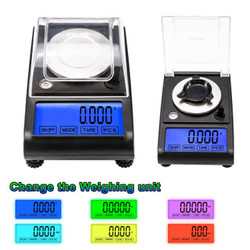
Choosing a scale for watch parts comes down to three technical questions:
How much measurement detail do you need?
How much total weight must the scale support?
How will the scale be calibrated and checked?
These questions correspond to:
accuracy and measurement performance, capacity, and calibration.
Watchmaking makes this particularly important because the objects being weighed can range from extremely lightweight movement components to complete watches.
A watchmaker, repair shop, collector or parts dealer might need to weigh:
-
Screws
-
Springs
-
Pins
-
Washers
-
Watch hands
-
Jewels
-
Gears
-
Crowns
-
Stems
-
Movement components
-
Complete movements
-
Cases
-
Case backs
-
Clasps
-
Buckles
-
Bracelets
-
Complete watches
-
Batches of replacement parts
A scale optimized for a tiny screw may not have enough capacity for a complete watch.
A scale designed for a complete watch may not display enough detail for a tiny movement component.
The goal is therefore not to find the scale with:
the most decimal places.
The goal is to find the scale whose:
readability + measurement performance + capacity + calibration requirements
match the watch parts you actually weigh.
For many general watchmaking applications:
500g × 0.01g
provides a practical balance.
For extremely lightweight individual components:
0.001g readability
may be useful.
For professionals working across both extremes:
two scales may be better than one.
Quick Watch Parts Scale Buying Guide
| Watch Part | Readability to Consider | Capacity to Consider |
|---|---|---|
| Tiny screw | 0.001g | 20–100g |
| Spring | 0.001g | 20–100g |
| Pin | 0.001g | 20–100g |
| Watch hand | 0.001g | 20–100g |
| Jewel | 0.001g | 20–100g |
| Small gear | 0.001g | 20–100g |
| Crown | 0.001–0.01g | 50–500g |
| Stem | 0.001–0.01g | 50–500g |
| Movement component | 0.001–0.01g | 50–500g |
| Complete movement | 0.01g | 100–500g |
| Watch case | 0.01g | 200–500g+ |
| Bracelet | 0.01g | 200–500g+ |
| Complete watch | 0.01g | 500g+ |
| Parts batch | 0.01–0.1g | Depends on batch |
These are practical starting points rather than universal measurement requirements.
Accuracy, Capacity and Calibration: What Is the Difference?
Before comparing scales, separate these three concepts.
Accuracy and Measurement Performance
This concerns how well the weighing system produces useful measurements within its specified operating conditions.
Important factors can include:
-
Readability
-
Repeatability
-
Linearity
-
Calibration
-
Minimum usable load
-
Environmental stability
Capacity
Capacity is:
the maximum physical load the scale is designed to support.
Calibration
Calibration uses:
an appropriate known reference mass and specified procedure
to evaluate or adjust the weighing system.
These concepts interact, but:
they are not interchangeable.
Readability Is Not the Same as Accuracy
This is one of the most important rules in precision weighing.
Suppose a scale displays:
1.347g.
That tells you the display has:
0.001g readability.
It does not automatically prove:
±0.001g accuracy.
Likewise:
a 0.01g scale
does not automatically guarantee:
every measurement is accurate within ±0.01g.
Readability tells you:
the smallest increment shown on the display.
AWS explains this distinction further in its guide to what 500g × 0.01g means on a digital scale.
What Does 0.001g Readability Mean?
A scale with:
0.001g readability
changes its display in increments of:
one-thousandth of a gram.
That equals:
1 milligram.
Examples:
0.023g
0.024g
0.025g
This level of readability can be useful for:
very lightweight watch parts.
Which Watch Parts May Benefit From 0.001g?
Possible examples include:
-
Tiny screws
-
Springs
-
Watch hands
-
Pins
-
Small washers
-
Tiny gears
-
Jewels
-
Lightweight movement components
AWS's Best Milligram Scales guide compares 0.001g models designed for fine measurement applications.
Do All Watch Parts Need 0.001g?
No.
Suppose you weigh:
Complete movement = 31.42g
Case = 68.35g
Bracelet = 96.48g
Complete watch = 181.76g
Milligram readability may provide:
more displayed detail than the application requires.
Meanwhile, the low capacity of many milligram scales becomes:
a major limitation.
What Does 0.01g Readability Mean?
A 0.01g scale changes its display in:
one-hundredth-of-a-gram increments.
Examples:
2.35g
31.47g
168.29g
For general watchmaking:
this is often a highly practical level of readability.
Which Watch Parts Work Well With 0.01g?
Depending on the task:
-
Crowns
-
Stems
-
Movement assemblies
-
Complete movements
-
Cases
-
Case backs
-
Clasps
-
Bracelets
-
Complete watches
-
Parts batches
can often be weighed effectively using:
0.01g readability.
0.001g vs. 0.01g for Watch Parts
Consider:
Scale A
50g × 0.001g
Scale B
500g × 0.01g
Scale A provides:
10× finer displayed increments.
Scale B provides:
10× greater maximum capacity.
Neither is automatically:
better.
The correct choice depends on:
the object.
Example: Tiny Watch Screw
Suppose a screw weighs approximately:
0.038g.
A:
0.001g scale
can display:
0.038g.
A:
0.01g scale
cannot show the same level of detail.
For this task:
milligram readability may be valuable.
Example: Complete Watch
Suppose a watch weighs:
185.42g.
A:
50g × 0.001g scale
cannot weigh it at all.
A:
500g × 0.01g scale
can.
For this task:
capacity matters more than the additional decimal place.
More Decimal Places Do Not Automatically Mean Better Measurement
A scale showing:
12.347g
looks more precise than:
12.35g.
But the number of digits alone does not tell you:
-
Accuracy
-
Repeatability
-
Stability
-
Calibration condition
-
Minimum usable load
Do not buy a watch-parts scale according to:
display digits alone.
Repeatability Matters
Repeatability concerns whether repeated measurements of the same object under similar conditions produce:
consistent results.
Suppose you weigh the same crown five times:
2.37g
2.37g
2.37g
2.37g
2.37g
That demonstrates:
consistent displayed measurements under those conditions.
Now suppose the readings are:
2.31g
2.39g
2.34g
2.42g
2.30g
The additional digits are less useful if:
the measurement is unstable.
How to Check Repeatability
A simple practical test:
-
Place the watch part on the scale.
-
Allow the display to stabilize.
-
Record the measurement.
-
Remove the part.
-
Confirm the display returns to zero.
-
Replace the same part.
-
Record the result.
-
Repeat several times.
Look for:
consistent readings.
Minimum Usable Load Matters
Maximum capacity receives most of the attention.
But precision weighing also has:
a lower end.
A scale that displays:
0.001g
does not automatically mean every object weighing:
0.001g
can be measured meaningfully.
Where available, review manufacturer specifications related to:
-
Minimum load
-
Accuracy
-
Repeatability
This is particularly important for:
extremely lightweight watch components.
Capacity: The Second Major Buying Factor
After determining how much measurement detail you need:
calculate capacity.
Capacity is:
the maximum physical load supported by the scale.
A scale might be:
20g × 0.001g
50g × 0.001g
100g × 0.001g
500g × 0.01g
2,000g × 0.1g
Each configuration serves:
a different working range.
Capacity Must Include Everything on the Scale
This is critical.
Use:
watch part + tray + container + holder = total physical load.
Suppose:
Movement = 37g
Tray = 18g
Total:
55g.
A 50g scale is:
not sufficient.
Tare Does Not Restore Capacity
Suppose:
scale capacity = 50g
tray = 15g.
Place the tray on the scale.
Display:
15.000g.
Press:
TARE.
Display:
0.000g.
You do not now have:
another 50g
of physical capacity.
The tray is still applying:
15g
of load.
Approximate remaining physical capacity:
35g.
Why This Matters With Milligram Scales
Low-capacity milligram scales may have:
20g
or:
50g
maximum capacities.
A tray that seems lightweight can consume:
a meaningful percentage
of the available range.
Leave Capacity Headroom
Avoid selecting a scale where your normal load sits:
right at maximum capacity.
Suppose:
complete watch = 460g
holder = 25g
total = 485g.
A:
500g scale
technically has enough nominal capacity,
but provides:
very little headroom.
A higher-capacity model may be more practical.
Capacity for Tiny Watch Parts
For:
-
Screws
-
Springs
-
Hands
-
Pins
-
Jewels
20–100g capacity may be enough.
If these are your primary objects:
fine readability may matter more than:
high capacity.
Capacity for Crowns and Stems
Crowns and stems generally provide:
more flexibility.
Depending on the workflow:
50–500g capacity
can work well.
Capacity for Complete Movements
Complete movements can be substantially heavier than:
individual movement components.
For this task:
100–500g capacity
provides more flexibility.
Capacity for Watch Cases
Cases can become:
relatively heavy.
When weighing:
case + case back + holder,
low-capacity milligram scales can become impractical.
Capacity for Bracelets
Metal bracelets can weigh:
significantly more than tiny watch parts.
Prioritize:
adequate capacity
and:
platform size.
Capacity for Complete Watches
For many complete watches:
500g capacity
provides a practical range.
But do not assume:
every watch fits this range.
Weigh or estimate:
your actual heaviest watch.
Capacity for Parts Inventory
A batch of:
200 screws
may weigh considerably more than:
one screw.
If your workflow involves:
batch inventory,
calculate:
the complete batch weight.
Platform Size and Capacity Work Together
A scale can have:
enough capacity
while still having:
an inconvenient platform.
Suppose:
capacity = 500g
watch = 180g.
The capacity is sufficient.
But if:
the watch and bracelet cannot sit securely on the platform,
the scale may still be inconvenient.
Complete Load Must Be Supported by the Scale
Do not allow:
part of a bracelet
to rest on:
the workbench.
If part of the object is supported by another surface:
the scale is not receiving the entire physical load.
General-Purpose Watch Parts Capacity
For users who want:
one scale
for a broad range of watch parts,
500g provides useful flexibility.
The AWS SC501g Precision Digital Pocket Scale combines:
500g capacity
with:
0.01g readability.
It also provides:
-
3.9 × 3.7-inch platform
-
Stainless-steel weighing surface
-
Tare
-
Two expansion trays
-
Multiple weighing units
-
Battery operation
For many general watchmaking tasks:
this combination balances capacity and readability well.
When 500g Is More Useful Than 50g
Suppose your workflow includes:
Screw = 0.08g
Crown = 2.4g
Movement = 32g
Case = 65g
Bracelet = 105g
Complete watch = 195g
A:
50g × 0.001g
scale can weigh:
the small components.
It cannot weigh:
the case, bracelet or complete watch.
A:
500g × 0.01g
scale covers:
far more of the overall working range.
When 50g × 0.001g Is More Useful
Now suppose your work focuses almost entirely on:
-
Screws
-
Springs
-
Pins
-
Jewels
-
Tiny gears
and the largest complete load is:
10g.
In this case:
500g capacity may provide little practical benefit.
Finer:
0.001g readability
may be more valuable.
Calibration: The Third Major Buying Factor
Precision weighing depends partly on:
proper calibration.
Calibration relates the weighing system to:
an appropriate known reference.
It should be performed according to:
the manufacturer's procedure.
Calibration Requirements Are Model-Specific
Do not assume:
all scales calibrate using the same mass.
One scale may require:
20g.
Another may require:
500g.
Always check:
the exact model.
SC501g Calibration
The SC501g specifies:
500g calibration weight.
The calibration weight is:
not included.
This is important to know before:
purchasing the scale.
GEMINI Calibration
AWS's milligram-scale range includes models with:
different calibration arrangements.
For example:
the GEMINI-50 includes:
a 20g calibration weight.
That can make:
initial setup and routine calibration
more convenient.
Use the Correct Calibration Mass
Do not improvise.
If the manufacturer specifies:
20g,
use the appropriate:
20g calibration mass.
If it specifies:
500g,
use the appropriate:
500g mass.
Do Not Use Coins for Calibration
A coin is:
an everyday object.
It is not a substitute for:
an appropriate calibration weight.
Do not use:
-
Coins
-
Watch batteries
-
Screws
-
Cases
-
Bracelets
-
Jewelry
-
Tools
as improvised calibration standards.
Calibration Is Not the Same as Tare
These functions are completely different.
Calibration
relates the scale's response to:
a known reference mass.
Tare
subtracts the displayed weight of:
a container or tray.
Calibration Is Not the Same as Zeroing
Zeroing establishes:
the zero reference.
Calibration evaluates or adjusts:
the scale's response using a known mass.
Calibration Does Not Fix Environmental Problems
Suppose a properly calibrated scale sits:
directly under an air-conditioning vent.
The display may still:
fluctuate.
Likewise, calibration cannot eliminate:
-
Vibration
-
Air movement
-
Static
-
Unstable surfaces
-
Poor placement
Calibration is important,
but it is not:
the only requirement for reliable weighing.
Use a Stable Surface
Place the scale on:
a firm, level surface.
Avoid:
-
Soft watch mats under the scale
-
Flexible tables
-
Uneven workbenches
-
Moving surfaces
The watch itself may be handled over:
a protective mat,
but the scale needs:
stable support.
Avoid Vibration
Watch repair workspaces may contain:
-
Polishers
-
Tools
-
Machinery
-
Speakers
that introduce vibration.
This can become especially noticeable with:
0.001g readability.
Avoid Direct Airflow
Milligram-level measurements can be affected by:
air movement.
Avoid placing the scale directly beneath:
-
Fans
-
HVAC vents
-
Open windows
Consider Draft Protection
For extremely lightweight watch parts:
draft protection can help stabilize:
milligram measurements.
This is particularly relevant when working with:
-
Springs
-
Hands
-
Tiny screws
-
Lightweight movement components
Consider Static Electricity
Very lightweight components may also be influenced by:
static effects.
If a tiny part produces unusual fluctuations:
check the environment.
Consider Temperature Stability
Precision weighing generally benefits from:
stable operating conditions.
Avoid immediately performing fine measurements after:
large temperature changes.
Accuracy Depends on the Whole Weighing Process
A common mistake is assuming:
the scale alone determines the result.
The complete measurement system includes:
scale + calibration + surface + environment + handling + object placement.
NIST's guidance on balance and scale calibration and uncertainties emphasizes calibration procedures, appropriate reference standards and potential sources of measurement uncertainty.
Center the Load
Whenever practical:
place the object near the intended weighing area.
Avoid:
awkward off-center loading.
For complete watches:
use a suitable platform or tray.
Use a Tray for Tiny Watch Parts
A tray can help contain:
-
Screws
-
Springs
-
Pins
-
Washers
-
Crowns
-
Gears
Procedure:
-
Place empty tray on scale.
-
Allow display to stabilize.
-
Press tare.
-
Confirm zero.
-
Add watch part.
-
Allow measurement to stabilize.
-
Record result.
Remember:
the tray still counts toward maximum physical capacity.
Handling Tiny Watch Components
Tweezers can be useful for:
small components.
They help reduce:
-
Dropping
-
Rolling
-
Excessive handling
Some milligram-scale packages include:
tweezers and weighing accessories.
Choosing Between 20g, 50g and 100g Milligram Scales
If you require:
0.001g readability,
capacity becomes the next decision.
20g × 0.001g
Best suited to:
extremely lightweight work.
50g × 0.001g
Provides:
more practical headroom
for trays and small groups of components.
100g × 0.001g
Useful when:
milligram readability is needed
but 20–50g capacity is too restrictive.
GEMINI-20 vs. GEMINI-50 for Watch Parts
Both models provide:
0.001g readability.
The primary capacity difference is:
GEMINI-20 = 20g
GEMINI-50 = 50g.
AWS's GEMINI-20 vs. GEMINI-50 comparison explains the capacity difference while both retain milligram readability.
For watch parts:
the 50g version can provide greater flexibility for:
trays and groups of components.
When to Choose 500g × 0.01g
Choose this configuration when:
your workflow includes:
-
Complete movements
-
Cases
-
Bracelets
-
Complete watches
-
Larger parts
-
Parts batches
and:
0.01g provides sufficient displayed detail.
When to Choose 50g × 0.001g
Choose this configuration when:
your workflow focuses on:
-
Screws
-
Springs
-
Hands
-
Pins
-
Jewels
-
Small gears
-
Tiny movement components
and:
milligram-level readability matters.
When to Choose Two Scales
Some watchmakers need both:
extremely fine readability
and:
substantial capacity.
Example working range:
Tiny screw = 0.035g
Spring = 0.080g
Crown = 1.75g
Movement = 31.60g
Case = 64.80g
Bracelet = 102.50g
Complete watch = 188.40g
No single compact scale necessarily provides the ideal specification for:
every task.
A two-scale setup can solve this.
Precision Scale 1
50–100g × 0.001g
for:
tiny components.
Precision Scale 2
500g × 0.01g
for:
larger parts and complete watches.
Why Two Scales Can Be Better Than One
The goal is not:
owning more equipment.
The goal is:
matching measurement range to the task.
A low-capacity milligram scale provides:
fine readability.
A 500g precision scale provides:
greater working capacity.
Together:
they cover a much broader watchmaking range.
Accuracy for Watch Screws
Tiny screws can benefit from:
0.001g readability
when comparing individual components.
But remember:
readability is not an automatic accuracy guarantee.
Accuracy for Watch Springs
Lightweight springs may require:
milligram readability.
Environmental stability becomes particularly important.
Accuracy for Watch Hands
Watch hands are extremely lightweight.
Use:
a stable environment
and:
appropriate tray.
Accuracy for Watch Gears
Small gears may benefit from:
0.001g.
Larger gears may be adequately measured at:
0.01g.
Accuracy for Crowns
For many crowns:
0.01g provides useful measurement detail.
If extremely fine comparison is required:
0.001g may be considered.
Accuracy for Complete Movements
For complete movements:
0.01g generally provides:
considerable measurement detail.
Capacity and platform size become:
more important.
Accuracy for Watch Cases
For cases:
prioritize:
-
Adequate capacity
-
Stable platform
-
Suitable physical size
Milligram readability is generally less important than it is for:
tiny movement parts.
Accuracy for Bracelets
Bracelets can be:
large and relatively heavy.
A:
500g × 0.01g
configuration can be much more practical than:
a 20–50g milligram scale.
Accuracy for Complete Watches
For complete watches:
0.01g readability generally provides:
fine displayed detail.
Prioritize:
capacity and correct positioning.
Weight Does Not Identify a Watch Part
A screw weighing:
0.084g
cannot automatically be identified according to:
weight alone.
Weight cannot independently establish:
-
Manufacturer
-
Reference
-
Compatibility
-
Material
-
Authenticity
Use weight as:
one measurement characteristic.
Weight Does Not Authenticate a Watch
Suppose a genuine reference is commonly associated with:
a particular weight range.
A matching measurement still does not independently prove:
authenticity.
Counterfeit or modified watches can potentially approximate:
expected mass.
Authentication requires:
additional evidence.
Weight Does Not Determine Metal Composition
Mass alone cannot prove that:
a case is gold
or:
a bracelet is stainless steel.
Material identification requires:
additional information or testing.
Weight Does Not Determine Value
Watch value can depend on:
-
Manufacturer
-
Model
-
Reference
-
Rarity
-
Condition
-
Originality
-
Provenance
-
Materials
-
Market demand
Weight is:
one data point.
Commercial Use Requires Additional Consideration
If a scale is used for:
internal repair, inventory, comparison or hobby measurements,
the requirements differ from:
commercial transactions determined directly by weight.
The current 2026 edition of NIST Handbook 44 contains specifications, tolerances and technical requirements used by weights-and-measures authorities for commercial weighing and measuring equipment.
Do not assume:
a consumer precision scale is automatically legal for trade.
Watch Parts Scale Comparison
| Configuration | Main Advantage | Main Limitation | Strong Use |
|---|---|---|---|
| 20g × 0.001g | Very fine readability | Very low capacity | Tiny individual parts |
| 50g × 0.001g | Fine readability + more room | Still limited capacity | Screws, springs, gears |
| 100g × 0.001g | Fine readability + higher capacity | Specialized range | Small component work |
| 500g × 0.01g | Excellent versatility | Less detail for ultra-light parts | General watchmaking |
| 2kg × 0.1g | High capacity | Coarser readability | Large batches |
Accuracy vs. Capacity: Which Matters More?
Neither universally matters more.
For:
a 0.03g screw,
readability and fine measurement performance matter greatly.
For:
a 250g watch,
capacity matters first.
If the object exceeds:
maximum capacity,
the scale is:
the wrong scale
regardless of its readability.
Calibration vs. Readability: Which Matters More?
They solve different problems.
Readability determines:
the display increment.
Calibration relates:
the scale's measurement response to an appropriate reference.
You need:
both appropriate readability and proper calibration.
Calibration vs. Repeatability
A scale can be calibrated and still produce inconsistent readings if:
the environment is unstable.
Repeatability should therefore be:
observed and considered separately.
Watch Parts Scale Buying Checklist
Before buying, ask:
-
What watch parts will I weigh?
-
What is my lightest component?
-
What is my heaviest component?
-
What is my heaviest complete watch?
-
Will I weigh parts individually?
-
Will I weigh parts in batches?
-
Do I need 0.001g readability?
-
Would 0.01g be sufficient?
-
What accuracy specifications are available?
-
What repeatability information is available?
-
What is the minimum usable load?
-
What is maximum capacity?
-
What does my weighing tray weigh?
-
What is my maximum complete physical load?
-
Have I left capacity headroom?
-
What is the platform size?
-
Will the object sit securely?
-
Does the scale have tare?
-
Do I understand that tare does not restore capacity?
-
What calibration mass is required?
-
Is the calibration weight included?
-
Is calibration straightforward?
-
Do I have the correct reference mass?
-
Is my workbench stable?
-
Is the scale level?
-
Is vibration present?
-
Is direct airflow present?
-
Could static affect lightweight parts?
-
Is temperature stable?
-
Would draft protection help?
-
Do I need a tray?
-
Do I need tweezers?
-
Do I need piece counting?
-
Are the components sufficiently consistent for piece counting?
-
Do I need multiple units?
-
Do I need battery operation?
-
Do I need portability?
-
Will I weigh complete watches?
-
Would 500g × 0.01g cover most of my work?
-
Do I also need a 0.001g scale?
-
Would a two-scale setup be better?
-
Am I confusing readability with accuracy?
-
Am I relying on weight for authentication?
-
Will the scale be used for regulated commercial transactions?
Frequently Asked Questions
What is the best scale accuracy for watch parts?
There is no universal specification.
For many general watch parts:
0.01g readability
is practical.
For extremely lightweight individual components:
0.001g readability
may be useful.
Is 0.001g necessary for watch repair?
Not for most complete watches or larger components.
It becomes more useful for:
tiny screws, springs, hands, gears and movement components.
What does 0.001g mean?
It means:
the scale displays increments of:
one milligram.
Does 0.001g mean ±0.001g accuracy?
No.
That figure describes:
readability.
Accuracy and repeatability are:
separate considerations.
Is 0.01g enough for watch parts?
For many:
-
Crowns
-
Movements
-
Cases
-
Bracelets
-
Complete watches
yes.
What capacity scale should I use for watch parts?
For general watchmaking:
500g
is a versatile starting capacity.
For tiny components:
20–100g milligram scales may be sufficient.
Is 500g enough for a complete watch?
For many watches:
yes.
But determine:
the actual heaviest object in your collection or workflow.
Does a tray count toward scale capacity?
Yes.
Everything physically supported by the weighing mechanism counts toward:
total load.
Does tare give me more capacity?
No.
Tare changes:
the displayed result.
It does not increase:
physical maximum capacity.
What is the best general-purpose watch parts scale?
A:
500g × 0.01g
precision scale is a strong general-purpose configuration.
What is the best scale for tiny watch parts?
Consider:
50–100g × 0.001g
when milligram-level readability is genuinely required.
How do I calibrate a watch parts scale?
Use:
the manufacturer's specified calibration procedure
and:
appropriate calibration mass.
Can I use a coin to calibrate my scale?
Do not use random household objects as substitutes for:
proper calibration masses.
How often should I calibrate?
Follow the manufacturer's instructions and your own measurement requirements.
Calibration may be appropriate after:
moving the scale
or when:
measurement performance needs to be checked.
Why does my milligram scale fluctuate?
Possible contributors include:
-
Vibration
-
Airflow
-
Static
-
Unstable surface
-
Temperature changes
-
Object movement
Does platform size affect accuracy?
The object should be:
securely supported
and properly positioned.
Do not allow part of a watch or bracelet to rest on:
another surface.
Can I weigh watch screws in a tray?
Yes.
Use:
tare
to remove the tray from the displayed measurement.
Can a scale count watch screws?
Some scales provide:
piece counting.
This works best with:
components having consistent individual weights.
Can a scale authenticate a Rolex or luxury watch?
No.
Weight alone cannot independently establish:
authenticity.
Can weight identify a genuine watch movement?
No.
It can be:
one measurement
but cannot independently establish:
identity or authenticity.
Can weight determine whether a watch is gold?
No.
Mass alone cannot prove:
material composition.
Should a watchmaker own two scales?
If the workflow ranges from:
extremely lightweight movement components
to:
complete watches,
two scales can provide better coverage.
Final Verdict: Watch Parts Scale Buying Guide
The right watch-parts scale is determined by:
accuracy and measurement performance + capacity + calibration.
Start by identifying:
the lightest component that matters to your work.
Then identify:
the heaviest complete physical load.
Remember:
complete load includes:
watch part + tray + container or holder.
For tiny:
-
Screws
-
Springs
-
Pins
-
Hands
-
Jewels
-
Gears
-
Movement components
consider:
0.001g readability
when milligram-level displayed increments are genuinely required.
For broader watchmaking involving:
-
Crowns
-
Complete movements
-
Cases
-
Bracelets
-
Complete watches
-
Parts batches
500g × 0.01g
provides an especially practical balance of:
capacity and readability.
The AWS SC501g is a strong general-purpose configuration with:
-
500g capacity
-
0.01g readability
-
3.9 × 3.7-inch platform
-
Tare
-
Expansion trays
-
Multiple units
-
Battery operation
For tiny component work:
a:
50–100g × 0.001g
milligram scale can provide finer displayed increments.
Calibration should always follow:
the procedure for the exact model.
Use:
the specified calibration mass.
Do not substitute:
coins, watch parts or household objects.
And remember:
calibration does not eliminate problems caused by:
vibration, airflow, static or unstable surfaces.
For a watchmaker working across an extreme weight range, a strong setup is:
0.001g milligram scale for tiny components + 500g × 0.01g precision scale for movements, cases, bracelets and complete watches.
The most important rule is:
do not buy the scale with the most decimal places—buy the scale whose measurement performance, capacity and calibration requirements match the watch parts you actually weigh.