
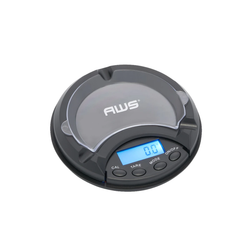
Whether you are developing lip balm, body butter, powder cosmetics, skincare products, makeup or small experimental formulations, accurate ingredient measurement starts with choosing the right digital scale.
For many cosmetic formulation tasks, the best digital scale is not simply the model with the highest capacity or the greatest number of decimal places.
You need the right balance of:
-
Capacity
-
Readability
-
Repeatability
-
Tare
-
Minimum usable load
-
Platform size
-
Calibration capability
-
Stable measurement
-
Suitable weighing units
-
Easy-to-maintain surfaces
For many small cosmetic formulations, a 500g × 0.01g precision scale can be an excellent starting point.
It provides enough capacity for many weighing containers and small batches while displaying measurements in increments of one-hundredth of a gram.
For larger batches involving oils, waxes, butters or bulk ingredients, you may instead need:
1kg, 2kg, 3kg or more capacity
with:
0.1g readability
And for genuinely tiny ingredient quantities, specialized formulation work may require:
0.001g readability
The correct scale depends on what you are making and, more importantly, the smallest and largest quantities you need to weigh.
Quick Answer: What Digital Scale Is Best for Cosmetics?
For many cosmetic makers, these are useful starting ranges:
| Cosmetic Application | Suggested Capacity | Suggested Readability |
|---|---|---|
| Small pigment tests | 100–500g | 0.01g |
| Mica and colorants | 100–500g | 0.01g |
| Lip balm formulation | 500g–1kg | 0.01–0.1g |
| Small skincare batches | 500g–2kg | 0.01–0.1g |
| Facial oils and serums | 500g–1kg | 0.01g |
| Powder cosmetics | 100–500g | 0.01g |
| Small makeup batches | 500g–1kg | 0.01g |
| Body butter | 1–3kg | 0.1g |
| Lotion or cream batches | 1–5kg | 0.1g |
| Larger production batches | Application-specific | Appropriate professional equipment |
| Very small ingredients | Low-capacity precision scale | 0.001g when genuinely required |
For small-batch cosmetic formulation, 500g × 0.01g is particularly versatile.
For larger batches, additional capacity becomes more important than adding another decimal place.
Why Cosmetics Need a Good Digital Scale
Cosmetic formulas are frequently documented by mass.
Instead of using:
-
Teaspoons
-
Drops
-
Scoops
-
Visual estimates
a formulation can record ingredients in grams.
For example:
| Ingredient | Mass |
|---|---|
| Carrier oil | 42.00g |
| Butter | 25.00g |
| Wax | 15.00g |
| Additional oil | 12.00g |
| Pigment | 1.50g |
| Other ingredients | 4.50g |
| Total | 100.00g |
This makes the formulation easier to:
-
Document
-
Scale
-
Compare
-
Repeat
-
Adjust
For commercial cosmetic production, weighing practices are also part of a much larger quality-control system. FDA's Good Manufacturing Practice Guidelines for Cosmetics specifically discuss written formulations, records of quantities used and checks on weighing and measuring raw materials.
A scale therefore should not be viewed merely as a convenience.
It is a fundamental formulation tool.
What Does 500g × 0.01g Mean?
One of the most common scale specifications you will encounter is:
500g × 0.01g
The first number is capacity.
500g = maximum total physical load
The second number is readability.
0.01g = smallest displayed increment
A 500g × 0.01g scale might display:
24.37g
115.08g
327.42g
instead of rounding everything to tenths or whole grams.
AWS explains this notation in greater detail in What Does 500g × 0.01g Mean on a Digital Scale?.
But there is an important distinction:
0.01g readability does not automatically mean guaranteed ±0.01g accuracy.
Readability is only one scale specification.
0.1g vs. 0.01g vs. 0.001g for Cosmetics
Choosing readability should start with the smallest quantity in your formulation.
Not with the number of decimals you would like to see.
0.1g Scale for Cosmetics
A 0.1g scale displays tenths of a gram:
1.1g
1.2g
1.3g
This can be appropriate for:
-
Larger oil quantities
-
Wax
-
Butters
-
Larger cream batches
-
Larger lotion batches
-
Soap and related craft formulations
-
Bulk ingredients
For example, if you are weighing:
250.0g of oil
or:
125.5g of butter
0.1g readability may provide more than enough detail for the particular formulation.
The advantage is that scales with 0.1g readability are often available with substantially greater capacity.
0.01g Scale for Cosmetics
A 0.01g scale displays hundredths of a gram:
0.25g
0.72g
2.48g
This can be useful for:
-
Cosmetic pigments
-
Mica
-
Small powder ingredients
-
Facial oils
-
Small serum formulations
-
Lip products
-
Makeup formulation
-
Small experimental batches
-
Formula development
For many small-batch cosmetic makers, 0.01g is the most practical precision level.
It provides significantly more detail than 0.1g without automatically requiring the much more sensitive weighing conditions associated with milligram scales.
0.001g Scale for Cosmetics
A 0.001g scale displays thousandths of a gram.
For example:
0.125g
0.126g
0.127g
This is milligram-level readability.
It can be useful when an ingredient genuinely needs to be measured at that scale.
However, 0.001g scales can be much more sensitive to:
-
Airflow
-
Vibration
-
Static
-
Temperature changes
-
Surface movement
-
Sample positioning
Do not automatically choose 0.001g because three decimal places appear more precise.
Choose it because your actual formulation requires milligram-level measurement.
AWS provides a detailed comparison in 0.001g vs. 0.01g Scales: Which Precision Do You Need?.
Readability Is Not the Same as Accuracy
This is one of the most important concepts when buying a cosmetic scale.
Suppose a scale displays:
5.27g
That tells you its readability reaches hundredths of a gram.
It does not automatically establish that every measurement is guaranteed accurate to exactly ±0.01g.
When comparing scales, consider:
Readability
The smallest increment displayed.
Accuracy
How closely a measurement agrees with an appropriate reference under specified conditions.
Repeatability
How consistently the same stable load produces the same result under similar conditions.
Minimum Usable Load
The lower portion of the weighing range where suitable performance can reasonably be expected according to the instrument's specifications.
Capacity
The maximum total physical load the scale is designed to support.
The correct cosmetic scale balances all of these factors.
Capacity Matters as Much as Precision
People making cosmetics often underestimate how much capacity they need.
You may only need:
0.75g
of pigment.
But the pigment is not necessarily the only thing sitting on your scale.
You may have:
Container: 80g
Oil phase: 175g
Pigment: 0.75g
Other ingredients: 15g
Total physical load:
270.75g
A 200g precision scale would not have enough capacity.
A 500g scale would.
This is why capacity must be calculated from the complete physical load.
Remember That the Container Counts
Everything supported by the weighing platform counts toward maximum capacity.
That includes:
-
Beakers
-
Cups
-
Bowls
-
Weighing dishes
-
Trays
-
Cosmetic ingredients
Suppose your scale has:
500g maximum capacity
and your container weighs:
100g
You place the container on the scale and press tare.
The display becomes:
0.00g
However, the scale is still physically supporting 100g.
You have approximately:
400g
of nominal capacity remaining.
Tare Does Not Increase Scale Capacity
Tare is essential for cosmetic formulation, but it is frequently misunderstood.
Tare changes the displayed reading.
It does not physically remove weight from the scale.
For example:
Maximum capacity = 500g
Container = 75g
Remaining nominal physical capacity = approximately 425g
even after the display has been tared back to zero.
This becomes especially important when using heavy glass containers.
Why Tare Is Essential for Cosmetics
A cosmetic formulation often contains multiple ingredients.
Tare makes ingredient-by-ingredient weighing easier.
A basic workflow might be:
-
Place your empty container on the scale.
-
Allow the reading to stabilize.
-
Press tare.
-
Confirm 0.00g.
-
Add Ingredient A.
-
Record its mass.
-
Tare when appropriate for your documented formulation procedure.
-
Add Ingredient B.
-
Record the amount.
-
Continue with the remaining ingredients.
Whether sequential taring is appropriate depends on your formulation and recordkeeping method.
The important point is that tare eliminates the need to manually subtract container mass from each displayed reading.
Best Scale Capacity for Small Cosmetic Formulations
For small batches, a:
500g scale
can be extremely versatile.
It can accommodate many:
-
Weighing cups
-
Pigment containers
-
Facial-oil formulations
-
Small makeup batches
-
Lip products
-
Test formulations
-
Powder ingredients
If paired with:
0.01g readability
it also provides fine measurement for small ingredients.
This makes 500g × 0.01g one of the strongest general-purpose combinations for cosmetic formulation work performed at relatively small batch sizes.
When You Need 1kg or More
A 500g scale becomes limiting once your complete batch begins approaching several hundred grams.
If you regularly formulate:
-
Body butter
-
Lotion
-
Cream
-
Shampoo
-
Conditioner
-
Larger batches of oil-based products
you may prefer:
1kg
2kg
3kg
or:
5kg
capacity.
In these situations, 0.1g readability may provide the better balance between usable capacity and measurement detail.
Should You Own Two Cosmetic Scales?
For serious formulation work, this can be one of the most useful setups.
Fine Precision Scale
Consider approximately:
100–500g × 0.01g
Use for:
-
Pigments
-
Small ingredients
-
Powder cosmetics
-
Small additives
-
Formula development
Higher-Capacity Scale
Consider:
1–5kg × 0.1g
depending on batch size.
Use for:
-
Oils
-
Butters
-
Waxes
-
Water phases
-
Larger batches
-
Heavier containers
Trying to make one scale handle everything from fractions of a gram to several kilograms usually involves compromises.
Best Digital Scale for Cosmetic Pigments
Pigments are one of the clearest reasons to own a precision scale.
Suppose your formulation uses:
Base mixture: 50.00g
Pigment A: 0.65g
Pigment B: 0.24g
Mica: 0.18g
A 0.01g scale makes these quantities easier to document than a scale reading only to 0.1g.
This can be particularly useful for:
-
Foundation shades
-
Blush
-
Eye products
-
Colored lip products
-
Powder formulation
-
Mica blends
-
Prototype shades
Always follow applicable ingredient restrictions, specifications and supplier usage guidance.
FDA maintains information on cosmetic ingredients, including resources covering color additives, allergens, restricted ingredients and other ingredient categories.
Best Digital Scale for Powder Cosmetics
Powder formulations can involve relatively small amounts of multiple ingredients.
Examples may include:
-
Mica
-
Iron oxide pigments
-
Base powders
-
Colorants
-
Other formulation ingredients
For small experimental batches, a:
100–500g × 0.01g
scale may provide an effective range.
Fine powders can also be affected by air movement and static, so environmental stability becomes more important as readability becomes finer.
Best Digital Scale for Lip Balm
Lip balm formulations frequently contain combinations of:
-
Oils
-
Waxes
-
Butters
-
Approved flavor or fragrance components
-
Colorants
-
Other formula-specific ingredients
For small test batches:
500g × 0.01g
can provide useful flexibility.
For larger production quantities:
1kg or greater capacity
may be preferable.
Always calculate the entire load, including your container.
Best Digital Scale for Facial Oils
Oil formulations can often be weighed efficiently in grams.
For small formulation and development batches, a scale around:
500g × 0.01g
can provide useful measurement detail.
The exact scale specification should still be determined by:
-
Smallest ingredient quantity
-
Largest ingredient quantity
-
Container mass
-
Final batch size
Do not assume every ingredient requires the same precision.
Best Digital Scale for Serums
Serum formulations vary dramatically.
A small development batch may contain ingredients measured below one gram alongside much larger base ingredients.
For this reason, some formulators may benefit from two scales:
0.01g precision scale for smaller quantities
plus:
0.1g higher-capacity scale for the main batch
The correct approach depends on the particular formula and ingredient specifications.
Best Digital Scale for Lotion and Cream
Lotions and creams often involve larger total batches than pigment testing or lip-product development.
You may need enough capacity for:
-
Water phase
-
Oil phase
-
Emulsifiers
-
Containers
-
Complete batch
A 500g precision scale may work for development batches.
For larger production, a higher-capacity scale is often more practical.
Do not sacrifice adequate capacity simply to obtain more decimal places.
Best Scale for Waxes and Butters
Waxes and butters are frequently used in quantities larger than very fine pigments.
If your formula includes:
75g butter
30g wax
120g oil
then 0.1g readability may provide plenty of displayed detail.
A larger-capacity scale can therefore be more useful than a very low-capacity 0.001g scale.
Again:
match scale specifications to ingredient quantities.
Repeatability Matters for Cosmetic Formulation
Imagine developing a lip color that you plan to make again.
Your recorded pigment formulation might be:
Red pigment: 0.42g
Mica: 0.18g
Additional colorant: 0.12g
If your scale produces unstable or inconsistent results, reproducing that shade becomes more difficult.
Repeatability is valuable when creating:
-
Standardized batches
-
Product prototypes
-
Shade variations
-
Customer samples
-
Research formulations
If your scale gives different readings for the same stable load, AWS explains several possible causes in Why Does My Digital Scale Give Different Readings?.
Minimum Usable Load Matters
A scale labeled:
500g × 0.01g
does not automatically mean 0.01g is an ideal working sample.
The 0.01g specification refers to the displayed increment.
When weighing extremely small quantities, check the manufacturer's specifications for:
-
Minimum load
-
Accuracy
-
Repeatability
-
Tolerance
If your formula requires quantities at or below the useful lower range of the scale, a different instrument may be needed.
Platform Size Is an Important Buying Feature
Cosmetic formulation may use:
-
Glass beakers
-
Stainless-steel containers
-
Plastic cups
-
Weighing dishes
Your container should:
-
Sit securely
-
Be fully supported
-
Remain centered where appropriate
-
Avoid touching the surrounding counter
-
Avoid contacting other surfaces
-
Leave the display visible
A scale can have adequate capacity but still be inconvenient if its platform is too small.
Measure your normal containers before selecting the scale.
A Stainless-Steel Platform Can Be Practical
Cosmetic ingredients can include:
-
Oils
-
Powders
-
Pigments
-
Waxes
-
Butters
A smooth stainless-steel weighing surface can make routine cleanup easier.
However, the scale should still be protected from materials entering:
-
Display seams
-
Buttons
-
Platform gaps
-
Battery compartments
-
Internal electronics
Follow the scale manufacturer's cleaning instructions.
Look for a Clear, Backlit Display
Fine measurements require a clearly visible decimal point.
Look for:
-
Large readable digits
-
Backlighting
-
Clear decimal placement
-
Good viewing angle
-
Display placement not blocked by the container
This is particularly valuable when using 0.01g scales.
Calibration Matters
A cosmetic formulation scale should have a clearly documented calibration or performance-check procedure.
Different scales may require different:
-
Calibration weights
-
Procedures
-
Button sequences
-
Environmental conditions
AWS explains the general process in How to Calibrate a Digital Scale for Accurate Results.
Use the procedure specified for the exact scale model.
Do not assume two scales with identical capacity use the same calibration reference.
Use the Correct Calibration Weight
Avoid using:
-
Coins
-
Cosmetic jars
-
Ingredient bottles
-
Tools
-
Random household objects
as substitutes for the calibration reference specified by the manufacturer.
NIST's Calibration of Mass Standards explains the broader metrological principle that calibration involves establishing mass values with appropriate uncertainty and suitable standards.
A small cosmetic workshop does not need to replicate a national metrology laboratory, but the principle remains useful:
use a known reference rather than guessing.
Calibration Is Not Tare
These functions are different.
Tare
Resets the displayed value to zero with a container on the platform.
Calibration
Relates or adjusts scale performance according to a known reference and a specified procedure.
Taring does not calibrate the scale.
Calibration does not eliminate the need to tare containers during normal weighing.
Avoid Drafts During Fine Cosmetic Weighing
A 0.01g or 0.001g scale can respond to small environmental forces.
Fine powders make this particularly noticeable.
Keep the scale away from:
-
Fans
-
HVAC vents
-
Open windows
-
Strong air-conditioning airflow
-
Air purifiers blowing across the bench
Allow the display to stabilize before recording your measurement.
Avoid Vibration
Precision weighing should be performed on a:
hard, rigid, stable surface
Avoid measuring while nearby equipment is creating vibration.
Possible sources include:
-
Mixers
-
Blenders
-
Homogenizers
-
Speakers
-
Compressors
-
Other machinery
-
Flexible worktables
Fine-resolution scales are generally more sensitive to these conditions.
Temperature Stability Matters
Precision measurements are best performed within the operating conditions specified for the scale.
If the scale has been moved from a significantly different temperature, allow it to acclimate before precision weighing when appropriate.
Do not place the scale directly next to strong heat sources or rapidly changing environmental conditions.
Pocket Scale vs. Larger Scale for Cosmetics
A pocket scale is often useful for:
-
Pigments
-
Small formulation work
-
Powders
-
Small oil formulations
-
Cosmetic development
A larger-capacity scale is better suited to:
-
Heavy containers
-
Large batches
-
Oils and water phases
-
Butters
-
Waxes
AWS compares the basic tradeoffs in Pocket Scale vs. Kitchen Scale: Which One Should You Buy?.
For formulation work, the distinction is less about the marketing category of the scale and more about whether its specifications match your application.
An AWS Option for Small Cosmetic Formulations
For small cosmetic ingredient measurements, the AWS SC501g Precision Digital Pocket Scale is one possible configuration to consider.
It provides:
500g capacity × 0.01g readability
along with:
-
Stainless-steel weighing platform
-
Tare
-
Backlit LCD
-
Expansion trays
-
Battery operation
-
Multiple weighing units
Its 500g × 0.01g range can be useful for pigments, small ingredients and formulation work where hundredth-of-a-gram readability is appropriate.
See the SC501g Precision Digital Pocket Scale for current product specifications.
Always compare the scale's published specifications with the quantities and quality requirements of your actual formulation process.
Cosmetic Manufacturing Requires More Than a Scale
For someone experimenting with personal formulations, selecting the right scale may primarily be about practical measurement.
Commercial cosmetic manufacturing introduces broader responsibilities.
The FDA's cosmetic GMP guidance discusses:
-
Raw-material handling
-
Clean equipment
-
Written formulations
-
Manufacturing records
-
Ingredient quantities
-
Production controls
-
Laboratory controls
-
Weighing and measuring practices
Internationally, ISO 22716 Cosmetics — Good Manufacturing Practices provides guidelines covering production, control, storage and shipment of cosmetic products.
A digital scale is therefore only one part of a larger quality system.
Know the Regulatory Context of Cosmetic Ingredients
Accurate weighing does not make an ingredient automatically suitable for cosmetic use.
The ingredient itself must still be appropriate for its intended cosmetic application.
FDA notes that cosmetic companies and individuals marketing cosmetics have responsibility for product and ingredient safety, with specific regulatory treatment applying to certain categories such as color additives.
For businesses manufacturing or marketing cosmetic products in the United States, the Modernization of Cosmetics Regulation Act of 2022 also introduced significant requirements, including provisions involving facility registration, product listing, safety substantiation and future cosmetic GMP regulations.
A precision scale helps you measure a formulation.
It does not replace:
-
Ingredient safety evaluation
-
Regulatory compliance
-
Good manufacturing practices
-
Testing
-
Documentation
Common Mistakes When Buying a Scale for Cosmetics
Buying Based Only on Decimal Places
More digits do not automatically mean better measurements.
Assuming 0.01g Means ±0.01g Accuracy
Readability and accuracy are separate characteristics.
Ignoring Minimum Usable Load
Important when weighing very small ingredients.
Buying Too Little Capacity
Always include the weighing container.
Forgetting That Tare Does Not Restore Capacity
The container still contributes to physical load.
Using One Tiny Scale for Large Batches
A high-capacity second scale may be more practical.
Buying 0.001g When 0.01g Is Enough
Extra resolution can increase sensitivity to environmental factors.
Ignoring Platform Size
Make sure your normal containers fit.
Blocking the Display
Check container and display placement.
Working Beside Airflow
Drafts can affect fine measurements.
Working on an Unstable Surface
Use a hard, rigid workbench.
Ignoring Calibration
Follow the manufacturer's specified procedure.
Using Random Objects for Calibration
Use the correct calibration reference.
Assuming a Precision Scale Makes a Formula Safe
Measurement accuracy and cosmetic safety are separate issues.
Digital Scale for Cosmetics Buying Checklist
Before buying a cosmetic scale, ask:
-
What products will I formulate?
-
What is my smallest ingredient quantity?
-
What is my largest ingredient quantity?
-
What is my typical batch size?
-
How heavy are my containers?
-
What is my maximum complete load?
-
Is 0.1g readability enough?
-
Do I need 0.01g?
-
Do I genuinely need 0.001g?
-
What accuracy specification is provided?
-
What repeatability information is available?
-
What minimum load is specified?
-
Does the scale have tare?
-
Does it measure in grams?
-
Is the platform large enough?
-
Will my beakers fit?
-
Can I see the display?
-
Is the display backlit?
-
Is the weighing surface easy to clean?
-
Are trays included?
-
Can the scale be calibrated?
-
What calibration weight is required?
-
Is that calibration weight included?
-
Is battery operation sufficient?
-
Would AC operation be useful?
-
Is my work surface stable?
-
Can I avoid airflow?
-
Can I avoid vibration?
-
Do I need a second higher-capacity scale?
-
Does the scale match my documented formulation process?
Frequently Asked Questions
What is the best digital scale for cosmetics?
For many small cosmetic formulations, a 500g × 0.01g precision scale provides a useful balance of capacity and fine readability.
Larger formulations may require 1–5kg capacity with 0.1g readability.
Is 0.01g accurate enough for cosmetics?
0.01g describes readability, not guaranteed accuracy.
Hundredth-of-a-gram readability can nevertheless be very useful for small cosmetic ingredients, pigments and formulation development.
Check accuracy, repeatability and minimum-load specifications separately.
Do I need a 0.001g scale for cosmetic formulation?
Only if the quantities you actually need to measure require milligram-level readability.
For many small cosmetic formulations, 0.01g is more practical.
Is 0.1g enough for cosmetics?
Yes for many larger ingredients and batches.
If you are measuring 50g, 100g or 250g quantities, 0.1g may provide sufficient displayed detail depending on the formulation requirements.
Is 500g capacity enough?
It can be excellent for small formulation work.
For larger lotion, cream, body-butter or bulk formulations, more capacity may be necessary.
What does 500g × 0.01g mean?
The scale can support up to 500g and displays measurements in 0.01g increments.
Does tare increase capacity?
No.
Tare resets the displayed measurement but the container remains physically supported by the scale.
Can I weigh cosmetic pigments on a digital pocket scale?
Yes, provided the scale's capacity, readability, minimum usable load and other performance specifications are appropriate.
A 0.01g precision pocket scale can be particularly useful for small pigment quantities.
Can I weigh oils on the same scale?
Yes, as long as the complete container and ingredient load remain within capacity.
Protect the scale from spills.
What scale should I use for lotion?
The correct capacity depends on batch size.
Small experimental batches may fit on a 500g scale, while larger batches can require 1kg, 2kg, 3kg or more.
What scale should I use for makeup pigments?
For many small pigment formulations:
100–500g × 0.01g
is a useful starting range.
Should I own two scales?
If you work with both very small ingredients and larger batches, two scales can be much more practical.
Consider:
100–500g × 0.01g precision scale
plus:
1–5kg × 0.1g higher-capacity scale
depending on your batch size.
How often should a cosmetic scale be calibrated?
Follow the manufacturer's recommendations for your exact scale and your own quality procedures.
There is no universal calibration schedule suitable for every instrument and application.
Can I calibrate a scale using coins?
Use the calibration reference specified by the manufacturer rather than assuming ordinary objects have suitable reference masses.
Is a precision scale enough for commercial cosmetic manufacturing?
No.
A scale is one piece of the manufacturing process.
Commercial production can also involve GMP procedures, documentation, ingredient controls, safety substantiation, testing and applicable regulatory requirements.
Final Verdict: What Is the Best Digital Scale for Cosmetics?
The best digital scale for cosmetics depends on the range of ingredients you actually weigh.
For small formulations, pigments, makeup development, facial oils and lightweight ingredients:
100–500g × 0.01g
is a strong starting range.
For many users:
500g × 0.01g
offers particularly useful versatility.
It provides fine hundredth-of-a-gram readability while leaving enough capacity for many:
-
Weighing containers
-
Pigments
-
Oils
-
Powders
-
Small cosmetic batches
For larger quantities involving:
-
Butters
-
Waxes
-
Water phases
-
Creams
-
Lotions
-
Larger production batches
consider:
1–5kg capacity × approximately 0.1g readability
depending on your formulation requirements.
For genuinely milligram-sized quantities:
0.001g
may be appropriate, but only when the actual ingredient amount requires that level of readability.
Do not choose a cosmetic scale based on decimal places alone.
Evaluate:
capacity, readability, accuracy specifications, repeatability, minimum usable load, tare, calibration, platform size and environmental stability.
For many formulators, the most practical solution is ultimately:
one 500g × 0.01g precision scale for small ingredients
plus:
one higher-capacity 0.1g scale for bulk ingredients and larger batches.
That combination gives you finer measurement where it matters without sacrificing the capacity needed for larger cosmetic formulations.