
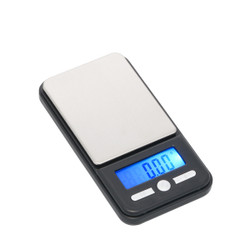
Best Digital Scale for Model Making
SEO Title: Best Digital Scale for Model Making: Precision & Capacity Guide
Meta Description: Find the best digital scale for model making. Compare 0.1g vs. 0.01g readability, capacity, tare, calibration and platform size for resin, pigments, fillers, putty, adhesives and miniature projects.
Suggested URL Slug: best-digital-scale-for-model-making
Primary Keyword: best digital scale for model making
Secondary Keywords: scale for model making, digital scale for model making, precision scale for model making, hobby scale, miniature scale, scale for resin models, scale for model paints, digital scale for hobbyists, 0.01g scale for model making, precision scale for miniatures, model building scale, digital gram scale for hobby projects
The best digital scale for model making depends on what you actually weigh.
Model builders may work with everything from tiny quantities of pigment and filler to substantially larger batches of resin, plaster or casting material.
That means one scale specification is not ideal for every project.
For many small model-making tasks, a useful starting range is:
100–500g capacity × 0.01g readability
For greater versatility within that range:
500g × 0.01g
can be especially practical.
It provides enough capacity for many weighing trays, mixing cups, powders and small components while displaying changes in hundredths of a gram.
For larger resin pours, plaster mixes or casting batches:
1–5kg × 0.1g
may be more appropriate.
The goal is not to buy the scale with the most decimal places.
The goal is to match:
capacity + readability + accuracy requirements + repeatability + minimum usable load + platform size
to your actual model-making workflow.
Quick Answer: What Scale Is Best for Model Making?
| Model-Making Task | Suggested Capacity | Suggested Readability |
|---|---|---|
| Pigments and colorants | 100–500g | 0.01g |
| Small resin jewelry/model parts | 200–500g | 0.01–0.1g |
| Small epoxy batches | 500g–2kg | 0.1g |
| Fine fillers | 100–500g | 0.01g |
| Putty components | 100–500g | 0.01g |
| Small adhesive batches | 100–500g | 0.01g |
| Model paint formulation | 100–500g | 0.01g |
| Silicone/casting additives | 100–500g | 0.01g |
| Medium resin molds | 1–2kg | 0.1g |
| Larger casting batches | 2–5kg+ | 0.1g |
| Genuine milligram-level work | Low-capacity precision scale | 0.001g when actually required |
For a model builder who frequently measures small powders, pigments and additives:
500g × 0.01g
is one of the most versatile specifications to consider.
Why Model Makers Benefit From a Digital Scale
Model making can involve surprisingly precise material ratios.
A project might require:
-
Resin
-
Hardener
-
Pigment
-
Mica
-
Filler
-
Plaster
-
Silicone
-
Putty
-
Adhesive
-
Paint
-
Modeling powder
-
Lightweight components
Eyeballing these quantities can make it difficult to reproduce a successful result.
A digital scale allows you to record measurements such as:
Resin Part A: 45.0g
Resin Part B: manufacturer-specified amount
Pigment: 0.75g
Filler: 2.25g
If the project works well, those numbers give you a starting point for repeating it.
The scale does not determine the correct formulation, however.
Always follow the instructions for the exact resin, adhesive, silicone or other material being used.
1. Start With the Smallest Material You Weigh
The smallest quantity in your workflow usually determines how fine your scale needs to read.
Imagine a model-building project using:
Resin = 80g
Hardener = 40g
Filler = 5g
Pigment = 0.65g
A 1g scale may be acceptable for the resin quantity.
It is far too coarse for accurately displaying 0.65g of pigment.
For this type of work, a second precision scale with:
0.01g readability
can be much more useful.
2. Understand Scale Readability
Readability is the smallest increment shown by the scale.
1g Readability
Displays:
10g
11g
12g
This can be useful for larger material quantities but offers limited detail for fine model-making ingredients.
0.1g Readability
Displays:
10.0g
10.1g
10.2g
This is useful for:
-
Resin batches
-
Casting compounds
-
Plaster
-
Larger fillers
-
Medium model-making mixtures
0.01g Readability
Displays:
10.00g
10.01g
10.02g
This is useful for:
-
Pigments
-
Mica powders
-
Fine fillers
-
Small adhesives
-
Model paint formulation
-
Small resin additives
-
Lightweight components
AWS explains this specification in What Does 500g × 0.01g Mean on a Digital Scale?.
0.001g Readability
Displays:
10.000g
10.001g
10.002g
This is milligram readability.
Most ordinary model-making projects do not require this level of displayed resolution.
AWS compares these precision classes in 0.001g vs. 0.01g Scales: Which Precision Do You Need?.
3. Do Model Makers Need a 0.01g Scale?
For many fine hobby applications, yes.
A 0.01g scale can be useful when weighing:
-
Pigment concentrates
-
Mica powders
-
Tiny filler quantities
-
Fine additives
-
Paint components
-
Small batches of modeling material
-
Lightweight model components
Suppose your pigment formula is:
Black pigment = 0.40g
White pigment = 0.75g
Metallic powder = 0.25g
A 0.1g scale provides some usable information.
A 0.01g scale provides much more detailed measurements that can help you reproduce the same color later.
4. When Is 0.1g Enough?
A 0.1g scale is often the better choice when materials are measured in larger amounts.
For example:
Resin = 250.0g
Hardener = 125.0g
Filler = 25.0g
For these quantities, a:
1–5kg × 0.1g
scale may be considerably more practical than a low-capacity 0.01g model.
You gain:
-
Greater capacity
-
More room for mixing cups
-
Larger platform options
-
More headroom for bigger batches
5. Do You Need 0.001g for Model Making?
Usually not.
A 0.001g scale can be useful when a genuine milligram-level measurement is required, but most model-making materials are not normally measured at that level.
Fine-resolution scales also tend to be more affected by:
-
Drafts
-
Vibration
-
Static
-
Temperature changes
-
Surface instability
More digits do not automatically improve a model-making workflow.
6. Readability Is Not the Same as Accuracy
Suppose a scale displays:
2.35g
That tells you it has 0.01g readability.
It does not automatically prove the actual mass is exactly 2.35g.
When comparing digital scales, consider:
-
Readability
-
Accuracy specifications
-
Repeatability
-
Minimum usable load
-
Calibration
-
Capacity
-
Environmental conditions
NIST's Calibration of Mass Standards provides broader measurement-science context on mass standards and traceability.
The key buying lesson is simple:
more decimal places do not automatically equal more accuracy.
7. Repeatability Matters for Model Making
Model making often involves recreating a successful mixture.
Imagine developing a custom metallic resin color.
You weigh the same reference load several times.
A repeatable scale might show:
10.25g
10.25g
10.24g
10.25g
10.25g
A poorly behaving scale might show:
10.25g
10.48g
10.11g
10.37g
10.16g
Repeatability can matter just as much as the number of digits on the screen.
AWS covers several causes of inconsistent measurements in Why Does My Digital Scale Give Different Readings?.
8. Minimum Usable Load Matters
A scale labeled:
500g × 0.01g
can display changes of 0.01g.
That does not necessarily mean:
0.01g
is an appropriate minimum working load.
If you routinely weigh very small pigment or additive quantities, consider available information on:
-
Minimum usable load
-
Accuracy
-
Repeatability
-
Tolerance
Do not assume the smallest displayed increment is automatically the smallest useful measurement.
9. Choose Enough Capacity
Capacity refers to the maximum physical load supported by the scale.
This includes:
container + materials + everything else resting on the platform.
Suppose:
Mixing cup = 75g
Resin = 250g
Hardener = 125g
Total:
450g
A 500g scale can technically accommodate the load.
However, it provides very little extra capacity.
A 1kg or 2kg scale may be the more practical choice.
10. The Mixing Cup Counts
Model makers frequently overlook container weight.
Suppose you are using:
Scale capacity = 500g
Mixing cup = 150g
Materials = 300g
Total physical load:
450g
You are already close to capacity.
A heavier batch could overload the scale.
11. Tare Does Not Restore Capacity
Place the 150g mixing cup on a 500g scale.
Press tare.
The display returns to:
0.00g
But the scale is still physically supporting 150g.
You have approximately:
350g
of nominal physical capacity remaining.
Tare changes the displayed value.
It does not increase maximum load.
12. Leave Capacity Headroom
Avoid routinely working at 95–100% of scale capacity.
Suppose your normal load is:
480g
and your scale maximum is:
500g
You only have:
20g
of headroom.
A small change in container size or batch size could exceed capacity.
For frequent 400–500g loads, consider moving to a 1kg or 2kg scale.
13. Is a 100g Scale Good for Model Making?
A 100g scale can work for:
-
Tiny pigment blends
-
Model paint formulation
-
Lightweight components
-
Small additive quantities
Its limitation is capacity.
A 40g container leaves only about 60g of remaining nominal capacity.
14. Is a 200g Scale Better?
A 200g scale provides more flexibility.
It can work well for:
-
Small resin samples
-
Pigments
-
Fillers
-
Putty components
-
Small adhesive batches
But larger mixing containers may still consume much of the available capacity.
15. Why 500g × 0.01g Is So Versatile
For many hobbyists:
500g × 0.01g
offers a useful middle ground.
It provides:
-
Fine readability
-
Enough capacity for many small cups
-
Space for trays
-
Flexibility for pigments and powders
-
Room for small resin samples
-
Compact dimensions
That makes it suitable for many detail-oriented model-making tasks.
16. When You Need 1kg or More
A higher-capacity scale becomes useful for:
-
Larger resin casts
-
Terrain pieces
-
Large silicone molds
-
Plaster
-
Mold-making compounds
-
Large batches of filler
-
Bigger mixing containers
A:
1–5kg × 0.1g
scale may be more practical for these applications.
17. Best Scale for Resin Model Making
Resin is one of the most common materials where model makers benefit from weighing.
But resin systems vary.
Some manufacturers specify ratios by:
-
Weight
-
Volume
-
Both
These ratios are not automatically interchangeable because resin and hardener may have different densities.
AWS discusses this extensively in Best Digital Scale for Resin.
Always follow the exact manufacturer's instructions for the product being used.
For many general resin batches:
1–5kg × 0.1g
can work well.
For pigments and tiny additives:
100–500g × 0.01g
can be more useful.
18. Do Not Convert Resin Volume Ratios to Weight Ratios Yourself
A resin system labeled:
2:1 by volume
is not automatically:
2:1 by weight.
The two components may have different densities.
If a manufacturer provides a weight ratio, use that specific ratio.
If only a volume ratio is provided, follow the manufacturer's volume instructions rather than inventing a weight conversion.
This is particularly important in model casting, where incorrect ratios can lead to:
-
Soft resin
-
Incomplete curing
-
Brittle parts
-
Sticky surfaces
-
Poor mold reproduction
19. Best Scale for Resin Pigments
Pigments are typically weighed in much smaller quantities than the main resin batch.
For example:
Resin batch = 150g
Pigment = 1.25g
Metallic powder = 0.35g
This is where a:
100–500g × 0.01g
scale becomes useful.
AWS goes deeper into this workflow in Best Digital Scale for Epoxy Pigments.
20. Best Scale for Model Paint Mixing
Model painters often mix custom colors.
A precision scale can make those mixtures easier to reproduce.
Example:
Base = 5.00g
White = 1.25g
Black = 0.30g
Metallic pigment = 0.15g
Recording these weights gives you a repeatable formulation.
For small paint mixtures:
100–500g × 0.01g
is generally more useful than a whole-gram kitchen scale.
21. Best Scale for Fillers
Model makers may add fillers to:
-
Resin
-
Putty
-
Casting compounds
-
Terrain materials
Small filler experiments may benefit from:
0.01g readability
while larger filler additions may only require:
0.1g readability.
Choose based on the actual quantity.
22. Best Scale for Putty Components
Some modeling compounds use multiple components.
If the manufacturer specifies ratios by mass, a scale can make repeatable proportioning easier.
For small putty mixtures:
100–500g × 0.01g
can provide useful detail.
But always use the manufacturer's specified mixing method.
Do not assume every two-component putty should be mixed by weight.
23. Best Scale for Adhesives
Small adhesive batches may involve quantities of only a few grams.
For example:
Component A = 5.00g
Component B = 2.50g
A 0.01g precision scale provides enough displayed detail to monitor small additions.
Again, only weigh adhesive components when the manufacturer provides or supports a weight-based mixing ratio.
24. Best Scale for Silicone Mold Making
Silicone mold systems vary considerably in recommended ratios.
Small model molds may involve only a few hundred grams.
For fine formulation:
500g × 0.01g
may work for small batches.
For larger molds:
1–5kg × 0.1g
is often more practical.
Always follow the silicone manufacturer's exact ratio instructions.
25. Best Scale for Plaster and Casting Powder
Plaster and similar materials can become heavy quickly.
Even a modest mixing cup plus water and powder can exceed a small pocket scale.
For larger terrain or casting work:
2–5kg capacity
may be more appropriate.
Fine 0.01g resolution is rarely necessary for large plaster batches.
26. Best Scale for Miniature Components
A precision scale can also be useful for comparing lightweight parts.
Examples include:
-
Miniature bases
-
Small metal components
-
Resin pieces
-
Hardware
-
Wheels
-
Detail parts
If parts weigh only a few grams:
0.01g readability
provides much more useful comparison data than 1g resolution.
27. Platform Size Matters
A scale can have ideal capacity and readability but still be inconvenient if your mixing container does not fit.
Make sure your normal:
-
Resin cup
-
Paint container
-
Powder tray
-
Silicone cup
-
Small bowl
sits securely on the platform.
The container should not touch the surrounding work surface.
28. Tare Is Essential for Model Making
Tare allows you to ignore the displayed weight of the empty mixing container.
Example:
Empty cup = 45.00g
Press tare.
Display:
0.00g
Add material:
25.50g
Now you can read the material mass directly.
29. Sequential Tare Can Simplify Multi-Part Mixtures
Suppose a hobby formulation uses:
Material A = 25.00g
Material B = 10.00g
Filler = 2.50g
Pigment = 0.50g
You can record each measurement and tare between additions when appropriate.
Just remember that every ingredient still contributes to the scale's total physical load.
30. Calibration Is Important for Precision Hobby Work
If you rely on the scale to reproduce material ratios, calibration matters.
Different scales require different calibration procedures and calibration weights.
Do not assume a 500g scale necessarily requires a 500g calibration weight.
Follow the exact model instructions.
AWS explains the general procedure in How to Calibrate a Digital Scale for Accurate Results.
31. Use the Correct Calibration Weight
Avoid calibrating a precision scale with:
-
Coins
-
Tools
-
Model parts
-
Batteries
-
Paint bottles
-
Resin containers
These are not appropriate substitutes for a known calibration reference.
NIST's Calibration Procedures for Weights and Measures Laboratories provides broader technical context on calibrated measurement standards.
32. Why Reference Weight Quality Matters
Professional mass measurement relies on suitable reference masses rather than arbitrary objects.
NIST's Standards for Laboratory Weights discusses standards used for analytical and mass-measurement applications.
For ordinary hobby scales, the practical takeaway is straightforward:
use the calibration mass specified for the model.
33. Use a Stable Work Surface
Precision scales should sit on a:
-
Hard
-
Flat
-
Rigid
-
Stable
surface.
Avoid:
-
Flexible hobby mats
-
Upholstered furniture
-
Carpet
-
Wobbly folding tables
-
Moving workbenches
34. Keep the Scale Away From Vibration
A hobby bench can contain many vibration sources.
These include:
-
Rotary tools
-
Air compressors
-
Sanders
-
Drills
-
Fans
-
3D printers
-
Mixing equipment
Turn nearby equipment off during precision weighing when necessary.
35. Airflow Can Affect Fine Measurements
A 0.01g or 0.001g scale may react to air movement.
Avoid placing it directly beside:
-
Fans
-
Airbrush booths
-
HVAC vents
-
Open windows
-
Air purifiers
This is particularly important when weighing lightweight pigments or powders.
36. Static Can Affect Fine Powders
Model-making materials frequently come in plastic cups and containers.
Static can cause fine powder to cling to:
-
Scoops
-
Cups
-
Trays
-
Packaging
This can make very small quantities harder to transfer consistently.
Static and environmental effects become more noticeable as the required measurement becomes finer.
37. Temperature Stability Matters
Do not expect maximum consistency immediately after moving a precision scale from:
cold garage → warm room
or:
hot workshop → air-conditioned room.
Allow the scale to stabilize according to manufacturer recommendations.
38. Look for a Clear Display
Model-making benches can become crowded.
A good scale should have:
-
Clear digits
-
Good contrast
-
Visible decimal placement
-
Backlighting
-
A display not completely hidden by the container
The difference between:
0.25g
and:
2.50g
is substantial.
39. Consider a Stainless-Steel Weighing Surface
A stainless-steel platform can be useful for hobby work because it offers a smooth weighing surface.
However, that does not make the entire scale resistant to:
-
Resin
-
Solvents
-
Paint
-
Adhesive
-
Water
Use trays and containers to protect the instrument.
40. Protect the Scale From Resin and Adhesives
Liquid resin can damage a scale if it enters:
-
Platform gaps
-
Buttons
-
Electronics
-
Display seams
Use disposable:
-
Weighing cups
-
Trays
-
Protective barriers
Do not allow a protective cover to interfere mechanically with the weighing platform.
41. Consider a Two-Scale Model-Making Setup
Model making often spans a wide range of material quantities.
One scale can struggle to cover everything.
A practical setup can be:
Precision Scale
100–500g × 0.01g
for:
-
Pigments
-
Fine fillers
-
Paint
-
Small adhesives
-
Tiny resin batches
and:
Higher-Capacity Scale
1–5kg × 0.1g
for:
-
Resin
-
Silicone
-
Plaster
-
Large molds
-
Larger mixing cups
This approach gives each scale a more appropriate job.
42. A Practical AWS Option for Model Makers
For many small model-making tasks, the AWS SC501g Precision Digital Pocket Scale provides:
500g × 0.01g
Useful features include:
-
Stainless-steel platform
-
Backlit LCD
-
Tare
-
Multiple weighing units
-
Two expansion trays
-
Battery operation
-
Compact design
You can review the SC501g Precision Digital Pocket Scale for current specifications.
For pigments, fillers, small paint batches, lightweight components and other fine hobby materials, the combination of 500g capacity and 0.01g readability provides substantial versatility.
43. When 500g × 0.01g Is Not Enough
Choose a higher-capacity scale when:
-
Mixing cup + material exceeds 500g
-
You regularly cast large resin pieces
-
You make large silicone molds
-
You weigh plaster or terrain compounds
-
Your containers are heavy
Choose a finer instrument only if your actual measurement requirements fall below the useful range of a 0.01g scale.
44. Example: Small Resin Model
Suppose a small resin model requires:
Mixing cup = 40g
Resin components = 80g
Pigment = 0.80g
Total physical load:
120.8g
A 500g precision scale provides plenty of capacity.
Depending on the manufacturer's resin instructions, you may weigh the primary resin mixture to the appropriate specification and use 0.01g readability for the pigment.
45. Example: Large Terrain Casting
Suppose:
Container = 300g
Casting material = 1,200g
Total physical load:
1,500g
A 500g pocket scale is unsuitable.
A:
2kg or greater capacity
scale is more practical.
This illustrates why maximum batch size must be considered before buying.
46. Example: Custom Model Paint Color
Suppose your successful mix is:
Gray base = 5.00g
White = 1.20g
Blue = 0.30g
Metallic pigment = 0.15g
Recording these values makes the color easier to recreate.
A:
0.01g
scale provides useful detail for this type of hobby formulation.
47. Resin Safety Still Matters
Precision measurement does not replace appropriate material handling.
Epoxy resins, hardeners, adhesives and solvents may require protective measures specified by their manufacturers.
Always review:
-
Product label
-
Safety Data Sheet
-
Ventilation recommendations
-
Skin/eye protection requirements
-
Disposal instructions
Scale precision only addresses mass measurement.
48. Always Follow the Resin Manufacturer's Ratio
Different resin systems can use different ratios.
For example, one system might specify:
2:1 by volume
while another may provide a different:
ratio by weight.
Do not assume these are interchangeable.
TotalBoat's guide to mixing epoxy by weight illustrates why manufacturers provide system-specific weight ratios.
49. Weight Ratios and Volume Ratios Can Differ
Resin and hardener can have different densities.
Therefore:
2:1 by volume does not necessarily equal 2:1 by weight.
TotalBoat also explains the distinction in its guide to measuring epoxy by weight versus volume.
For model makers, this means a precise scale cannot compensate for using the wrong mixing ratio.
Common Mistakes When Buying a Scale for Model Making
Buying Only by Decimal Places
0.001g is not automatically better than 0.01g.
Ignoring Maximum Capacity
Your mixing container counts.
Assuming Tare Restores Capacity
It does not.
Confusing Readability With Accuracy
A 0.01g display does not automatically mean guaranteed ±0.01g accuracy.
Ignoring Minimum Load
Very small quantities may fall below an appropriate working range.
Buying Too Small a Platform
Your mixing cup must fit securely.
Using One Scale for Every Job
Tiny pigments and kilogram-sized resin batches often need different equipment.
Using Random Objects for Calibration
Use the calibration reference specified for the scale.
Ignoring Vibration
Workshop equipment can destabilize fine measurements.
Ignoring Airflow
Fans and airbrush booths may affect high-resolution readings.
Getting Resin on the Scale
Use a tray or weighing container.
Assuming Weight and Volume Ratios Are Interchangeable
Follow the material manufacturer's instructions.
Model-Making Scale Buying Checklist
Before purchasing a scale, ask:
-
What materials will I weigh?
-
What is my smallest normal measurement?
-
What is my largest ingredient quantity?
-
What is my heaviest complete batch?
-
How much does my mixing cup weigh?
-
Do I need 1g readability?
-
Do I need 0.1g?
-
Do I need 0.01g?
-
Do I genuinely need 0.001g?
-
What accuracy specifications are provided?
-
What repeatability information is available?
-
What minimum usable load applies?
-
Is there enough capacity headroom?
-
Does the scale provide tare?
-
Is the platform large enough?
-
Does the mixing cup block the display?
-
Is the display backlit?
-
Does the scale stabilize properly?
-
Can it be calibrated?
-
What calibration weight is required?
-
Is that calibration weight included?
-
Are weighing trays included?
-
Can the scale be protected from resin and paint?
-
Is the workbench stable?
-
Is there nearby vibration?
-
Is there strong airflow?
-
Could static affect fine powders?
-
Is the temperature reasonably stable?
-
Would two scales cover your projects better?
-
Does the scale match your actual model-making workflow?
Frequently Asked Questions
What is the best digital scale for model making?
For many small model-making tasks:
100–500g × 0.01g
is a useful range.
For greater versatility:
500g × 0.01g
is particularly practical.
Is 0.01g precision good for model making?
Yes, especially for pigments, fillers, small paint mixtures, additives and other lightweight hobby materials.
Do I need 0.001g for model making?
Usually not.
Use 0.001g only when your actual application requires milligram readability.
What scale should I use for resin models?
For many resin batches:
1–5kg × 0.1g
can be practical.
For tiny batches, pigments and additives:
100–500g × 0.01g
can provide finer measurement.
What scale should I use for model paint mixing?
For small custom paint formulations:
100–500g × 0.01g
is a useful range.
Is 500g × 0.01g good for model making?
Yes.
It offers a strong balance of fine readability and enough capacity for many small containers and hobby materials.
Is a pocket scale good for model making?
Yes, particularly for:
-
Pigments
-
Small powders
-
Lightweight components
-
Paint formulation
-
Fine fillers
A larger scale may be better for resin, silicone, plaster and heavy casting materials.
Does the mixing cup count toward scale capacity?
Yes.
Everything resting on the platform contributes to maximum physical load.
Does tare give me the full capacity back?
No.
Tare changes the displayed number but does not remove the physical mass of the container.
Can I mix epoxy by weight?
Only when the epoxy manufacturer provides or approves a weight-based mixing ratio.
Do not automatically convert a volume ratio into the same numerical weight ratio.
What scale should I use for pigments?
For many pigment applications:
100–500g × 0.01g
is a useful starting range.
What scale should I use for plaster?
For model terrain and larger casting batches, a:
1–5kg or higher capacity scale
may be more appropriate.
Fine 0.01g readability usually provides little benefit for kilogram-sized plaster batches.
Should I calibrate my model-making scale?
Follow the manufacturer's calibration instructions for the exact scale.
Calibration becomes particularly important when you rely on repeatable weight-based formulations.
Why does my hobby scale fluctuate?
Potential causes include:
-
Airflow
-
Vibration
-
Static
-
Weak batteries
-
Temperature changes
-
Unstable work surfaces
-
Platform interference
-
Calibration issues
Should I buy one scale or two?
If you work with both tiny pigments and large resin or casting batches, two scales are often more practical:
500g × 0.01g
for fine materials,
plus:
1–5kg × 0.1g
for larger batches.
Final Verdict: What Is the Best Digital Scale for Model Making?
The best digital scale for model making depends on the range of materials and quantities you actually use.
For pigments, fillers, paint, additives and other small hobby materials:
100–500g × 0.01g
is an excellent starting range.
For maximum versatility among compact precision scales:
500g × 0.01g
is particularly useful.
It gives model builders:
-
Fine displayed increments
-
Moderate capacity
-
Room for small mixing cups
-
Tare functionality
-
Useful precision for powders and pigments
-
Compact dimensions
For larger resin, silicone, plaster and casting batches:
1–5kg × 0.1g
may be the better option.
And for most ordinary model-making work, a 0.001g milligram scale is unnecessary unless the project genuinely requires that measurement range.
Rather than buying according to decimal places alone, compare:
capacity, readability, accuracy specifications, minimum usable load, repeatability, tare, calibration, platform size and environmental stability.
For hobbyists who work across everything from tiny pigment quantities to larger resin casts, the strongest setup may be:
one 500g × 0.01g precision scale for fine materials
paired with:
one 1–5kg × 0.1g scale for larger model-making batches.
That combination covers a far wider range of model-making tasks than trying to force a single scale to handle everything.