
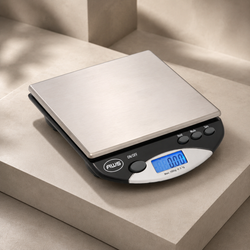
Best High Precision Kitchen Scale: Features, Accuracy & Capacity Guide
SEO Title: Best High Precision Kitchen Scale: Features & Accuracy Guide
Meta Description: Find the best high precision kitchen scale for baking, coffee, spices and recipe development. Compare 0.1g vs. 0.01g readability, capacity, tare, calibration, platform size and accuracy.
Suggested URL Slug: best-high-precision-kitchen-scale
Primary Keyword: best high precision kitchen scale
Secondary Keywords: high precision kitchen scale, precision kitchen scale, accurate kitchen scale, digital kitchen scale 0.01g, kitchen scale 0.1g, high accuracy food scale, precision food scale, digital gram scale for kitchen, best accurate kitchen scale, kitchen scale for small measurements, kitchen scale for baking, precision scale for cooking
The best high precision kitchen scale should give you enough measurement detail for small ingredients without sacrificing the capacity and platform size needed for bowls, cups and everyday food preparation.
That balance matters.
A standard kitchen scale that measures only in whole grams may work perfectly for:
-
Flour
-
Sugar
-
Produce
-
Meat
-
Meal portions
-
Large recipe batches
But it may provide too little measurement detail when you need to weigh:
-
Coffee
-
Spices
-
Herbs
-
Yeast
-
Salt
-
Small baking ingredients
-
Seasoning blends
-
Recipe-development samples
At the opposite extreme, a 0.001g milligram scale may offer far more sensitivity than a normal kitchen workflow requires while providing very little capacity for bowls or larger ingredients.
For that reason, the ideal high-precision kitchen scale depends on the quantities you actually measure.
For many fine kitchen measurements:
0.1g or 0.01g readability
is far more practical than either a whole-gram scale or an ultra-sensitive milligram scale.
For small precision ingredients, a:
500g × 0.01g
scale can be especially useful.
For normal bowls, baking ingredients and larger recipes, a:
2–5kg × 0.1g
scale may provide the better balance.
For serious cooks, bakers, coffee enthusiasts and recipe developers, owning both types can provide the broadest useful measurement range.
Quick Answer: What Is the Best High Precision Kitchen Scale?
The best specifications depend on the food and batch size.
| Kitchen Application | Suggested Capacity | Suggested Readability |
|---|---|---|
| Tiny spice quantities | 100–500g | 0.01g |
| Herbs | 100–500g | 0.01g |
| Espresso doses | 100–500g | 0.01g |
| Coffee beans | 500g–1kg | 0.01–0.1g |
| Yeast | 100–500g | 0.01g |
| Salt | 500g–2kg | 0.01–0.1g |
| Recipe development | 500g–2kg | 0.01–0.1g |
| Small baking ingredients | 500g–2kg | 0.1g |
| Flour and sugar | 2–5kg | 0.1g–1g |
| Bread dough | 2–5kg+ | 0.1g–1g |
| Large mixing bowls | 3–5kg+ | 0.1g–1g |
| Genuine milligram-level measurement | Application-specific low capacity | 0.001g when required |
For many kitchens, the most useful setup is:
Precision scale:
500g × 0.01g
plus:
Higher-capacity kitchen scale:
2–5kg × 0.1g
That gives you fine measurement for small ingredients and enough capacity for bowls and larger batches.
What Makes a Kitchen Scale “High Precision”?
The term high precision kitchen scale generally refers to a digital scale that provides finer measurement increments than a basic whole-gram kitchen scale.
Standard kitchen scales commonly prioritize:
-
Higher capacity
-
Larger platforms
-
Bowls and plates
-
Ease of use
-
General food preparation
Precision scales emphasize:
-
Finer readability
-
Smaller ingredient quantities
-
Repeatability
-
More detailed measurements
AWS explains the distinction in its guide to Pocket Scale vs. Kitchen Scale: Which One Should You Buy?.
A high-precision kitchen setup may therefore include either a specialized kitchen scale or a compact precision scale used alongside a larger kitchen scale.
1. Readability Is One of the Most Important Features
Readability is the smallest increment shown on the scale display.
For example:
1g readability
The display changes like:
10g
11g
12g
0.1g readability
The display changes like:
10.0g
10.1g
10.2g
0.01g readability
The display changes like:
10.00g
10.01g
10.02g
0.001g readability
The display changes like:
10.000g
10.001g
10.002g
More decimal places provide finer displayed increments.
But they do not automatically make a scale better for every kitchen task.
2. Is 1g Precision Enough for Cooking?
For many everyday kitchen tasks, yes.
A scale that reads in whole grams can be perfectly suitable for weighing:
-
500g flour
-
250g sugar
-
300g vegetables
-
150g meat
-
800g dough
-
Large meal portions
If your ingredients are generally measured in hundreds of grams, the difference between:
499g
and:
500g
may not materially affect your workflow.
However, whole-gram readability becomes less useful when your ingredients themselves weigh only one or two grams.
3. When Is a 0.1g Kitchen Scale Better?
A 0.1g scale measures in tenths of a gram.
That makes it useful for:
-
Coffee
-
Yeast
-
Salt
-
Baking ingredients
-
Seasonings
-
Small recipe adjustments
-
Recipe testing
For example, instead of:
3g
a 0.1g scale could display:
3.4g
That additional detail can be useful without requiring the environmental sensitivity of an ultra-fine scale.
For many kitchen applications, 0.1g represents an excellent balance of capacity and precision.
4. When Should You Choose 0.01g?
A 0.01g scale displays hundredths of a gram.
Examples:
1.21g
1.22g
1.23g
This level becomes useful when working with relatively small amounts of:
-
Spices
-
Herbs
-
Coffee
-
Small seasoning ingredients
-
Recipe-development samples
-
Fine powders
A 0.01g scale can reveal differences that a whole-gram kitchen scale simply cannot display.
AWS explains this specification in What Does 500g × 0.01g Mean on a Digital Scale?.
For many precision food applications, 500g × 0.01g is an especially useful combination.
5. Do You Need 0.001g in the Kitchen?
Usually not.
A 0.001g scale displays thousandths of a gram.
That can be appropriate for applications that genuinely require milligram-level measurement.
However, finer-resolution scales may become more sensitive to:
-
Airflow
-
Vibration
-
Static
-
Temperature variation
-
Surface movement
They also commonly trade capacity for finer readability.
For most cooking, baking, coffee, spice and herb workflows, 0.01g is already very fine.
AWS provides a deeper comparison in 0.001g vs. 0.01g Scales: Which Precision Do You Need?.
Do not choose 0.001g simply because it displays another decimal place.
Choose it only when your measurement task actually requires it.
6. Readability Is Not the Same as Accuracy
This distinction is essential when shopping for the best high precision kitchen scale.
Readability
The smallest increment the scale displays.
Accuracy
How closely the measured result agrees with an appropriate reference value within the scale's specified operating conditions.
Repeatability
How consistently the same stable load produces the same result under similar conditions.
A scale displaying:
25.37g
has 0.01g readability.
That does not automatically prove that every measurement is accurate to exactly ±0.01g.
NIST's Calibration of Mass Standards provides broader measurement-science context for mass standards and calibration.
When comparing scales, look beyond decimal places.
7. Repeatability Matters in the Kitchen
Imagine weighing the same item five times.
A scale gives:
25.30g
25.30g
25.31g
25.30g
25.30g
Compare that with:
25.30g
25.52g
25.11g
25.41g
25.20g
For repeatable recipes, consistency matters.
This is especially true for:
-
Baking
-
Coffee recipes
-
Seasoning blends
-
Recipe testing
-
Product development
If your scale produces inconsistent readings, AWS explains potential causes in Why Does My Digital Scale Give Different Readings?.
8. Minimum Usable Load Matters
A common misunderstanding is that:
0.01g readability
means:
0.01g is automatically an appropriate minimum quantity to weigh.
It does not.
The smallest displayed increment is not necessarily the same as the smallest suitable working load.
For very small quantities, consider available manufacturer information regarding:
-
Minimum load
-
Accuracy
-
Repeatability
-
Tolerance
If you genuinely need to weigh quantities approaching the milligram range, a dedicated instrument may be more appropriate.
9. Capacity Is Just as Important as Precision
Kitchen users often focus on decimal places and forget capacity.
That can be a major mistake.
Suppose you have:
Glass bowl = 650g
Flour = 500g
Water = 350g
Total physical load:
1,500g
A 500g precision scale cannot handle that recipe.
Even though it may provide finer readability, it is the wrong tool for the job.
For kitchen use, always calculate:
container + food + everything else resting on the platform
10. Your Bowl Counts Toward Maximum Capacity
Suppose your scale has:
2,000g capacity
Your mixing bowl weighs:
600g
You place the bowl on the scale.
Then press tare.
Display:
0.0g
The scale is still physically supporting the 600g bowl.
Approximately:
1,400g
of nominal physical capacity remains.
This principle applies to every digital scale.
11. Tare Does Not Restore Capacity
Tare is extremely useful in the kitchen.
But it does not increase maximum capacity.
Suppose:
Scale = 500g maximum
Cup = 100g
Press tare.
Display = 0.00g
You still have only approximately:
400g
of nominal physical capacity remaining.
Tare changes the displayed value.
It does not remove weight from the load cell.
12. Capacity Headroom Matters
Avoid buying a scale that will operate at maximum capacity during normal use.
Suppose your normal bowl and ingredients weigh:
1,900g
A 2kg scale technically has enough capacity.
But you have only:
100g
of headroom.
A 3kg or 5kg scale may provide much more practical flexibility.
The same principle applies to small precision scales.
If your normal complete load is 480g, a 500g scale leaves very little room for error or recipe growth.
13. Best High Precision Kitchen Scale for Baking
Baking frequently benefits from weighing ingredients rather than relying entirely on volume measurements.
For larger ingredients such as:
-
Flour
-
Sugar
-
Water
-
Butter
a:
2–5kg × 0.1g or 1g
scale can be practical.
For smaller ingredients such as:
-
Yeast
-
Salt
-
Spices
-
Small formulation adjustments
a:
500g × 0.01g
precision scale may provide additional detail.
Serious bakers may therefore benefit from using two scales.
14. Best Precision Scale for Yeast
Yeast is often used in relatively small amounts.
Suppose your recipe requires:
3.5g
of yeast.
A whole-gram scale may show only:
3g
or:
4g
A 0.1g scale can display:
3.5g
A 0.01g scale can display:
3.50g
For many baking applications, 0.1g is already sufficiently detailed, while 0.01g may be useful for recipe development or very small test batches.
15. Best High Precision Kitchen Scale for Coffee
Coffee is one of the strongest kitchen use cases for precision weighing.
Useful tasks include:
-
Espresso dosing
-
Coffee beans
-
Pour-over recipes
-
Coffee-to-water ratios
-
Recipe development
For smaller coffee doses:
100–500g × 0.01g
can provide detailed measurements.
For larger brewing systems where a vessel and water are weighed together:
1–3kg × 0.1g
may be much more practical.
Again, capacity and precision must be considered together.
16. Best High Precision Kitchen Scale for Spices
Spices may be used in fractions of a gram or only a few grams.
For small spice recipes:
100–500g × 0.01g
is a useful starting range.
A 500g × 0.01g scale gives you room for:
-
Weighing trays
-
Small bowls
-
Multiple ingredients
while maintaining fine displayed increments.
For bulk spice blends, move to a higher-capacity scale.
17. Best Precision Kitchen Scale for Herbs
Dried herbs can be extremely lightweight.
For:
-
Oregano
-
Thyme
-
Basil
-
Rosemary
-
Dill
-
Parsley
-
Sage
a:
100–500g × 0.01g
precision scale can be useful for small recipes.
Because lightweight herbs can respond to air movement, control drafts when making fine measurements.
18. Best Kitchen Scale for Salt
The right precision depends on batch size.
For small recipe development:
500g × 0.01–0.1g
may be useful.
For large bread, seasoning or food-production batches:
2–5kg × 0.1g
may be more appropriate.
There is little benefit in buying 0.01g readability if every normal salt measurement is 100g or more.
19. Best High Precision Kitchen Scale for Recipe Development
Recipe developers often work across a very wide measurement range.
One ingredient might weigh:
0.35g
while another weighs:
350g
Trying to cover both perfectly with one scale can create compromises.
A strong setup is:
Fine Scale
500g × 0.01g
Main Kitchen Scale
2–5kg × 0.1g
This creates a broader useful measurement range.
20. Platform Size Matters More Than You Think
A precision specification means little if your bowl does not fit comfortably.
A kitchen-scale platform should:
-
Support the container securely
-
Avoid excessive overhang
-
Prevent the bowl from touching another surface
-
Leave the display visible
-
Make ingredient addition easy
For large mixing bowls, platform size may be more valuable than ultra-fine readability.
21. Display Placement Matters
Imagine placing a large bowl on the scale only to discover that it completely covers the display.
Look for:
-
Clear digits
-
Strong contrast
-
Backlighting
-
Easy decimal visibility
-
Display placement visible around common containers
Good display design reduces measurement errors.
22. Tare Is Essential for Kitchen Use
Tare allows you to ignore the displayed mass of your container.
Example:
Bowl = 425.0g
Press tare.
Display = 0.0g
Add flour:
300.0g
Press tare.
Add water:
200.0g
Press tare.
Add salt:
5.0g
This makes multi-ingredient weighing much easier.
23. Sequential Tare Can Simplify Recipes
Suppose your recipe contains:
Flour = 300g
Water = 200g
Sugar = 25g
Salt = 5g
You can place one bowl on the scale, tare it, and add each ingredient sequentially.
This reduces the need for multiple measuring cups and containers.
However, remember that every ingredient remains part of the physical load even after you tare between additions.
24. Calibration Is Important
Precision scales should have an appropriate calibration or performance-check procedure.
Calibration requirements vary by model.
You should not assume:
500g-capacity scale = 500g calibration weight
Some scales use different reference masses.
AWS explains the process in How to Calibrate a Digital Scale.
Always follow the instructions for your exact model.
25. Use the Correct Calibration Weight
Do not calibrate a precision kitchen scale using:
-
Random food packages
-
Coins
-
Coffee cups
-
Measuring spoons
-
Phones
-
Batteries
A package labeled 500g is not automatically an appropriate 500g calibration reference.
For precision calibration, use the appropriate reference specified for the scale.
NIST publishes detailed Calibration Procedures for Weights and Measures Laboratories, illustrating how carefully reference standards and calibration procedures are handled in professional measurement settings.
26. Stable Surface Is Essential
Place a precision scale on a:
hard, rigid, level and stable surface.
Avoid:
-
Towels
-
Flexible mats
-
Uneven tables
-
Soft surfaces
-
Unstable counters
Even a high-quality scale can produce poor results in an unsuitable environment.
27. Airflow Can Affect Fine Kitchen Measurements
A standard whole-gram kitchen scale may not visibly react to gentle airflow.
A finer scale can.
Keep precision scales away from:
-
Fans
-
Open windows
-
HVAC vents
-
Air purifiers
-
Strong air-conditioning flow
Airflow also physically affects lightweight ingredients such as herbs and powders.
28. Vibration Can Affect Measurements
Common kitchen appliances produce vibration.
Examples include:
-
Blenders
-
Coffee grinders
-
Stand mixers
-
Food processors
-
Spice grinders
Avoid taking fine measurements on the same unstable surface while these appliances are operating.
29. Temperature Stability Matters
Electronic precision scales can be affected by significant temperature changes.
Avoid immediately performing fine weighing after moving a scale from:
a cold car to a warm kitchen
or:
a hot storage area to an air-conditioned room.
Allow the scale to acclimate according to manufacturer instructions.
30. Stable Zero Is an Important Quality Feature
Before adding ingredients, your display should settle appropriately at:
0
0.0g
or:
0.00g
depending on readability.
If it repeatedly changes:
0.00
0.03
-0.02
0.01
investigate the environment.
Potential causes include:
-
Vibration
-
Drafts
-
Weak batteries
-
Temperature changes
-
Static
-
Surface instability
-
Platform interference
-
Incorrect calibration
Do not repeatedly recalibrate before addressing obvious environmental problems.
31. Stainless-Steel Platforms Are Practical for Kitchens
Food preparation can be messy.
A smooth stainless-steel weighing surface can simplify routine cleaning.
However, stainless steel does not necessarily mean the entire scale is:
-
Waterproof
-
Dishwasher safe
-
Washable under running water
Follow the manufacturer's cleaning instructions.
Avoid allowing water or powders into:
-
Buttons
-
Platform openings
-
Display seams
-
Battery compartments
32. Removable Bowls and Trays Can Be Useful
Precision measurements of:
-
Herbs
-
Spices
-
Coffee
-
Yeast
-
Salt
are often easier with a weighing tray.
Place the empty tray on the scale.
Press tare.
Add the ingredient.
If the scale comes with an expansion tray or protective cover that doubles as a tray, that can add practical value.
33. Battery vs. AC Power
Battery-Powered Scale
Advantages:
-
Portable
-
Easy to move
-
No countertop cable
-
Easy storage
AC-Powered Scale
Advantages:
-
Useful for permanent stations
-
Convenient for long weighing sessions
-
No battery replacement during regular workstation use
Neither is automatically better.
Choose based on your kitchen setup.
34. Auto-Off Can Be Helpful—or Annoying
Auto-off helps preserve batteries.
However, aggressive auto-off can become inconvenient during:
-
Baking
-
Long recipe preparation
-
Multi-stage formulation
-
Coffee preparation
If you regularly pause between ingredient additions, check how the scale handles inactivity.
35. Gram Mode Is Especially Useful
Grams make recipes easier to document and scale.
Instead of:
1 cup flour
you can record:
120g flour
Instead of:
a pinch of seasoning
you can record:
0.35g seasoning
Instead of:
approximately one teaspoon
you can record an exact mass for your specific recipe.
Mass-based recipes are particularly convenient when scaling formulas proportionally.
36. Example: Scaling a Recipe by Weight
Suppose your test seasoning recipe contains:
Salt = 10g
Garlic = 4g
Paprika = 3g
Herbs = 2g
Pepper = 1g
Total:
20g
To create a batch five times larger:
Salt = 50g
Garlic = 20g
Paprika = 15g
Herbs = 10g
Pepper = 5g
Total:
100g
Weight-based formulation makes proportional scaling straightforward.
37. Should You Buy One High Precision Kitchen Scale or Two?
For many serious kitchen users, two scales provide the best overall setup.
Scale 1: Precision Scale
Consider:
500g × 0.01g
Use it for:
-
Spices
-
Herbs
-
Coffee
-
Small ingredients
-
Recipe development
-
Fine seasoning measurements
Scale 2: Main Kitchen Scale
Consider:
2–5kg × 0.1g
Use it for:
-
Flour
-
Sugar
-
Water
-
Meat
-
Produce
-
Dough
-
Mixing bowls
-
Larger recipes
This avoids asking one scale to do two fundamentally different jobs.
38. Why a 500g × 0.01g Precision Scale Is Useful in the Kitchen
A 500g × 0.01g scale offers:
500g maximum capacity
and:
0.01g displayed increments.
That combination is particularly useful because it offers significantly more capacity than many ultra-fine milligram scales while providing considerably finer readability than a conventional whole-gram kitchen scale.
It can work well for:
-
Coffee doses
-
Spices
-
Herbs
-
Yeast
-
Recipe formulation
-
Small food ingredients
The main limitation is capacity.
It is not designed for large mixing bowls or kilogram-sized recipes.
39. A Practical AWS Precision Option
For small kitchen ingredients, the AWS SC501g Precision Digital Pocket Scale provides:
500g × 0.01g
Its features include:
-
Stainless-steel weighing surface
-
Backlit LCD
-
Tare
-
Multiple weighing units
-
Expansion trays
-
Battery operation
You can review the AWS SC501g Precision Digital Pocket Scale for current specifications.
For small ingredients such as herbs, spices and coffee, this capacity/readability combination can provide substantially more detail than a typical whole-gram kitchen scale.
For large bowls and full recipes, pair it with a higher-capacity kitchen scale.
40. A High Precision Scale Does Not Make Food Safer
A scale tells you mass.
It does not tell you whether food is:
-
Properly cooked
-
Properly refrigerated
-
Contaminated
-
Safely stored
-
Free from allergens
-
Appropriate for consumption
The FDA's Safe Food Handling guidance covers broader practices intended to reduce foodborne-illness risks in the home.
Precision weighing and food safety are separate issues.
41. Precision Weighing Does Not Replace Ingredient Safety Requirements
If you are producing packaged foods commercially, accurately weighing an ingredient does not automatically mean its use complies with applicable rules.
FDA's Types of Food Ingredients provides broader information about ingredients used in food.
A scale determines quantity.
It does not independently determine:
-
Safety
-
Permitted use
-
Labeling
-
Allergen requirements
-
Regulatory compliance
42. High Precision Kitchen Scale vs. Standard Kitchen Scale
| Feature | High-Precision Scale | Standard Kitchen Scale |
|---|---|---|
| Typical emphasis | Fine measurements | General food preparation |
| Readability | Often 0.1g or 0.01g | Often 1g |
| Capacity | Often lower | Usually higher |
| Platform | Often compact | Usually larger |
| Tiny ingredients | Better | Less detailed |
| Heavy bowls | May be limited | Better |
| Coffee/spices | Excellent | Depends on model |
| Flour/dough | Limited on compact models | Excellent |
| Portability | Often high | Moderate |
| Environmental sensitivity | Greater as resolution increases | Usually lower |
The question is not which design is universally superior.
The question is:
What do you actually need to weigh?
43. High Precision Kitchen Scale vs. Pocket Scale
The categories can overlap.
Many compact precision scales are technically pocket scales but can still be extremely useful in kitchen applications.
The important specifications are:
-
Capacity
-
Readability
-
Platform size
-
Tare
-
Units
-
Calibration
-
Food-contact workflow
-
Environmental requirements
Do not reject a compact scale simply because it is called a pocket scale.
And do not assume a product labeled “kitchen scale” automatically provides fine precision.
Read the specifications.
44. High Precision Kitchen Scale vs. Milligram Scale
For most kitchen applications, a milligram scale is unnecessary.
A 0.001g scale may provide very fine displayed increments but often sacrifices:
-
Capacity
-
Platform size
-
Environmental tolerance
-
Simplicity
Choose a milligram scale only when the task genuinely requires it.
For coffee, herbs, spices and small food formulation, 0.01g is often the more practical precision class.
45. Common Mistakes When Buying a High Precision Kitchen Scale
Buying Based Only on Decimal Places
More decimals do not automatically mean better performance.
Confusing Readability With Accuracy
They are related but separate concepts.
Ignoring Maximum Capacity
A precision scale cannot replace a high-capacity scale when using heavy bowls.
Ignoring the Bowl Weight
The container counts toward physical capacity.
Assuming Tare Restores Capacity
It does not.
Ignoring Minimum Usable Load
The smallest displayed increment is not automatically the smallest suitable measurement.
Buying Too Small a Platform
Large kitchen bowls may hide the display or become unstable.
Ignoring Repeatability
Consistent recipes require consistent measurement.
Ignoring Calibration
Precision scales need an appropriate verification/calibration process.
Using Random Objects for Calibration
Use the correct reference specified by the manufacturer.
Using 0.001g When 0.01g Is Sufficient
More sensitivity may create unnecessary complexity.
Weighing Beside a Fan
Drafts can influence fine measurements and lightweight ingredients.
Running Appliances Beside the Scale
Vibration may destabilize readings.
Assuming Expensive Means More Appropriate
Specifications matter more than price alone.
High Precision Kitchen Scale Buying Checklist
Before purchasing, check:
-
What foods will you weigh?
-
What is the smallest quantity you normally measure?
-
What is your largest ingredient quantity?
-
What is your largest recipe?
-
How much does your normal bowl weigh?
-
What is the largest complete physical load?
-
Do you need 1g readability?
-
Would 0.1g be better?
-
Do you need 0.01g?
-
Do you genuinely need 0.001g?
-
What accuracy specifications are available?
-
What repeatability information is provided?
-
What is the minimum usable load?
-
Does it support tare?
-
Does it measure grams?
-
What other units are available?
-
How large is the platform?
-
Will your normal bowl fit?
-
Will the bowl hide the display?
-
Is the display backlit?
-
Does it settle reliably at zero?
-
What calibration procedure does it use?
-
What calibration weight is required?
-
Is that weight included?
-
Is the weighing surface easy to maintain?
-
Are trays included?
-
Does it run on batteries?
-
Does it support AC power?
-
What is the auto-off behavior?
-
Can you operate it away from drafts?
-
Can you isolate it from vibration?
-
Does it provide enough capacity headroom?
-
Would two scales be more practical?
-
Does the scale fit your actual kitchen workflow?
Frequently Asked Questions
What is the best high precision kitchen scale?
The best choice depends on your measurement range.
For very small ingredients:
100–500g × 0.01g
can be useful.
For larger recipes:
2–5kg × 0.1g
can offer a better combination of capacity and precision.
What is the most accurate type of kitchen scale?
There is no single specification that is automatically the most accurate for every kitchen task.
Consider:
-
Manufacturer accuracy specifications
-
Readability
-
Repeatability
-
Minimum load
-
Calibration
-
Capacity
-
Operating environment
together.
Is 0.1g accurate enough for a kitchen scale?
For many baking, coffee and recipe applications, 0.1g readability provides excellent measurement detail.
Is a 0.01g kitchen scale worth it?
It can be very useful when you regularly measure small quantities of:
-
Herbs
-
Spices
-
Coffee
-
Yeast
-
Fine ingredients
Do I need a 0.001g kitchen scale?
Usually not for normal cooking or baking.
Use milligram readability when your specific application genuinely requires it.
Is 500g × 0.01g good for kitchen use?
Yes, for small ingredients.
It can be excellent for spices, herbs, coffee and recipe development.
It is not suitable for heavy mixing bowls or large recipes exceeding its capacity.
What does 500g × 0.01g mean?
It means:
500g maximum capacity
and:
0.01g readability.
The 0.01g value describes displayed increments, not guaranteed accuracy under every condition.
Does tare increase scale capacity?
No.
Tare changes the display but the bowl or container still physically contributes to the total load.
What is the best precision scale for baking?
For large ingredients and bowls:
2–5kg × 0.1g
can be a strong general range.
For very small ingredients, adding a 0.01g precision scale may be useful.
What is the best precision scale for coffee?
For small coffee doses:
100–500g × 0.01g
can work well.
For brewing directly on the scale with a larger vessel and water, choose greater capacity.
What scale is best for spices?
For many small spice recipes:
100–500g × 0.01g
is a useful starting range.
What scale is best for herbs?
For lightweight herbs and small seasoning recipes:
100–500g × 0.01g
is practical.
Should a kitchen scale be calibrated?
Follow the manufacturer-specific calibration or performance-check recommendations for your model.
Why does my precision kitchen scale fluctuate?
Possible causes include:
-
Airflow
-
Vibration
-
Weak batteries
-
Temperature changes
-
Static
-
Unstable surfaces
-
Platform interference
-
Incorrect calibration
Is a pocket scale good for kitchen use?
Yes, when you need fine measurements of small ingredients.
For heavy bowls and large recipes, a larger kitchen scale is usually more practical.
Should I own two kitchen scales?
For serious recipe development, baking or food formulation, two scales can be extremely useful:
500g × 0.01g precision scale
plus:
2–5kg × 0.1g higher-capacity scale.
Final Verdict: What Is the Best High Precision Kitchen Scale?
The best high precision kitchen scale is not necessarily the scale that displays the greatest number of decimal places.
It is the one that provides the right balance of:
capacity, readability, accuracy characteristics, repeatability, minimum usable load, tare, calibration, platform size and stability
for your actual kitchen tasks.
If you primarily weigh:
-
Flour
-
Sugar
-
Dough
-
Meat
-
Produce
-
Large bowls
prioritize:
2–5kg or greater capacity
with:
0.1g to 1g readability
depending on the application.
If you regularly weigh:
-
Spices
-
Herbs
-
Coffee
-
Yeast
-
Fine seasoning ingredients
-
Small recipe-development samples
consider:
100–500g × 0.01g
For many small precision kitchen tasks:
500g × 0.01g
is particularly versatile.
It provides much finer readability than a conventional whole-gram kitchen scale while retaining enough capacity for many small cups, trays and ingredients.
For users who need both precision and high capacity, the best overall solution is often not one scale.
It is:
a 500g × 0.01g precision scale
for small ingredients,
paired with:
a 2–5kg × 0.1g kitchen scale
for bowls, baking and larger recipes.
That combination covers a much wider useful measurement range without forcing one scale to perform tasks outside the range where it is most practical.