
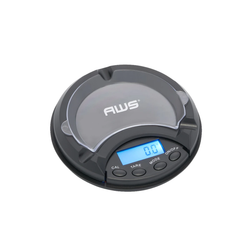
Choosing the right scale for spices starts with two questions:
What is the smallest quantity you regularly need to weigh?
and:
What is the largest complete load you will place on the scale?
Those two numbers determine the most important specifications: readability and capacity.
For many spice, herb and seasoning applications, a practical starting point is:
100–500g capacity × 0.01g readability
For larger dry-rub or seasoning batches, a:
1–5kg × 0.1g
scale may be more practical.
And if you regularly work with both tiny spice quantities and kilogram-sized batches, using two scales can provide better measurement coverage than trying to force one instrument to handle everything.
This guide explains how to choose a scale for spices based on actual ingredient quantities rather than simply buying the scale with the most decimal places.
Quick Answer: What Scale Do You Need for Spices?
| Application | Suggested Capacity | Suggested Readability |
|---|---|---|
| Small spice tests | 100–200g | 0.01g |
| Herbs | 100–500g | 0.01g |
| Saffron | 100–200g | 0.01g |
| Fine seasoning blends | 100–500g | 0.01g |
| Dry-rub development | 200–500g | 0.01g |
| Small recipe batches | 500g–1kg | 0.01–0.1g |
| Larger seasoning blends | 1–5kg | 0.1g |
| Bulk spices | 2–5kg+ | 0.1g |
| Genuine milligram-level measurement | Low-capacity precision scale | 0.001g when actually required |
For many spice users, 500g × 0.01g is one of the most versatile specifications because it combines useful capacity with fine readability.
1. Start With Your Smallest Spice Quantity
Do not start by asking:
Which scale has the most decimals?
Start by identifying the smallest ingredient in your typical recipe.
Suppose your blend contains:
Paprika = 10.00g
Salt = 8.00g
Garlic powder = 4.50g
Black pepper = 1.25g
Cayenne = 0.35g
Because one ingredient is below 1g, a 0.01g scale can provide more useful displayed detail than a whole-gram or 0.1g scale.
If your smallest quantities are consistently:
10g
25g
50g
then 0.1g may be sufficient.
Match the scale to the recipe.
2. Understand Readability Before Choosing a Scale
Readability describes the smallest increment shown on the display.
A:
1g scale
may display:
5g
6g
7g
A:
0.1g scale
may display:
5.1g
5.2g
5.3g
A:
0.01g scale
may display:
5.21g
5.22g
5.23g
And a:
0.001g scale
may display:
5.213g
5.214g
5.215g
AWS explains how these specifications work in What Does 500g × 0.01g Mean on a Digital Scale?.
Readability tells you how finely the display changes.
It should not be confused with guaranteed accuracy.
3. When Should You Choose a 0.1g Scale for Spices?
A 0.1g scale can be a very practical choice when ingredient quantities are relatively large.
For example:
Salt = 125.0g
Paprika = 75.0g
Sugar = 50.0g
Garlic powder = 30.0g
Pepper = 15.0g
For quantities like these, hundredth-of-a-gram increments may provide little practical advantage.
A 0.1g scale is particularly useful for:
-
Large dry rubs
-
Bulk seasoning production
-
Restaurant preparation
-
Large herb batches
-
Salt-heavy blends
-
Commercial-style recipe batches
Higher-capacity 0.1g scales are also widely available.
4. When Should You Choose a 0.01g Scale?
For many spice applications, 0.01g is the practical sweet spot.
It is especially useful for:
-
Saffron
-
Cayenne
-
Chili powders
-
Clove
-
Nutmeg
-
Fine herbs
-
Small seasoning formulas
-
Recipe-development batches
-
High-value spices
Suppose your formula contains:
Cumin = 1.35g
Cayenne = 0.42g
Clove = 0.18g
A 0.01g scale gives you substantially more displayed detail than a 0.1g scale.
This can make formulas easier to document and recreate.
5. When Do You Need 0.001g?
A 0.001g scale displays thousandths of a gram.
Examples:
0.125g
0.126g
0.127g
This level of readability may be appropriate when your actual application requires milligram-scale measurement.
But it is not automatically better.
Fine-resolution scales are usually more sensitive to:
-
Drafts
-
Vibration
-
Static
-
Temperature changes
-
Surface movement
For ordinary spice blending, a 0.01g scale is generally more practical.
AWS explains the tradeoff in 0.001g vs. 0.01g Scales: Which Precision Do You Need?.
Choose 0.001g because the ingredient quantity requires it—not simply because the display has another decimal place.
6. Readability Is Not the Same as Accuracy
This distinction is critical.
A scale that displays:
3.27g
has 0.01g readability.
That does not automatically mean every measurement is guaranteed accurate to exactly ±0.01g.
When comparing spice scales, consider several different characteristics.
Readability
The smallest displayed increment.
Accuracy
How closely a result agrees with an appropriate reference under specified conditions.
Repeatability
How consistently the same stable load produces the same result.
Minimum Usable Load
The lower part of the scale's measurement range where suitable performance can reasonably be expected.
NIST's Calibration of Mass Standards provides broader measurement-science context for understanding calibrated mass values and measurement uncertainty.
Do not choose a scale based only on the number of displayed digits.
7. Determine Your Maximum Complete Load
After deciding the readability you need, calculate capacity.
Do not calculate capacity based only on the spice.
Calculate:
container + ingredients + weighing tray or accessories
For example:
Glass bowl = 150g
Paprika = 50g
Salt = 35g
Other spices = 25g
Total load:
260g
A 200g scale would not be sufficient.
A 500g scale would.
8. Your Bowl Counts Toward Scale Capacity
Suppose your digital scale has:
500g maximum capacity
Your bowl weighs:
120g
You place it on the platform and press tare.
The display returns to:
0.00g
But the scale is still physically supporting 120g.
Approximately:
380g
of nominal capacity remains.
This is especially important when using:
-
Glass bowls
-
Ceramic bowls
-
Stainless-steel containers
-
Heavy weighing dishes
9. Tare Does Not Restore Capacity
Tare is an extremely useful feature.
But it does not increase the scale's physical capacity.
Suppose:
Scale capacity = 500g
Container = 100g
After tare:
Display = 0.00g
The scale still supports 100g.
Approximately:
400g
of nominal capacity remains.
Always include your container when choosing scale capacity.
10. Leave Capacity Headroom
Avoid buying a scale that barely fits your current recipe.
Suppose your normal total load is:
185g
A 200g model technically works.
But it provides very little room for:
-
A heavier bowl
-
Larger batches
-
Extra ingredients
-
Future recipes
A 500g scale may be a more practical long-term choice.
Similarly, if your normal total load is close to 500g, consider a higher-capacity model.
11. Why 500g × 0.01g Is So Versatile for Spices
A:
500g × 0.01g
precision scale provides a useful balance between capacity and fine readability.
It can handle many:
-
Small spice bowls
-
Dry-rub tests
-
Herb blends
-
Seasoning formulas
-
High-value spices
-
Recipe-development batches
while still showing hundredth-of-a-gram increments.
For many spice-focused users, this is more versatile than a very low-capacity 0.001g scale.
12. When Should You Choose 1kg or More?
If you are making larger spice blends, 500g may become restrictive.
Consider:
1kg
2kg
3kg
or:
5kg
capacity when working with:
-
Bulk seasoning batches
-
Restaurant prep
-
Commercial dry rubs
-
Large mixing bowls
-
Bulk salt
-
Sugar-heavy blends
At larger batch sizes, 0.1g readability may be more practical than 0.01g.
13. One Scale or Two?
For many home users, one precision scale may be enough.
For serious recipe development or larger production, two scales can be more practical.
Precision Scale
Consider:
100–500g × 0.01g
Use it for:
-
Saffron
-
Cayenne
-
Herbs
-
Strong spices
-
Small recipe ingredients
-
Test formulas
Higher-Capacity Scale
Consider:
1–5kg × 0.1g
depending on your batch size.
Use it for:
-
Salt
-
Sugar
-
Bulk paprika
-
Large seasoning batches
-
Heavy bowls
This allows each scale to work in a more useful measurement range.
14. Tare Is Essential for Spice Blending
A practical spice-weighing workflow might look like this:
-
Place the empty bowl on the scale.
-
Allow the reading to stabilize.
-
Press tare.
-
Confirm 0.00g.
-
Add the first spice.
-
Record the amount.
-
Tare again when appropriate.
-
Add the next spice.
-
Continue through the recipe.
This makes it much easier to formulate blends based on mass instead of approximate spoon measurements.
15. Repeatability Matters for Recipe Development
Suppose you develop a seasoning blend containing:
Paprika = 12.00g
Salt = 8.50g
Garlic powder = 4.25g
Black pepper = 2.15g
Cumin = 1.30g
Cayenne = 0.40g
The recipe is perfect.
You want tomorrow's batch to taste like today's.
That is where repeatability matters.
A scale should provide stable measurements when the same load is measured under similar conditions.
Repeatability is valuable for:
-
Dry rubs
-
Spice businesses
-
Restaurant formulas
-
Test kitchens
-
Recipe development
-
Small production runs
If measurements keep changing, see Why Does My Digital Scale Give Different Readings? for common causes.
16. Minimum Usable Load Matters for Tiny Spice Quantities
A scale labeled:
500g × 0.01g
can display hundredths of a gram.
But that does not automatically mean 0.01g is the ideal smallest working quantity.
If your formula includes extremely small amounts of:
-
Saffron
-
Cayenne
-
Clove
-
Fine chili powder
-
Concentrated seasoning ingredients
check available manufacturer information regarding:
-
Minimum load
-
Accuracy
-
Repeatability
-
Tolerance
The smallest displayed increment is not always the smallest practical sample.
17. Choose a Platform That Fits Your Bowls
Platform size is easy to overlook.
Your normal weighing container should:
-
Sit securely
-
Be fully supported
-
Avoid touching the surrounding countertop
-
Avoid resting against the scale body
-
Leave the display visible
A scale with excellent precision specifications may still be frustrating if your bowl barely fits.
Measure your usual containers before choosing a model.
18. Pocket Scale or Kitchen Scale?
Precision pocket scales are especially useful for:
-
Small spice quantities
-
Saffron
-
Herbs
-
Recipe testing
-
Dry-rub development
Larger kitchen-style scales are often better for:
-
Heavy bowls
-
Bulk spices
-
Large seasoning batches
-
Restaurant-scale recipes
AWS compares the general differences in Pocket Scale vs. Kitchen Scale: Which One Should You Buy?.
For spice work, choose according to actual specifications rather than simply whether the product is marketed as a pocket scale or kitchen scale.
19. A Clear Display Matters
A clear digital display is particularly important when reading hundredths of a gram.
Look for:
-
Large digits
-
Backlighting
-
Visible decimal points
-
Good viewing angle
-
Display placement that remains visible behind the bowl
For example:
1.25g
and:
12.5g
are very different quantities.
A clear display helps reduce avoidable mistakes.
20. Stable Zero Matters
Before adding an ingredient, the scale should settle reliably.
If the display continuously changes between:
0.00g
0.02g
-0.01g
0.03g
small-quantity measurement becomes difficult.
Potential causes include:
-
Airflow
-
Vibration
-
Static
-
Temperature changes
-
Weak batteries
-
Unstable surfaces
-
Calibration issues
Make sure the scale and its environment are both suitable for fine measurement.
21. Keep the Scale Away From Drafts
Lightweight spices can move surprisingly easily.
Avoid weighing directly beside:
-
Fans
-
Open windows
-
HVAC vents
-
Air purifiers
-
Strong air-conditioning airflow
This is particularly important for:
-
Saffron
-
Fine herbs
-
Powdered chili
-
Ground spices
Allow the reading to stabilize before recording the result.
22. Avoid Vibration
Do not place a precision spice scale on the same unstable surface as an operating:
-
Spice grinder
-
Coffee grinder
-
Blender
-
Food processor
-
Mixer
Vibration can make fine readings unstable.
For precision measurements, use a separate rigid work surface whenever possible.
23. Consider Temperature Stability
Digital precision scales should be operated within their specified environmental conditions.
If a scale has just been moved from:
cold storage → warm kitchen
or:
hot vehicle → air-conditioned room
allow it to acclimate appropriately before expecting stable fine measurements.
Follow the manufacturer's operating recommendations.
24. Calibration Capability Matters
A good precision spice scale should have a documented calibration or performance-check procedure.
Different models can require different:
-
Calibration weights
-
Button sequences
-
Procedures
Do not assume that every 500g scale uses the same calibration reference.
AWS explains the fundamentals in How to Calibrate a Digital Scale for Accurate Results.
Follow the instructions for your specific model.
25. Use the Correct Calibration Weight
Do not substitute:
-
Coins
-
Spice jars
-
Measuring spoons
-
Utensils
-
Random kitchen objects
for the reference weight specified by the scale manufacturer.
Use the correct known mass.
NIST's Calibration Procedures for Weights and Measures Laboratories provides broader technical context on defined calibration procedures and appropriate mass standards.
You do not need a metrology laboratory to weigh spices, but calibration should still be performed according to the manufacturer's instructions.
26. Calibration Is Different From Tare
These two functions should not be confused.
Tare
Sets the displayed value to zero with your weighing container on the platform.
Calibration
Checks or adjusts scale performance relative to an appropriate known reference according to the manufacturer's procedure.
Tare does not calibrate the scale.
Calibration does not replace tare.
27. Gram Mode Is Extremely Useful for Spice Recipes
Mass-based spice formulas are easy to document.
Instead of:
one scoop paprika
record:
Paprika = 10.25g
Instead of:
a pinch of cayenne
record:
Cayenne = 0.35g
This creates recipes that are much easier to:
-
Repeat
-
Scale
-
Compare
-
Adjust
-
Standardize
28. How to Create a Spice Formula by Weight
Suppose your blend contains:
Paprika = 10.00g
Salt = 5.00g
Garlic powder = 2.50g
Cumin = 1.50g
Black pepper = 1.00g
Cayenne = 0.50g
Total = 20.50g
Now you have a measurable formula instead of a list of approximate scoops and pinches.
If you want to make ten times the batch:
Paprika = 100g
Salt = 50g
Garlic powder = 25g
Cumin = 15g
Black pepper = 10g
Cayenne = 5g
The same proportions are much easier to maintain.
29. Best Scale for Saffron
Saffron is lightweight and relatively valuable, so avoiding excessive amounts can be important.
A useful starting point may be:
100–200g × 0.01g
for many ordinary small quantities.
Important features include:
-
Fine readability
-
Low practical minimum load
-
Stable zero
-
Tare
-
Small weighing tray
-
Draft protection
If your quantity is below the scale's useful measurement range, evaluate finer equipment rather than assuming the 0.01g display alone guarantees suitability.
30. Best Scale for Dry Rubs
Dry-rub formulas often contain ingredients across a wide range.
For example:
Brown sugar = 40.00g
Paprika = 20.00g
Salt = 15.00g
Garlic = 5.50g
Pepper = 2.25g
Cayenne = 0.45g
A 500g × 0.01g scale can be particularly useful during recipe development.
Larger production batches may require a 1kg, 2kg or higher-capacity scale.
31. Best Scale for Herbs
Dried herbs can be very lightweight.
A:
100–500g × 0.01g
scale can work well for small:
-
Basil blends
-
Oregano mixtures
-
Thyme formulas
-
Rosemary blends
-
Dill
-
Parsley
-
Herbal seasoning mixtures
Because lightweight herbs respond easily to airflow, environmental stability becomes especially important.
32. Best Scale for Bulk Seasoning
If your normal recipe contains several hundred grams or kilograms of ingredients, prioritize capacity.
A:
1–5kg × 0.1g
scale may be a better choice.
You can then use a smaller 0.01g precision scale for minor ingredients.
This two-scale approach is often more practical than trying to obtain extremely fine readability across several kilograms.
33. A Practical AWS Option for Small Spice Batches
For smaller spice measurements requiring hundredth-of-a-gram readability, the AWS SC501g Precision Digital Pocket Scale provides:
500g capacity × 0.01g readability
It also includes practical features such as:
-
Stainless-steel weighing surface
-
Tare
-
Backlit LCD
-
Multiple weighing units
-
Expansion trays
-
Battery operation
See the SC501g Precision Digital Pocket Scale for current specifications.
Its combination of capacity and readability can be useful for herbs, seasoning formulas, dry-rub development and small spice batches when those specifications match the application.
34. Food Safety Is Separate From Scale Precision
A precision scale can help you measure a spice consistently.
It cannot determine whether that ingredient:
-
Was stored safely
-
Was contaminated
-
Was processed properly
-
Meets applicable food-safety requirements
FDA has published a dedicated Risk Profile: Pathogens and Filth in Spices examining microbial hazards and contamination concerns associated with spices.
Measurement precision and food safety are separate considerations.
35. Commercial Spice Production May Have Additional Requirements
If you produce seasoning blends commercially, the scale becomes one part of a broader food-production system.
FDA's Food Safety Modernization Act resources cover the broader preventive framework used to address food-safety hazards.
Commercial operations may need to consider:
-
Ingredient controls
-
Sanitation
-
Storage
-
Traceability
-
Documentation
-
Production procedures
-
Applicable labeling requirements
A precision scale supports formulation consistency but does not replace these systems.
36. Ingredient Labeling Is a Separate Issue
Precise measurement can help you determine how much of each ingredient goes into a blend.
Packaged-food labeling is governed separately.
FDA explains food-ingredient information through its Types of Food Ingredients resources.
Businesses selling spice blends should determine which food-labeling requirements apply to their specific products.
Common Mistakes When Choosing a Scale for Spices
Choosing a Whole-Gram Scale for Tiny Ingredients
It may not provide enough detail for small seasoning quantities.
Buying Based Only on Decimal Places
More decimals do not automatically mean better measurements.
Confusing Readability With Accuracy
These are separate characteristics.
Ignoring Minimum Usable Load
Particularly important for lightweight spices.
Buying Too Little Capacity
Remember that the bowl counts.
Assuming Tare Restores Capacity
It does not.
Ignoring Repeatability
Consistent recipes require consistent measurements.
Choosing Too Small a Platform
Your normal bowl should fit securely.
Blocking the Display
Check container size and display placement.
Ignoring Calibration
Follow the correct procedure.
Using Coins as Calibration Weights
Use the reference specified by the manufacturer.
Weighing Beside a Fan
Airflow can affect lightweight ingredients.
Running a Grinder Beside the Scale
Vibration can interfere with precision weighing.
Buying 0.001g When 0.01g Is Enough
Extra sensitivity is not always useful.
Assuming Precision Replaces Food Safety
It does not.
Spice Scale Buying Checklist
Before choosing your scale, ask:
-
What spices will I weigh?
-
What is my smallest ingredient quantity?
-
What is my largest ingredient quantity?
-
What is my normal batch size?
-
What does my bowl weigh?
-
What is my maximum complete physical load?
-
How much capacity headroom do I need?
-
Is 0.1g readability enough?
-
Do I need 0.01g readability?
-
Do I genuinely need 0.001g?
-
What accuracy information is provided?
-
What repeatability information is available?
-
What minimum load is specified?
-
Does the scale have tare?
-
Does it weigh in grams?
-
How large is the platform?
-
Will my bowl fit securely?
-
Will the display remain visible?
-
Is the display backlit?
-
Does the reading stabilize quickly?
-
Can the scale be calibrated?
-
What calibration weight is required?
-
Is that calibration weight included?
-
Are weighing trays included?
-
Is the weighing surface easy to maintain?
-
Is battery power appropriate?
-
Would AC power be useful?
-
Is my weighing surface stable?
-
Can I avoid drafts?
-
Can I avoid vibration?
-
Would a second scale provide better capacity coverage?
-
Does the scale match my actual recipe-development process?
Frequently Asked Questions
What type of scale is best for spices?
For many spice applications:
100–500g × 0.01g
is a useful starting range.
For larger batches:
1–5kg × 0.1g
may be more practical.
Is 0.01g good for spices?
Yes.
It is particularly useful for small spice quantities, herbs, saffron and recipe development.
Is 0.1g enough for spices?
It can be for larger seasoning quantities and bulk batches.
Do I need 0.001g?
Usually not.
Choose milligram readability only when your actual ingredient quantities require it.
Is 500g × 0.01g a good scale for spices?
For many small spice applications, yes.
It combines useful capacity with hundredth-of-a-gram readability.
What does 500g × 0.01g mean?
500g is the maximum physical capacity.
0.01g is the smallest displayed increment.
Does 0.01g mean the scale is accurate within ±0.01g?
No.
0.01g describes readability.
Accuracy, repeatability and minimum-load specifications should be considered separately.
Does tare increase capacity?
No.
The weighing bowl still contributes to physical load.
What scale should I use for saffron?
A 100–200g × 0.01g precision scale may suit many small saffron quantities.
Very small quantities may require a scale with a lower appropriate working range.
What scale should I use for dry rubs?
For small development batches, 500g × 0.01g is versatile.
For larger production, use more capacity.
Should I calibrate my spice scale?
Follow the manufacturer's calibration and performance-check recommendations.
Can I use coins for calibration?
Use the calibration reference specified for the exact scale.
Why does my spice scale keep changing?
Possible causes include:
-
Airflow
-
Vibration
-
Static
-
Weak batteries
-
Temperature changes
-
Unstable surfaces
-
Calibration issues
Should I use one scale or two?
If you make both very small test blends and kilogram-sized seasoning batches, two scales may be more practical.
A useful setup is:
100–500g × 0.01g precision scale
plus:
1–5kg × 0.1g higher-capacity scale.
Final Verdict: How to Choose a Scale for Spices
The best way to choose a scale for spices is to work backward from your recipes.
First determine:
the smallest spice quantity you regularly need to measure.
Then calculate:
the largest complete physical load, including the bowl.
If your ingredients are generally measured in tens or hundreds of grams:
0.1g readability may be enough.
If you routinely work with sub-gram spices:
0.01g is usually more useful.
If your application genuinely requires milligram-level measurements:
consider a 0.001g scale.
For many spice, herb and seasoning applications:
100–500g × 0.01g
provides an excellent starting range.
A:
500g × 0.01g
scale can be particularly versatile for:
-
Herbs
-
Saffron
-
Chili powders
-
Dry rubs
-
Seasoning blends
-
Recipe development
For larger commercial-style or bulk batches:
1–5kg × 0.1g
may provide the better balance.
And if your workflow includes both tiny spices and large batches, a particularly practical solution is:
one 500g × 0.01g precision scale for small ingredients
plus:
one higher-capacity 0.1g scale for larger batches.
Whatever you choose, evaluate more than capacity and decimal places.
Look at:
readability, accuracy specifications, repeatability, minimum usable load, tare, calibration, platform size, display visibility and environmental stability.
That gives you a scale matched to the actual way you weigh spices rather than simply the model with the most impressive-looking specification.