
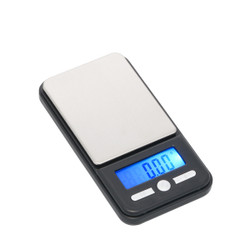
The best precision scale for collectibles is not necessarily the model with the most decimal places.
Collectors need a scale that combines:
-
Appropriate capacity
-
Useful readability
-
Consistent repeatability
-
Stable zero
-
Suitable minimum load
-
Tare
-
Calibration capability
-
Appropriate platform size
-
Useful weighing units
-
Environmental stability
For many small collectibles, one of the most useful configurations is:
500g × 0.01g
That combination provides hundredth-of-a-gram readability while preserving enough capacity for many:
-
Coins
-
Tokens
-
Medals
-
Watches
-
Pins
-
Badges
-
Jewelry collectibles
-
Graded trading-card slabs
-
Small miniatures
-
Small antiques
For larger figurines and memorabilia, however:
1–5kg capacity with 0.1g readability
may be substantially more useful.
For extremely small items where differences below 0.01g genuinely matter:
0.001g readability
may be appropriate.
The important principle is:
precision should match the collectible—not exceed the useful requirements of the application.
Quick Answer: Which Precision Scale Features Matter Most?
| Feature | Why It Matters |
|---|---|
| Capacity | Determines the heaviest collectible you can weigh |
| Readability | Determines the smallest displayed increment |
| Accuracy | Describes closeness to the actual mass |
| Repeatability | Helps the same object produce consistent readings |
| Minimum load | Matters when weighing extremely light pieces |
| Tare | Allows trays and containers to be zeroed |
| Calibration | Helps maintain measurement performance |
| Platform size | Determines whether the collectible is fully supported |
| Stable zero | Essential for precision comparisons |
| Gram mode | Useful for most small collectibles |
| Troy ounce mode | Useful for some precious-metal collectibles |
| Carat mode | Useful for gemstones |
| Protective cover | Helps protect compact precision scales |
| Stable environment | Fine scales are sensitive to vibration and drafts |
For general-purpose collecting:
0.01g readability + 250–500g capacity
is a strong starting range.
For a particularly versatile all-purpose collectible scale:
500g × 0.01g
offers an excellent balance.
1. Capacity Is the First Feature to Evaluate
Before comparing resolution, determine the heaviest object you expect to place on the scale.
Suppose you collect:
-
Coins weighing 5–35g
-
Watches weighing 80–200g
-
Medals weighing 100–300g
-
Graded card slabs weighing under 100g
A:
500g scale
provides plenty of useful headroom.
But suppose your collection also contains:
-
900g figurines
-
1.5kg die-cast models
-
3kg boxed collectibles
Then a 500g precision scale cannot handle your full collection.
You may need a second higher-capacity scale.
2. Always Include Trays, Holders and Containers in Capacity
Collectors frequently forget that the scale physically supports more than the collectible itself.
Suppose:
Collectible = 390g
Tray = 80g
Total physical load:
470g
A 500g scale can support it.
Now suppose:
Collectible = 450g
Tray = 80g
Total:
530g
That exceeds a 500g scale's nominal capacity—even if you press tare first.
Capacity applies to:
everything physically resting on the scale.
3. What Does 500g × 0.01g Mean?
A specification such as:
500g × 0.01g
normally indicates:
Maximum nominal capacity:
500 grams
Readability:
0.01 gram
AWS explains this terminology further in What Does 500g × 0.01g Mean on a Digital Scale?.
This distinction is important because:
readability is not the same thing as guaranteed accuracy.
A scale displaying two decimal places does not automatically guarantee that every reading is exact within ±0.01g under all conditions.
4. Why 0.01g Is So Useful for Collectors
A 0.01g scale displays:
26.71g
26.72g
26.73g
That level of detail can be useful when weighing:
-
Coins
-
Tokens
-
Small medals
-
Watches
-
Collectible jewelry
-
Small precious-metal pieces
-
Miniatures
-
Components
-
Pins
-
Badges
For many general collectible applications:
0.01g is the precision sweet spot.
It provides significantly more detail than a conventional kitchen scale without forcing you into the lower capacities and environmental sensitivity commonly associated with milligram scales.
AWS makes a similar recommendation for coin applications in its Best Digital Scale for Coins, where approximately 0.01g readability is identified as a practical range for many collectors.
5. When Is 0.1g Enough?
A scale with:
0.1g readability
displays:
265.1g
265.2g
265.3g
This can be entirely sufficient for:
-
Larger figurines
-
Die-cast models
-
Heavy medals
-
Large watches
-
Boxed collectibles
-
Memorabilia
-
Groups of coins
-
Larger antiques
Suppose a collectible weighs:
1,420g
The difference between:
1,420.01g
and:
1,420.02g
normally provides little practical collectible information.
Higher capacity may be far more valuable.
6. When Does 0.001g Make Sense?
A 0.001g scale displays:
2.351g
2.352g
2.353g
That is:
milligram-level readability.
It can be useful when weighing:
-
Very tiny components
-
Small precious-metal fragments
-
Loose gemstones
-
Lightweight collectible parts
-
Objects where hundredths of a gram are genuinely too coarse
But 0.001g should not be your default simply because it displays another digit.
AWS's comparison of 0.001g vs. 0.01g scales emphasizes that finer readability involves tradeoffs including capacity and greater sensitivity to environmental conditions.
7. 0.001g Is Not Automatically More Accurate
This is one of the biggest misconceptions in precision weighing.
Compare:
Scale A
500g × 0.01g
Scale B
20g × 0.001g
Scale B displays a smaller increment.
But if your collectible weighs:
85g
Scale B is useless because the object exceeds capacity.
Even when both scales can handle an item:
finer readability alone does not establish better overall measurement performance.
Consider:
-
Stated accuracy
-
Repeatability
-
Minimum load
-
Calibration
-
Environment
-
Platform
-
Load placement
8. Readability vs. Accuracy
Readability means:
the smallest increment the display shows.
Accuracy relates to:
how close a measurement is to the actual value.
These are related concepts, but they are not interchangeable.
A scale that displays:
28.36g
does not automatically mean:
true mass is guaranteed within ±0.01g.
NIST's Calibration of Mass Standards provides broader technical context for traceable mass measurement and calibration.
For collectible applications, evaluate more than the number of decimal places.
9. Repeatability Is One of the Most Important Features
For collectors, repeatability is often more practically useful than chasing another decimal place.
Suppose you weigh a coin three times.
Scale A
26.72g
26.72g
26.73g
Scale B
26.721g
26.846g
26.653g
Scale B displays more decimal places.
But Scale A is producing more useful consistent measurements in this example.
A good precision scale should provide similar readings when:
-
The same object is used.
-
Position is consistent.
-
Environment is stable.
-
Scale is properly zeroed.
-
Nothing else touches the object.
10. What Causes Poor Repeatability?
Changing readings can result from:
-
Drafts
-
Vibration
-
Static
-
Unstable surface
-
Uneven object placement
-
Weak battery
-
Calibration problems
-
Overloading
-
Temperature change
-
Objects touching surrounding surfaces
Before blaming the scale itself, examine the entire weighing environment.
11. Minimum Load Matters
Collectors often focus entirely on maximum capacity.
For very lightweight objects, however:
minimum usable load can matter too.
Suppose a scale has:
500g maximum capacity
and:
0.01g readability.
That does not mean every object from virtually zero grams to 500g performs identically.
When measuring tiny pieces, consult the scale manufacturer's performance specifications.
This becomes particularly important with:
-
Tiny precious-metal pieces
-
Small gems
-
Very light components
-
Miniature fragments
12. Stable Zero Is Essential
Before weighing an object, the unloaded scale should settle appropriately at zero.
If an empty scale continually displays:
0.00g
then:
0.07g
then:
-0.04g
then:
0.11g
you should investigate before trusting fine comparisons.
Possible causes include:
-
Drafts
-
Vibration
-
Static
-
Poor surface
-
Low battery
-
Calibration issues
Fine collectible measurements require:
a stable baseline.
13. Calibration Is a Major Feature
A precision scale should have a clear calibration procedure when user calibration is supported.
Before purchasing, ask:
-
Can the scale be calibrated?
-
What reference mass does it require?
-
Is that weight included?
-
Is calibration simple?
-
Are instructions available?
A well-designed calibration workflow is more valuable than simply having another decimal place.
14. Calibration Requirements Are Model-Specific
Never assume:
maximum capacity = required calibration weight.
The exact calibration mass depends on the model.
For example, the AWS SC501g Precision Digital Pocket Scale is currently specified at:
500g × 0.01g
and its product specifications call for a 500g calibration weight, which is not included.
That does not mean every 500g scale uses the same procedure.
Always follow the instructions for the actual model.
15. Do Not Use a Collectible as a Calibration Weight
Do not automatically calibrate a scale using:
-
Coin
-
Medal
-
Watch
-
Jewelry
-
Packaged product
-
Household object
even if you believe its weight is known.
A collectible is not necessarily an appropriate calibration standard.
Use:
the calibration reference specified by the manufacturer.
16. Verification and Calibration Are Different
Collectors may occasionally confuse these processes.
Verification
You place an appropriate known reference mass on the scale to check its reading.
Calibration
The scale is adjusted or its measurement relationship is established according to its calibration procedure.
You do not necessarily need to recalibrate every time you verify performance.
17. Tare Is Extremely Useful for Collectibles
Tare allows you to place a:
-
Tray
-
Container
-
Protective dish
-
Weighing boat
on the scale and reset the display to zero.
Example:
Tray = 54.37g
Press tare.
Display:
0.00g
Add collectible.
Display:
collectible weight only
This can help protect objects that should not be placed directly on a stainless-steel platform.
18. Tare Does Not Increase Capacity
Suppose:
Scale capacity = 500g
Tray = 75g
Press tare.
Display:
0.00g
The scale is still physically supporting:
75g
That means an additional 500g collectible would overload the scale.
Approximate remaining nominal load allowance is:
425g
Tare changes the display.
It does not change the load cell's physical limit.
19. Platform Size Matters More Than Many Collectors Expect
A collectible can be:
light but large.
Suppose:
Collectible = 320g
Scale capacity = 500g
Technically, capacity is sufficient.
But if the item:
-
Touches the surrounding desk
-
Leans against a wall
-
Is partially supported elsewhere
the measurement may become unreliable.
A precision scale needs:
proper load support—not just sufficient numerical capacity.
20. Platform Material Matters
Stainless-steel platforms are common on precision pocket scales because they can be:
-
Durable
-
Easy to wipe
-
Resistant to everyday handling
-
Appropriate for small objects
For delicate collectibles, you may prefer to use:
-
Protective tray
-
Soft intermediary holder
-
Appropriate weighing container
rather than placing an easily scratched item directly on the platform.
21. Expansion Trays Can Be Valuable
Some compact scales include trays that can:
-
Hold coins
-
Contain small pieces
-
Support irregular objects
-
Expand effective weighing convenience
Remember:
the tray itself contributes to physical capacity.
Tare removes it from the displayed value but not from the actual load.
22. Protective Covers Matter for Portable Scales
Precision pocket scales often travel in:
-
Bags
-
Drawers
-
Collector kits
-
Show cases
-
Dealer equipment cases
A protective cover helps protect:
-
Platform
-
Display
-
Buttons
during storage and transportation.
Collectors who attend:
-
Coin shows
-
Card shows
-
Flea markets
-
Antique events
-
Estate sales
may particularly appreciate portability and protection.
23. Display Quality Matters
A precision scale should have an easy-to-read display.
Useful characteristics include:
-
Backlighting
-
Clear decimal points
-
Visible unit indicator
-
Large enough numerals
-
Fast stabilization
At 0.01g or 0.001g readability, confusing:
26.72
with:
267.2
would be a significant error.
Clear display design matters.
24. Gram Mode Is Essential for Many Collectors
For general collectible weighing:
grams
are usually the most useful unit.
Grams are common for:
-
Coins
-
Watches
-
Medals
-
Miniatures
-
Precious metals
-
Small objects
Many published coin specifications also use grams.
For a mixed collection, gram mode should be considered a basic requirement.
25. Troy Ounces Can Be Useful
Collectors dealing with:
-
Silver
-
Gold
-
Bullion
-
Precious-metal collectibles
may benefit from:
ozt
or troy-ounce mode.
Remember that:
1 troy ounce is not the same as 1 ordinary avoirdupois ounce.
Do not confuse the two when comparing published specifications.
26. Pennyweight Can Be Useful for Precious Metals
Some scales include:
dwt
or pennyweight.
This unit may be useful in:
-
Jewelry
-
Precious-metal trading
-
Scrap-metal evaluation
For general collectible documentation, however:
grams remain simpler and more universal.
27. Carat Mode Can Be Useful for Collectible Jewelry
Carat mode:
ct
can be useful for:
-
Gemstones
-
Diamonds
-
Loose stones
But carats are not especially useful for:
-
Coins
-
Trading cards
-
Watches
-
Figurines
Choose weighing units based on your actual collection.
28. Grain Mode Can Have Specialized Uses
Some precision scales support:
gn
or grains.
Collectors may encounter grain measurements in:
-
Historical references
-
Precious-metal documentation
-
Specialized numismatic material
Again, grams remain a strong universal baseline.
29. Airflow Matters at 0.01g
The finer the scale, the more environmental conditions matter.
A 0.01g scale can react to:
-
Air-conditioning
-
Ceiling fan
-
Open window
-
Strong movement nearby
For more consistent results:
weigh away from direct drafts.
30. 0.001g Is Even More Sensitive
At milligram readability, environmental effects become even more important.
A reading can be influenced by:
-
Small air currents
-
Static
-
Vibration
-
Temperature changes
-
Touching the table
This is why:
0.001g is not automatically the better choice for an ordinary collector.
Finer resolution can require a more controlled environment.
31. Vibration Can Affect Precision Measurements
Avoid placing the scale on a table shared with:
-
Printer
-
Speaker
-
Fan
-
Machinery
-
Moving equipment
Even subtle vibration can influence fine measurements.
A:
solid, isolated surface
is preferable.
32. Use a Hard, Level Surface
Good:
-
Solid desk
-
Workbench
-
Countertop
-
Rigid table
Poor:
-
Bed
-
Sofa
-
Carpet
-
Flexible shelf
-
Foam pad
-
Unstable folding table
Precision measurement depends on the entire setup.
33. Static Electricity Can Affect Lightweight Objects
Static can become particularly relevant when weighing:
-
Plastic holders
-
Card sleeves
-
Plastic capsules
-
Lightweight components
If readings appear unstable, static is one possible contributor.
This does not mean every unstable reading is caused by static, but it is worth considering for fine-resolution measurements.
34. Temperature Stability Matters
A precision scale may perform differently when moved rapidly between significantly different environments.
For example:
cold vehicle → warm room
Allow the scale to acclimate according to manufacturer guidance before relying on very fine measurements.
35. Battery Condition Matters
Weak batteries can contribute to:
-
Unstable display
-
Inconsistent operation
-
Unexpected shutdown
-
Poor user experience
Collectors using portable scales should keep suitable spare batteries available.
This is especially useful at:
-
Shows
-
Markets
-
Appraisal events
-
Dealer meetings
36. Auto-Off Can Be Helpful
Auto-off extends battery life.
That can be particularly useful for a collector who weighs only a few objects at a time.
However, during:
-
Inventory sessions
-
Coin sorting
-
Collection cataloging
an extremely short auto-off interval may become inconvenient.
Evaluate usability as well as measurement specifications.
37. Best Precision Scale for Coins
Coins are among the strongest reasons to own a collectible precision scale.
For many general coin applications:
0.01g readability
provides useful measurement detail.
AWS's Coin Scale Buying Guide recommends balancing readability with enough capacity for coins, capsules, trays, medals and groups.
Typical capacity needs:
-
Individual coins: 100g+
-
Coins in capsules: 100–250g
-
Small groups: 250–500g
-
Larger groups: 500g+
38. Weight Is Not Coin Authentication
This distinction is essential.
A measured coin weight can be compared against:
-
Published specifications
-
Reference material
-
Known examples
But weight alone cannot establish authenticity.
Professional grading considers condition and authentication factors beyond mass.
PCGS describes coin grading as an evaluation of a coin's physical condition and uses established grading standards rather than weight as a standalone determination. PCGS Coin Grading
39. Grade Is Not Determined by Weight
A coin weighing exactly its published nominal mass is not automatically:
-
Genuine
-
Mint State
-
High grade
-
Valuable
NGC uses a 1–70 grading scale and evaluates coin condition under its grading standards. NGC Coin Grading Scale
Mass can be:
supporting information.
It is not a grading system.
40. Wear Can Change Coin Mass
Circulated coins can lose material over time.
Possible factors include:
-
Wear
-
Corrosion
-
Damage
-
Residue
-
Cleaning
-
Contamination
Therefore, a small deviation from nominal published mass does not automatically establish that a coin is counterfeit.
Collectors should evaluate multiple characteristics.
41. Best Precision Scale for Trading Cards
Trading cards are extremely lightweight.
A scale may be used for:
-
Documentation
-
Comparing similar cards
-
Comparing sleeves
-
Comparing holders
-
Cataloging slabs
But weight cannot determine:
-
Grade
-
Centering quality
-
Surface condition
-
Authenticity
-
Alteration status
PSA's authentication and grading process evaluates collectible cards through professional inspection rather than simply comparing mass. PSA Authentication & Grading Services
42. Do Trading Cards Need 0.001g?
Usually not.
For ordinary card collecting:
0.01g or 0.1g
can provide more than enough measurement detail for documentation.
A 0.001g reading should only be pursued when the research purpose genuinely benefits from milligram-level data.
Do not assume an unusually precise card weight proves:
-
Authenticity
-
Printing version
-
Alteration
-
Grade
43. Holder Weight Matters for Cards
If you weigh:
card + sleeve
you are measuring both.
If you weigh:
card + graded slab
you are measuring the entire encapsulated assembly.
Be explicit in your records.
For example:
Card only: 1.82g
versus:
Card + slab: 47.63g
Those are different measurements with different purposes.
44. Best Precision Scale for Watches
Many watches fall comfortably within:
250–500g capacity.
Useful readability may be:
0.01g
for detailed documentation
or:
0.1g
for general inventory measurement.
A 500g × 0.01g scale is therefore especially flexible for many collectible watches.
45. Weight Cannot Authenticate a Watch
A watch with the "correct" mass can still be counterfeit.
Watch authentication may involve:
-
Movement
-
Case construction
-
Serial numbers
-
Dial details
-
Materials
-
Finishing
-
Documentation
-
Provenance
Treat weight as:
one documented physical characteristic.
46. Best Precision Scale for Medals and Tokens
Small medals and tokens often fit well within:
250–500g capacity
with:
0.01g readability.
Larger medals may justify:
1kg × 0.1g
or another higher-capacity configuration.
Again, choose according to actual objects rather than applying the same scale specification to every collection.
47. Best Precision Scale for Collectible Jewelry
Collectible jewelry may include:
-
Rings
-
Bracelets
-
Brooches
-
Chains
-
Pendants
-
Vintage pieces
-
Precious-metal objects
For many general jewelry applications:
0.01g
provides practical precision.
AWS provides additional application-specific guidance in How to Choose a Scale for Jewelry.
Very small gems or components may justify finer 0.001g readability.
48. Best Precision Scale for Miniatures
Miniatures can range from:
a few grams
to:
hundreds of grams.
For small:
-
Gaming miniatures
-
Metal figures
-
Resin models
-
Components
a:
500g × 0.01g
scale provides considerable flexibility.
Larger assembled models may require higher capacity.
49. Best Precision Scale for Figurines
Figurines frequently exceed pocket-scale capacity.
Example:
Figure = 720g
Base = 260g
Total:
980g
A 500g precision scale cannot weigh the completed collectible.
A:
2kg × 0.1g
scale may be more appropriate.
This is a perfect example of why:
higher capacity can matter more than finer readability.
50. Best Scale for Die-Cast Collectibles
Die-cast:
-
Cars
-
Trucks
-
Aircraft
-
Trains
-
Military vehicles
can be relatively dense.
A 500g scale may work for smaller models.
For larger die-cast pieces:
1–5kg capacity
may be preferable.
If the object weighs 2kg, 0.01g resolution is generally unnecessary.
51. Best Precision Scale for Pins and Badges
Pins, badges and insignia are ideal small-scale applications.
Most can easily fit within:
100–500g capacity
and 0.01g provides plenty of measurement detail.
A tray can help prevent small items from:
-
Rolling
-
Sliding
-
Falling from the platform
52. Best Precision Scale for Small Antiques
Small antiques may include:
-
Keys
-
Decorative pieces
-
Silver items
-
Small boxes
-
Accessories
-
Historical objects
Because this category varies enormously, choose capacity based on:
your heaviest complete item.
For items below 500g, a 500g × 0.01g scale can be highly useful.
53. Best Precision Scale for Precious-Metal Collectibles
Precious-metal collectibles may benefit from:
-
0.01g readability
-
Gram mode
-
Troy-ounce mode
-
Pennyweight mode
-
Calibration
-
Repeatability
Tiny pieces may warrant 0.001g.
Larger silver objects may need higher capacity instead.
Remember:
a scale measures mass—not purity.
54. Weight Does Not Determine Metal Purity
Suppose two objects both weigh:
31.10g.
One could be:
-
Silver
-
Copper alloy
-
Plated metal
-
Another composition
Mass alone does not establish composition.
Material identification may require:
-
Documentation
-
Hallmarks
-
Density-related examination
-
XRF
-
Other professional analysis
Do not infer purity from the scale alone.
55. Weight Does Not Determine Value
A:
5g collectible
may be worth more than a:
5kg collectible.
Value can depend on:
-
Rarity
-
Condition
-
Provenance
-
Authenticity
-
Demand
-
Edition
-
Historical importance
-
Artist
-
Manufacturer
The American Numismatic Association emphasizes education, grading knowledge, preservation and research as important aspects of responsible collecting. ANA Coin Collecting Basics
A scale contributes measurement data.
It does not produce a valuation.
56. Document Your Measurements
Precision becomes more valuable when the measurements are recorded consistently.
For each collectible, consider documenting:
-
Item name
-
Mass
-
Unit
-
Date
-
Holder included?
-
Tray included?
-
Scale used
-
Notes
Example:
Collectible: 1920s medal
Mass: 84.36g
Holder: No
Scale: 500g × 0.01g
Date: September 2026
This creates useful context.
57. Use the Same Measurement Procedure
If you want to compare objects over time:
consistency matters.
Try to use:
-
Same scale
-
Same unit
-
Same tray
-
Same surface
-
Same basic environment
-
Same holder policy
A measurement of:
42.31g bare
cannot be directly compared with:
48.76g in capsule
without accounting for the holder.
58. One Scale vs. Two Scales
A single scale is ideal when all collectibles fall within a relatively narrow range.
For example:
2g–300g
A:
500g × 0.01g
scale can cover the entire collection.
But suppose your collection ranges from:
3g coins
to:
3kg statues.
One scale may require too many compromises.
59. The Two-Scale Collector Setup
For broad mixed collections, consider:
Precision Scale
500g × 0.01g
for:
-
Coins
-
Tokens
-
Watches
-
Small medals
-
Jewelry
-
Cards
-
Miniatures
plus:
Higher-Capacity Scale
2–5kg × 0.1g
for:
-
Figurines
-
Models
-
Heavy memorabilia
-
Boxed collectibles
This setup provides:
fine detail where it matters + high capacity where it matters.
60. Why the AWS SC501g Fits Many Collectible Applications
For general small-object collecting, the AWS SC501g provides a particularly useful specification:
500g × 0.01g
Its current specifications include:
-
500g maximum capacity
-
0.01g readability
-
Stainless-steel platform
-
Backlit LCD
-
Tare
-
Multiple weighing units
-
Expansion trays
-
Battery operation
-
Compact construction
That combination makes it suitable for many:
-
Coins
-
Tokens
-
Medals
-
Watches
-
Collectible jewelry pieces
-
Miniatures
-
Small memorabilia
provided the complete physical load stays below capacity.
Example 1: Individual Coin
Coin:
26.72g
A:
0.01g scale
provides useful hundredth-of-a-gram detail.
Record the measurement as supporting data rather than proof of authenticity.
Example 2: Coin With Capsule
Coin = 31.10g
Capsule = 6.72g
Combined:
37.82g
If comparing against a published bare-coin specification, the 37.82g combined measurement is not directly equivalent.
Example 3: Collectible Watch
Watch:
163.48g
A 500g × 0.01g scale provides:
-
Ample capacity
-
Useful detail
-
Plenty of headroom
Example 4: Graded Card
Card + slab:
48.2g
A 500g scale handles this easily.
There is normally no reason to sacrifice capacity in order to obtain 0.001g readability for ordinary card documentation.
Example 5: Medal
Medal:
284.67g
Tray:
71.20g
Physical load:
355.87g
This remains within a 500g scale's capacity.
Example 6: Figurine
Figure:
810g
Base:
205g
Combined:
1,015g
A 500g scale is unsuitable.
Choose a scale with:
2kg or greater capacity.
Example 7: Mixed Collection
Collection includes:
Coin = 8g
Watch = 145g
Medal = 290g
Figurine = 1.8kg
There is no ideal 500g scale for every item.
A two-scale system makes more sense:
500g × 0.01g
plus:
2–5kg × 0.1g.
Common Precision Collectible Scale Mistakes
Assuming More Decimal Places Means Better Accuracy
It does not.
Ignoring Capacity
A 0.001g scale is useless if the collectible exceeds its maximum load.
Forgetting Tray Weight
Tare does not eliminate the physical load.
Confusing Readability With Accuracy
Readability is only one measurement characteristic.
Ignoring Repeatability
Consistent readings are essential.
Ignoring Minimum Load
Very small objects may require attention to minimum usable weighing conditions.
Skipping Calibration
Follow model-specific guidance.
Calibrating With a Coin
Use the specified calibration reference.
Weighing on a Soft Surface
Use a rigid, stable surface.
Ignoring Drafts
Fine-resolution scales can react to air movement.
Ignoring Vibration
Nearby equipment can affect readings.
Ignoring Static
Plastic holders and lightweight pieces may create problems.
Using Weight as Proof of Authentication
A scale cannot independently authenticate a collectible.
Using Weight to Grade Coins
Grade is based on professional condition standards, not mass alone.
Using Weight to Grade Cards
Trading-card grading requires evaluation beyond weight.
Using Weight to Determine Metal Purity
A scale measures mass, not chemical composition.
Using Weight to Determine Value
Collectible value depends on far more than mass.
Buying One Scale for a Huge Weight Range
A two-scale setup can provide better performance.
Precision Collectible Scale Buying Checklist
Before buying, ask:
-
What types of collectibles do I own?
-
What is the lightest object?
-
What is the heaviest object?
-
Do I weigh trays?
-
Do I weigh holders?
-
Is 100g capacity enough?
-
Do I need 250g?
-
Is 500g more practical?
-
Do I need 1kg?
-
Do I need 2–5kg?
-
Is 0.1g readability enough?
-
Do I need 0.01g?
-
Do I genuinely need 0.001g?
-
What accuracy specifications are stated?
-
What is the minimum usable load?
-
Are readings repeatable?
-
Does the zero remain stable?
-
Can the scale be calibrated?
-
What calibration mass does it require?
-
Is the calibration reference included?
-
Does the scale have tare?
-
Is the platform large enough?
-
Are expansion trays useful?
-
Does it have a protective cover?
-
Is the display backlit?
-
Does it support grams?
-
Do I need troy ounces?
-
Do I need carats?
-
Do I need pennyweight?
-
Is the operating environment stable?
-
Will airflow affect my measurements?
-
Is vibration controlled?
-
Could static be a concern?
-
Do I need battery portability?
-
Would two scales better cover my collection?
-
Am I treating weight as supporting information rather than proof of authenticity?
Frequently Asked Questions
What is the best precision scale for collectibles?
For many small collectible objects:
500g × 0.01g
provides an excellent combination of capacity and readability.
What features matter most in a collectible scale?
Prioritize:
-
Capacity
-
Readability
-
Accuracy specification
-
Repeatability
-
Minimum load
-
Calibration
-
Tare
-
Platform size
-
Stable zero
-
Useful units
-
Environmental stability
Is 0.01g precise enough for collectibles?
For many:
-
Coins
-
Watches
-
Tokens
-
Medals
-
Jewelry pieces
-
Miniatures
yes.
0.01g is one of the most practical general-purpose readability levels.
Do I need 0.001g?
Only when differences smaller than 0.01g genuinely matter to your application.
Do not choose 0.001g solely because it displays more decimal places.
Is 0.001g more accurate than 0.01g?
Not automatically.
It provides finer readability.
Overall measurement performance also depends on calibration, repeatability, minimum load, accuracy specifications and environmental conditions.
Is 500g enough capacity?
For many small collectibles, yes.
A 500g scale can accommodate many:
-
Coins
-
Watches
-
Tokens
-
Medals
-
Jewelry pieces
-
Card slabs
-
Miniatures
Large figurines and memorabilia may require substantially more.
Is 250g enough for coins?
For many individual coins and small groups, yes.
Collectors who weigh larger groups, trays or medals may prefer 500g.
Should I choose 500g instead of 200g?
If both scales provide the readability you need, greater capacity offers additional headroom for:
-
Holders
-
Trays
-
Groups
-
Larger objects
Choose based on the heaviest complete load.
Does tare increase capacity?
No.
Tare changes the displayed zero.
The tray or holder still contributes to the physical load.
Is calibration important?
Yes.
A precision scale should be used according to its documented calibration and verification instructions.
Can I calibrate my scale with a coin?
Do not assume a collectible coin is an appropriate calibration reference.
Use the mass specified by the scale manufacturer.
Why does my scale give different readings?
Possible causes include:
-
Drafts
-
Vibration
-
Static
-
Uneven surface
-
Weak batteries
-
Temperature changes
-
Improper load placement
-
Calibration problems
Does platform size matter?
Yes.
The collectible should be supported properly without touching another surface.
What unit should collectors use?
For most mixed collectible applications:
grams
are the simplest and most useful.
Precious-metal collectors may also benefit from:
-
Troy ounces
-
Pennyweight
Gemstone collectors may use:
-
Carats
Can a scale authenticate a collectible?
No.
Weight may support your examination, but it cannot independently establish authenticity.
Can a scale determine whether a coin is counterfeit?
Not by itself.
Weight can be compared with published specifications, but authentication can require examination of:
-
Dimensions
-
Composition
-
Surface
-
Design
-
Provenance
-
Other characteristics
Can weight determine coin grade?
No.
Coin grading evaluates physical condition according to recognized grading standards.
Can weight determine a trading-card grade?
No.
Card grading evaluates authentication and condition characteristics beyond mass.
Can a scale determine gold or silver purity?
No.
A scale measures mass.
It does not directly determine material composition or fineness.
Can weight determine collectible value?
No.
Value may depend on:
-
Authenticity
-
Rarity
-
Grade
-
Condition
-
Provenance
-
Demand
-
Edition
-
Historical significance
What scale should I use for figurines?
For figurines above 500g:
1–5kg capacity
with approximately 0.1g readability may be more useful than a low-capacity 0.01g scale.
Should collectors own two scales?
For a collection ranging from tiny coins to large figurines:
yes, two scales can be ideal.
A practical setup is:
500g × 0.01g precision scale
plus:
2–5kg × 0.1g higher-capacity scale.
Final Verdict: Which Precision Scale Features Matter Most for Collectibles?
The best precision scale for collectibles is the scale that provides enough measurement detail without sacrificing the capacity required by your collection.
For many small collectible applications:
500g × 0.01g
is one of the strongest overall configurations.
It combines:
-
Hundredth-of-a-gram readability
-
Useful capacity
-
Compact size
-
Portability
-
Compatibility with trays
-
Multiple weighing-unit options
and can accommodate many:
-
Coins
-
Tokens
-
Watches
-
Medals
-
Jewelry pieces
-
Graded cards
-
Pins
-
Miniatures
For larger:
-
Figurines
-
Models
-
Memorabilia
-
Boxed collectibles
move toward:
1–5kg+ capacity with approximately 0.1g readability.
For genuinely tiny collectible components requiring milligram-level measurement:
0.001g
can be valuable, but only when the application genuinely benefits from that additional resolution.
When comparing precision scales, evaluate:
capacity + readability + accuracy + repeatability + minimum load + stable zero + tare + calibration + platform size + operating environment.
Do not simply count decimal places.
And most importantly, remember what the scale can tell you.
A precision scale can provide:
objective mass data.
It cannot independently establish:
authenticity, grade, metal purity, rarity or market value.
For most serious collectors seeking one versatile precision scale, the strongest starting point remains:
500g × 0.01g
with a second higher-capacity scale when the collection includes larger figurines, models or memorabilia.