
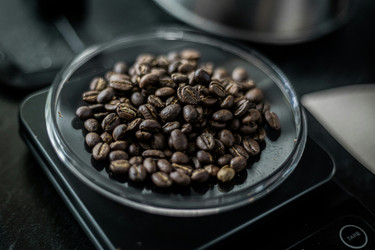
A good coffee scale makes one of the most important variables in brewing
measurable: how much coffee you actually use. Whether you are
dialing in espresso, preparing pour-over, pre-weighing beans for the
week, or simply trying to make tomorrow's cup taste like today's, a
scale gives you a repeatable starting point.
But choosing the right scale requires more than looking for the model
with the most decimal places.
Three specifications deserve the most attention:
-
Accuracy and useful readability
-
Capacity
-
Calibration
For most everyday coffee preparation, 0.1g readability provides an
excellent balance between useful measurement detail and practical
capacity. The Specialty Coffee Association
provides professional coffee education and standards built around
repeatable brewing measurements. A compact 500--600g scale can be ideal
for beans and espresso dosing, while a 3,000g scale is substantially
more versatile when the entire brewer, cup, carafe, and water need to
sit on the platform.
American Weigh Scales currently recommends 0.1g readability for most
coffee applications and offers formats ranging from compact pocket
scales to dedicated brewing
scales.
This buying guide explains how to evaluate accuracy, capacity,
calibration, repeatability, tare, response speed, timers, platform size,
and other features before choosing a scale for coffee beans.
Quick Coffee Scale Buying Guide
Coffee application Practical capacity Practical readability
Beans only 200--600g 0.1g
Espresso dosing 200--600g 0.1g
Beans + dosing cup 500--750g 0.1g
Portafilter + coffee 500--1,000g+ 0.1g
Espresso yield 500--1,000g+ 0.1g
AeroPress 1,000--3,000g 0.1g
Pour-over 2,000--3,000g+ 0.1g
French press 2,000--5,000g 0.1g
Cold-brew vessel 3,000--5,000g+ 0.1g
Specialized tiny doses 100--250g 0.01g
These are starting points. Your actual equipment determines the required
capacity.
Accuracy, Readability and Repeatability
These terms are related, but they do not mean the same thing.
Readability
Readability is the smallest increment shown by the display.
Examples include:
-
1g
-
0.1g
-
0.01g
-
0.001g
Accuracy
Accuracy concerns how closely the measured result agrees with the
relevant reference value within the scale's stated performance.
Repeatability
Repeatability describes whether repeated measurements of the same stable
load produce consistent results under similar conditions.
For coffee, all three concepts matter.
A scale with many decimal places is not automatically the best coffee
scale.
Why 0.1g Readability Is Usually the Sweet Spot
Most coffee recipes do not require laboratory-level resolution.
A 0.1g scale can display:
-
15.0g
-
18.0g
-
18.5g
-
20.0g
-
30.0g
-
36.0g
This is detailed enough for most espresso dosing, espresso yield,
pour-over, AeroPress, and other manual-brewing applications.
AWS's current Best Scale for Coffee Beans and Espresso
Dosing
guide recommends 0.1g readability for most coffee preparation.
Is 1g Readability Enough?
A scale that reads only in whole grams can still measure coffee.
It may be acceptable for:
-
Large batch brewing
-
Rough bean portioning
-
General kitchen use
However, it is relatively coarse for espresso.
If your target dose is 18g, a 0.1g scale provides much more feedback as
you approach the target.
For enthusiasts who want repeatable recipes, 0.1g is generally the
better choice.
Do You Need 0.01g?
Usually not.
A 0.01g scale can be useful for:
-
Tiny experimental doses
-
Individual-bean comparisons
-
Specialized coffee testing
-
A scale shared with jewelry, coins, crafts, or other precision
applications
But most coffee recipes do not meaningfully require hundredth-of-a-gram
dosing.
The tradeoff can be lower capacity and a smaller platform.
For most coffee stations, 0.1g is more practical. The SCA Sample
Preparation
Standard
provides a useful professional reference for precision in coffee sample
weighing.
Do You Need 0.001g?
For ordinary coffee preparation, no.
A milligram scale may be appropriate for specialized experiments, but it
is generally unnecessary for espresso and brewed coffee.
Such scales can be more sensitive to:
-
Drafts
-
Vibration
-
Static
-
Temperature
They may also have limited capacity and small weighing pans.
Coffee preparation usually benefits more from fast, stable response than
extreme resolution.
Capacity: How Much Is Enough?
Capacity is the maximum total load the scale is designed to support.
The important word is total.
If you place a dosing cup on the scale, its mass counts.
If you place a pour-over setup on the scale, all of these count:
-
Carafe
-
Dripper
-
Filter
-
Coffee
-
Water
That is why a scale that is perfect for beans may be unsuitable for
brewing.
200g Capacity
A 200g scale can easily handle typical coffee doses.
It is useful for:
-
Beans
-
Grounds
-
Small espresso doses
-
Lightweight dosing cups
-
Travel
However, a heavier container can quickly consume the available capacity.
AWS's 200g vs. 500g Pocket
Scale
guide notes that 200g can work for individual coffee portions, while
500g offers more flexibility with containers and larger portions.
500g Capacity
A 500g scale is a highly practical format for coffee dosing.
It provides room for:
-
Beans
-
Grounds
-
Dosing cups
-
Small containers
-
Travel kits
AWS currently lists its AWS-501 at 500g x 0.1g as a portable
espresso-dosing option.
For many users, 500g is the point where a pocket scale becomes
substantially more forgiving.
600--750g Capacity
A 600--750g scale adds useful headroom while remaining compact.
This range works well for:
-
Larger dosing cups
-
Small bowls
-
Multiple servings
-
Office coffee
-
Travel
-
Grinder stations
AWS's Best Pocket Scales for Jewelry, Coins, Coffee and
Crafts
identifies a 600g x 0.1g format as useful for coffee beans, grounds, and
small containers.
1,000g Capacity
A 1kg scale can accommodate heavier containers and some compact brewing
setups.
However, it may still be insufficient for a complete pour-over setup.
Always add the weight of:
brewer + carafe/cup + coffee + water
before deciding.
3,000g Capacity
For complete coffee preparation, 3kg is one of the most versatile
capacities.
It can accommodate many:
-
Pour-over setups
-
Mugs
-
Carafes
-
AeroPress setups
-
Espresso cups
-
Brewing-water quantities
AWS's current BARISTA-3KG specification combines 3,000g capacity with
0.1g readability and a built-in timer.
This is a strong all-purpose combination for a dedicated coffee station.
5,000g Capacity
A 5kg scale is useful for:
-
Heavy French presses
-
Large carafes
-
Batch brewing
-
Large bowls
-
General kitchen work
Choose this capacity if you need the extra load range.
Do not assume 5kg is automatically better than 3kg. Readability,
response speed, platform size, and brewing features still matter.
Capacity Headroom
Avoid planning normal use right at maximum capacity.
Example:
-
Portafilter = 450g
-
Coffee = 20g
-
Funnel = 30g
Total:
500g
A 500g scale has no practical headroom for this setup.
A higher-capacity scale is the better choice.
Headroom helps accommodate heavier containers and reduces the risk of
accidental overload.
Tare Does Not Increase Capacity
Suppose you place a 100g dosing cup on a 500g scale and press tare.
The display returns to zero.
The scale is still physically supporting 100g.
Tare changes the displayed net measurement; it does not restore physical
capacity.
AWS explains how capacity and readability work together in What Does
500g x 0.01g Mean on a Digital
Scale?.
Why Tare Is Essential for Coffee
Tare is one of the most useful scale functions in coffee preparation.
For bean dosing:
-
Put the dosing cup on the scale.
-
Press tare.
-
Confirm zero.
-
Add beans.
-
Stop at the target dose.
For brewing, you can similarly zero the cup, carafe, or brewer before
adding coffee or water.
Tare eliminates manual subtraction and makes recipes easier to follow.
Calibration: Why It Matters
Calibration is part of maintaining confidence in a precision weighing
system.
A good coffee scale should have a clear procedure specifying:
-
Whether user calibration is supported
-
Which reference mass is required
-
How calibration mode is activated
-
Whether the calibration weight is included
AWS provides step-by-step instructions in How to Calibrate a Digital
Scale for Accurate
Results.
Use the calibration mass specified by the manufacturer.
Do Not Calibrate With Coffee Beans
Coffee beans are not calibration standards.
Individual beans vary in:
-
Size
-
Density
-
Moisture
-
Roast
-
Shape
A bag labeled with a nominal net weight is also not a substitute for a
proper calibration mass.
Calibration depends on a known reference.
When Should You Check Calibration?
Follow the manufacturer's recommendations.
Situations that may justify checking scale performance include:
-
After travel
-
After long storage
-
After a significant temperature change
-
After accidental overload
-
When measurements become unusual
Before recalibrating, also inspect the setup.
A problem may come from:
-
Weak batteries
-
Unstable counter
-
Coffee grounds around the platform
-
Container contact
-
Vibration
Calibration vs. Verification
These concepts are useful to distinguish.
Calibration establishes or adjusts the relationship between the scale's
indication and an appropriate reference according to the manufacturer's
procedure.
Verification is a check of how the scale behaves against a suitable
known reference.
For everyday coffee use, following the manufacturer's calibration
instructions and periodically checking repeatability is usually more
useful than obsessively recalibrating the scale.
Why Reference Weights Matter
Professional metrology depends on reference standards with known values
and documented relationships to higher-level standards.
NIST's Calibration of Mass
Standards
describes mass calibration as establishing a mass value together with
appropriate uncertainty and explains its calibration services for mass
standards.
A home coffee scale does not need laboratory metrology, but the
principle is still useful: calibration should rely on the correct
reference mass rather than an improvised object.
Repeatability
Repeatability is particularly important for coffee because the purpose
of weighing is often to reproduce a recipe.
Test it by:
-
Confirming zero.
-
Placing the same dosing cup on the platform.
-
Recording the reading.
-
Removing it.
-
Waiting for zero.
-
Repeating several times.
The readings should behave consistently within the scale's stated
performance.
If they do not, investigate the environment and setup.
Stable Zero
A useful coffee scale should return predictably to zero after a load is
removed.
If the display drifts, check:
-
Platform cleanliness
-
Battery condition
-
Surface stability
-
Calibration
-
Air movement
-
Contact with surrounding objects
Coffee grounds can collect around platform edges, so cleanliness
matters.
Response Speed
Response speed is especially important when the load changes
continuously.
During pour-over:
water is constantly being added.
During espresso:
beverage output is constantly increasing.
A slow scale may lag behind the actual load.
For beans alone, this matters less.
For active brewing, it becomes one of the most important features.
Built-In Timer
A timer is not essential for weighing dry beans.
It becomes highly useful for:
-
Espresso extraction
-
Pour-over bloom
-
Pour intervals
-
Total brew time
-
AeroPress steep time
A scale that combines time and mass lets you monitor two important
brewing variables from one display.
Platform Size
Platform size is just as important as numerical capacity.
A small platform works for:
-
Beans
-
Grounds
-
Dosing cups
A larger platform is better for:
-
Portafilters
-
Mugs
-
Drippers
-
Carafes
-
French presses
The complete container must rest freely on the weighing surface.
If it touches the counter, machine, or another object, part of the load
may be supported elsewhere.
Espresso-Machine Clearance
If you plan to weigh espresso output beneath the machine, measure the
available space.
Check:
-
Width
-
Depth
-
Scale height
-
Cup height
-
Display visibility
A high-capacity kitchen scale can be completely unsuitable if it does
not fit on the drip tray.
Splash Resistance
Coffee scales operate near liquid.
Common hazards include:
-
Espresso drips
-
Brewing water
-
Condensation
-
Wet cups
Splash resistance is valuable for a brewing scale.
However, splash-resistant does not mean waterproof.
Never immerse the scale unless the manufacturer explicitly says the
device is designed for it.
Silicone Mat
A removable silicone mat can:
-
Protect the platform
-
Improve grip
-
Catch minor drips
-
Make cleanup easier
This is especially useful beneath espresso cups and pour-over equipment.
Display Quality
Look for:
-
Clear digits
-
Visible decimal point
-
Backlighting
-
Easy-to-see timer
-
Good viewing angle
During active brewing, the display needs to remain readable with a cup
or carafe on the platform.
Grams
Grams are the most convenient unit for coffee recipes.
They allow both coffee and water to be expressed using the same
mass-based system.
Examples:
-
18g coffee
-
36g espresso yield
-
20g coffee
-
320g brewing water
This makes ratio calculations straightforward.
Coffee-to-Water Ratios
A scale makes recipes repeatable.
Example:
20g coffee + 320g water
320 ÷ 20 = 16
That is a 1:16 coffee-to-water ratio.
Another example:
30g coffee + 510g water
510 ÷ 30 = 17
That is 1:17.
The SCA Brewing Control
Chart
is a useful professional reference for brewing strength and extraction.
The ideal ratio depends on the coffee, brewer, grind, and taste
preference.
The value of the scale is that you can reproduce the same ratio or
change it intentionally.
Espresso Brew Ratios
A scale is equally useful for espresso.
Example:
-
Dry coffee dose = 18g
-
Espresso output = 36g
36 ÷ 18 = 2
This produces a 1:2 input-to-output ratio.
A timer then adds another measurable variable: extraction time.
That is why a responsive 0.1g scale with a timer is particularly useful
for espresso.
Best Scale for Coffee Beans Only
If the scale will stay beside the grinder and only measure beans:
500--600g x 0.1g
is an excellent target.
Prioritize:
-
Compact size
-
Tare
-
Fast response
-
Stable readings
-
Protective cover
-
Easy storage
You do not need 3kg capacity for an 18--30g coffee dose unless heavy
equipment will also sit on the scale.
Best Scale for Espresso Dosing
For beans or grounds:
200--600g x 0.1g
works well.
If you place a heavy portafilter on the scale, calculate the gross load
first.
The portafilter may require 500g, 1kg, or greater capacity depending on
the equipment.
Best Scale for Espresso Yield
For espresso output, prioritize:
-
0.1g readability
-
Fast response
-
Built-in timer
-
Tare
-
Compact dimensions
-
Splash resistance
Physical fit beneath the group head matters as much as capacity.
Best Scale for Pour-Over
For complete pour-over brewing:
2--3kg+ x 0.1g
is a strong target.
The scale needs enough capacity for:
-
Carafe
-
Dripper
-
Filter
-
Coffee
-
Water
A timer and larger platform are highly useful.
Best Scale for AeroPress
For beans alone, a pocket scale is enough.
For the complete brewing setup:
1--3kg x 0.1g
provides greater flexibility.
A timer is helpful for repeatable steep times.
Best Scale for French Press
A French press can become heavy once filled with water.
Calculate:
press + coffee + water
before selecting capacity.
A 3--5kg scale may be more appropriate than a pocket model.
Best Scale for Cold Brew
Cold brew may involve a large coffee dose and a heavy brewing vessel.
For beans only:
500--750g x 0.1g
can work well.
For the complete vessel:
3--5kg+ may be necessary.
Best Scale for Travel Coffee
Travel favors:
-
200--600g capacity
-
0.1g readability
-
Protective cover
-
Battery power
-
Compact dimensions
-
Tare
A pocket scale is often the best format when you only need to pre-weigh
beans.
Best Scale for an Office Coffee Station
For bean dosing:
500--600g x 0.1g
is compact and practical.
For shared pour-over:
2--3kg x 0.1g
offers greater versatility.
Pocket Scale vs. Dedicated Coffee Scale
Pocket Scale
Best for:
-
Beans
-
Grounds
-
Travel
-
Grinder station
-
Office dosing
-
Small containers
Dedicated Coffee Scale
Best for:
-
Pour-over
-
Espresso yield
-
Water measurement
-
Carafes
-
Timed brewing
The distinction is less about precision than workflow.
Coffee Scale vs. Kitchen Scale
A kitchen scale can work for coffee if it provides:
-
0.1g readability
-
Suitable capacity
-
Tare
-
Fast response
-
Appropriate platform
Many general kitchen scales read only in 1g increments.
That can be fine for large recipes but less useful for espresso dosing.
Two-Scale Coffee Setup
Some enthusiasts benefit from two scales.
Scale One: Dosing
500--600g x 0.1g
Keep it beside the grinder.
Use it for:
-
Beans
-
Grounds
-
Travel
Scale Two: Brewing
3,000g x 0.1g
Keep it at the brewing station.
Use it for:
-
Pour-over
-
Espresso output
-
AeroPress
-
Carafes
-
Water
This gives each scale a clear job.
Commercial Coffee Weighing
A home brewing scale and a commercial scale used to determine
transaction value are not necessarily the same thing.
NIST Handbook 44, 2026
Edition
contains specifications, tolerances, and technical requirements for
weighing and measuring devices used in regulated contexts.
If coffee is sold by weight, applicable legal-metrology requirements may
govern the scale used for the transaction.
Do not assume a consumer coffee scale is approved for legal-for-trade
use.
Coffee Scale Buying Checklist
Before buying, ask:
-
Will I weigh beans only?
-
Will I weigh grounds?
-
Will I weigh a portafilter?
-
Will I brew directly on the scale?
-
What is the lightest normal dose?
-
What is the heaviest gross load?
-
Is 200g enough?
-
Would 500--600g be more flexible?
-
Do I need 3kg?
-
Would 5kg help with heavy equipment?
-
Does the scale read to 0.1g?
-
Do I genuinely need 0.01g?
-
What accuracy does the manufacturer specify?
-
How repeatable are measurements?
-
Can the scale be calibrated?
-
Which calibration mass is required?
-
Is the calibration mass included?
-
Does it have tare?
-
Does it measure grams?
-
Is response speed suitable for brewing?
-
Does it have a timer?
-
Is the platform large enough?
-
Will it fit beneath the espresso machine?
-
Is the display visible?
-
Is it splash resistant?
-
Is it easy to clean?
-
Does the power system fit my workflow?
-
Is auto-off appropriate?
-
Will I travel with it?
-
Is the scale intended for commercial transactions?
Common Coffee Scale Buying Mistakes
Choosing by Decimal Places Alone
More decimal places do not automatically mean better coffee
measurements.
Confusing Readability and Accuracy
They are different specifications.
Ignoring Repeatability
A scale should behave consistently.
Buying Too Little Capacity
Remember the container and brewing equipment.
Forgetting Headroom
Avoid routinely operating at maximum capacity.
Assuming Tare Restores Capacity
It does not.
Ignoring Platform Size
The complete load must fit.
Buying a Huge Scale With Coarse Readability
Capacity alone does not make a scale suitable for espresso.
Buying 0.001g for Everyday Coffee
Milligram readability is generally unnecessary.
Ignoring Response Speed
Dynamic brewing benefits from a responsive scale.
Skipping Calibration Instructions
Use the manufacturer's specified procedure and reference mass.
Using Coffee as a Calibration Weight
Coffee beans are not reference standards.
Ignoring Water Exposure
Brewing scales operate around liquid.
How to Set Up a New Coffee Scale
-
Read the manufacturer's instructions.
-
Install or charge the correct power source.
-
Place the scale on a hard, stable surface.
-
Inspect and clean the platform.
-
Allow the scale to acclimate after major temperature changes.
-
Follow the specified calibration procedure if required.
-
Confirm zero.
-
Test repeatability with a stable object.
-
Select grams.
-
Begin weighing coffee.
Do not overload the scale during testing.
How to Weigh Coffee Beans Consistently
-
Use the same dosing cup.
-
Place the scale on the same stable surface.
-
Confirm zero.
-
Tare the empty cup.
-
Add beans gradually.
-
Stop at the target dose.
-
Record the dose when testing recipes.
-
Remove the container.
-
Confirm the scale returns to zero.
Consistency makes comparisons more meaningful.
How to Troubleshoot Inconsistent Readings
If readings seem inconsistent:
-
Move the scale to a hard, stable counter.
-
Eliminate strong airflow.
-
Check whether the container touches anything outside the platform.
-
Clean coffee grounds from the platform edges.
-
Check battery condition.
-
Allow the scale to acclimate if temperature changed.
-
Verify calibration according to the manufacturer's instructions.
-
Repeat the measurement.
AWS also discusses these issues in Why Does My Digital Scale Give
Different
Readings?.
Frequently Asked Questions
What accuracy do I need for coffee beans?
For most coffee preparation, a well-performing scale with 0.1g
readability is a practical choice. Evaluate the manufacturer's stated
accuracy and repeatability rather than assuming readability equals
accuracy.
Is 0.1g good enough for espresso?
Yes. It provides useful detail for typical espresso doses and beverage
yields.
Do I need 0.01g for coffee?
Usually not. It is more useful for specialized small-dose experiments.
Do I need 0.001g?
No for ordinary coffee preparation.
What capacity should I buy?
Choose roughly 200--600g for beans and small dosing containers, around
3kg for complete brewing setups, and 5kg when heavy equipment or
multipurpose kitchen use requires it.
Is 500g enough?
For beans, grounds, and many dosing cups, yes.
Is 3kg enough?
For many pour-over, AeroPress, espresso-yield, and carafe setups, 3kg is
highly versatile.
Does tare increase capacity?
No. The container remains part of the physical load.
Why does calibration matter?
Calibration helps establish or adjust the scale's response using an
appropriate known reference according to its specified procedure.
Can I calibrate with coffee beans?
No. Use the calibration mass specified by the manufacturer.
How often should I calibrate?
Follow the manufacturer's instructions. Check performance after
transport, unusual readings, accidental overload, or major environmental
changes when appropriate.
What is repeatability?
Repeatability is the ability to produce consistent measurements of the
same stable load under similar conditions.
Do I need a timer?
Not for beans alone. A timer is highly useful for espresso, pour-over,
AeroPress, and other time-sensitive brewing methods.
Is a pocket scale good for coffee?
Yes. Pocket scales are excellent for beans, grounds, travel, and dosing.
Is a kitchen scale good for coffee?
It can be, provided it has suitable readability, capacity, response
speed, tare, and platform dimensions.
Can a coffee scale be used commercially?
A consumer scale is not automatically legal for trade. If weight
determines transaction value, verify applicable weights-and-measures
requirements.
Final Verdict: Accuracy, Capacity and Calibration
For most coffee drinkers, the ideal scale starts with 0.1g
readability and enough capacity for the complete load.
A practical framework is:
-
200--500g x 0.1g: compact bean and espresso dosing
-
500--750g x 0.1g: versatile dosing with heavier containers
-
1--2kg x 0.1g: compact brewing setups
-
3kg x 0.1g: excellent all-around coffee and pour-over capacity
-
5kg x 0.1g: heavy brewers, batch preparation, and kitchen use
-
0.01g: specialized small-dose experiments
-
0.001g: generally unnecessary for coffee
Then evaluate accuracy specifications, repeatability, calibration,
tare, response speed, platform size, timer functionality, display
visibility, and resistance to everyday brewing splashes.
For beans alone, a compact 500--600g x 0.1g scale is an excellent
choice.
For complete brewing, a 3,000g x 0.1g coffee scale offers substantially
more flexibility.
Most importantly, do not confuse extra decimal places with better
measurement. The best coffee scale is the one that consistently measures
the loads you actually use, fits your brewing equipment, can be checked
or calibrated appropriately, and makes your recipes easier to repeat.