
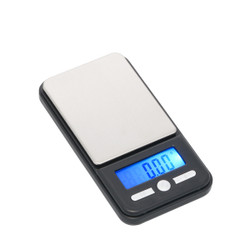
The best digital scale for collectibles depends on what you collect and what you expect weight measurements to tell you.
A coin collector comparing an individual coin with published specifications has very different requirements from someone weighing:
-
Boxed figurines
-
Watches
-
Medals
-
Trading-card slabs
-
Miniatures
-
Collectible jewelry
-
Small antiques
-
Groups of coins
-
Memorabilia
For many small collectible objects:
100–500g capacity with 0.01g readability
provides an excellent balance between measurement detail and practical capacity.
A:
500g × 0.01g
scale is particularly versatile because it can handle many individual collectibles while providing hundredth-of-a-gram readability.
For heavier collectibles:
1–2kg+ capacity with 0.1g readability
may be more practical.
For extremely small objects where thousandths of a gram genuinely matter:
0.001g
may be useful.
But finer resolution should not automatically be considered better.
The right scale needs:
enough capacity for the complete object + fine enough readability for the difference that actually matters.
Quick Answer: What Scale Do You Need for Collectibles?
| Collectible | Practical Capacity | Suggested Readability |
|---|---|---|
| Individual coins | 100–200g | 0.01g |
| Coins in capsules | 100–250g | 0.01g |
| Small groups of coins | 250–500g | 0.01g |
| Tiny precious-metal items | 20–100g | 0.001g when genuinely needed |
| Medals | 200–500g+ | 0.01g–0.1g |
| Watches | 250–500g+ | 0.01g–0.1g |
| Trading cards | 100–500g | 0.01g–0.1g |
| Graded card slabs | 200–500g+ | 0.01g–0.1g |
| Small figurines | 500g–2kg | 0.1g |
| Miniatures | 100–500g | 0.01g |
| Small memorabilia | 500g–2kg+ | 0.1g |
| Boxed collectibles | 1–5kg+ | 0.1g–1g |
For the broadest range of small collectibles:
500g × 0.01g
is a strong starting point.
For heavier figurines, boxed pieces and memorabilia:
higher capacity becomes more important than extreme precision.
Why Collectors Use Digital Scales
Weight can provide useful information when:
-
Recording a collection
-
Comparing similar items
-
Checking published coin specifications
-
Documenting purchases
-
Cataloging inventory
-
Comparing components
-
Tracking restoration or modifications
-
Separating visually similar items
-
Weighing precious-metal collectibles
-
Preparing collectibles for shipping
For some collectibles, mass is one objective physical characteristic that can complement:
-
Dimensions
-
Materials
-
Condition
-
Markings
-
Provenance
-
Certification
-
Photography
But weight should be treated as:
one piece of information—not proof of authenticity.
A Digital Scale Cannot Authenticate a Collectible
This is particularly important for:
-
Coins
-
Trading cards
-
Watches
-
Precious metals
-
Memorabilia
-
Vintage objects
Two objects can have similar weight while differing significantly in:
-
Composition
-
Manufacturing method
-
Authenticity
-
Condition
-
Market value
Professional collectible services evaluate far more than mass.
For example, PSA's trading-card authentication and grading process considers authenticity and condition before assigning a grade.
Likewise, CGC's collectible grading standards evaluate condition using established grading systems rather than weight alone.
Use your scale for measurement.
Do not use it as a substitute for professional authentication.
Start With What You Actually Collect
Before choosing a scale, make a list of the objects you expect to weigh.
You might collect:
-
Coins
-
Tokens
-
Medals
-
Bullion pieces
-
Watches
-
Jewelry
-
Trading cards
-
Sports cards
-
Pokémon cards
-
TCG cards
-
Graded card slabs
-
Stamps
-
Miniatures
-
Die-cast models
-
Figurines
-
Small sculptures
-
Pins
-
Badges
-
Vintage accessories
-
Small antiques
-
Memorabilia
Then determine two numbers:
1. Your lightest meaningful object or weight difference
and
2. Your heaviest complete collectible, including any holder or tray
Those two measurements tell you what capacity and readability range to consider.
What Does 500g × 0.01g Mean?
A scale labeled:
500g × 0.01g
typically means:
Maximum nominal capacity:
500 grams
Displayed readability:
0.01 gram
That does not mean every measurement is guaranteed accurate to exactly ±0.01g under every condition.
AWS explains this distinction in What Does 500g × 0.01g Mean on a Digital Scale?.
For collectors, this configuration is attractive because it provides:
-
Enough capacity for many small objects
-
Fine hundredth-of-a-gram readability
-
Compact size
-
Portable pocket-scale formats
-
Useful headroom for holders and trays
0.1g vs. 0.01g vs. 0.001g for Collectibles
Understanding readability is one of the most important parts of choosing a collectible scale.
0.1g Readability
A 0.1g scale displays tenths of a gram.
Examples:
84.1g
84.2g
84.3g
This level can work well for:
-
Figurines
-
Larger medals
-
Watches
-
Boxed collectibles
-
Large coin groups
-
Memorabilia
-
Model vehicles
-
Heavier antiques
For an 800g figurine, hundredth-of-a-gram detail usually adds little practical value.
0.01g Readability
A 0.01g scale displays hundredths of a gram.
Examples:
26.71g
26.72g
26.73g
For many collectors, this is the sweet spot.
It can be useful for:
-
Coins
-
Tokens
-
Small medals
-
Precious-metal pieces
-
Small jewelry collectibles
-
Miniatures
-
Small parts
-
Individual card-related comparisons
-
Watch components
AWS's Best Digital Scale for Coins similarly identifies 0.01g readability as a practical general-purpose range for many coin collectors.
0.001g Readability
A 0.001g scale displays thousandths of a gram.
That equals:
1 milligram.
This may be useful for:
-
Tiny precious-metal fragments
-
Extremely small components
-
Very light collectible parts
-
Research-oriented measurement
-
Situations where 0.01g increments genuinely are too coarse
However, finer readability comes with tradeoffs.
A 0.001g scale is generally more sensitive to:
-
Air movement
-
Vibration
-
Static
-
Temperature
-
Surface instability
AWS explains these tradeoffs further in 0.001g vs. 0.01g Scales: Which Precision Do You Need?.
Does More Resolution Mean Better Accuracy?
No.
This is one of the most common mistakes when buying a scale.
Consider:
Scale A:
500g × 0.01g
Scale B:
50g × 0.001g
Scale B displays one additional decimal place.
But that does not automatically make it the better scale for your collection.
If your collectible weighs:
180g
Scale B cannot weigh it at all.
Useful measurement depends on:
-
Capacity
-
Readability
-
Accuracy specification
-
Repeatability
-
Minimum usable load
-
Calibration
-
Stability
-
Environment
NIST's Calibration of Mass Standards provides technical background on traceable mass measurement and calibration.
Best Digital Scale for Coins
Coins are one of the strongest collectible use cases for precision weighing.
A coin's published specifications may include:
-
Diameter
-
Thickness
-
Composition
-
Weight
For many individual collectible coins:
0.01g readability
is a practical choice.
Capacity requirements are generally modest.
A:
100–500g
scale can handle:
-
Individual coins
-
Capsules
-
Holders
-
Small coin groups
-
Tokens
-
Many medals
AWS's Coin Scale Buying Guide provides more detailed guidance specifically for numismatic applications.
Compare Coins With Authoritative Specifications
If you use weight to evaluate a coin, compare the measurement against a reliable numismatic reference.
The NGC Coin Explorer and research tools include technical information such as coin weights, composition and other specifications for many issues.
The American Numismatic Association also emphasizes education, grading knowledge and reference materials as fundamentals of collecting in its coin collecting basics guide.
Weight is useful supporting data.
It is not a complete authentication test.
Why Coin Weight Can Differ
A collectible coin may not weigh exactly its nominal original specification.
Possible reasons include:
-
Circulation wear
-
Surface loss
-
Corrosion
-
Damage
-
Residue
-
Contamination
-
Holder or capsule weight
-
Scale performance
-
Manufacturing tolerances
Therefore:
do not automatically label a coin counterfeit because its measured weight differs slightly from a published figure.
Further examination may be necessary.
Should You Weigh Coins in Capsules?
You can, but understand what you are measuring.
Suppose:
Coin + capsule = 36.42g
That is not directly comparable with a published coin-only specification.
For direct comparison:
measure the coin itself when safe and appropriate.
If you prefer not to remove a valuable collectible from its holder, document the combined weight rather than treating it as bare-coin mass.
Best Scale for Coin Groups
A single coin may weigh only a few grams.
A tray containing:
30 coins
can weigh substantially more.
If you routinely weigh:
-
Coin lots
-
Rolls
-
Multiple medals
-
Bullion collections
choose greater capacity.
A:
500g × 0.01g
scale can provide useful flexibility for individual pieces and small groups.
Larger lots may require:
1–2kg or more.
Best Digital Scale for Trading Cards
Trading cards are extremely light compared with coins.
A standard card scale application might involve:
-
Individual cards
-
Sleeved cards
-
Top loaders
-
Graded slabs
-
Small card lots
For cards, fine mass measurements can be interesting for documentation and comparison.
However:
weight cannot determine a trading card's grade or authenticity.
Professional grading involves visual inspection, authentication and condition evaluation.
PSA, for example, evaluates authenticity before assessing condition using its grading system.
Is 0.01g Useful for Trading Cards?
It can be useful if you are comparing:
-
Individual cards
-
Sleeves
-
Top loaders
-
Different card stocks
-
Similar card variants
But it should not be used as a standalone test for:
-
Counterfeits
-
Trimming
-
Alterations
-
Condition grade
Those require additional inspection and expertise.
Best Scale for Graded Trading Cards
A graded card slab weighs considerably more than the card inside it.
Therefore, if you want to weigh:
-
PSA slabs
-
CGC slabs
-
Other encapsulated cards
choose enough capacity for:
card + protective holder.
A:
200–500g
scale can generally provide much more headroom than an ultra-low-capacity milligram scale.
Best Scale for Watches
Watches can vary dramatically in mass.
A lightweight watch may weigh:
50–100g
while a large metal watch can be considerably heavier.
For many collectible watches:
500g capacity
is a useful starting point.
Readability of:
0.01g or 0.1g
may be appropriate depending on why you are measuring the watch.
Can Weight Authenticate a Watch?
No.
A counterfeit and genuine watch may have similar overall weight.
Authenticating watches can involve:
-
Movement
-
Serial numbers
-
Materials
-
Case construction
-
Dial
-
Finishing
-
Documentation
-
Service history
Mass can be recorded as supporting information but should not be treated as definitive proof.
Best Digital Scale for Medals
Collectible medals can range from lightweight pieces to large bronze or silver items.
For smaller medals:
200–500g × 0.01g
can work well.
For heavier medals:
1kg+ × 0.1g
may provide more useful capacity.
If precious-metal content is relevant, use weight together with:
-
Dimensions
-
Composition analysis
-
Hallmarks
-
Professional evaluation
Best Scale for Tokens
Tokens are similar to coins in their weighing requirements.
Many collectors can use:
100–500g × 0.01g
for:
-
Individual tokens
-
Casino tokens
-
Transit tokens
-
Trade tokens
-
Commemorative pieces
Larger groups require additional capacity.
Best Scale for Pins and Badges
Collectible pins and badges often fall within a modest weight range.
A:
500g × 0.01g
scale provides plenty of flexibility for:
-
Enamel pins
-
Military badges
-
Lapel pins
-
Collectible buttons
-
Small insignia
For individual pieces, 0.01g offers more detail than is usually required but remains practical.
Best Scale for Figurines
Figurines require a different approach.
A small miniature may weigh:
20g
while a larger resin or metal collectible might weigh:
800g
or several kilograms.
For small miniatures:
500g × 0.01g
can work well.
For larger figures:
2–5kg × 0.1g
may be a better choice.
Why Figurines Often Need More Capacity
Collectible figurines may contain:
-
Resin
-
Metal
-
PVC
-
Ceramic
-
Base
-
Stand
-
Accessories
The complete object matters.
Suppose:
Figure = 610g
Base = 240g
Total:
850g
A 500g scale cannot weigh the complete collectible.
You would need greater capacity.
Best Scale for Die-Cast Models
Die-cast vehicles and models can become heavy despite their compact size.
Examples include:
-
Model cars
-
Aircraft
-
Trains
-
Military vehicles
-
Machinery models
For smaller die-cast collectibles:
500g–1kg
may be sufficient.
For large models:
2–5kg
provides more flexibility.
Best Scale for Miniatures
Miniature collectors may weigh:
-
Miniatures
-
Bases
-
Components
-
Metal figures
-
Resin pieces
-
Model parts
For many small miniatures:
100–500g × 0.01g
works well.
AWS covers similar small-object weighing requirements in Best Digital Scale for Jewelry.
Best Scale for Collectible Jewelry
Vintage and collectible jewelry may include:
-
Rings
-
Chains
-
Bracelets
-
Brooches
-
Pendants
-
Precious-metal pieces
For many pieces:
0.01g
is an excellent general-purpose readability.
Tiny components may justify 0.001g.
Larger silver jewelry may require greater capacity.
AWS provides further guidance in How to Choose a Scale for Jewelry.
Best Digital Scale for Stamps
Individual stamps weigh very little.
Weight usually is not the primary method used to:
-
Grade
-
Authenticate
-
Value
a collectible stamp.
However, a precision scale can still be useful when documenting:
-
Stamp groups
-
Covers
-
Envelopes
-
Albums
-
Sets
For ordinary philatelic collecting, extremely fine weighing precision may provide limited practical value compared with condition, printing characteristics and provenance.
Best Scale for Small Antiques
The term "antique" covers an enormous range.
Small collectible objects might include:
-
Keys
-
Small silverware
-
Decorative pieces
-
Miniature boxes
-
Small tools
-
Vintage accessories
For items below approximately 500g:
500g × 0.01g
provides a versatile range.
For heavier objects:
1–5kg × 0.1g
may be more appropriate.
Best Scale for Memorabilia
Memorabilia can include:
-
Pins
-
Badges
-
Medals
-
Signed objects
-
Small equipment
-
Promotional items
-
Souvenirs
Because weight varies so widely, determine:
your heaviest complete object
before choosing capacity.
If you routinely handle pieces above 500g, a small pocket scale may not be sufficient.
Best Capacity for Collectibles
A useful general capacity guide is:
| Capacity | Best For |
|---|---|
| 50–100g | Tiny components |
| 100–200g | Individual coins and very small objects |
| 200–500g | Coins, jewelry, watches, slabs, medals |
| 500g–1kg | Heavier watches, small models, grouped items |
| 1–2kg | Figurines, die-cast models, memorabilia |
| 2–5kg+ | Large collectibles and boxed pieces |
For a general collector who primarily owns small objects:
500g
is especially useful.
Why 500g × 0.01g Is So Versatile
A 500g × 0.01g scale occupies a useful middle ground.
It provides:
-
500g maximum nominal capacity
-
Hundredth-of-a-gram readability
-
Compact form factor
-
Enough room for many small collectible items
It can cover many:
-
Coins
-
Tokens
-
Medals
-
Watches
-
Pins
-
Badges
-
Jewelry pieces
-
Miniatures
-
Graded cards
without requiring the lower capacity associated with many 0.001g scales.
A Practical AWS Scale for Collectibles
The AWS SC501g Precision Digital Pocket Scale provides:
500g × 0.01g
making it a particularly practical configuration for many small collectible applications.
Useful characteristics include:
-
Stainless steel weighing platform
-
Tare
-
Backlit display
-
Multiple weighing units
-
Expansion trays
-
Compact format
For collectors whose items remain under 500g, this type of configuration offers a strong balance between capacity and measurement detail.
When 500g Is Not Enough
Do not force a collectible onto an undersized scale.
Suppose:
Figurine = 720g
Base = 240g
Total = 960g
A 500g scale cannot weigh it.
Choose:
1kg or greater capacity.
If your collection contains many heavy models or statues, a 2–5kg scale may be more practical.
When 0.001g Is Actually Useful
Use 0.001g when:
-
Your object is extremely small.
-
Differences below 0.01g genuinely matter.
-
Your scale has enough capacity.
-
Your environment can support milligram-level measurement.
Do not choose 0.001g simply because:
three decimal places look more precise.
The extra digit only has value when the application requires it.
Minimum Usable Load Matters
A fine-resolution scale may not perform equally across every possible load.
For very small objects, check:
-
Manufacturer specifications
-
Minimum load
-
Repeatability
-
Accuracy tolerance
Do not assume that displaying:
0.001g
means every milligram-level value is equally reliable.
Repeatability Is Important for Collectors
Suppose you weigh the same coin several times.
You see:
26.72g
26.72g
26.73g
That indicates useful consistency.
If you instead see:
26.72g
27.14g
26.21g
investigate the setup.
Possible causes include:
-
Vibration
-
Air movement
-
Unstable surface
-
Weak batteries
-
Calibration problems
-
Object touching another surface
Use a Hard, Stable Surface
Place your collectible scale on:
-
Hard table
-
Solid desk
-
Stable workbench
-
Rigid countertop
Avoid:
-
Carpet
-
Bed
-
Couch
-
Flexible shelf
-
Soft mat
Fine-resolution scales respond to very small forces.
Surface stability matters.
Keep the Scale Away From Vibration
Do not weigh collectibles:
-
Next to running machinery
-
On the same table as a vibrating printer
-
Beside a speaker
-
On an unstable folding table
Even subtle vibration can interfere with precision measurements.
Air Movement Matters at Fine Resolution
A 0.01g scale can be more sensitive to airflow than a normal kitchen scale.
A 0.001g scale is even more sensitive.
Avoid weighing directly beneath:
-
Air-conditioning vent
-
Fan
-
Open window
-
Strong airflow
Wait for the reading to stabilize.
Static Can Affect Lightweight Objects
Static electricity can interfere with fine measurements, particularly when weighing:
-
Plastic holders
-
Sleeves
-
Lightweight components
-
Packaging
If readings are unstable, static may be one possible factor.
Temperature Can Affect Scale Performance
Allow a scale to operate within its specified environmental range.
Avoid moving it directly from:
-
Cold storage
to:
-
Hot room
and immediately expecting highly repeatable precision measurements.
Give the equipment time to stabilize when necessary.
Why Tare Matters for Collectibles
Tare allows you to use:
-
Tray
-
Container
-
Protective dish
-
Holder
without including its displayed weight.
Example:
Tray = 42.35g
Place it on the scale.
Press tare.
Display:
0.00g
Add collectible.
Display:
collectible mass
This can be useful when the object should not be placed directly on the scale platform.
Tare Does Not Restore Physical Capacity
Suppose:
Scale capacity = 500g
Tray = 80g
You tare the tray.
Display:
0.00g
The scale is still supporting:
80g physically.
You do not have another full 500g available.
The total load must remain within the scale's physical capacity.
Platform Size Matters
Some collectibles are lightweight but physically large.
A scale may have enough capacity but insufficient platform space.
For example:
Collector plate = 420g
Scale capacity = 500g
But the object may:
-
Hang over the platform
-
Touch the table
-
Lean against another surface
If so, the measurement may become unreliable.
Choose a platform that supports the collectible appropriately.
Use a Tray for Irregular Collectibles
A tray can help with:
-
Coins
-
Small pieces
-
Pins
-
Components
-
Irregular shapes
But remember:
tray + collectible must remain within capacity.
Use tare if you need the display to show only the item's weight.
Calibration Matters
Calibration helps establish the relationship between the scale's reading and a known reference mass.
Before buying a collectible scale, ask:
-
Can it be calibrated?
-
What calibration mass does it require?
-
Is the calibration mass included?
-
Are instructions available?
Use the exact procedure for the specific scale.
Do Not Calibrate With Random Collectibles
A coin is not automatically a calibration weight.
Neither is:
-
Watch
-
Medal
-
Dumbbell
-
Jewelry piece
-
Packaged product
Even if its nominal weight appears known.
Use an appropriate calibration reference specified by the scale manufacturer.
Calibration vs. Verification
These terms are not identical.
Calibration
Adjusts or establishes the scale's relationship to a known reference.
Verification
Checks scale performance using an appropriate known mass.
A collector may periodically verify readings without necessarily recalibrating every time.
Record Measurements Consistently
If you use weight as part of collection documentation, create a consistent procedure.
Record:
-
Item
-
Measured mass
-
Unit
-
Date
-
Whether holder was included
-
Whether tray was tared
-
Scale used
For example:
1921 coin
Weight: 26.70g
Holder: No
Scale: 500g × 0.01g
Date: September 2026
This is more useful than simply recording:
26.70
with no context.
Always Record the Unit
Do not write:
31.4
Write:
31.4g
or:
1.11 oz
Units matter.
Collectible scales may support:
-
g
-
oz
-
ct
-
gn
-
dwt
-
ozt
depending on the model.
Grams Are the Best General Unit for Many Collectibles
For coins and small objects:
grams
are often the easiest unit to use.
Published numismatic specifications frequently provide weight in grams.
Grams are also intuitive for:
-
Watches
-
Miniatures
-
Medals
-
Small models
Troy Ounces vs. Regular Ounces
Collectors of precious metals should understand that:
troy ounce
and:
avoirdupois ounce
are not the same unit.
If working with precious-metal collectibles, verify which unit is being displayed.
Do not compare a value expressed in ordinary ounces directly with a specification expressed in troy ounces.
Carats Are Useful for Gemstones, Not General Collectibles
Some precision scales include:
ct
mode.
That can be useful for:
-
Gemstones
-
Diamonds
-
Jewelry collectibles
But grams remain more generally useful across mixed collectible categories.
Weight Can Help Document a Collection
Suppose you own ten versions of the same collectible figurine.
Recording:
-
Weight
-
Dimensions
-
Edition
-
Serial number
-
Packaging
-
Condition
can make your inventory more useful.
Weight provides one additional objective characteristic.
Weight Can Help Compare Similar Objects
Suppose:
Item A = 142.32g
Item B = 158.48g
That difference may prompt further investigation into:
-
Material
-
Version
-
Internal components
-
Manufacturing changes
But the scale alone cannot tell you why the difference exists.
Do Not Infer Material Composition From Weight Alone
Two objects with similar dimensions but different masses may contain different materials.
But mass alone does not identify composition conclusively.
Determining composition may require:
-
Documentation
-
Manufacturer specifications
-
Chemical analysis
-
XRF testing
-
Professional examination
Avoid turning a weight measurement into a material claim without supporting evidence.
Do Not Infer Value From Weight Alone
A collectible weighing:
200g
is not necessarily worth more than one weighing:
20g.
Collectible value can depend on:
-
Rarity
-
Condition
-
Provenance
-
Demand
-
Edition
-
Authenticity
-
Artist
-
Manufacturer
-
Certification
Weight is measurement data—not valuation.
Best Scale for Collectible Shipping Preparation
Collectors who sell items online may also use a scale to prepare shipments.
In that situation, you need to distinguish:
precision collectible scale
from:
shipping scale.
A 500g × 0.01g scale might be perfect for the collectible itself.
But the packaged shipment could weigh:
1.5kg
or more.
You may need a separate higher-capacity shipping scale for postage.
Two-Scale Setup for Serious Collectors
Collectors handling a wide range of objects may benefit from:
Precision Scale
500g × 0.01g
for:
-
Coins
-
Jewelry
-
Tokens
-
Watches
-
Small medals
-
Miniatures
plus:
Higher-Capacity Scale
2–5kg × 0.1g
for:
-
Figurines
-
Boxed collectibles
-
Models
-
Heavy memorabilia
This gives you:
fine readability when you need it + capacity when you need it.
Example 1: Collectible Coin
Coin expected specification:
approximately 26.73g
Measured:
26.70g
That measurement may be worth documenting.
But do not conclude authenticity or counterfeit status solely from a small deviation.
Example 2: Coin in Capsule
Coin:
31.10g
Coin + capsule:
37.84g
If comparing with published coin specifications, use:
coin-only mass
when appropriate and safe.
Example 3: Collectible Watch
Watch:
164.52g
A:
500g × 0.01g
scale provides ample capacity.
Example 4: Trading Card Slab
Graded card + slab:
47.8g
A 500g precision scale handles this easily.
But the measured mass says nothing definitive about the card's grade.
Example 5: Miniature
Miniature:
82.46g
Base:
21.38g
Complete piece:
103.84g
A 500g × 0.01g scale works well.
Example 6: Figurine
Figurine + base:
1,180g
A 500g scale cannot weigh it.
Choose:
2kg+ capacity.
Example 7: Boxed Collectible
Collectible:
1.7kg
Box and inserts:
0.6kg
Complete boxed item:
2.3kg
A:
5kg scale
would provide more appropriate capacity than a precision pocket scale.
Common Mistakes When Buying a Collectible Scale
Buying Based Only on Decimal Places
More decimals do not automatically mean better measurement.
Ignoring Capacity
The entire object must remain within the physical limit.
Forgetting Holders and Trays
Their mass counts toward capacity.
Confusing Readability With Accuracy
They are different specifications.
Assuming Weight Proves Authenticity
It does not.
Using Weight to Grade Trading Cards
Professional grading involves condition and authentication.
Declaring Coins Counterfeit From Weight Alone
Wear, contamination and other factors can influence measured mass.
Ignoring Repeatability
Stable measurements matter.
Ignoring Minimum Load
Fine-resolution performance depends on actual scale specifications.
Weighing on an Unstable Surface
This can produce inconsistent results.
Weighing in Strong Airflow
Fine-resolution scales are sensitive to drafts.
Ignoring Static
Plastic holders and sleeves may contribute to instability.
Guessing Calibration Weight
Use the correct specified reference mass.
Using Coins as Calibration Weights
A collectible coin is not automatically an appropriate calibration standard.
Ignoring Platform Size
Large collectibles may touch surrounding surfaces.
Taring and Forgetting Physical Capacity
Tare does not increase maximum load.
Using One Scale for Everything
A 500g precision scale cannot replace a 5kg scale for large collectibles.
Collectible Scale Buying Checklist
Before buying, ask:
-
What collectibles will I weigh?
-
What is my lightest meaningful item?
-
What is my heaviest item?
-
Do I use protective holders?
-
Do I use a tray?
-
Is 100g enough?
-
Do I need 200g?
-
Do I need 500g?
-
Do I need 1kg?
-
Do I need 2–5kg?
-
Is 0.1g readability sufficient?
-
Do I need 0.01g?
-
Do I genuinely need 0.001g?
-
What accuracy specification is provided?
-
What is the minimum usable load?
-
Are readings repeatable?
-
Can the scale be calibrated?
-
What calibration mass is required?
-
Is the calibration weight included?
-
Is the platform large enough?
-
Can my collectible sit without touching another surface?
-
Does the scale offer tare?
-
Does it support grams?
-
Do I need troy ounces?
-
Do I need pennyweight?
-
Do I need carats?
-
Is the display easy to read?
-
Will I use the scale for shipping too?
-
Would a second higher-capacity scale be useful?
-
Am I using weight only as supporting information rather than proof of authenticity?
Frequently Asked Questions
What is the best digital scale for collectibles?
For many small collectible objects:
500g × 0.01g
provides an excellent balance between capacity and readability.
For larger figurines and memorabilia:
1–5kg × 0.1g
may be more appropriate.
What precision do collectors need?
For many coins, watches, tokens and small objects:
0.01g readability
is highly practical.
For larger collectibles:
0.1g
may be sufficient.
For genuinely tiny components:
0.001g
may be useful.
Is 0.01g good for coins?
Yes.
For many individual collectible coins, 0.01g readability provides useful measurement detail.
Is 0.001g better for coins?
Not automatically.
Most general coin collecting does not require thousandth-of-a-gram readability.
The lower capacity and greater environmental sensitivity may make 0.001g less convenient.
Can a scale tell if a coin is fake?
No.
Weight is one characteristic you can compare against published specifications.
Authentication may require additional examination and professional expertise.
Can a digital scale authenticate trading cards?
No.
Professional card authentication involves examination beyond mass.
PSA and other grading companies evaluate authenticity and condition through specialized processes.
Can weight determine a card grade?
No.
Card grades consider condition characteristics such as surfaces, edges, corners and other factors rather than weight.
What scale should I use for watches?
For many watches:
250–500g capacity
with:
0.01g or 0.1g readability
is practical.
What scale should I use for figurines?
For small miniatures, 500g may be enough.
For larger figures:
1–5kg capacity
is often more practical.
What scale should I use for medals?
For many small medals:
200–500g
capacity with 0.01g readability works well.
Large medals may require additional capacity.
What scale should I use for graded cards?
A 200–500g scale provides plenty of capacity for many slabbed cards.
Extreme 0.001g precision is generally unnecessary.
Is 500g enough for collectibles?
For many:
-
Coins
-
Watches
-
Jewelry
-
Cards
-
Tokens
-
Small medals
-
Miniatures
yes.
Large figurines and boxed collectibles often exceed 500g.
Is tare important for collectors?
Yes.
It allows you to subtract a tray or container from the displayed measurement.
Does tare increase capacity?
No.
The tray or container still contributes to the physical load.
Should I calibrate my collectible scale?
Follow the manufacturer's instructions.
For regular precision use, having a clearly documented calibration procedure is valuable.
Can I calibrate with a coin?
Do not assume a coin is a suitable calibration reference.
Use the specified calibration mass.
Why does my collectible scale keep changing?
Possible causes include:
-
Vibration
-
Drafts
-
Static
-
Uneven surface
-
Weak batteries
-
Improper placement
-
Calibration issues
Should I weigh collectibles with their cases?
That depends on your purpose.
For inventory, you may record:
item + case
For comparison with an item's published specification, you generally need the object's actual mass without an unrelated holder.
Document clearly which method you used.
Can weight determine collectible value?
No.
Weight alone does not determine rarity, condition, authenticity or market demand.
Do I need two scales for collectibles?
If your collection ranges from tiny coins to multi-kilogram figurines:
yes, a two-scale setup can be ideal.
Use:
500g × 0.01g
for precision work and:
2–5kg × 0.1g
for heavier pieces.
Final Verdict: What Is the Best Digital Scale for Collectibles?
The best digital scale for collectibles depends on the size and type of objects in your collection.
For:
-
Coins
-
Tokens
-
Watches
-
Jewelry
-
Trading-card slabs
-
Small medals
-
Pins
-
Miniatures
500g × 0.01g
is one of the most versatile configurations.
It provides:
-
Useful hundredth-of-a-gram readability
-
Enough capacity for many small collectibles
-
Compact dimensions
-
Practical everyday measurement
For very small pieces requiring true milligram-level work:
0.001g
may be appropriate.
For larger:
-
Figurines
-
Models
-
Memorabilia
-
Boxed collectibles
increase capacity to:
1–5kg+
and accept 0.1g readability when that level is adequate.
The most important principle is:
do not choose a collectible scale simply by counting decimal places.
Choose based on:
capacity + readability + repeatability + minimum usable load + calibration + platform size + weighing environment.
And remember that a digital scale provides:
measurement data.
It does not independently establish:
authenticity, grade, rarity, material composition or market value.
For many collectors, the strongest starting setup is therefore:
a 500g × 0.01g precision pocket scale
with a separate higher-capacity scale if the collection includes large figurines, boxed pieces or heavy memorabilia.