
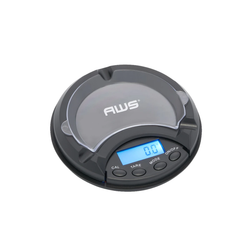
Choosing the right scale for resin is about much more than finding the model with the most decimal places.
A useful resin scale needs to balance several important specifications:
Accuracy. Capacity. Readability. Calibration. Repeatability. Platform size.
A high-capacity scale may not provide enough measurement detail for tiny quantities of pigment. A highly sensitive precision scale, on the other hand, may not have enough capacity for a mixing cup and a large resin batch.
For many resin makers, a practical main-scale range is:
2–5kg capacity x 0.1g readability
For pigments, additives, small jewelry batches and formula development, a second scale around:
100–500g x 0.01g
can be useful.
The correct choice ultimately depends on what you actually weigh.
This resin scale buying guide explains how to evaluate accuracy, capacity, readability, calibration, tare, minimum load, repeatability, platform dimensions and environmental stability before buying a digital scale for resin.
Quick Resin Scale Buying Guide
A practical starting point is:
| Resin Application | Suggested Capacity | Suggested Readability |
|---|---|---|
| Pigment testing | 100–500g | 0.01g |
| Mica and additives | 100–500g | 0.01g |
| Resin jewelry | 500g–1kg | 0.1g |
| Coasters | 1–2kg | 0.1g |
| Tumblers | 1–2kg | 0.1g |
| Small and medium molds | 2–3kg | 0.1g |
| General resin crafting | 2–5kg | 0.1g |
| Larger molds and tabletop projects | 3–5kg+ | 0.1g–1g as appropriate |
| Large casting/deep-pour work | 5kg+ | Based on application |
These are scale-selection guidelines rather than universal resin-mixing instructions.
Always follow the resin manufacturer's instructions regarding whether the product should be measured by weight or volume and which mixing ratio applies.
The Three Most Important Resin Scale Specifications
When comparing scales for resin, start with three factors:
1. Capacity
How much total physical weight can the scale support?
2. Readability and Accuracy
How small an increment does the scale display, and what measurement performance does the manufacturer specify?
3. Calibration
How can the scale be checked or calibrated according to its instructions?
These factors should be evaluated together.
A scale is not automatically better simply because it has more capacity or more decimal places.
What Does Scale Capacity Mean?
Capacity is the maximum physical load the scale is designed to support.
For example:
2000g x 0.1g
means:
2000g = maximum capacity
0.1g = readability
The scale can physically support up to 2,000 grams and displays measurements in tenth-of-a-gram increments.
If you're unfamiliar with this notation, American Weigh Scales explains it in detail in What Does 500g x 0.01g Mean on a Digital Scale?.
Capacity becomes especially important in resin work because the scale has to support more than the resin itself.
Calculate the Complete Load Before Buying
Your scale must support:
Mixing container + resin + hardener + pigments + additives
Suppose your typical batch includes:
Mixing cup: 125g
Resin: 700g
Hardener: 350g
Pigment and additives: 25g
The total physical load is:
125 + 700 + 350 + 25 = 1,200g
A 1kg scale is not large enough.
A 2kg scale provides considerably more usable room.
This calculation should be one of the first things you do before purchasing a resin scale.
Why the Mixing Cup Matters
Container weight is easy to overlook.
Imagine you plan to mix:
400g of resin and hardener
A 500g scale might sound sufficient.
But if your mixing cup weighs:
120g
the scale is actually supporting:
520g
That exceeds a 500g capacity.
This is why scale capacity should always be calculated from the complete physical load.
Tare Does Not Increase Capacity
Tare is extremely useful for resin mixing.
Place an empty cup on the scale.
Press tare.
The display returns to zero.
You can now add resin without manually subtracting the cup weight.
However:
Tare only changes the displayed value.
It does not physically remove the cup from the scale.
If a 100g container sits on a 500g scale and you press tare, the load cell is still supporting that 100g container.
Approximately 400g of physical capacity remains.
Do not choose a resin scale under the assumption that tare restores its full capacity.
How Much Capacity Headroom Should You Leave?
Avoid selecting a scale that barely supports your typical batch.
Suppose your normal complete load is:
1,900g
A 2kg scale technically supports it.
But it leaves very little room for:
-
A heavier container
-
Extra pigment
-
Fillers
-
Accidental overpour
-
A slightly larger batch
-
Future projects
A higher-capacity scale may provide more comfortable headroom.
Similarly, if your normal load is around 2,800g, a 3kg scale leaves very little margin.
A 5kg model may be more practical.
Is a 500g Scale Good for Resin?
A 500g scale can be excellent for small resin applications.
Consider 500g capacity for:
-
Jewelry
-
Tiny molds
-
Pigment tests
-
Mica powder
-
Color development
-
Small repairs
-
Lightweight additives
A:
500g x 0.1g
model can be useful for general small resin work.
A:
500g x 0.01g
model can provide finer displayed increments for pigments and small additives.
The main limitation is capacity.
Always include the container when determining whether 500g is sufficient.
For a deeper explanation of how capacity and readability interact on smaller scales, see the AWS guide 200g vs. 500g Pocket Scale: Which Capacity Is Right for You?.
Is a 1kg Scale Good for Resin?
A 1kg scale provides more flexibility than a 500g model.
It can be useful for:
-
Jewelry
-
Coasters
-
Small molds
-
Resin artwork
-
Small adhesive batches
-
Small craft projects
A specification around:
1000g x 0.1g
can be a practical choice for makers who primarily work with smaller projects.
Is a 2kg Scale Good for Resin?
A:
2kg x 0.1g
scale can be one of the most versatile choices for regular resin crafting.
It provides enough capacity for:
-
Jewelry
-
Coaster batches
-
Medium molds
-
Resin art
-
Small casting projects
-
Larger mixing cups
-
General craft work
For makers who want one primary scale, 2kg x 0.1g is a useful starting specification.
American Weigh Scales offers the SC-2KG Precision Digital Pocket Scale, which combines a 2,000g capacity with 0.1g readability and is specifically positioned for hobby applications that include resin materials.
When Should You Choose 3kg?
A 3kg scale becomes useful when:
-
You routinely mix more than 1kg
-
Your containers are relatively heavy
-
You make larger molds
-
You want additional capacity headroom
-
Your projects are growing
A:
3kg x 0.1g
model can cover many workshop and craft applications while still offering fine displayed increments.
When Does a 5kg Scale Make Sense?
Consider 5kg or more for:
-
Larger molds
-
Production batches
-
Tabletop projects
-
Heavy mixing containers
-
Larger casting work
The important tradeoff is readability.
Some higher-capacity scales display in larger increments.
That can be acceptable for large batches but less useful for small formulations.
Do not compare capacity alone.
What Is Readability?
Readability is the smallest increment displayed by the scale.
For example:
1g Readability
The display changes in whole grams:
100g
101g
102g
0.1g Readability
The display changes in tenths:
100.1g
100.2g
100.3g
0.01g Readability
The display changes in hundredths:
10.01g
10.02g
10.03g
0.001g Readability
The display changes in thousandths:
1.001g
1.002g
1.003g
More decimal places do not automatically make a scale more appropriate for resin.
AWS explains the distinction between these fine measurement levels further in 0.001g vs. 0.01g Scales: Which Precision Do You Need?.
Is 1g Readability Enough for Resin?
For some large resin batches, 1g increments can be adequate if the resin manufacturer's required measurement tolerance supports that level of measurement.
For small craft batches, however, 1g can be relatively coarse.
Suppose a jewelry batch totals only 20g.
A one-gram change represents a significant portion of the total batch.
As batch size decreases, finer readability generally becomes more useful.
Why 0.1g Is Practical for Many Resin Makers
A 0.1g scale displays tenths of a gram.
This is useful for many:
-
Jewelry batches
-
Coasters
-
Tumblers
-
Molds
-
Resin-art projects
-
Medium craft batches
It provides more measurement detail than a whole-gram scale while still being available in models with practical capacity for resin.
This is why specifications such as:
1kg x 0.1g
2kg x 0.1g
3kg x 0.1g
can be practical for general resin work.
When Should You Choose 0.01g?
A 0.01g scale displays hundredths of a gram.
This can be useful for:
-
Pigment testing
-
Mica powder
-
Concentrated colorants
-
Small additives
-
Tiny jewelry batches
-
Formula development
-
Small experimental batches
For example, a color formula might use:
Resin sample: 50.00g
Pigment A: 0.80g
Pigment B: 0.25g
Additive: 0.15g
A 0.01g scale provides additional displayed detail for these measurements.
Do You Need 0.001g?
Usually not for ordinary resin crafting.
A 0.001g scale reads to one milligram.
That level of readability is much more sensitive to:
-
Drafts
-
Vibration
-
Static
-
Temperature changes
-
Surface movement
Unless you actually work with milligram-level ingredients, a 0.01g or 0.1g scale is generally more practical.
Do not buy a scale based solely on the number of decimal places.
Readability Is Not Accuracy
This is one of the most important concepts in a resin scale buying guide.
A scale that displays:
10.01g
does not automatically guarantee that every measurement is accurate to exactly ±0.01g.
Readability tells you the smallest increment the display can show.
Accuracy concerns measurement performance relative to a reference value under the scale's stated specifications.
When comparing scales, consider:
-
Readability
-
Accuracy specifications
-
Repeatability
-
Minimum usable load
-
Capacity
-
Calibration requirements
-
Operating environment
The best resin scale is not necessarily the one with the most decimal places.
For additional information about how readability, capacity and minimum usable load relate to each other, read What Does 500g x 0.01g Mean on a Digital Scale?.
Why Accuracy Matters in Resin Work
When a resin system is mixed by weight, your scale is responsible for measuring the mass you add.
Accurate, consistent measurement can help you reproduce:
-
Resin-to-hardener proportions
-
Pigment percentages
-
Additive percentages
-
Small test batches
-
Color formulas
-
Casting formulations
But remember:
Scale accuracy cannot fix an incorrect formula.
If you enter the wrong target or use the wrong mixing ratio, even a properly calibrated scale will still produce an incorrect mixture.
Repeatability Matters Too
Repeatability refers to obtaining consistent readings from the same stable load under similar conditions.
This matters because resin makers often want to reproduce previous results.
For example, you might want to recreate:
-
A successful color
-
A jewelry formula
-
A pigment concentration
-
A casting batch
-
An additive percentage
-
A resin-to-hardener mixture
A scale that produces stable and repeatable readings makes formulation records much more useful.
If your digital scale appears to produce inconsistent readings, AWS covers common causes in Why Does My Digital Scale Give Different Readings?.
Minimum Usable Load
Do not assume that a scale's smallest displayed increment equals its practical minimum load.
A scale that reads to:
0.01g
does not necessarily mean that 0.01g is an ideal working quantity.
When working with very small pigments or additives, check the manufacturer's specifications for:
-
Minimum load
-
Accuracy
-
Tolerance
-
Repeatability
This becomes increasingly important at very low measurement ranges.
What Is Calibration?
Calibration is the process of checking or adjusting scale performance using an appropriate reference according to the scale manufacturer's procedure.
Different scales may require different:
-
Calibration weights
-
Calibration sequences
-
Button combinations
-
Operating conditions
There is no single universal calibration procedure for every digital scale.
Always use the instructions for your exact model.
For a complete step-by-step overview, see the American Weigh Scales guide How to Calibrate a Digital Scale for Accurate Results.
Why Calibration Matters for Resin Scales
If you depend on a scale to reproduce resin formulas, you need confidence that its performance remains consistent.
A scale may benefit from a performance check or calibration after:
-
Transportation
-
A drop or impact
-
Accidental overload
-
Long storage
-
Major temperature changes
-
Unexpected reference readings
-
Changes in repeatability
Calibration cannot repair physical damage, but following the manufacturer's recommended checking and calibration procedures can be an important part of maintaining measurement performance.
For broader technical context on weighing and measurement standards, the National Institute of Standards and Technology's Handbook 44 provides specifications, tolerances and technical requirements used in weighing and measuring applications.
Use the Correct Calibration Weight
Do not calibrate a resin scale using random household objects.
Avoid using:
-
Coins
-
Resin bottles
-
Tools
-
Pigment jars
-
Cured resin
-
Jewelry
-
Kitchen objects
Instead, use the reference mass specified by the scale manufacturer.
The correct calibration weight may vary by model.
A 500g scale and a 2kg scale may require completely different reference weights.
Why Coins Are Not a Substitute for a Calibration Weight
Coins are sometimes used as improvised scale checks, but they should not replace the manufacturer's specified calibration reference.
Actual coin mass can vary because of factors such as:
-
Wear
-
Damage
-
Contamination
-
Manufacturing tolerances
If the manufacturer specifies a calibration weight, use that weight.
Calibration Does Not Fix Everything
A fluctuating or inconsistent scale does not necessarily need calibration.
Other possible causes include:
-
Weak batteries
-
Drafts
-
Vibration
-
Soft surfaces
-
Uneven workbenches
-
Temperature changes
-
Static
-
Overload
-
Off-center placement
-
Container contact with another surface
Before assuming the scale needs calibration, check the weighing environment.
Use a Hard, Level Surface
A precision scale should be placed on a:
Rigid, stable and level surface
Avoid:
-
Towels
-
Foam
-
Fabric
-
Flexible silicone mats
-
Uneven countertops
-
Wobbly tables
A flexing or unstable surface can reduce measurement stability and repeatability.
Watch for Airflow
Fine-resolution scales can react to moving air.
Keep precision scales away from:
-
Fans
-
Open windows
-
HVAC vents
-
Strong air-conditioning airflow
This becomes particularly important when weighing lightweight pigments or additives on a 0.01g scale.
Watch for Vibration
Vibration can come from:
-
Sanders
-
Drills
-
Compressors
-
Speakers
-
Shop equipment
-
Foot traffic
-
Flexible workbenches
Perform precision weighing before running vibrating equipment nearby.
The finer the scale's readability, the more environmental stability matters.
Temperature Can Affect Scale Behavior
If a scale has been moved from:
-
A hot garage
-
A cold vehicle
-
A different workshop
-
An air-conditioned room
-
An outdoor workspace
allow it to acclimate before precision measurement.
Avoid placing hot containers directly on the platform unless the scale manufacturer permits it.
Platform Size Matters as Much as Capacity
A scale may have enough capacity but still be poorly suited to your containers.
A resin mixing cup should:
-
Sit securely
-
Remain centered
-
Be fully supported
-
Avoid touching the surrounding counter
-
Avoid touching the scale housing
-
Leave the display visible
If a large container overhangs the platform and touches the table, the scale is no longer supporting the entire load.
That can interfere with the measurement.
Display Visibility
Large resin cups can block the LCD.
Before buying, consider:
-
Digit size
-
Backlighting
-
Decimal-point visibility
-
Viewing angle
-
Display position
A scale is much easier to use when you can clearly see the measurement while pouring.
Tare Is an Essential Resin Scale Feature
Tare allows you to remove the displayed weight of the mixing container.
A typical weight-based workflow is:
-
Place the empty mixing cup on the scale.
-
Wait for a stable reading.
-
Press tare.
-
Confirm zero.
-
Add Part A to the target mass.
-
Add Part B according to the manufacturer's specified weight ratio.
-
Confirm the final mass.
-
Mix according to the manufacturer's instructions.
Tare simplifies the process, but remember that the container still counts toward physical capacity.
Do Not Guess the Resin Mixing Ratio
A digital scale measures mass.
It does not determine the correct resin-to-hardener ratio.
The ratio must come from the exact product's:
-
Label
-
Instructions
-
Technical data sheet
-
Official manufacturer documentation
-
Approved calculator
Different resin systems can use different ratios.
Do not assume one brand's ratio applies to another product.
Weight Ratio vs. Volume Ratio
This is especially important when buying a scale specifically for epoxy resin.
A resin system labeled:
2:1 by volume
does not necessarily use:
2:1 by weight
Resin and hardener can have different densities.
Because of that, equal proportional volumes do not necessarily correspond to the same proportional masses.
When using a digital scale, follow the product-specific weight ratio supplied or approved by the resin manufacturer.
Do not convert a numerical volume ratio directly into the same weight ratio unless the manufacturer confirms that this is appropriate.
For example, TotalBoat provides specific guidance for mixing TotalBoat epoxy by weight and publishes separate guidance explaining how to measure epoxy by weight versus volume.
Pocket Scale vs. Larger Scale for Resin
A pocket scale can be useful for:
-
Pigments
-
Additives
-
Jewelry
-
Small repairs
-
Formula tests
-
Tiny resin batches
A larger kitchen or bench-style scale can be more practical for:
-
Larger mixing cups
-
Coasters
-
Medium molds
-
Tabletop projects
-
Higher-capacity work
AWS compares the advantages of each format in Pocket Scale vs. Kitchen Scale: Which One Should You Buy?.
Many resin makers can benefit from having both.
One Scale or Two?
Trying to force one scale to cover every application may create unnecessary compromises.
A practical two-scale setup can be:
Main Resin Scale
2–5kg x 0.1g
Use for:
-
Resin
-
Hardener
-
Mixing cups
-
Medium batches
-
Coasters
-
Molds
-
Resin art
Precision Scale
100–500g x 0.01g
Use for:
-
Pigments
-
Mica
-
Small additives
-
Color development
-
Formula tests
This allows each scale to operate in a measurement range better suited to the job.
Best Resin Scale for Jewelry
For jewelry work, consider:
500g–1kg x 0.1g
This can work well for:
-
Earrings
-
Pendants
-
Charms
-
Rings
-
Small molds
For very small pigment quantities, consider adding:
100–500g x 0.01g
as a secondary precision scale.
If your work involves jewelry as well as resin, see the AWS guide to choosing the Best Digital Scale for Jewelry.
Best Resin Scale for Coasters
For coaster projects, a useful starting range is:
1–2kg x 0.1g
This provides enough capacity for the container plus multiple small pours.
Remember to calculate your complete load before choosing capacity.
Best Resin Scale for Tumblers
For tumbler resin work:
1–2kg x 0.1g
can provide a useful balance between capacity and measurement detail.
Choose capacity based on the largest complete batch you actually mix.
Best Resin Scale for Molds
For small and medium molds:
2–3kg x 0.1g
can be practical.
Larger molds may require:
5kg+
depending on the complete load.
Best Resin Scale for Pigments
Pigments and mica may require much finer measurement than the main resin batch.
Consider:
100–500g x 0.01g
for controlled pigment and color development.
This can help you record:
-
Resin mass
-
Pigment mass
-
Pigment percentage
-
Additional colorant
-
Final batch mass
Measurement records make successful colors easier to reproduce.
Best Resin Scale for Larger Projects
For larger molds, tabletop work and casting batches, consider:
5kg or more
when needed.
Also evaluate:
-
Platform size
-
Display visibility
-
Container support
-
Readability
-
Calibration
-
Capacity headroom
A high-capacity scale is only useful when its other specifications also fit the project.
Protect the Scale From Resin
Uncured resin can damage:
-
Buttons
-
Platform gaps
-
Electronics
-
Display seams
-
Battery compartments
-
Charging ports
Use clean mixing containers and, where appropriate, a removable tray or protective barrier that does not interfere with weighing.
Follow the manufacturer's cleaning instructions.
Do Not Store Heavy Objects on the Scale
Avoid leaving:
-
Resin bottles
-
Mixing cups
-
Tools
-
Pigment containers
-
Molds
sitting on the platform when the scale is not being used.
A digital scale should be stored unloaded.
Use its protective cover if one is included.
Power and Battery Considerations
Weak batteries can contribute to unstable scale behavior.
Useful features can include:
-
Low-battery indicator
-
Reliable battery operation
-
Rechargeable power
-
Approved AC adapter
-
Predictable startup
If your scale starts fluctuating unexpectedly, its power supply is one factor worth checking.
Auto-Off Behavior
Auto-off can save battery life but may interrupt resin preparation.
You might pause while:
-
Calculating a ratio
-
Opening containers
-
Measuring pigment
-
Preparing molds
-
Recording formulas
Choose a scale whose auto-off behavior fits your normal workflow.
Resin Scale Buying Mistakes to Avoid
Buying by Capacity Alone
A high-capacity scale may be too coarse for small batches.
Buying by Decimal Places Alone
A 0.01g or 0.001g display does not automatically mean better measurement performance.
Ignoring Container Weight
The mixing cup counts toward capacity.
Assuming Tare Restores Capacity
It does not.
Ignoring Minimum Load
Very small pigment measurements require an appropriate usable measurement range.
Using a Platform That Is Too Small
The container needs complete support.
Blocking the Display
Check your real mixing containers.
Working on Soft Surfaces
Use a hard, stable surface.
Weighing Beside Vibrating Equipment
Move precision weighing away from vibration.
Calibrating With Random Objects
Use the specified reference weight.
Assuming Every 2:1 Resin Is 2:1 by Weight
The numerical ratio may differ between weight and volume.
Ignoring Calibration Instructions
Different scales can have different requirements.
Resin Scale Buying Checklist
Before buying a resin scale, ask:
-
What projects do I make?
-
What is my smallest batch?
-
What is my largest batch?
-
How much does my mixing container weigh?
-
What is my maximum complete load?
-
How much capacity headroom do I need?
-
Is 500g enough?
-
Should I choose 1kg?
-
Would 2kg be more practical?
-
Do I need 3kg?
-
Should I move to 5kg or more?
-
Is 1g readability sufficient?
-
Is 0.1g more appropriate?
-
Do I need 0.01g?
-
Do I genuinely need 0.001g?
-
What accuracy does the manufacturer specify?
-
What is the minimum usable load?
-
Is repeatability appropriate?
-
Does the scale have tare?
-
Is the platform large enough?
-
Can the container sit securely?
-
Will the display remain visible?
-
Does the scale have a backlit LCD?
-
Can the scale be calibrated?
-
What calibration weight is required?
-
Is the required weight included?
-
Are performance-check instructions clear?
-
Can the scale be protected from spills?
-
Is the power source practical?
-
Would two scales cover my work better?
Frequently Asked Questions About Resin Scales
What is the best scale capacity for resin?
For many resin makers, 2–5kg provides a useful primary-scale range.
Small jewelry work may need only 500g–1kg, while larger molds and tabletop batches can require 5kg or more.
Is 0.1g accurate enough for resin?
For many craft-scale batches, 0.1g readability can be practical when the scale's overall accuracy and performance specifications are appropriate.
Remember that readability and accuracy are not the same specification.
When should I use a 0.01g scale?
Consider 0.01g readability for:
-
Tiny pigment quantities
-
Mica
-
Small additives
-
Jewelry tests
-
Color formulation
-
Small experimental batches
Is 0.001g necessary for resin?
Usually not for ordinary resin crafting.
Milligram-level readability is more sensitive to environmental conditions and is typically unnecessary unless your actual measurements require it.
Is readability the same as accuracy?
No.
Readability is the smallest displayed increment.
Accuracy relates to how closely the scale's measurement corresponds with a reference value within its specified operating conditions and tolerances.
How much capacity headroom should I leave?
Choose enough capacity to comfortably support your complete normal load rather than routinely working immediately below the scale's maximum.
Does tare increase capacity?
No.
Tare resets the displayed value but does not remove the physical container weight from the scale.
Should I calibrate my resin scale?
Follow the scale manufacturer's calibration and performance-check instructions.
AWS provides additional guidance in How to Calibrate a Digital Scale for Accurate Results.
What should I use to calibrate a digital scale?
Use the reference mass specified by the manufacturer.
Do not substitute coins or random household objects for the manufacturer's specified calibration weight.
Why does my resin scale fluctuate?
Possible causes include:
-
Drafts
-
Vibration
-
Weak batteries
-
Soft surfaces
-
Temperature changes
-
Static
-
Off-center loading
-
Overload
-
Calibration issues
For more troubleshooting information, see Why Does My Digital Scale Give Different Readings?.
Can I use a kitchen scale for resin?
A kitchen-style or larger bench scale can be useful for medium and larger batches.
A pocket or precision scale may be better for pigments, additives and small jewelry work.
The AWS guide Pocket Scale vs. Kitchen Scale: Which One Should You Buy? explains the differences in more detail.
Should I own two resin scales?
If you work with both kilogram-scale resin batches and sub-gram pigments, two scales can provide a better overall measurement range.
A practical combination is:
2–5kg x 0.1g
plus:
100–500g x 0.01g
Can I mix epoxy by weight?
Yes, when the manufacturer provides or approves a weight-based ratio for the specific resin system.
Use that exact weight ratio.
For an example of product-specific instructions, see TotalBoat's guide to mixing epoxy by weight.
Is a volume ratio the same as a weight ratio?
Not necessarily.
Resin and hardener can have different densities, so numerical weight and volume ratios may differ.
Always use the ratio specified by the manufacturer for the measurement method you are using.
Final Verdict: How to Buy the Right Resin Scale
A good resin scale should not be selected by one specification alone.
Start with capacity.
Calculate:
Mixing container + resin + hardener + pigments + additives
Then leave enough headroom to comfortably support your largest normal batch.
Next, evaluate readability and accuracy.
For many general resin applications:
0.1g readability
provides a useful balance between measurement detail and practical capacity.
For pigments, mica, lightweight additives and tiny formulations:
0.01g readability
can provide additional measurement detail.
Do not assume that more decimal places automatically mean better accuracy.
Compare the manufacturer's:
-
Accuracy specification
-
Minimum usable load
-
Repeatability
-
Capacity
-
Calibration requirements
Then consider calibration.
A useful resin scale should have clear calibration or performance-check instructions and should use the manufacturer-specified reference weight.
Do not substitute coins, resin bottles, tools or other household objects for the proper reference mass.
For many makers, a useful main-scale range is:
2–5kg x 0.1g
For precision pigment and additive work:
100–500g x 0.01g
can be a useful complement.
Finally, remember that the scale measures mass—it does not determine the correct resin formula.
When mixing by weight, always use the exact weight ratio supplied or approved by the resin manufacturer.
Choose the capacity for your real batches, choose readability for the smallest meaningful measurement, follow the calibration instructions, and use the scale on a hard, stable surface away from drafts and vibration.
That combination matters far more than simply buying the scale with the highest capacity or the most decimal places.